Table of Contents
- The Earthquake of August 15, 1950: A Day that Shattered Borders
- Prelude to Disaster: Geology and History of the Assam-Tibet Region
- The Tectonic Stage: Understanding the Himalayan Collisions
- The Morning Tremor: First Signs of a Cataclysm
- The Magnitude Unveiled: The Seismic Fury of 8.6 Mw
- Immediate Impact on Assam: Villages Buried in Silence
- The Devastation in Tibet: Remote Regions in Ruins
- Human Stories Amidst the Rubble: Survivors and Witnesses
- The Challenge of Rescue: Difficult Terrain and Limited Communication
- Political Overlays: India and China on the Edge
- Scientific Responses: Early Seismological Insights
- The Aftershocks: Nature’s Lingering Warning
- Environmental Repercussions: Landslides, Floods, and River Changes
- Socio-economic Consequences: Displacement and Hardship
- The Earthquake in Cold War Context: A Geopolitical Backdrop
- Lessons Learned: Advances in Disaster Management
- Remembering August 15, 1950: Memorials and Memory
- The Earthquake’s Legacy in Indo-Tibetan Relations
- Reflections from Modern Seismology: A Benchmark Event
- Conclusion: When Earth’s Unseen Powers Rewrite History
- Frequently Asked Questions (FAQs) about the Assam-Tibet Earthquake
- External Resource: Wikipedia Link on Assam-Tibet Earthquake
- Internal Link: Visit History Sphere
1. The Earthquake of August 15, 1950: A Day that Shattered Borders
The morning of August 15, 1950, dawned like many others in the rugged frontier between Assam, India, and Tibet. But beneath the calm skies and misty mountains lurked a terrifying force of nature, ready to unleash one of the most powerful earthquakes of the 20th century. At precisely 7:39 am local time, the earth trembled violently over the Himalayan belt, birthing destruction across remote corners of two ancient cultures. This was no ordinary tremor — it was a seismic upheaval strong enough to rewrite the geography of a thousand hills and river valleys, drawing the attention of geologists and governments alike.
This earthquake, known today as the Assam-Tibet earthquake, remains one of the largest recorded in India and the entire Himalayan region, boasting a staggering magnitude of 8.6 Mw. Yet, its story is not only one of plates and fault lines but of shattered homes, heroic survival, scientific curiosity, and political tension between two nations just beginning their post-colonial trajectories. As the earth cracked, so did the calm of a land poised between tradition and a rapidly modernizing world.
But the initial tremor was only the beginning…
2. Prelude to Disaster: Geology and History of the Assam-Tibet Region
To comprehend the magnitude of the 1950 earthquake, one must first understand the land that bore its fury. Assam and Tibet lie within the volatile Himalayan range, the result of one of the most intense continental collisions in history — the Indian Plate pushing northwards into the Eurasian Plate. This ongoing movement has uplifted the tallest mountain range on Earth and fostered climatic and ecological diversity.
For centuries, this region was a mosaic of cultural and economic exchanges, bound together by winding trade routes across snow-capped passes and dense forests. Assam, famed for its fertile Brahmaputra valley and tea plantations, stood in stark contrast with the high-altitude deserts and monasteries of Tibetan plateau. Yet their interconnectedness also meant that nature’s wrath here would echo far beyond local borders.
The tectonic stresses in this fault network had built up over thousands of years, quietly storing energy beneath the earth’s crust until it could no longer hold — a ticking time bomb beneath a picturesque landscape.
3. The Tectonic Stage: Understanding the Himalayan Collisions
The earthquake’s genesis was the thrust of the Indian tectonic plate beneath the Eurasian plate, a process that began some 50 million years ago. This continental collision created the Himalayas and continues to push them skyward at a rate of approximately 5 centimeters per year.
Along this convergent boundary lies the Main Himalayan Thrust, an enormous megathrust fault where plate motion is accommodated primarily through episodic ruptures — earthquakes that release pent-up seismic energy. The 1950 Assam-Tibet earthquake was the manifestation of a sudden slip along this hidden fault system, causing a massive release of accumulated stress.
Seismologists today regard this event as an archetype of megathrust earthquakes that can produce devastating effects not only locally but regionally, altering river courses, triggering landslides, and reshaping life for millions.
4. The Morning Tremor: First Signs of a Cataclysm
August 15 started with an unassuming mist threading through the valleys. Farmers were starting their day in Assam’s sprawling tea gardens; monks were beginning their morning prayers in the Tibetan hills. Suddenly, the ground shuddered violently. The first tremor caught many off guard.
Eyewitnesses recalled buildings swaying as if caught in an invisible grip, animals fleeing their shelters, and a low rumbling that seemed to grow louder by the second. Windows shattered, trees bent and toppled, and narrow mountain paths crumbled beneath the force.
Reports from Ledo and other Assam towns described walls collapsing and people thrown to the ground. In Tibet, entire villages were swallowed by landslides, forever lost to memory.
5. The Magnitude Unveiled: The Seismic Fury of 8.6 Mw
Subsequent measurements confirmed the earthquake's massive scale — magnitude 8.6 on the moment magnitude scale, powerful enough to register around the globe. In fact, it is considered the largest earthquake recorded in India and among the most destructive in the Himalayan region during the 20th century.
Its seismic energy was vast, releasing an equivalent of roughly 178 megatons of TNT — several thousand times more than the atomic bomb dropped on Hiroshima.
Scientists marveled at the intensity and distribution of shaking, which spanned over 850 kilometers. The rupture extended deep into the earth’s crust, with fault displacement reaching up to 20 meters in some locations, dramatically altering the landscape.
6. Immediate Impact on Assam: Villages Buried in Silence
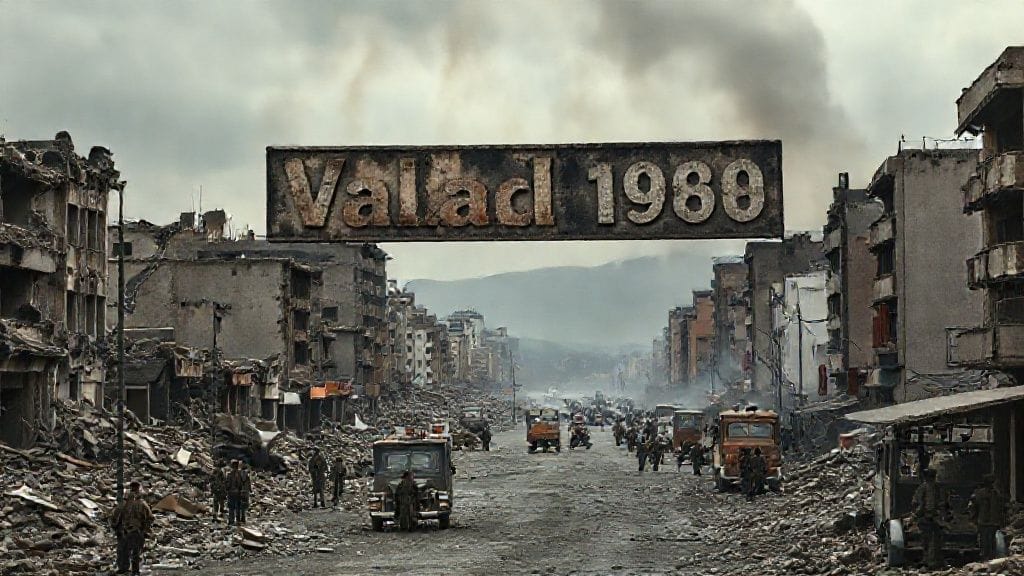
In the lush plains of Assam, the earthquake dealt a brutal blow. Towns like Sadiya and Dibrugarh were engulfed in dust and chaos. Homes made mostly from wood and bamboo were splintered, while masonry structures crumbled like castles of sand.
The mountainous terrain exacerbated the disaster: landslides blocked roads and wiped out farmlands. Communications were severed. Entire small communities vanished overnight.
Estimated casualties ran into the thousands, but precise counts remain elusive due to the remoteness of many affected areas. Survivors spoke of being trapped under debris, the earth opening beneath them, and rescue efforts hampered by unpassable terrain.
Yet, amidst despair, stories emerged of local heroes — villagers who guided neighbors to safety by fires and lantern light during the aftershock-filled nights.
7. The Devastation in Tibet: Remote Regions in Ruins
Crossing the border into Tibet, the calamity’s footprint continued its brutal course. The Himalayan landscape here was even more precarious: steep, crumbling slopes and fragile settlements perched on precarious mountain ledges.
Entire clusters of monasteries were damaged or destroyed. The isolated communities of the Chamdo region felt the quake intensely, with reports of rockfalls and river shifts.
Due to Tibet’s remoteness and limited infrastructure in 1950, detailed damage reports came sluggishly, making relief and assessment difficult. Nonetheless, local oral histories preserved harrowing accounts of nights spent under open skies amid aftershocks, and the challenge of survival in harsh alpine conditions.
8. Human Stories Amidst the Rubble: Survivors and Witnesses
Behind statistics and geological data lie deeply human tales. One memorable account is of a Tibetan shepherd who, sensing the impending quake from unusual animal behavior, managed to lead his flock to a safe valley, saving dozens of lives.
Another comes from a tea plantation worker in Assam recalling how his entire family was trapped in their hut, yet a sudden crack in the wall allowed them to escape. These voices reveal not only physical survival but resilience and shared humanity amidst chaos.
Some survivors were haunted by the loss of ancestors' homes, sacred sites, and familiar landscapes that shifted forever. The earthquake was more than a natural event — it was a rupture in time and memory.
9. The Challenge of Rescue: Difficult Terrain and Limited Communication
The logistical nightmare that followed the quake tested the limits of regional administrations. Assam in 1950 lacked modern roads and communication networks, and Tibet’s remoteness amplified isolation.
Relief operations were slow to mobilize. Helicopters were rare, and most aid had to traverse landslides and fractured bridges on foot or muleback. Medical assistance was scarce, and many injured either perished or suffered lasting disabilities from delayed care.
International response was limited, partly because of political sensitivities and Cold War dynamics in the region. Local communities took it upon themselves to band together, forming ad hoc rescue parties and establishing temporary shelters.
Indeed, nature’s fury collided with human vulnerability in stark terms.
10. Political Overlays: India and China on the Edge
The earthquake occurred during a turbulent phase in South Asian history. India had just gained independence three years prior, grappling with nation-building and border definitions. China had asserted control over Tibet, leading to strained relations and geopolitical uncertainty.
The disaster briefly forced both governments to confront a shared calamity. However, border disputes, lack of trust, and differing priorities complicated coordinated responses.
Despite the tragedy, little cross-border cooperation emerged formally, with each side focusing inward. The earthquake thus became not only a natural event but a stage reflecting the political fragility of the region during the early Cold War era.
11. Scientific Responses: Early Seismological Insights
From a scientific perspective, the Assam-Tibet earthquake offered a unique window into Himalayan tectonics. Researchers around the world scrutinized the event, using it as a case study to understand megathrust earthquakes in continental mountain belts.
Initial field investigations mapped the extension of fault rupture zones, landslide scars, and ground fissures. Seismograph data helped refine estimation methods for earthquake magnitudes and precursor events.
Significantly, the earthquake underscored the potential risk of future major earthquakes in the Himalayas, a lesson that influences seismic preparedness to this day.
12. The Aftershocks: Nature’s Lingering Warning
Long after the initial disaster, the earth continued its restless murmurs. The region endured a pattern of aftershocks, some sizeable enough to cause renewed panic and additional damage. These tremors complicated recovery efforts and unsettled the psychological state of survivors.
The aftershocks reminded inhabitants that the earth’s balance had been deeply disturbed and that such events might recur unpredictably.
This persistent unrest also kept the earthquake alive in regional narratives, festivals, and local lore for decades.
13. Environmental Repercussions: Landslides, Floods, and River Changes
Beyond human tolls, the earthquake reshaped the environment dramatically. Massive landslides, triggered by violent shaking, buried valleys, altered river courses, and dammed streams.
Notably, the Brahmaputra River experienced shifts, causing flooding and sediment redistribution that affected agriculture and fisheries. Forests were devastated, and wildlife habitats disrupted.
Geologists continue to study the event to understand how such earthquakes reshape young mountain ranges and influence ecological systems.
14. Socio-economic Consequences: Displacement and Hardship
The tremors and their aftermath disrupted the fragile economies of Assam and Tibetan borderlands. Displacement left many homeless, dependent on uncertain food supplies or precarious shelter.
Traditional livelihoods, especially among farmers and pastoralists, suffered as fertile lands were buried or flooded. Markets and trade routes, already fragile due to geography, were fractured.
The disaster exacerbated poverty and hardship, slowing development efforts and sowing seeds for social change in the decades following.
15. The Earthquake in Cold War Context: A Geopolitical Backdrop
The timing of the event — in the early years of the Cold War — added complexity to its international significance. The Himalayan region was a geopolitical chessboard involving India, China, the Soviet Union, and Western powers.
While humanitarian concerns existed, they were often entangled with distrust and strategic calculations. The earthquake briefly highlighted a shared human vulnerability transcending political divides, but this solidarity was fragile.
The border sensitivities contributed to the muted international response and shaped subsequent diplomatic postures regarding disaster relief and border management.
16. Lessons Learned: Advances in Disaster Management
From tragedy, important lessons emerged. The 1950 earthquake highlighted the critical need for improved seismic monitoring, emergency preparedness, and infrastructure resilience in mountainous, earthquake-prone areas.
India and neighboring countries gradually developed seismological institutions, early warning systems, and stricter building codes inspired in part by this event.
Furthermore, the calamity taught the value of community preparedness and decentralized relief capabilities in remote areas — principles still emphasized in Himalayan disaster management today.
17. Remembering August 15, 1950: Memorials and Memory
Although overshadowed in national narratives by political upheavals and other major historical events, the August 15 earthquake remains a poignant memory for local communities.
Memorials and commemorations occur sporadically, preserving the memory of lives lost and resilience shown. These acts of remembrance reinforce regional identities and respect for nature’s power.
In stories passed down through generations, the earthquake is a symbol of survival, humility, and the ever-present dance between humans and the earth beneath their feet.
18. The Earthquake’s Legacy in Indo-Tibetan Relations
While the earthquake did not lead to direct political rapprochement, its legacy persists subtly in how India and China approach border risk management and humanitarian issues.
The shared seismic hazard necessitates some level of scientific exchange and regional cooperation, albeit limited by larger political narratives.
In this sense, the earthquake remains a silent reminder of the connections — physical and human — binding disparate peoples across invisible fault lines.
19. Reflections from Modern Seismology: A Benchmark Event
Today, researchers view the 1950 Assam-Tibet earthquake as a seminal event in Himalayan seismology, a benchmark for understanding continental earthquakes of exceptional scale.
Data collected has informed hazard models, contributing to better predicting and mitigating risks in one of the world’s most populous and tectonically active regions.
The event continues to inspire interdisciplinary studies, blending geology, anthropology, and political science.
20. Conclusion: When Earth’s Unseen Powers Rewrite History
The Assam-Tibet earthquake of August 15, 1950, was more than just an earthquake. It was an upheaval that cracked open mountains and tested human endurance in the fragile boundary between two dynamic worlds.
It showed that nature’s forces — invisible, relentless — can shape not only landscapes but destinies, cultures, and politics. Yet amidst destruction, stories of courage, community, and adaptation emerged, reminding us how intimately tied humanity is to the earth we inhabit.
As we recall that fateful summer day, we honor both those who endured and the lessons that tremble quietly beneath the Himalayan peaks, waiting for the next test.
Conclusion
The 1950 Assam-Tibet earthquake remains a powerful testament to the dynamic relationship between humans and the natural world. Its immense magnitude, far-reaching destruction, and profound socio-political reverberations underscore how deeply geological events can penetrate human history.
Yet, beyond the devastation, this event revealed remarkable resilience—the capacity of communities in Assam and Tibet to recover, rebuild, and remember. It also spurred scientific progress and subtle shifts in regional cooperation, even in politically tense times.
Today, as the Himalayan region continues to grow and modernize, the shadow of that August morning serves as a solemn reminder: the earth beneath us is alive, constantly shaping and reshaping existence. Understanding and respecting that power is not only a scientific pursuit but a moral imperative for future generations.
FAQs
Q1: What caused the Assam-Tibet earthquake in 1950?
A: The earthquake was caused by a sudden slip along the Main Himalayan Thrust fault, where the Indian tectonic plate pushes beneath the Eurasian plate. This movement releases accumulated stress as seismic energy in the form of earthquakes.
Q2: How powerful was the 1950 Assam-Tibet earthquake?
A: It registered an estimated magnitude of 8.6 on the moment magnitude scale, making it one of the largest earthquakes recorded in India and the Himalayan region.
Q3: What areas were most affected by the earthquake?
A: The earthquake primarily devastated parts of Assam in India and the Tibetan border region, especially affecting villages, towns, and remote mountainous communities.
Q4: How did the earthquake affect Indo-China relations?
A: While the earthquake exposed shared vulnerabilities, political tensions and border disputes between India and China limited formal cooperation and joint relief efforts.
Q5: What were some environmental consequences of the earthquake?
A: Landslides, river course changes, and flooding significantly altered the landscape, impacting agriculture, wildlife habitats, and local ecosystems.
Q6: How did the disaster influence seismic research?
A: The earthquake provided valuable data that helped advance the understanding of megathrust earthquakes in continental collision zones, influencing hazard assessment and disaster preparedness.
Q7: Are there memorials commemorating the earthquake?
A: While few formal memorials exist, local communities remember the disaster through oral histories, occasional commemorations, and cultural memory.
Q8: Could such an earthquake happen again in the region?
A: Yes. The Himalayan region remains tectonically active, and major earthquakes are expected in the future. Ongoing monitoring and preparedness are crucial.