Table of Contents
- A Shattering Dawn: The Moment the Earth Trembled over Biak
- The Geographical and Geological Prelude to Disaster
- Papua’s Unique Landscape: Between Ocean and Mountain
- Indonesia’s Seismic Vulnerability: A Land Shaped by Fire and Fury
- The Tectonic Dance Beneath Biak Island
- Early Warnings and Local Preparedness: Between Hope and Hesitation
- February 17, 1996: The Earthquake Unfolds with Sudden Fury
- Shockwaves and Aftershocks: A Relentless Aftermath
- The Human Toll: Lives Torn Apart by the Invisible Fracture
- Emergency Response in Remote Papua: Challenges and Courage
- Local Communities: Stories of Survival and Solidarity
- The Indonesian Government’s Crisis Management: Lessons and Limits
- International Aid Arrives: Navigating the Complexities of Disaster Relief
- Geological Insights: What Biak Taught Scientists About Subduction Zones
- The Psychological Scars: Trauma Beyond the Physical Destruction
- Reconstruction and Resilience: Papua’s Road back from Ruin
- Cultural Impacts: How Traditional Societies Adapted to Catastrophe
- The Earthquake’s Place in Indonesian History: Remembering Biak 1996
- Advances in Seismology Following the Biak Event
- From Ruin to Awareness: Building a More Prepared Papua
- Environmental Consequences: The Earthquake’s Mark on Biak’s Ecosystem
- The Ripple Effect: Influence on Regional Disaster Policies
- Contemporary Perspectives: Biak in Memory and Media
- Conclusion: Echoes of the Tremor That Shaped Lives and Land
- FAQs: Understanding the Biak Earthquake and Its Legacy
- External Resources
- Internal Link
1. A Shattering Dawn: The Moment the Earth Trembled over Biak
It was the early morning of February 17, 1996. The sun had barely begun to paint the sky with pale orange hues over the vast archipelago of Indonesia. On the remote island of Biak, nestled in the province of Papua, the routine calm of dawn was suddenly broken by a low, ominous rumble beneath the sea. An invisible force, gigantic and unstoppable, released pent-up energy from deep within the Earth’s crust. The ground shifted violently—collapsing homes, snapping trees, and tearing the land apart.
For those on Biak, the earth’s trembling was not just a physical jolt; it was a rupture of stability and certainty. Panic surged, families scrambled, and whispered fears of ancient legends about the wrath of spirits seemed suddenly plausible. In less than a minute, the island was transformed—nature’s immense power laid bare. The Biak earthquake of 1996 was not just an event recorded by seismographs; it was a transformative moment woven into the fragile, human fabric of Papua.
2. The Geographical and Geological Prelude to Disaster
Biak Island sits off the northern coast of Papua, Indonesia’s easternmost province. This sprawling island, part of the Schouten Islands group, is surrounded by deep, complex ocean trenches and ridges that trace the boundaries of massive tectonic plates. Beneath the vibrant blue waters of Cenderawasih Bay lies an intricate mosaic of plate interactions: remnants of ancient oceanic crust colliding with giant continental plates, constantly reshaping the island’s very foundation.
The region’s position along the Pacific "Ring of Fire"—a horseshoe-shaped area notorious for seismic and volcanic activity—was both a blessing and a curse. Its biodiversity flourished in part due to volcanic soils, yet that same volatile environment made it prone to earthquakes and tsunamis. Understanding Biak’s geography is paramount to appreciating why the earthquake occurred—a violent expression of colossal geological chatter beneath the Earth’s surface.
3. Papua’s Unique Landscape: Between Ocean and Mountain
Papua is an extraordinary province where the forested mountains rise abruptly from the ocean depths. The island itself is part of New Guinea, the world’s second-largest island, renowned for its rich ecosystems and cultural diversity. For centuries, indigenous communities like the Biak people lived in relative isolation, maintaining a deep spiritual connection to the land and the sea.
This intimate relationship amplified the trauma when the earth shook. The physical devastation was compounded by a deep cultural rupture, as villages built with generations of knowledge were razed in moments. The mountainous terrain complicated rescue efforts, slowing aid from central hubs and leaving many isolated.
4. Indonesia’s Seismic Vulnerability: A Land Shaped by Fire and Fury
Indonesia is arguably one of the most seismically active countries on earth. Straddling multiple tectonic plates—the Eurasian, Australian, Pacific, and Philippine Sea plates—the archipelago faces constant geological pressure. This interaction has birthed a complex pattern of volcanoes and earthquake-prone zones, fundamentally shaping the lives of tens of millions of Indonesians.
From Sumatra’s deadly tsunamis to Java’s rumbling volcanoes, Indonesians have long lived under the shadow of seismic unrest. However, Papua’s earthquakes drew less national attention historically, in part because of its remoteness and sparse infrastructure. This invisibility often translated into systemic gaps in disaster preparedness and response in the region.
5. The Tectonic Dance Beneath Biak Island
To truly grasp the magnitude of the 1996 Biak earthquake, it is essential to explore the tectonic processes at play. The island sits near the active boundary between the Australian plate and the Pacific plate. Here, the Australian plate is subducting beneath the Pacific plate at an irregular pace, resulting in complex zones of stress accumulation.
The earthquake was triggered along a strikingly active fault line characterized by thrust faulting—a powerful movement where one block of earth is forced over another. This event not only released catastrophic energy but significantly altered the region’s seismic stress patterns, foreshadowing future tremors.
6. Early Warnings and Local Preparedness: Between Hope and Hesitation
In Papua, formal early warning systems were, and largely remain, underdeveloped. Traditional knowledge played a pivotal role in teaching communities how to recognize signs of impending calamity, such as unusual animal behavior or subtle earth vibrations. But these methods, while valuable, struggled to keep pace with the rapid and severe nature of modern tremors.
Before February 17, local officials and geologists hinted at rising seismic tension, but resource limitations and communication gaps prevented widespread dissemination of warnings. This underpreparedness would soon reveal its tragic consequences.
7. February 17, 1996: The Earthquake Unfolds with Sudden Fury
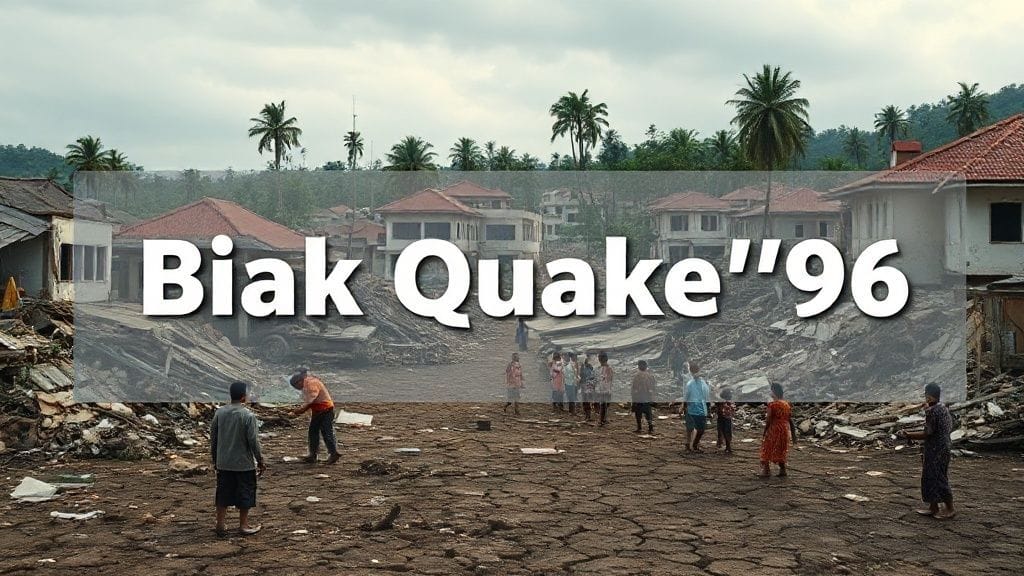
At precisely 7:35 a.m. local time, the ground beneath Biak surged violently—a magnitude 8.2 quake unleashed along a shallow but destructive fault. Buildings swayed and collapsed, roads cracked open, and the sea momentarily withdrew before roaring back in a minor tsunami, engulfing low-lying coastal zones. Power lines were severed, communication between island villages was cut, and the landscape was forever changed in the blink of an eye.
Eyewitnesses recall the terrifying seconds when the earth rolled and shook without relent. Mothers clutched their children, elders prayed to the ancestral spirits, and the collective heartbeat of Biak was suspended between fear and survival.
8. Shockwaves and Aftershocks: A Relentless Aftermath
The initial quake was only the beginning. Over the following days, a series of aftershocks—some nearly as powerful as the main tremor—continued to rock Biak. These secondary quakes magnified damage, destabilized precarious slopes, and incited widespread panic.
Aftershocks also hindered rescue and rebuilding efforts, as people faced uncertainty about returning to damaged homes or seeking shelter elsewhere. The unceasing rumble underscored nature’s unpredictable cruelty.
9. The Human Toll: Lives Torn Apart by the Invisible Fracture
Exact casualty figures are debated, but estimates indicate that hundreds lost their lives, while thousands were injured or displaced. Entire villages required evacuation; schools, churches, and marketplaces—centers of daily life—were reduced to rubble. The earthquake’s physical toll ran deep, but the emotional trauma was no less profound.
Parents mourned children, friends searched for missing loved ones, and communities faced the daunting task of collective healing. Especially poignant were the accounts of those who lost everything in a matter of moments, forced to start anew amidst ruins.
10. Emergency Response in Remote Papua: Challenges and Courage
Papua’s rugged terrain and sparse infrastructure complicated relief operations. Roads were damaged beyond use, and many remote villages were accessible only by boat or helicopter. The Indonesian government mobilized military and civil agencies to coordinate responses, but logistical hurdles were immense.
Despite these difficulties, countless local volunteers and aid workers demonstrated extraordinary dedication. The mobilization showcased humanity’s resilience and the deep communal bonds that defined Biak’s people in the face of tragedy.
11. Local Communities: Stories of Survival and Solidarity
Amid destruction emerged stories of hope and solidarity. Neighbors endured the crisis together, sharing food, shelter, and resources. Traditional leaders played vital roles in organizing relief, using indigenous knowledge to navigate the terrain and maintain social order.
These narratives illuminate the human spirit’s capacity to adapt, highlighting how cultural cohesion became a bedrock for survival during some of Biak’s darkest hours.
12. The Indonesian Government’s Crisis Management: Lessons and Limits
Indonesia’s response was a complex mixture of swift action and institutional shortcomings. While some agencies acted promptly, others grappled with inefficiencies, lack of coordination, and limited resources. The disaster exposed glaring disparities between Jakarta and remote provinces like Papua in terms of infrastructure and preparedness.
These challenges catalyzed later reforms aimed at improving Indonesia’s national disaster agency, though the road to comprehensive resilience remains ongoing.
13. International Aid Arrives: Navigating the Complexities of Disaster Relief
News of the earthquake’s devastation quickly reached the international community. Humanitarian organizations from Australia, the United States, and Southeast Asia dispatched emergency teams, supplies, and expertise. Coordination between international aid and local authorities was essential but fraught with challenges related to cultural differences, logistical obstacles, and bureaucratic red tape.
Still, this influx of global solidarity underscored the growing recognition of Indonesia’s strategic importance and vulnerability in a volatile region.
14. Geological Insights: What Biak Taught Scientists About Subduction Zones
Seismologists turned their attention to the Biak earthquake, analyzing fault slip patterns, aftershock distributions, and seismic wave propagation. The event provided critical data on the behavior of subduction zones in eastern Indonesia, a region less understood than the western parts of the archipelago.
Biak’s earthquake redefined seismic hazard models and contributed to advancements in predicting megathrust earthquakes, shaping strategies for future risk reduction.
15. The Psychological Scars: Trauma Beyond the Physical Destruction
The earthquake’s impact extended beyond physical damages to mental health. Many survivors developed post-traumatic stress disorder, grappling with nightmares, anxiety, and survivor’s guilt. Mental health support was sparse, and cultural stigmas often hindered open discussions about psychological trauma.
Nevertheless, community healing rituals and emerging local counseling initiatives began addressing these invisible wounds, recognizing emotional recovery as critical to rebuilding lives.
16. Reconstruction and Resilience: Papua’s Road back from Ruin
Rebuilding Biak was neither quick nor simple. Houses were reconstructed using new seismic-resistant techniques, schools and hospitals were rebuilt, and infrastructure gradually restored. International and national agencies worked alongside local communities to promote sustainable recovery.
More than physical rebuilding, this phase sparked a renewed dialogue on incorporating traditional knowledge with modern engineering, fostering a unique model of resilience rooted in Papua’s identity.
17. Cultural Impacts: How Traditional Societies Adapted to Catastrophe
The earthquake challenged many cultural practices tied intimately to place and environment. Ritual sites were damaged or lost; entire villages displaced; ancestral lands altered. These cultural upheavals necessitated adaptations, blending traditional wisdom with contemporary realities.
Survivors found new ways to honor heritage and memory, embedding the earthquake into oral histories, songs, and ceremonies—ensuring that Biak’s story would be passed down through generations.
18. The Earthquake’s Place in Indonesian History: Remembering Biak 1996
Although less internationally known than other Indonesian earthquakes, the Biak disaster remains an essential chapter in the nation’s seismic history. It serves as a somber reminder of the vulnerability faced by peripheral regions and the need for inclusive disaster policies that consider cultural context.
In commemorations, survivors and officials alike reflect on the delicate relationship between humans and the powerful earth beneath their feet.
19. Advances in Seismology Following the Biak Event
The 1996 earthquake catalyzed investments in seismic monitoring technology across eastern Indonesia. New seismographs, GPS stations, and early warning systems were gradually installed, staffed by growing numbers of Indonesian geoscientists.
Research stemming from Biak’s data enhanced understanding of complex plate boundaries worldwide, contributing to a global effort to mitigate earthquake risks.
20. From Ruin to Awareness: Building a More Prepared Papua
The memory of Biak’s earthquake instilled a heightened awareness across Papua. Schools incorporated disaster education; local governments developed evacuation plans; community workshops trained residents in first aid and emergency responses.
Though challenges persist, the lessons learned fostered a growing culture of preparedness, honoring the past while safeguarding the future.
21. Environmental Consequences: The Earthquake’s Mark on Biak’s Ecosystem
Nature, too, bore the scars of the quake. Landslides scarred deforested slopes, coral reefs near the shore suffered damage from seismic-induced waves, and freshwater sources became polluted. The earthquake’s impact rippled through the island’s delicate ecosystems, affecting biodiversity and local livelihoods dependent on fishing and agriculture.
Recovery efforts included environmental restoration initiatives aimed at healing the land alongside the people.
22. The Ripple Effect: Influence on Regional Disaster Policies
Biak’s earthquake underscored the necessity for Indonesia’s government to craft cohesive regional disaster response frameworks that accounted for island geography and cultural diversity. Policies evolved to integrate local leaders more effectively, emphasize community-based preparedness, and improve infrastructure in vulnerable areas.
Its legacy is felt in contemporary disaster risk management across the Pacific and Southeast Asia.
23. Contemporary Perspectives: Biak in Memory and Media
Today, Biak’s 1996 earthquake features in documentaries, local museums, and academic studies. Survivors continue to share their stories, ensuring that new generations comprehend the event’s magnitude and lessons.
Media portrayals have evolved from immediate tragedy coverage to deeper reflections on resilience, identity, and humanity’s place within an ever-shifting earth.
24. Conclusion: Echoes of the Tremor That Shaped Lives and Land
The Biak earthquake was more than a geological event; it was a profound human tragedy that reshaped not only land but also lives, culture, and consciousness. From the trembling earth emerged stories of loss, courage, and hope—a vivid reminder that beneath seeming stability sits a restless earth capable of both destruction and renewal.
As Indonesia and the world continue to navigate the challenges of living with nature’s immense forces, Biak 1996 stands as a testament to resilience and the enduring bonds between people and place.
Conclusion
The story of the 1996 Biak earthquake weaves together the raw power of natural forces and the complex resilience of human societies. It vividly captures the fragility of existence on a restless planet and the indefatigable spirit of a community that refused to be broken. Through the devastation emerged lessons in preparedness, cultural adaptation, and scientific discovery, echoing far beyond the remote shores of Papua.
The earthquake challenged generations to rebuild not only physical structures but also the intangible threads of identity and memory. It stands as a solemn but hopeful monument to human endurance amid nature’s relentless upheaval.
FAQs
Q1: What caused the Biak earthquake of February 17, 1996?
The earthquake was triggered by tectonic activity along a thrust fault near the boundary of the Australian and Pacific plates beneath Biak Island. The subduction and collision of these plates created accumulated stress that eventually released in a powerful seismic event.
Q2: How severe was the damage caused by the Biak earthquake?
The quake, measuring approximately magnitude 8.2, caused widespread destruction including collapsed homes, damaged infrastructure, and casualties. Hundreds died, thousands were injured or displaced, and several villages were severely affected.
Q3: How did local communities respond to the earthquake?
Despite limited external aid initially, local communities demonstrated remarkable solidarity, sharing resources and shelter. Traditional leaders coordinated relief efforts, relying on indigenous knowledge and communal cooperation for survival.
Q4: What challenges did emergency responders face?
Biak’s remote location, rugged terrain, and damaged infrastructure hampered rescue and relief operations. Communication breakdowns and logistical difficulties delayed aid reaching isolated villages.
Q5: What impact did the Biak earthquake have on Indonesian disaster policies?
The event highlighted deficiencies in preparedness and response, especially in remote regions. It spurred reforms focusing on disaster education, improved infrastructure, early warning systems, and stronger community involvement.
Q6: How did the earthquake affect the environment of Biak?
Besides physical damage to buildings and land, the earthquake caused landslides, coral reef damage, and pollution of freshwater systems, affecting the island’s ecosystems and local livelihoods dependent on natural resources.
Q7: Is the Biak earthquake remembered in Indonesian history?
While less internationally known than other Indonesian earthquakes, Biak's 1996 disaster remains a significant event in the nation's history, remembered for its human toll and lessons in resilience and preparedness.
Q8: What scientific knowledge was gained from the Biak earthquake?
The event provided valuable data on the behavior of complex subduction zones in eastern Indonesia, enhancing seismic risk models and contributing to global seismological understanding.