Table of Contents
- The Sudden Shudder: A Prelude to Disaster
- Shadows on the Pacific: Japan’s Vulnerability to Earthquakes
- Setting the Stage: The Geological Tensions Beneath Tokachi-Oki
- The Morning of September 26, 2003: Awakening of the Earth
- The Earthquake’s Raw Power: Magnitude and Immediate Impact
- Cascading Waves: The Tsunami Warning and Coastal Evacuations
- The Human Toll: Stories of Survival and Loss
- Infrastructure on Trial: Damage to Roads, Bridges, and Buildings
- The Response Mobilized: Government and Community Action
- The Aftershocks: Lingering Tremors and Uncertainty
- Scientific Revelations: What the Tokachi-Oki Earthquake Taught Seismologists
- Media Coverage: Witnessing the Disaster From Afar
- Economic Repercussions: Short and Long-Term Effects on the Region
- Cultural Resonance: How the Earthquake Shaped Local Memory
- Japan’s Resilience Tested: Lessons in Preparedness and Recovery
- International Aid and Collaboration: A Global Response to a Local Tragedy
- The Technological Edge: Advances in Early Warning Systems Post-2003
- Environmental Consequences: Changes to the Landscape and Ecosystems
- The Psychological Fallout: Trauma, Grief, and Community Healing
- Comparative Analysis: The Tokachi-Oki Earthquake Among Japan’s Seismic Events
- The Legacy of Tokachi-Oki: Building a Safer Future
- Conclusion: Remembering September 26, 2003—A Story of Earth and Humanity
- FAQs
- External Resource
- Internal Link
1. The Sudden Shudder: A Prelude to Disaster
On the dawn of September 26, 2003, beneath the peaceful skies of northern Japan, the earth began to writhe unseen—a deep, high-pressure growl rumbling through the tectonic plates. Then, in a relentless, unforgiving moment, the ground convulsed, raising shockwaves that would be etched in the memories of many. The Tokachi-Oki Earthquake was not merely a seismic event; it was nature's brutal reminder of the fragility of human existence against the planet’s restless crust. This story begins in the eerie silence before the roar, the calm just before the chaos.
2. Shadows on the Pacific: Japan’s Vulnerability to Earthquakes
Japan sits on the meeting point of four major tectonic plates—the Pacific, North American, Eurasian, and Philippine Sea plates—a volatile intersection that has made it one of the most earthquake-prone regions in the world. This unique geological positioning means that seismic tremors, both minor and catastrophic, writhe beneath its surface with poignant regularity. Yet, despite—and because of—this constant threat, Japan evolved a society notable for its scientific curiosity, engineering innovations, and social preparedness.
The Tokachi-Oki region, located off the northeastern coast of Hokkaido, was regularly shaken by minor quakes, but the risks that lurked beneath the ocean floor were not fully comprehended by the public. This area’s seismological history was a tapestry embroidered with violent episodes yet underscored by periods of deceptive tranquility.
3. Setting the Stage: The Geological Tensions Beneath Tokachi-Oki
The Tokachi-Oki Earthquake emerged at the edge of the Pacific “Ring of Fire,” where the Pacific Plate subducts beneath the North American Plate. This subduction zone is notorious for generating powerful thrust earthquakes, often accompanied by tsunamis—deadly, fast-moving walls of water generated by undersea seismic movements.
In the months leading up to this event, minor tremors hinted at mounting geological stress along the plate boundary. Earth scientists monitored subtle shifts in seismic patterns, but predicting the exact scale and timing of the impending quake remained elusive.
4. The Morning of September 26, 2003: Awakening of the Earth
Early on that September morning, at precisely 05:50 local time, the enormous plates shifted abruptly, unleashing a magnitude 8.3 earthquake beneath the ocean floor near Tokachi-Oki. The rupture was swift but far-reaching, radiating energy across vast distances, shaking the land and rattling the nerves of everyone within hundreds of kilometers.
Residents in Hokkaido, northern Honshu, and even parts of Russia’s Sakhalin reported violent shaking. For some, it was a moment of terror; for others, an abrupt awakening from sleep. The intensity of the tremors was such that it shattered windows, swayed buildings, and sent workers scrambling to safety.
5. The Earthquake’s Raw Power: Magnitude and Immediate Impact
A magnitude 8.3 quake ranks among the most formidable seismic events on record. To grasp its tremendous energy, imagine the detonation of over 15,000 Hiroshima-sized atomic bombs—all unleashed in the span of minutes beneath the cold waters of the Pacific Ocean. The shock was not confined to Japan; seismographs around the globe registered the disturbance.
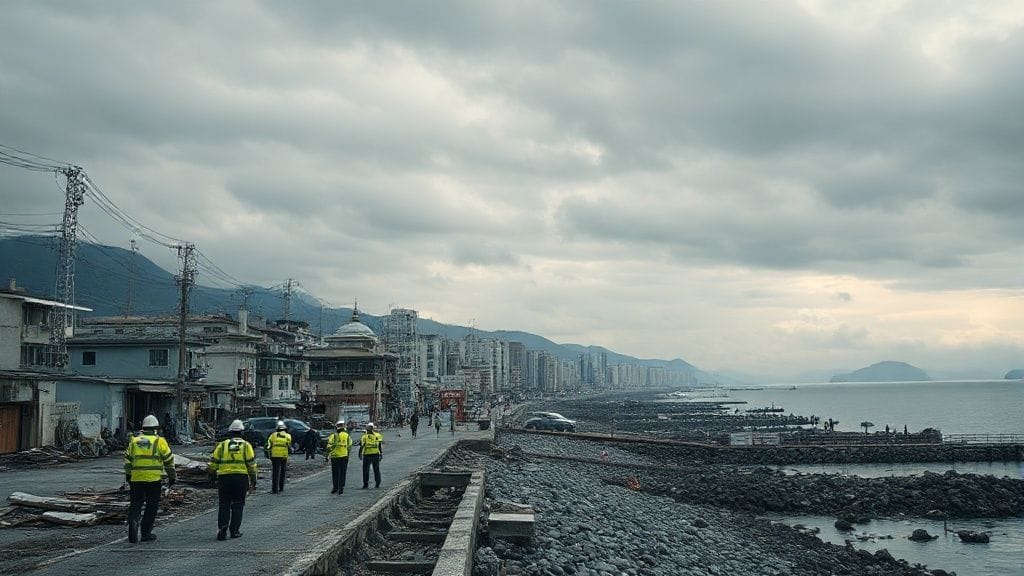
Locally, the quake’s force caused serious damage. Structures engineered for seismic resistance were tested, while older buildings bore the brunt of the shaking. Power outages rippled through urban and rural zones, communication lines faltered, and roads buckled. Yet, the bracing effect of Japan’s stringent building codes mitigated what could have been far graver destruction.
6. Cascading Waves: The Tsunami Warning and Coastal Evacuations
Almost immediately after the quake, the Japanese Meteorological Agency issued tsunami warnings, a surge of calculated urgency sweeping over coastal towns. Communities along the eastern shores of Hokkaido and Aomori prefectures heard the sirens and felt their world tipping into an invisible threat.
Fortunately, the tsunami generated was relatively small compared to some historic precedents, with waves measuring up to 4 meters in height. Still, the water swept across beaches and low-lying areas, destroying docks, flooding homes, and claiming lives. In some areas, the warnings and quick evacuation saved countless people from drowning.
7. The Human Toll: Stories of Survival and Loss
Behind every number in a disaster lies a human story. The Tokachi-Oki earthquake silenced some voices forever, deprived families of loved ones, and left countless others sifting through the rubble of their lives. Anecdotes of bravery emerged—of neighbors aiding neighbors, of emergency workers racing through the quake’s destruction to deliver aid.
A fisherman in Hokkaido recalled how the ocean pulled back suddenly before crashing in furious waves, giving him mere seconds to reach higher ground. An elderly couple, trapped in their home, were rescued by firefighters who braved aftershocks to find them amid the ruins. These moments capture a profound truth—amid catastrophe, resilience and solidarity bloom.
8. Infrastructure on Trial: Damage to Roads, Bridges, and Buildings
The earthquake's violent energy tested the very framework of northern Japan’s infrastructure. Bridges that once symbolized progress were twisted or cracked, highways buckled, and rail lines distorted. The Shinkansen—the high-speed rail network—suffered service interruptions as engineers inspected for potential railbed shifts.
Hospitals, schools, and essential facilities underwent inspections to ensure safety before reopening. The regional power grid, reliant on combination of hydroelectric and thermal plants, faced temporary blackouts affecting thousands. Utilities scrambled to restore normalcy as earthquakes notoriously expose vulnerabilities in modern infrastructure.
9. The Response Mobilized: Government and Community Action
Japan’s government swiftly activated disaster response protocols, deploying Self-Defense Forces, emergency responders, and disaster relief teams to the affected regions. Cooperation between national agencies and local municipalities was critical in orchestrating relief camps, medical support, and food distribution.
While Japan's preparedness prevented greater tragedy, the scale of the event challenged response capacities. Still, the efficiency, transparency, and discipline of both official agencies and volunteer efforts produced a blueprint for confronting future disasters.
10. The Aftershocks: Lingering Tremors and Uncertainty
Earthquakes of this magnitude are often followed by a series of aftershocks—smaller, though sometimes powerful quakes that sustain fear and uncertainty. After Tokachi-Oki, thousands of tremors rippled through the region in the subsequent weeks.
Each aftershock was a reminder: the earth was still restless. Seismic activity hampered reconstruction and tested the nerves of residents and responders alike, prolonging the trauma but also deepening community bonds.
11. Scientific Revelations: What the Tokachi-Oki Earthquake Taught Seismologists
Beyond the immediate damages, the 2003 Tokachi-Oki earthquake became a critical case study in seismology. Researchers analyzed the rupture process, slip distribution, and tsunami generation patterns, refining models used for predicting future quakes.
Dr. Katsuyuki Abe, a leading seismologist, remarked at a symposium later: "This earthquake revealed the complex mechanics of interplate thrust events—we learned how energy does not release uniformly, opening new frontiers for monitoring and risk assessment."
12. Media Coverage: Witnessing the Disaster From Afar
Television networks, newspapers, and digital platforms relayed images and stories of the earthquake worldwide. Graphic footage of shaking buildings, rising tsunami waves, and community efforts captured the imagination and sympathy of global audiences.
Media narratives highlighted not only destruction but also human courage, the role of science, and Japan’s enduring spirit. The event spurred international interest in earthquake preparedness and environmental hazards.
13. Economic Repercussions: Short and Long-Term Effects on the Region
While the Tokachi-Oki earthquake did not cause the catastrophic economic damage seen in other mega-quakes, the disruption to industries, agriculture, and fisheries was palpable. Coastal towns dependent on fish harvests saw damage to port facilities, delaying export schedules.
Tourism in affected areas waned temporarily but gradually bounced back, fueled by Japan’s reputation for recovery and safety. Insurance claims, reconstruction costs, and infrastructure upgrades injected both challenges and opportunities into local economies.
14. Cultural Resonance: How the Earthquake Shaped Local Memory
In the months and years following, the earthquake’s impression seeped into cultural expressions—poetry, local festivals, and commemorative monuments arose as collective catharsis. Survivors gathered annually to honor those lost and to affirm life despite adversity.
Museums integrated earthquake exhibits, educating new generations. Schools incorporated lessons on resilience, preparedness, and the intimate relationship between humans and nature’s formidable forces.
15. Japan’s Resilience Tested: Lessons in Preparedness and Recovery
Japan’s experience with the Tokachi-Oki earthquake reaffirmed its status as a global leader in disaster resilience. The event prompted reviews of early-warning systems, building codes, and community evacuation protocols.
Efforts intensified to integrate advanced seismic sensors and tsunami modeling into national safety strategies, underscoring humanity’s determination to coexist with an unpredictable planet.
16. International Aid and Collaboration: A Global Response to a Local Tragedy
Although Japan managed most recovery efforts domestically, international communities offered solidarity, scientific exchange, and technical support. Experts from around the world shared data and collaborated on earthquake research forums, strengthening global seismic knowledge networks.
The collaborative spirit displayed during this crisis framed a modern paradigm: disasters cross borders not only in impacts but in lessons and human empathy.
17. The Technological Edge: Advances in Early Warning Systems Post-2003
In the aftermath, Japan accelerated the development of sophisticated early warning systems designed to provide seconds to minutes of notice before shaking begins. These systems leverage thousands of sensors to issue rapid alerts via broadcasts, phones, and public address systems.
The Tokachi-Oki event was a catalyst that pushed technological innovation, potentially saving thousands of lives in future quakes.
18. Environmental Consequences: Changes to the Landscape and Ecosystems
Earthquakes beneath the ocean floor often reshape seabeds, alter sediment patterns, and trigger underwater landslides. The Tokachi-Oki quake was no exception—scientific surveys charted changed bathymetry and disturbed marine habitats.
On land, shifts in fault lines caused subtle topographical changes, influencing rivers and forest ecosystems. While nature adapts, these environmental effects form layers in the disaster’s enduring legacy.
19. The Psychological Fallout: Trauma, Grief, and Community Healing
Beyond the physical damages lie invisible wounds—psychological scars borne by survivors. Anxiety, insomnia, and post-traumatic stress disorder emerged in many affected individuals and families.
Community centers and mental health services mobilized to provide counseling and support groups, fostering resilience not only in infrastructure but in human spirit.
20. Comparative Analysis: The Tokachi-Oki Earthquake Among Japan’s Seismic Events
Tokachi-Oki stands among Japan’s significant quakes but is often overshadowed by the 2011 Tōhoku disaster. Still, its lessons echo loudly in seismic science and disaster management.
Compared to earlier events, Tokachi-Oki highlighted modern Japan’s progress and remaining vulnerabilities, reminding that even the best-prepared are vulnerable to nature’s will.
21. The Legacy of Tokachi-Oki: Building a Safer Future
Seventeen years later, the earthquake’s imprints guide policy, technology, and social consciousness. It shifted paradigms of risk communication, ensuring that no tremor is ignored and every community is as ready as possible.
From structural reinforcements to public education campaigns, Tokachi-Oki spurred a movement towards safety that reverberates well beyond northern Japan’s coasts.
Conclusion
The Tokachi-Oki Earthquake of September 26, 2003, was more than a seismic event; it was a crucible in which science, society, and human spirit coalesced under pressure. From the trembling ocean floor rose lessons about the delicate balance between nature’s immense power and human resilience.
The story of Tokachi-Oki is a story about awakening—to the earth’s unpredictable heartbeat and to the indomitable will of communities forged through shared hardship. While tragedy marked that day, hope and knowledge rose even stronger—testaments to Japan’s timeless dance with the earth beneath.
FAQs
Q1: What caused the Tokachi-Oki Earthquake in 2003?
A: The earthquake was caused by the sudden release of stress along the subduction zone where the Pacific Plate slides beneath the North American Plate near Hokkaido’s coast.
Q2: How strong was the Tokachi-Oki Earthquake?
A: It registered a magnitude of 8.3, making it one of the most powerful earthquakes recorded in Japan in recent decades.
Q3: Was there a tsunami following the earthquake?
A: Yes, a tsunami was generated with waves reaching up to 4 meters, which caused flooding and damage along parts of the Hokkaido coast.
Q4: How did the Japanese government respond to the disaster?
A: Japan quickly mobilized emergency responders and disaster management protocols, including evacuations, rescue operations, and infrastructure assessments.
Q5: What scientific advances resulted from the Tokachi-Oki Earthquake?
A: The event led to improved seismic monitoring, better understanding of subduction earthquake mechanics, and accelerated development of early warning systems.
Q6: How did the earthquake affect local communities culturally?
A: The quake inspired memorials, educational programs, and cultural expressions centered around resilience, loss, and preparedness.
Q7: How does Tokachi-Oki compare to other significant Japanese earthquakes?
A: Although less devastating than the 2011 Tōhoku earthquake, Tokachi-Oki was still a major seismic event that provided crucial lessons in disaster preparedness.
Q8: Is Japan safer today because of the lessons learned from the Tokachi-Oki Earthquake?
A: Yes, Japan’s advancements in building codes, early warning technology, and emergency response owe much to experiences like Tokachi-Oki.