Table of Contents
- The Dawn Shattered: Inangahua on May 24, 1968
- Unveiling the Land of Fire and Faults: New Zealand’s Geological Tension
- The Quiet Before the Quake: Inangahua’s Rural Routine
- A Sudden Jolt: The Earthquake Strikes at Dawn
- Initial Aftershocks and the Ring of Fear
- The Immediate Human Toll: Lives Interrupted and Lost
- Rescue Missions Amidst the Rubble: Courage in Chaos
- Infrastructure Collapsed: Roads, Railways, and Communication Lines Severed
- The Role of Community Solidarity: A Tale of Hope and Resilience
- Governmental and Military Intervention: Emergency Responses Mobilized
- Scientific Insight: Seismologists Decoding the Rupture
- The Psychological Impact: Trauma in a Small Town
- Media Coverage and Public Awareness: Shining a Light on the Disaster
- Rebuilding Lives and Infrastructure: The Long Road to Recovery
- Economic Repercussions in the West Coast Region
- Lessons Learned: Changes in Building Codes and Disaster Preparedness
- The Inangahua Earthquake in New Zealand’s Seismic History
- Commemoration and Memory: Honoring Trauma and Triumph
- Comparing Inangahua to Global Earthquake Events of the 20th Century
- The Legacy Today: How 1968 Shaped New Zealand’s Earthquake Resilience
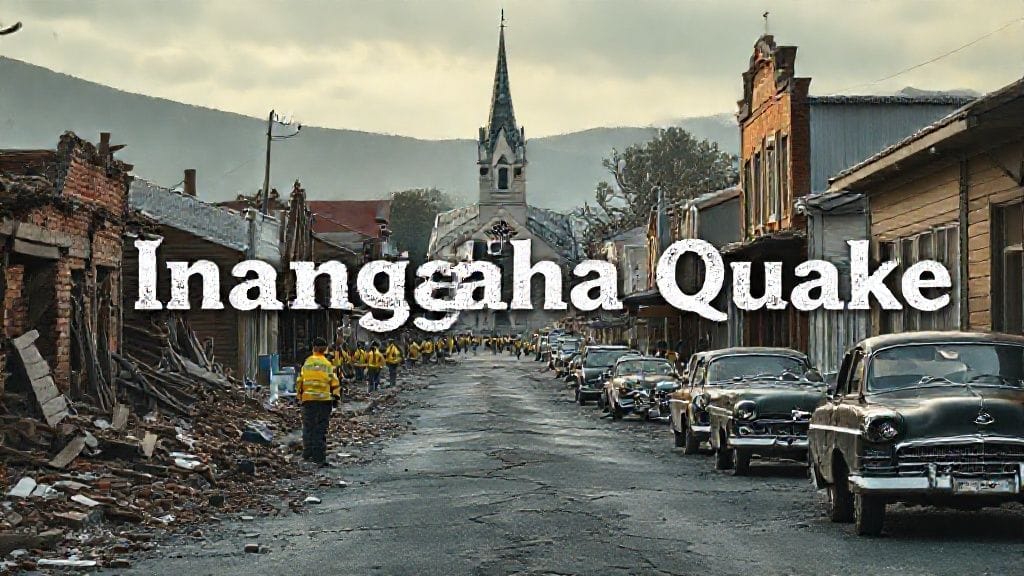
On the morning of May 24, 1968, as the first light seeped softly over New Zealand’s rugged West Coast, the fragile tranquillity of a tiny town called Inangahua was shattered in an instant. The earth roared and twisted beneath the feet of its inhabitants, ripping open the ground and tossing cars and homes alike into a chaotic dance of destruction. The Inangahua earthquake had dawned—a cataclysm that would not only physically fracture this remote community but leave an indelible mark on the nation’s consciousness.
The Dawn Shattered: Inangahua on May 24, 1968
Inangahua Junction was a dot on the map surrounded by dense forests and rough mountain terrain, far removed from the bustling cities of New Zealand’s North and South Islands. On that fateful Friday morning, just before 6 am, the calm was abruptly broken. Locals awoke to violent tremors that rolled through the earth with a ferocity few in the country had ever experienced.
The quake measured 7.1 on the Richter scale—a powerful force unleashed when the Pacific and Australian tectonic plates violently shifted against each other along the complex fault lines slicing through the region. Buildings crumbled like sandcastles under the shaking ground. Amid the chaos, an eerie silence descended—only to be replaced moments later by the screams and cries of those left trapped beneath collapsed homes.
This was no ordinary earthquake. It was a stark reminder of the raw power lurking beneath New Zealand’s picturesque landscapes.
Unveiling the Land of Fire and Faults: New Zealand’s Geological Tension
New Zealand sits astride the fiery boundary between the Pacific and Australian plates. This geological seam has sculpted some of Earth’s most dramatic terrains—towering mountains, steamy geysers, and restless volcanoes. But it also creates a tinderbox of seismic volatility.
The West Coast, where Inangahua lies, is especially vulnerable. It’s a region riddled with faults, including the mighty Alpine Fault—the country’s most significant geological scar, capable of producing massive earthquakes. The plates’ constant grinding creates underground stresses, which periodically release in sudden, violent jolts.
By 1968, scientists had a grasp on these seismic risks but remained uncertain about when or where the next major quake would strike. For Inangahua, tucked away in this shadowy fault zone, the earthquake was a cruel awakening.
The Quiet Before the Quake: Inangahua’s Rural Routine
On the morning of May 24, Inangahua residents were going about their simple lives—farmers tending livestock, miners preparing for the day’s work, and families stirring to meet the demands of small-town life. The quiet was typical, a calm underscored by the hum of nature and the occasional rumble of trains moving coal from nearby mines.
Few anticipated the earth itself would soon betray their sense of safety. The town’s modest homes, wooden and brick structures alike, were not designed to withstand significant seismic shocks. Roads snaked through the valley, bridging streams and creeks, and the railway was a lifeline connecting remote communities.
As dawn turned slowly toward daybreak, a restless calm hung in the air. Some say animals sensed the tremors before humans did; birds fell silent and dogs whimpered anxiously.
A Sudden Jolt: The Earthquake Strikes at Dawn
At exactly 5:24 am local time, the earth beneath Inangahua convulsed with overwhelming force. The quake lasted less than a minute, yet within that fleeting moment, everything changed. Residents described a nightmare of shaking walls, flying debris, and the terrifying sensation of being caught in nature’s grip.
Some were thrown from beds; others were trapped by fallen ceilings. The ground split open, swallowing vehicles and creating new chasms where fields had once been flat. Bridges cracked and rails buckled.
One miner, later recalling the event, said, “It felt like the world was being torn apart. You knew it was no ordinary shake. It was the earth’s fury laid bare.”
Initial Aftershocks and the Ring of Fear
The main shock was soon followed by a series of aftershocks—dozens of smaller, but still frightening tremors that kept the population on edge for days. Each aftershock reignited panic, knowing that further damage or collapses could come at any moment.
These subsequent shakes complicated rescue efforts and prevented many from returning safely to damaged homes. Fear permeated the air; families huddled together in makeshift shelters, uncertain if their precarious refuges would hold.
It was a visceral test of human endurance.
The Immediate Human Toll: Lives Interrupted and Lost
The official death toll from the Inangahua earthquake was three, but the human toll extended beyond fatalities. Scores suffered injuries ranging from minor bruises to serious fractures.
Many lost everything—homes, possessions, livelihoods—all in a matter of seconds. The emotional devastation was profound as well; longstanding community ties were strained under the shock and uncertainty.
Yet, even amid grief, stories of survival emerged. One couple was pulled alive from a collapsed house six hours after the quake. Their rescue underscored the urgency of organized response in a landscape now rendered treacherous.
Rescue Missions Amidst the Rubble: Courage in Chaos
The remoteness of Inangahua dramatically challenged rescue efforts. Many roads were impassable due to landslides and structural damage, and communication lines were severed. Emergency responders, local volunteers, and the New Zealand Army mobilized quickly, traveling over treacherous terrain to reach trapped victims.
Helicopters flew through thick fog, and men and women clawed through mud, debris, and collapsed timber to uncover survivors. The operation was as much about bravery as it was about strategy—each life recovered a victory against overwhelming odds.
Locals worked hand-in-hand with authorities, exemplifying a communal spirit that would define the region’s recovery.
Infrastructure Collapsed: Roads, Railways, and Communication Lines Severed
The quake’s physical damage was immense. The railway line, vital for coal transport, suffered extensive fractures. Roads twisted and fell victim to landslides, effectively isolating the community.
Communication was disrupted as telephone lines snapped, cutting off immediate contact with emergency services. Power failures darkened the region, prolonging the crisis.
For Inangahua and surrounding settlements, the disaster was a crippling blow. Restoring basic infrastructure became a priority, yet the rugged landscape hindered swift progress.
The Role of Community Solidarity: A Tale of Hope and Resilience
What stands out in the narrative of the Inangahua earthquake is the remarkable solidarity among its residents. Neighbors opened their doors to one another, sharing food, warmth, and shelter. Farmers used their trucks and horses to ferry the injured and deliver supplies.
This selfless cooperation provided not only practical support but emotional solace—an affirmation that in the depths of despair, human kindness endures.
In the words of a local teacher, “We were broken, but we were not beaten. Together, we would rebuild.”
Governmental and Military Intervention: Emergency Responses Mobilized
Recognizing the disaster’s scale, the New Zealand government activated emergency protocols. The Defense Force dispatched troops to assist in search and rescue, road clearance, and the establishment of temporary shelters.
Civilian agencies coordinated relief efforts, mobilizing resources for medical aid, food distribution, and infrastructure repair. The coordinated response, though hampered by logistical obstacles, reflected the country’s commitment to aiding its citizens in crisis.
International aid was not required; New Zealanders took pride in their self-reliance, yet welcomed the solidarity of the nation as a whole.
Scientific Insight: Seismologists Decoding the Rupture
Seismologists regarded the Inangahua earthquake as a wealth of data that deepened understanding of New Zealand’s seismic activity. The event highlighted the potential severity of the Alpine Fault and other regional faults.
Instrumental recordings and field studies revealed the quake’s mechanics—how the rupture propagated over tens of kilometers and the complex interplay of aftershocks. The findings spurred renewed efforts to monitor seismicity across the country more comprehensively.
“…This event was pivotal in shifting New Zealand’s approach to earthquake science,” wrote a leading geologist decades later.
The Psychological Impact: Trauma in a Small Town
Beyond physical destruction lay the silent scars of trauma. Survivors wrestled with anxiety and the fear of recurrence. Some reported sleepless nights haunted by memories of shattered glass and crashing walls.
This psychological toll was a reminder that natural disasters imprint wounds not easily visible or healed. Mental health services were sparse in rural areas, compounding the challenge.
Yet, community support groups and local churches stepped in to provide comfort and counseling, underscoring the importance of addressing human needs holistically in disaster aftermaths.
Media Coverage and Public Awareness: Shining a Light on the Disaster
For the wider New Zealand public, news of the Inangahua earthquake soon spread through radio and newspapers. Journalists traveled to the scene, capturing evocative images of devastation and resilience.
The coverage raised awareness about the region’s seismic risks and the urgent need for preparedness. It also sparked public debate on investing in safer infrastructure and emergency planning.
In some ways, the earthquake brought the distant fault lines and geological precariousness into sharp national focus.
Rebuilding Lives and Infrastructure: The Long Road to Recovery
The reconstruction of Inangahua was painstaking and slow. Damaged homes were repaired or replaced; roads and railways painstakingly restored. The process took months and demanded significant resources.
Many residents faced difficult choices—whether to rebuild in the hazard zone or start anew elsewhere. Yet, the enduring attachment to place and community drew most back.
The rebuilding phase became a testament to human perseverance—and also a catalyst for modernizing construction standards in seismic zones.
Economic Repercussions in the West Coast Region
The region’s economy, heavily dependent on mining and forestry, faced serious disruptions. Damaged transport links slowed coal exports, while uncertainty hampered investment.
Small businesses struggled under the weight of losses and reconstruction costs. Nonetheless, the resilience of local industries and government support helped the economy gradually regain footing.
The disaster also galvanized discussions on diversifying the West Coast’s economic base to reduce future vulnerability.
Lessons Learned: Changes in Building Codes and Disaster Preparedness
Perhaps the most lasting legacy of the Inangahua earthquake was its influence on building regulations and emergency planning. Engineers and policymakers scrutinized the failures that led to buildings crumbling.
New Zealand adopted stricter seismic design standards for homes and infrastructure, promoting safer construction practices nationwide. Disaster preparedness programs, including community education on earthquake response, were expanded.
The event underscored the unpredictable but inevitable nature of earthquakes in New Zealand—and the vital importance of readiness.
The Inangahua Earthquake in New Zealand’s Seismic History
While not the deadliest or most devastating quake in New Zealand’s history, the Inangahua event holds a particular place. It vividly demonstrated the Alpine Fault’s capacity for destruction and shaped the nation’s seismic consciousness.
Future earthquakes, like the 2010 Canterbury and 2016 Kaikoura events, built upon lessons learned in 1968. The Inangahua quake marked the beginning of a modern era in New Zealand’s approach to earthquake risk.
Commemoration and Memory: Honoring Trauma and Triumph
Inangahua today remembers the earthquake with quiet reverence. Memorial stones and markers honor those lost and the community’s brave response.
Every year, local gatherings recall the disaster, affirming collective memory and the importance of vigilance. These acts of remembrance serve as both tribute and warning—a story passed through generations.
Comparing Inangahua to Global Earthquake Events of the 20th Century
Globally, the 1968 Inangahua quake may seem modest compared to catastrophic events like the 1976 Tangshan quake or the 1964 Alaska earthquake. Yet its impact in a remote community resonates powerfully.
It underscores that seismic disasters’ human cost is not only a function of magnitude but also of preparedness, geography, and social fabric. Inangahua’s story adds a nuanced chapter to the global narrative of resilience in the face of nature’s fury.
The Legacy Today: How 1968 Shaped New Zealand’s Earthquake Resilience
Fifty-plus years on, the lessons of that early dawn endure in New Zealand’s national psyche. Emergency systems are more robust, construction more resilient, and communities better equipped.
The Inangahua earthquake stands as a reminder—not just of destruction but of human tenacity and the capacity to learn and adapt. It anchored a resolve to coexist with a restless earth, bridging past tragedy with ongoing hope.
Conclusion
The Inangahua earthquake of May 24, 1968, is far more than a historical fact or a seismic data point—it is an intense human story, etched into the soil and souls of a small New Zealand community. From those harrowing first moments when the earth tore itself apart, to the slow, determined efforts of recovery and renewal, this event reveals the raw intersection of nature’s power and human spirit.
It reminds us that beneath every shattering disaster lies not just ruin but the enduring capacity for courage, unity, and reconstruction. Inangahua’s experience continues to inform not only engineers and scientists but also the collective consciousness—an ongoing narrative of vulnerability and strength, loss and hope.
This is why remembering the Inangahua earthquake matters: it connects us all to the subtle, relentless forces shaping our world and to the indomitable will within us to face them, together.
FAQs
Q1: What caused the Inangahua earthquake of 1968?
A: The earthquake was caused by a sudden rupture along the complex fault lines where the Pacific and Australian tectonic plates meet beneath New Zealand’s South Island, particularly around the Alpine Fault area.
Q2: How strong was the earthquake, and what was its magnitude?
A: The Inangahua earthquake had a magnitude of 7.1 on the Richter scale, classifying it as a major seismic event capable of causing widespread damage.
Q3: How many people were killed or injured during the earthquake?
A: Officially, three people died in the earthquake, and many others were injured. However, the emotional and psychological impact was felt throughout the community.
Q4: What were the main challenges in the rescue and recovery efforts?
A: The remote location, landslides, destroyed infrastructure, and communication breakdowns made rescue efforts difficult. Weather and terrain further complicated access for emergency teams.
Q5: How did the earthquake influence New Zealand’s approach to disaster preparedness?
A: It led to stricter building codes for seismic resilience, increased scientific monitoring of faults, and more comprehensive emergency planning and community education programs.
Q6: In what ways is the Inangahua earthquake remembered today?
A: Through memorials, annual local commemorations, and its place in New Zealand’s seismic history, serving as a lesson and symbol of community resilience.
Q7: How does the Inangahua earthquake compare to other earthquakes in New Zealand’s history?
A: While significant, it was smaller in death toll and damage than quakes like Christchurch in 2011 but remains a key moment for raising awareness and advancing preparedness.
Q8: What role did local communities play in the aftermath of the earthquake?
A: Local residents were crucial in initial rescues, providing shelter, and rebuilding, demonstrating solidarity and communal strength.