Table of Contents
- A Tremor in the Dawn: The Christchurch Earthquake of June 1869
- Setting the Stage: Christchurch in the Mid-19th Century
- Science and Seismic Understanding Before the Quake
- The Morning Shakes: Initial Moments of the Earthquake
- The Unfolding Chaos: Immediate Impact on the City and Its People
- The Geography of Destruction: Which Neighborhoods Fell First
- Voices from the Ground: Eyewitness Accounts and Personal Stories
- The Social Fabric Tested: Community Response and Solidarity
- Infrastructure Collapses and Architectural Lessons Learned
- The Role of the Press: Newspapers in the Aftermath
- Government Action: Aid, Reconstruction, and Policy Changes
- Economic Shockwaves: The Earthquake’s Impact on Christchurch’s Growth
- The Indigenous Perspective: Māori Experiences and Narratives
- Scientific Advances Spurred by the Disaster
- Memory and Myth: How the 1869 Earthquake Entered Local Lore
- Comparing 1869 to Later New Zealand Earthquakes: A Historical Continuum
- Christchurch’s Resilience: A City Reborn from the Rubble
- Cultural Reflections: Art, Literature, and Commemorations
- Lessons Learned: Earthquake Preparedness in New Zealand
- The Earthquake’s Place in Global Seismic History
- Conclusion: The Enduring Legacy of the 1869 Christchurch Quake
- FAQs: Understanding the Earthquake and Its Impact
- External Resource
- Internal Link
1. A Tremor in the Dawn: The Christchurch Earthquake of June 1869
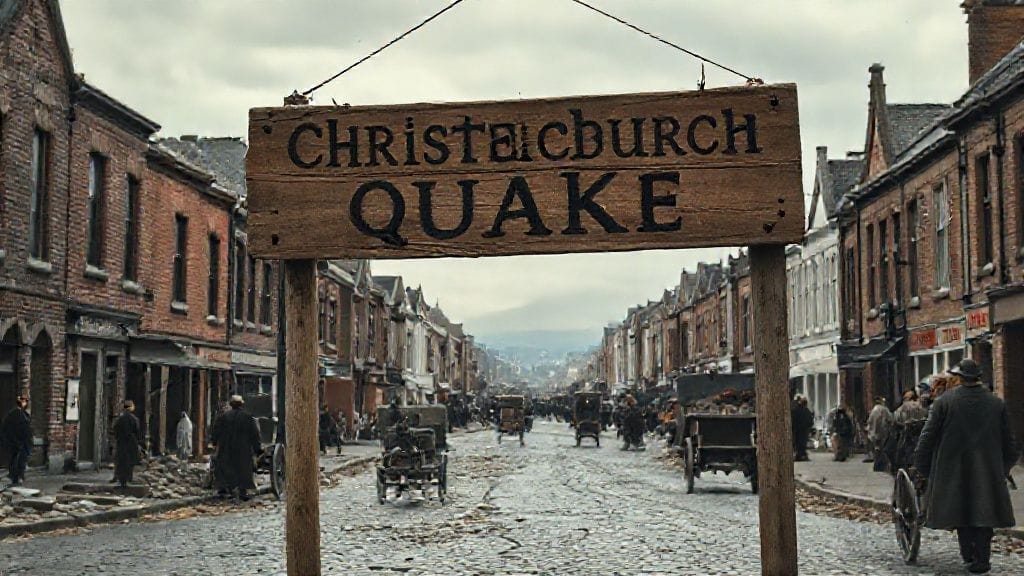
On the chilly morning of June 5th, 1869, as the first light filtered gently over the cobblestone streets of Christchurch, an invisible force beneath the earth began to stir with unrelenting energy. Without warning, a violent shudder rattled the burgeoning city—a shockwave born deep from the bowels of the New Zealand land itself. The moment stretched infinitely in time; the ground groaned, buildings trembled, and terrified voices filled the cold air.
It was a day etched forever in the memory of Christchurch’s early settlers. The 1869 earthquake, though not the largest in New Zealand’s seismic history, struck a raw chord in a young community whose very foundations—literal and metaphorical—were tested in that fleeting, terrifying upheaval.
This was not merely an act of nature. It was the awakening of a land still learning to harbor an emerging society amidst its dramatic landscape. But what caused this sudden rupture, and how did the people of Christchurch confront the destruction it wrought? To understand this, we must journey backward, stepping into the world of 19th-century New Zealand, a land of promise and peril.
2. Setting the Stage: Christchurch in the Mid-19th Century
Christchurch, founded in 1850 by the Canterbury Association, was a fledgling colonial city shaped by English ideals and marked by rapid growth. By 1869, its streets were lined with Georgian architecture, wooden homes, and nascent institutions—a place balancing the charm of rural settlement with ambitions of city grandeur.
The population numbered only around 10,000, made up mostly of settlers from Britain, but the influence of the indigenous Māori was an ever-present, though precariously acknowledged, facet of its social landscape. The settlers were carving their place in unfamiliar terrain, attempting to harness the fertile plains and rolling hills for agriculture and trade.
Yet Christchurch sat perilously close to the active fault lines of the region, resting on the cusp of stability and chaos. At the time, scientific understanding of earthquakes was rudimentary; European settlers had few precedents for the violent shakes that were part of Māori oral history but largely ignored in colonial discourse.
It was a city on the edge—brimming with hopes but vulnerable to the raw power of nature’s forces.
3. Science and Seismic Understanding Before the Quake
Earthquakes in mid-19th century New Zealand were shrouded in mystery. The scientific community worldwide was only beginning to grasp the mechanics of seismic activity. The concept of tectonic plates was decades away from discovery; instead, explanations ranged from divine punishment to shifting earth spirits.
The Māori, with their rich oral tradition, described earthquakes as the movements of the ancestral giant, Māui, or the rumblings of the god of earthquakes, Ruaumoko, sleeping beneath the earth. These beliefs were narratives steeped in respect and caution—lessons passed down generations warning to live in harmony with the land.
European settlers often dismissed such views, focusing instead on pragmatic survival or religious explanations. Instrumentation to measure earthquakes was virtually nonexistent in New Zealand, and local records depended heavily on anecdotal descriptions.
Thus, when the ground began shivering in June 1869, most were unprepared for the reality of the event they faced.
4. The Morning Shakes: Initial Moments of the Earthquake
At approximately dawn, the earth beneath Christchurch began to convulse. What started as a subtle vibration escalated into a violent shaking that lasted nearly a minute—a long duration for any historically recorded earthquake.
Buildings groaned; chimneys collapsed; windows rattled and shattered. Streets echoed with panicked cries and the trampling of hurried footsteps. Livestock, disturbed in their pens, bleated desperately.
The epicenter was soon believed to be close to the city outskirts, near the Heathcote River basin, where fissures opened in the earth, spilling water and mud onto the shaking ground.
The initial shock stunned residents. Many fled outdoors into the misty morning, gathering on open fields, fearing building collapse and further tremors.
In the epicenter’s immediate vicinity, the damage was severe. Timber homes splintered; brick buildings showed cracks that threatened their integrity. However, despite the chaos, there were remarkably few immediate fatalities—a testament to the low population density and the construction types.
Still, the trauma rippled deeper than physical destruction.
5. The Unfolding Chaos: Immediate Impact on the City and Its People
As the shaking subsided, an eerie quiet settled over Christchurch. But the calm was deceptive. Fires, sparked by overturned stoves or broken chimneys, began to spread in some quarters. Water mains ruptured, flooding streets and complicating firefighting efforts.
The marketplace was disrupted—stalls overturned, and goods spoiled. Communications within the city broke down partially, hampering coordination.
People sought loved ones, shared food, and formed ad hoc aid groups. The pervasive uncertainty bred rumors as well as solidarity.
One particularly haunting story came from a local schoolhouse, where the headmistress reportedly gathered frightened children beneath sturdy desks, maintaining calm until parents arrived. Such moments underscored the fragility and resilience of the community alike.
6. The Geography of Destruction: Which Neighborhoods Fell First
Damage was uneven across Christchurch. The older commercial districts, packed tightly with brick structures, suffered the most. Here, the rigidity of construction clashed with the earth’s shaking, leading to partial collapses.
In contrast, wooden residential homes in the newer suburbs fared somewhat better. The flexibility of timber often absorbs seismic energy more effectively.
Notably, areas near the Avon and Heathcote rivers experienced ground liquefaction—where saturated soil temporarily loses strength—causing subsidence and fissures. This displacement rendered certain plots temporarily uninhabitable.
Farmsteads on the city outskirts reported fencing down and stock injuries, while some cliffs along the Port Hills—silent sentinels east of the city—showed evidence of minor landslides.
This patchwork destruction colored the city’s recovery for years ahead.
7. Voices from the Ground: Eyewitness Accounts and Personal Stories
The human element of the 1869 earthquake is best captured through the vivid testimonies left by survivors.
One settler, Thomas Harding, described waking to a “terrible rumble, like a mighty train beneath us,” and rushing outside with family, “the earth heaving as though it breathed beneath our feet.”
Mary O’Connor, a nurse at Christchurch Hospital, recalled tending to injured neighbors by candlelight, the hospital itself having shaken but remaining largely intact. “There was fear, yes,” she wrote in a letter, “but also a fierce determination not to be undone.”
Such narratives reveal the emotional spectrum of fear, hope, and resolve. They paint a picture not only of destruction but of a community bound by circumstance.
8. The Social Fabric Tested: Community Response and Solidarity
Amidst the rubble, a remarkable social cohesion emerged. Neighbors lent hands and homes, strangers shared resources, and local churches opened their doors as makeshift shelters.
Charity drives were organized quickly, reflecting the city’s underlying spirit of cooperation. Workshops and town meetings discussed reconstruction plans, and Maori communities offered support, illustrating a bond sometimes overlooked in historical retellings.
This solidarity was not universal; tensions flared in some quarters over resources and differing priorities. Yet, the shared experience of survival often transcended divisions.
9. Infrastructure Collapses and Architectural Lessons Learned
The earthquake exposed both the limitations and strengths of Christchurch’s built environment.
Brick and masonry buildings revealed vulnerabilities that would influence future construction codes—demands for greater flexibility and seismic resilience gradually entered architectural thinking.
Wooden structures, being lighter and more pliable, became a favored model post-disaster.
City planners also began reconsidering the placement of critical facilities, emphasizing open spaces that could serve as safe gathering spots during emergencies.
In short, the earthquake prompted a slow but steady evolution in the understanding of urban safety.
10. The Role of the Press: Newspapers in the Aftermath
Newspapers such as The Lyttelton Times and The Press played crucial roles in informing citizens, providing updates, and serving as forums for public discourse.
Initial reports captured the spectacle and sorrow of the quake; subsequent editions debated reconstruction priorities and public safety.
Editorials urged government accountability and community preparedness, planting seeds for future policies.
Moreover, the press helped shape the collective memory of the event, ensuring it would not fade from public consciousness.
11. Government Action: Aid, Reconstruction, and Policy Changes
The colonial government faced pressure to respond swiftly. Relief funds were allocated, though limited by budget constraints.
Public works projects began repairing roads, municipal buildings, and water systems—work that often stretched for years.
Importantly, earthquake safety became a consideration in legislations governing building practices. Civil engineers, some newly immigrated, advocated for standards that balanced tradition and innovation.
Though slow, these steps marked the beginning of New Zealand’s systematic approach to seismic risk.
12. Economic Shockwaves: The Earthquake’s Impact on Christchurch’s Growth
On a broader scale, the earthquake temporarily stalled economic progress. Trade faced disruptions; agricultural outputs from nearby farms suffered due to infrastructure damage and lost livestock.
Insurance mechanisms were rudimentary, so many settlers absorbed losses personally.
Yet, the recovery spurred new economic activity—construction industries expanded, and local craftsmanship flourished, especially in rebuilding homes and public edifices.
As a result, the disaster paradoxically acted as a catalyst for growth and modernization.
13. The Indigenous Perspective: Māori Experiences and Narratives
The Māori, whose presence in Canterbury predated European settlement by centuries, were deeply affected by the quake.
Oral histories recount the earthquake as a moment of spiritual upheaval, a reminder of ancestral forces in play. Some tribes perceived it as a warning to respect the land.
The event also demonstrated the interconnectedness of settler and indigenous communities, as Māori offered shelter and aid to displaced persons, bridging cultural divides in times of crisis.
Their perspectives enrich the narrative, reminding us of the land's ancient stories interwoven with natural disasters.
14. Scientific Advances Spurred by the Disaster
Though limited at the time, scientific inquiry into the quake helped lay foundational work for New Zealand seismology.
Reports from engineers and naturalists documented ground fissures and building responses; these data, presented to colonial and international scientific societies, sowed seeds for later research.
The quake sparked interest in geological surveys and instruments that could detect and record tremors—a movement critical for the Pacific “Ring of Fire” region.
This event thus was more than destruction—it was a moment of learning.
15. Memory and Myth: How the 1869 Earthquake Entered Local Lore
As decades passed, the 1869 earthquake achieved mythic status in Christchurch. Stories grew, blending fact and legend about the city waking mid-shake, teetering buildings, and communal heroism.
Annual commemorations and public talks kept the memory alive. The quake became a symbol of resilience, a touchstone in the city’s identity.
Yet, over time, newer disasters would overshadow it in scale, notably the seismic shocks of the late 20th and early 21st centuries. Still, the 1869 quake remains a foundational chapter.
16. Comparing 1869 to Later New Zealand Earthquakes: A Historical Continuum
New Zealand’s seismic story did not end in 1869. Later earthquakes, including the devastating Christchurch earthquakes of 2010 and 2011, would dwarf the earlier event in impact but build on its legacy.
Comparative studies reveal evolving building codes, response strategies, and scientific understanding.
This long continuum demonstrates how each earthquake, even those centuries apart, teaches invaluable lessons for living with the earth’s restless nature.
17. Christchurch’s Resilience: A City Reborn from the Rubble
The true story of the 1869 earthquake is not of destruction alone, but renewal.
Christchurch, guided by its citizens' determination, rose from its trials. The city expanded, architecture adapted, and social cohesion strengthened.
Today, the echoes of 1869 resonate in the city’s culture, infrastructure, and preparedness.
This resilience, forged under shaking skies, remains a beacon for coastal settlements worldwide.
18. Cultural Reflections: Art, Literature, and Commemorations
Artists and writers of the late 19th and early 20th centuries drew inspiration from the earthquake. Paintings captured the shattered cityscape; poems evoked the fear and hope felt by survivors.
Public events commemorated the quake’s anniversaries, creating community memory.
These cultural expressions deepen our understanding of the earthquake, translating geological facts into human emotion.
19. Lessons Learned: Earthquake Preparedness in New Zealand
From Christchurch’s 1869 experience emerged early awareness about preparedness.
Today’s New Zealand boasts sophisticated early warning systems, rigorous building codes, and public education—all tracing origins back to initial responses to earthquakes like the one in 1869.
The event thus marks a crucial step in the country’s ongoing quest to coexist with seismic hazard.
20. The Earthquake’s Place in Global Seismic History
While modest on a global scale, the Christchurch earthquake was one of the earliest well-documented quakes in a colonial context.
It contributed to the growing 19th-century body of global seismic knowledge, influencing how settler societies worldwide understood and mitigated natural disaster risks.
In the grand tapestry of Earth’s restless history, the quake remains an important thread linking human experience and geoscience.
21. Conclusion: The Enduring Legacy of the 1869 Christchurch Quake
The June 1869 earthquake was more than an isolated natural event; it was a crucible forging Christchurch’s character. Amid destruction, fear, and upheaval, it revealed the strength inherent in a community willing to rebuild, learn, and remember.
Its tremors reached beyond buildings—they shook the understanding of people about their place on a volatile planet.
In an age where natural disasters grow ever more prominent globally, Christchurch’s experience reminds us how history’s trials can nurture resilience, empathy, and progress.
FAQs: Understanding the Earthquake and Its Impact
Q1: What caused the 1869 Christchurch earthquake?
The earthquake was caused by tectonic activity along fault lines near the Canterbury region, part of New Zealand’s position on the boundary between the Pacific and Australian plates.
Q2: How severe was the earthquake in terms of magnitude?
While exact historical magnitudes are difficult to determine, estimates suggest a moderate quake around magnitude 6.0-6.5, sufficient to cause substantial damage but less devastating than later events.
Q3: Were there any fatalities?
Historical records indicate few if any direct fatalities, partly due to the low population density and building types, though injuries and property losses were significant.
Q4: How did the Māori perceive the earthquake?
Māori interpreted the tremors through cultural and spiritual lenses, viewing the quake as manifestations of ancestral forces urging respect for the land.
Q5: What changes did the earthquake prompt in Christchurch?
It influenced building codes, urban planning, and emergency preparedness, initiating a gradual shift toward earthquake-resilient infrastructure and community awareness.
Q6: How is the earthquake remembered today?
Through historical accounts, commemorations, and cultural expressions, the 1869 quake remains a part of Christchurch’s identity and heritage.
Q7: Did this earthquake influence scientific understanding?
Yes, it contributed data to early seismology studies and helped raise awareness of New Zealand’s seismic risks.
Q8: How does this event compare to the 2010-2011 Christchurch earthquakes?
The 1869 quake was less intense and damaging but shared similar seismic origins. Later quakes had far greater human and infrastructural impact, yet both highlight the region’s vulnerability and resilience.