Table of Contents
- The Shattering Dawn of May 2, 1983
- California’s Restless Fault Lines: A Historical Prelude
- Geological Origins: The Mechanics Beneath Coalinga
- The City on Edge: Coalinga Before the Earthquake
- Early Morning Tremors: The First Signs of Disaster
- The Earthquake Strikes: A 6.5 Magnitude Fury
- Structural Failures and the Wrath on Infrastructure
- Human Stories Amidst the Rubble
- Emergency Response: Struggle and Solidarity
- Media Coverage and Public Reaction
- Scientific Insights: What Seismologists Learned
- Economic Impact on Coalinga and Surrounding Regions
- The Psychological Aftershocks: Community Trauma and Recovery
- Reconstruction and Urban Renewal: Rising from the Rubble
- Influence on California’s Seismic Building Codes
- A Glimpse into Disaster Preparedness Evolution Post-1983
- The Legacy of the Coalinga Earthquake in Popular Memory
- Comparative Analysis: Coalinga and Other Californian Quakes
- Voices from Survivors: Memoirs and Testimonies
- The Earthquake’s Role in Advancing Seismology Technology
- Lessons Learned: A Catalyst for Change in Earthquake Management
- The Environmental Consequences and Landscape Transformation
- Coalinga Today: Remembering Through Monuments and Museums
- Global Implications: The Earthquake in the Context of World Seismic Events
- The Enduring Tale of Coalinga’s Tremor: From Ruin to Resilience
1. The Shattering Dawn of May 2, 1983
The morning of May 2, 1983, began cloaked in the usual quiet of a Central California spring—a gentle breeze rustling the leaves, the sun casting warm hues over the undulating hills surrounding Coalinga. Yet, beneath this serene surface, restless tectonic forces were poised to erupt. As the clock struck 7:42 a.m., the earth’s crust groaned and then violently jerked, ripping the silence apart with a 6.5 magnitude earthquake that would carve an indelible scar across this small city and its people.
Imagine that terrifying moment when the very ground beneath your feet betrays you, shattering walls, toppling chimneys, and halting heartbeats alike. For thousands of residents, the Coalinga Earthquake was not a distant statistic—it was a moment suspended between life and loss, chaos and courage. This dramatic awakening would ripple far beyond the borders of the city, touching scientific communities, reshaping policies, and embedding itself in California’s fraught relationship with seismic disaster.
2. California’s Restless Fault Lines: A Historical Prelude
California, the land of dreamers and risk-takers, was also a land perpetually strained along its numerous fault lines. Long before Coalinga’s quake, the San Andreas Fault had earned a fearsome reputation, most notably with the catastrophic 1906 San Francisco earthquake that left the city in flames and thousands dead. Yet the state’s seismic narrative was broader and more complex, with lesser-known faults like the Coalinga Fault quietly accumulating tension beneath Central California’s sun-baked earth.
The history of these faults is a tale of slow, inevitable accumulation of geological stress—a ticking bomb sealed beneath the surface. Communities like Coalinga, nestled precariously atop these fault systems, lived with a latent uncertainty; a day when the earth would finally declare its violent independence from human control. The Coalinga quake was a newsworthy arrival, but far from a freak event: it was the punctuation of California’s restless ground shaking off centuries of quiet.
3. Geological Origins: The Mechanics Beneath Coalinga
Beneath Coalinga’s modest urban sprawl lies a geological script written by tectonic plates grinding and sliding past one another. The earthquake originated on the Coalinga Fault, part of the larger fault zone complex branching through California’s interior. Unlike the famous San Andreas Fault that marks a clear boundary between the Pacific and North American plates, the Coalinga Fault is a subsidiary, less predictable, and thus more insidious actor.
The quake’s rupture was a strike-slip event, where two blocks of the earth’s crust slid horizontally past each other. The sudden release of accumulated stress along the fault plane unleashed seismic waves traveling vast distances. Technical analyses later revealed the event’s focal depth at around 8 kilometers, shallow enough to cause intense surface shaking and structural damage.
Seismologists would later debate the quake’s exact characteristics but agreed that it highlighted the underestimated seismic potential of smaller fault strands—a lesson with profound implications for earthquake risk assessment in similar regions worldwide.
4. The City on Edge: Coalinga Before the Earthquake
Before the earth roared, Coalinga was a quietly industrious town, deeply tied to California’s agricultural heartland and oil industry. With a population hovering around 13,000, it was characterized by broad residential streets, small local businesses, farms, and oil derricks punctuating the landscape.
Despite its seemingly peaceful existence, Coalinga had pockets of vulnerability—old brick buildings lined its downtown, many constructed before modern seismic codes had taken root. Residents had experienced smaller tremors before but never one that would shake their foundational sense of safety so violently.
Among the townsfolk were generations of immigrant families, workers connected to the oil fields, schoolchildren, shopkeepers, and a close-knit community network that valued neighborly support. This serene backdrop was destined to be shattered in just moments.
5. Early Morning Tremors: The First Signs of Disaster
That morning, an eerie stillness was first broken by subtle tremors—too faint at first to alarm most. However, for geologists monitoring seismic activity, preliminary readings showed a promisingly active fault line just waking up.
At around 7:40 a.m., minor foreshocks rippled through the area, prompting whispers of unease. Some locals felt a fleeting nausea or observed cracked plaster in older homes, but many went on with their routines, unaware that a cataclysm was seconds away.
The foreshocks were a cruel harbinger, tempering residents’ perceptions of normalcy before the major shockwave devastated the region.
6. The Earthquake Strikes: A 6.5 Magnitude Fury
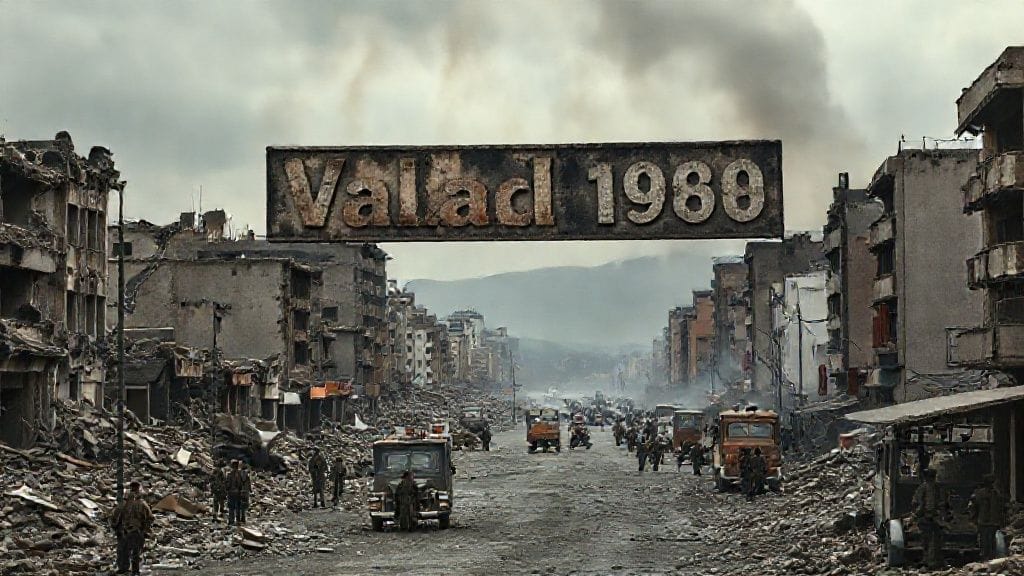
At precisely 7:42 a.m., a violent jerk cracked the earth and shattered the calm. The Coalinga Earthquake sent shockwaves cascading through the city, with the tremor lasting a heart-stopping 15 seconds but leaving destruction that would take years to repair.
Buildings trembled and cracked, glass shattered into glittering shards raining down on panicked unions of families and neighbors fleeing outdoors. Water and gas mains ruptured, fires sparked, and power lines collapsed. The ground itself seemed to heave and shift like a living beast, buckling sidewalks and roads.
For many, the quake was a cruel awakening from comfort into chaos. Some escaped injury by sheer luck; others were caught in the collapse of structures or trapped in vehicles. Emergency sirens wailed, and cries for help filled the shaken air.
7. Structural Failures and the Wrath on Infrastructure
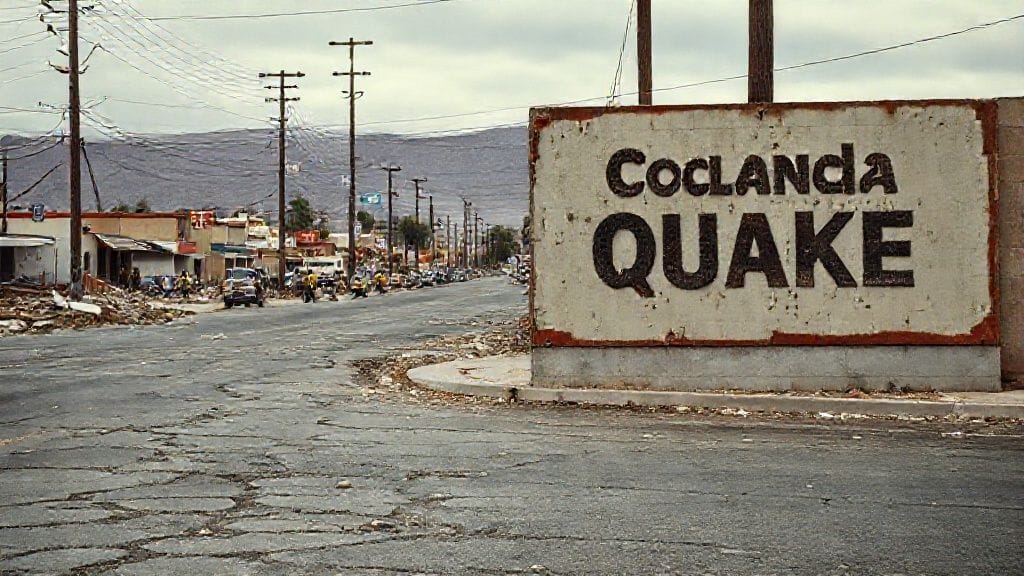
While the magnitude of 6.5 may not appear colossal next to other California quakes, Coalinga’s damage was exacerbated by the vulnerability of its buildings. Many downtown structures, built with unreinforced masonry, crumbled under the shaking.
The iconic Westside neighborhood saw numerous home collapses, and older oil derricks—vestiges of the town’s industrial past—were toppled or severely damaged. Public utilities suffered widespread outages: water lines burst, leading to flooding in some streets, while gas pipes fractured, increasing fire risk.
Roads and highways became impassable as the ground heaved. The city’s hospital sustained damage but continued functioning, becoming a critical hub for emergency care. Yet, behind these cold facts remained the human faces of loss—business owners who saw their shops reduced to rubble, families who lost their homes, and schools that closed their doors indefinitely.
8. Human Stories Amidst the Rubble
Among the chaos, stories of courage and heartbreak emerged. Take the Larson family, whose home near the western edge of town collapsed just as 10-year-old Sarah was waking. Miraculously, she escaped through a gap in the debris, but her parents were seriously injured.
Meanwhile, community leaders like Sheriff Tom Hernandez coordinated impromptu rescue teams, navigating dangerous streets to locate trapped survivors. Nurses worked through exhaustion at Coalinga Community Hospital, turning their wards into beacons of hope amid despair.
This earthquake was not just a geological event—it was a collective trauma etched into the consciousness of every who lived it. Children’s screams blended with frantic phone calls, neighbors opened their doors to the displaced, and prayers hovered over the ruins. It was a moment where humanity flickered defiantly amidst destruction.
9. Emergency Response: Struggle and Solidarity
The immediate aftermath revealed both the strengths and weaknesses of Coalinga’s preparedness. The local emergency services, though understaffed, sprang into action fast, organizing search and rescue and establishing shelters.
The California Office of Emergency Services dispatched teams from Sacramento, and the National Guard was activated to maintain order and assist with logistics. Yet, communication hurdles and infrastructure damage complicated coordination.
Notably, local volunteer groups became vital players in relief efforts, distributing food, water, and medical supplies. The city’s resilience became its lifeline, stitching together a fractured community. Stories of neighbors saving strangers and strangers becoming neighbors painted a portrait of solidarity that outshone the rubble.
10. Media Coverage and Public Reaction
News of the Coalinga earthquake quickly spread beyond the region, dominating headlines in California and national newspapers alike. Television crews arrived within hours, capturing haunting images of collapsed buildings and distraught residents.
The media dubbed it a “wake-up call” for California, highlighting vulnerabilities in disaster preparedness and the unpredictable nature of seismic events. Public reaction was a blend of empathy and apprehension—empathy for the victims’ suffering, apprehension over the safety of other Californian communities perched on fault lines.
This surge of attention fueled calls for increased investment in seismic research and stricter building codes, marking the beginning of broader discussions on how modern society could coexist with geological instability.
11. Scientific Insights: What Seismologists Learned
The Coalinga earthquake quickly became a case study for seismologists intent on unraveling the mysteries of earthquake mechanics. Instrumental data collected during the event contributed to understanding the behavior of smaller, fault-strand earthquakes, often overshadowed by larger events on major faults.
Researchers highlighted the significance of shallow focal depth and its role in amplifying ground shaking near the epicenter. The event also underscored the potential for unexpected rupture in less-mapped faults, challenging assumptions held in seismic hazard predictions.
Moreover, the Coalinga quake accelerated the deployment of more advanced seismic instrumentation across California, heralding a new era in earthquake detection and data analysis.
12. Economic Impact on Coalinga and Surrounding Regions
The financial toll was staggering for a town of Coalinga’s size. Damage estimates reached tens of millions of dollars, straining local budgets and resources. Aside from the rebuilding costs, many businesses remained shuttered for weeks or months, disrupting livelihoods.
Agricultural productivity was affected as infrastructure such as irrigation canals and roads suffered damage. Oil production facilities, a major economic driver, also faced interruptions due to inspection and repairs.
Federal and state disaster declarations unlocked aid packages, but recovery was a slow climb. The earthquake’s economic shock rippled beyond Coalinga, reminding the broader region how natural disasters could disrupt interconnected local economies.
13. The Psychological Aftershocks: Community Trauma and Recovery
Beyond bricks and mortar, the earthquake’s deepest scars were emotional and psychological. Many residents experienced enduring stress, anxiety over future quakes, and grief over lost loved ones or shattered homes.
Studies in the years following Coalinga emphasized the need for mental health support in disaster recovery, highlighting symptoms akin to post-traumatic stress disorder among survivors. Community groups and local churches became pillars of emotional support.
Children faced school disruptions and altered routines, while adults contended with job losses and uncertainty. Yet, within this darkness rose stories of healing: community gatherings, commemorative ceremonies, and shared determination to rebuild lives.
14. Reconstruction and Urban Renewal: Rising from the Rubble
Reconstruction was both a practical necessity and a symbolic act of defiance against nature’s raw power. Building permits skyrocketed, with new homes and business centers rising amid the ruins.
Importantly, reconstruction efforts embraced seismic resilience, incorporating lessons learned into architectural design and construction methods. This urban renewal gave Coalinga a chance to modernize while honoring its past.
Public spaces, parks, and memorials took shape, quietly sanctifying those lost and those who fought to save the city. The rebuilding years were hard but forged a deeper sense of identity, pride, and unity among Coalinga’s residents.
15. Influence on California’s Seismic Building Codes
One of the earthquake’s most lasting impacts was its forceful influence on regulatory change. The collapse of older masonry buildings in Coalinga spotlighted the dangers of outdated construction.
California’s legislature responded by accelerating the adoption of the 1981 Uniform Building Code provisions, which mandated stricter seismic standards. This shift significantly improved the safety of future structures, not only in Coalinga but throughout the state and beyond.
Engineers and planners increasingly prioritized seismic retrofitting, acknowledging that preparation was the best defense. The Coalinga earthquake became a catalyst for transforming how California designs, plans, and builds in the shadow of seismic risk.
16. A Glimpse into Disaster Preparedness Evolution Post-1983
Before Coalinga, disaster preparedness in many Californian towns was fragmented and underfunded. The earthquake exposed gaps in emergency communication systems, evacuation plans, and public awareness.
In response, local and state agencies expanded their drills, education campaigns, and coordination frameworks. Schools integrated earthquake safety into curricula, while communities held regular “drop, cover, and hold” exercises.
Technological advances in emergency response communications—such as mobile radios and centralized dispatch centers—found increased support. The Coalinga event was a wake-up call that transformed California’s approach from reactive to proactive disaster management.
17. The Legacy of the Coalinga Earthquake in Popular Memory
Though overshadowed by larger quakes in the Californian imagination, the Coalinga earthquake holds a special place in local and scientific history. Oral histories collected by universities preserve the raw emotions of survivors, ensuring their experiences remain vivid lessons.
Annually, the city marks the anniversary with remembrance events, including moments of silence, speeches, and community gatherings. Schools teach children the earthquake’s history, embedding resilience in the next generation’s consciousness.
In popular culture, the event inspired documentaries and newspaper retrospectives that explore human vulnerability and perseverance in the face of nature’s might.
18. Comparative Analysis: Coalinga and Other Californian Quakes
Compared to the devastating 1989 Loma Prieta quake or the infamous 1906 San Francisco earthquake, Coalinga’s event was moderate in size but equally instructive. Its unique profile—centered on a minor fault, causing disproportionate damage due to shallow depth and vulnerable structures—challenged existing risk models.
Seismologists often reference Coalinga as evidence that hazard maps must not ignore smaller faults and urban vulnerabilities. Unlike the San Andreas, which is intensely monitored, Coalinga demonstrated the unpredictability of California’s fault system.
This nuanced understanding has informed preparedness strategies tailored to local contexts rather than broad regional assumptions.
19. Voices from Survivors: Memoirs and Testimonies
Personal testimonies provide perhaps the most poignant insights into the earthquake’s effect. Survivors recall the horror of waking to violent shaking, the rush to save children, friends, and neighbors amid falling debris.
One elderly resident, Frank Mendoza, remembered how his decades-old home, built by his father, shook apart in seconds. “It felt like the earth was alive and angry. We were lucky to get out with our lives—and that’s what mattered.”
Teachers spoke of fear and determination as they gathered children in schoolyards, ensuring no one was left behind. Emergency workers described exhaustion but pride in their response efforts.
These testimonies humanize the quake, reminding us that behind every statistic lies countless threads of lived experience.
20. The Earthquake’s Role in Advancing Seismology Technology
The Coalinga event was pivotal in prompting investment in seismic monitoring technology. It accelerated deployment of advanced accelerographs—devices that record ground motion with precision—across vulnerable regions.
Data collected during the quake became a valuable benchmark for calibrating predictive models and assessing building performance under stress. This, in turn, helped refine early warning systems and risk communication tools.
Moreover, interdisciplinary research blossomed, with geologists, engineers, and urban planners collaborating to better understand earthquake impacts holistically.
21. Lessons Learned: A Catalyst for Change in Earthquake Management
More than just a destructive episode, the 1983 Coalinga earthquake was a profound teacher. It highlighted that seismic risk is not solely the domain of high-profile faults and that smaller communities can suffer disproportionate damage.
It illuminated gaps in emergency preparedness and the importance of community engagement. Its aftermath spurred a holistic approach combining engineering innovation, public education, and psychological support.
The quake’s legacy urges continual vigilance, adaptation, and respect for the power beneath our feet.
22. The Environmental Consequences and Landscape Transformation
Coalinga’s terrain was visibly altered by the earthquake. Ground ruptures scarred the earth, and minor landslides shifted soils on neighboring hills.
These physical transformations affected agriculture and local ecosystems, challenging farmers who relied on stable irrigation and soil conditions.
Yet, these changes also provided scientists with living laboratories to study seismic effects on landscapes and recovery dynamics among flora and fauna.
Over time, nature’s resilience was witnessed in regrowth and adaptation, echoing human recovery.
23. Coalinga Today: Remembering Through Monuments and Museums
Visitors to Coalinga today can witness tangible reminders of the 1983 quake. The city has erected plaques and monuments honoring the lives impacted and the bravery shown during the disaster.
Local museums house exhibits featuring photographs, artifacts recovered from damaged buildings, and oral history recordings, allowing new generations and tourists to engage deeply with this chapter of history.
These commemorations foster a sense of pride and continuity, linking past resilience to present-day identity.
24. Global Implications: The Earthquake in the Context of World Seismic Events
Though a regional event, the Coalinga earthquake attracted international scientific attention. It underscored that moderate quakes on lesser-known faults can cause disproportionate damage, a lesson applicable worldwide.
Countries in seismic zones from Japan to Turkey examined the event’s data to refine their own risk assessments and disaster preparedness measures.
In the global history of earthquakes, Coalinga holds a niche as a turning point in understanding fault heterogeneity and urban vulnerability.
25. The Enduring Tale of Coalinga’s Tremor: From Ruin to Resilience
The narrative of the Coalinga earthquake is ultimately one of human tenacity. From a shattered morning in 1983 emerged a community determined to rebuild smarter, stronger, and more united.
It is a story etched into the very earth beneath Coalinga, a reminder that beneath catastrophe lies opportunity—an opportunity to learn, adapt, and honor those who endured.
Though nature’s forces remain unpredictable, the spirit forged amid the rubble endures as a beacon of resilience for generations to come.
Conclusion
The Coalinga earthquake of May 2, 1983, is more than a geological footnote; it is a vivid testament to nature’s unpredictability and humanity’s response to disaster. That fateful morning, the earth abruptly revealed its volatile power, shattering buildings and reshaping lives. Yet, the true legacy lies not solely in destruction but in the courage, solidarity, and transformation it sparked.
From the rubble emerged improved scientific understanding, enhanced building codes, and a community healed through persistence and reconciliation. Coalinga’s story reminds us that earthquakes, while irrevocable forces of nature, also expose the enduring bonds of society—how people can come together in the face of uncertainty, mend their broken world, and prepare with hope for the tremors yet to come.
FAQs
Q1: What caused the Coalinga earthquake of 1983?
A1: The earthquake was caused by a sudden slip along the Coalinga Fault, a strike-slip fault in Central California. The motion occurred at a shallow depth, releasing accumulated tectonic stress and generating a magnitude 6.5 earthquake.
Q2: How badly was Coalinga damaged?
A2: Significant damage was inflicted, especially to older brick buildings and infrastructure like water and gas lines. Estimated damages reached tens of millions of dollars, with many homes, businesses, and public utilities affected.
Q3: Were there any fatalities during the earthquake?
A3: Remarkably, despite considerable damage and injuries, there were no confirmed fatalities, a fact attributed to the timing of the quake and some degree of luck.
Q4: How did the earthquake influence California’s building codes?
A4: It accelerated the implementation of stricter seismic building codes, particularly addressing the vulnerabilities of unreinforced masonry structures, leading to safer construction practices state-wide.
Q5: What role did the earthquake play in advancing earthquake science?
A5: The Coalinga quake provided valuable data on shallow fault ruptures and the seismic potential of smaller fault strands, influencing monitoring technology and risk assessment models globally.
Q6: How did the community recover psychologically from the quake?
A6: Recovery involved extensive community support, mental health services, and public education on earthquake preparedness, addressing trauma and strengthening resilience.
Q7: Is Coalinga at risk for future earthquakes?
A7: Yes, the region remains seismically active, necessitating ongoing preparedness and adherence to modern building standards to mitigate future risks.
Q8: How is the Coalinga earthquake remembered today?
A8: Through annual commemorations, monuments, museum exhibits, and oral histories, the event remains a vital part of local identity and a cautionary tale for seismic preparedness.