Table of Contents
- A Tremor Awakens the Plains: The Oklahoma Earthquake of September 3, 2016
- The Heartland Shaken: Oklahoma’s Geology and Seismic Surprises
- Behind Hidden Faults: The Pawnee Seismic Zone Unveiled
- A Quiet Storm: The Lead-up to the 5.8 Magnitude Jolt
- September 3, 2016, 7:02 AM: When the Earth Roared Above Pawnee
- Immediate Aftermath: From Rattled Windows to Collapsed Chimneys
- Human Stories in the Wake: Fear, Resilience, and Community Response
- The Role of Induced Seismicity: Fracking and Wastewater Injection under Scrutiny
- Political and Legal Fallout: Government, Industry, and Public Pressure
- Emergency Response and Scientific Mobilization: Mapping the Damage
- Media Frenzy and Public Perception: Oklahoma in the National Spotlight
- The Strain on Infrastructure: Roads, Buildings, and Lifelines Tested
- Personal Narratives: Eyewitness Accounts that Bring the Tremor to Life
- Scientific Advances Post-2016: How Pawnee Shook Earthquake Science
- Economic Ripples: Insurance, Property Values, and Industry Shifts
- Cultural Impact: Oklahoma’s Identity in the Shadow of Earthquakes
- Environmental Debates: Weighing Energy Needs Against Earthquake Risks
- Lessons Learned: Preparing the Heartland for Future Shocks
- The Global Lens: What Oklahoma’s Earthquake Teaches the World
- The Quiet Resilience of Pawnee: Rebuilding and Remembering
- Conclusion: How a Single Tremor Changed a State’s Story Forever
- FAQs about the Oklahoma (Pawnee) Earthquake of 2016
- External Resource
- Internal Link
A Tremor Awakens the Plains: The Oklahoma Earthquake of September 3, 2016
On the crisp morning of September 3, 2016, residents across northeastern Oklahoma awoke not only to the first light of dawn but to an unanticipated rumble beneath their feet. At 7:02 AM local time, the earth convulsed with a force that rippled through homes, schools, and workplaces, turning ordinary moments into a collective experience of shock and uncertainty. The epicenter was near the small city of Pawnee, a town nestled amidst serene landscapes more accustomed to the gentle whispering of the prairie winds than an earth-shattering jolt.
This was no mere tremor. It was Oklahoma’s strongest earthquake in more than a century — a staggering magnitude 5.8 that reverberated across states and headlines alike. The land, usually steady and predictable, had suddenly revealed a new character: volatile, fragile, and capable of upheaval. Windows shattered, books tumbled from shelves, and the very notion of safety was questioned in a region better known for tornadoes than tectonic upheaval. For many, it was a moment of disbelief; for scientists, a profound puzzle. But for everyone, it was a stark reminder that beneath the expansive plains lies a hidden world, restless and reactive.
The Heartland Shaken: Oklahoma’s Geology and Seismic Surprises
Oklahoma sits squarely within the interior of the North American Plate, far from the well-known seismic hotspots of the West Coast. Traditionally, this geographical fact cast the state as a place of rare geological turbulence. Yet beneath this quiet facade lies a complex tapestry of ancient faults, dormant for millennia, their seismic silence deceiving.
Geologists have long known that Oklahoma is crisscrossed by faults—the Pawnee Fault being among them—but the expectation was that they would remain inactive or produce only minor tremors. The plains, with their flat terrain and sedimentary layers, disguise the great forces pressing under the surface. What sets Oklahoma apart in the story of this earthquake is the surprising combination of natural tectonics and human activity that, since the early 2000s, has activated seismic zones once thought quiet.
This tension between a calm landscape and an unsettled subsurface created the perfect setting for the dramatic event in 2016. The heartland’s geology, though often overlooked, was about to be thrust into the spotlight.
Behind Hidden Faults: The Pawnee Seismic Zone Unveiled
The fault responsible for the 2016 quake lay near Pawnee, an area previously quiet on seismic maps. This region sits on the edge of the Nemaha Ridge, a buried geological structure, where rocks have fractured and shifted over eons. The fault line itself, while known to some experts, had not been considered a major source of large quakes in modern times.
Scientists studying the Pawnee seismic zone uncovered a network of faults showing signs of reactivation, likely influenced by changes in underground pressures. The shallow depth of the earthquake—approximately 5 kilometers—meant the shaking was intense and concentrated near the surface, adding to the damage despite the moderate magnitude.
But what triggered this reawakening of the earth beneath Pawnee was part natural, part anthropogenic, and wholly controversial.
A Quiet Storm: The Lead-up to the 5.8 Magnitude Jolt
In the years prior to 2016, Oklahoma had witnessed an unprecedented increase in earthquake frequency and intensity. What had once been a barely perceptible few quakes annually ballooned to thousands. Scientists linked this rise to induced seismicity—earthquakes caused by human activities, especially the injection of wastewater from hydraulic fracturing (fracking) deep underground.
Wastewater injection increases pore pressure in rock layers, potentially lubricating faults and triggering slips. Oklahoma became one of the global hotspots of this phenomenon, with many residents experiencing quakes that were no longer “once in a decade” events but frequent and growing stronger.
On the morning of September 3, the earth’s simmering tension broke with a force that sent shockwaves around the region and beyond.
September 3, 2016, 7:02 AM: When the Earth Roared Above Pawnee
At exactly 7:02 AM, the earth moved with a deep rumble felt across more than half a dozen states. The epicenter near Pawnee ignited shaking that rattled nerves and knocks windows free. For 20 seconds, a magnitude 5.8 jolt enveloped cities from Tulsa to further afield, testing the resilience of Oklahoma’s buildings and the steadiness of its people.
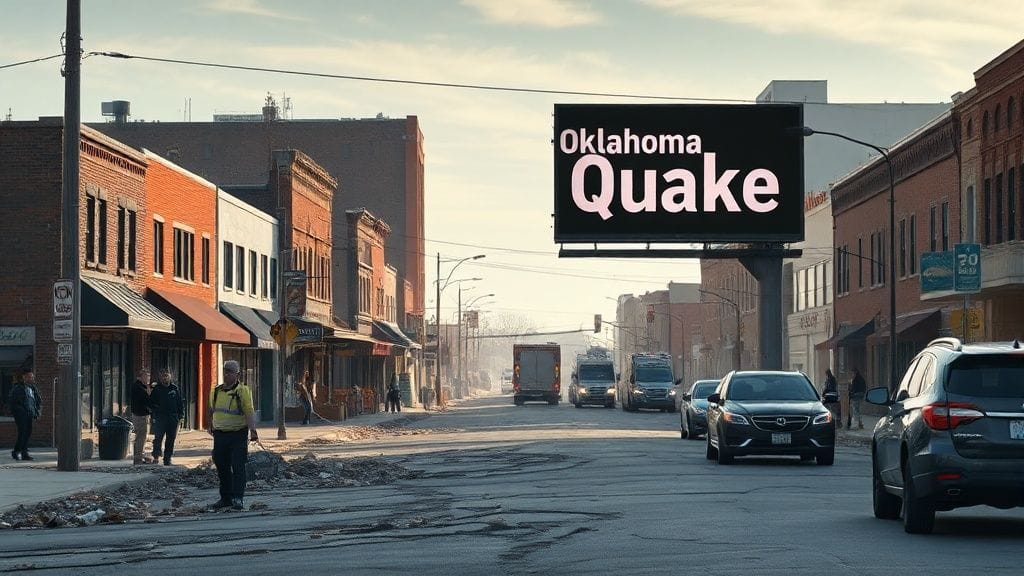
In Pawnee alone, over a dozen chimneys toppled and structural damage was reported across homes and public buildings. Schools were immediately evacuated, and workers spilled out into streets, faces etched in alarm and disbelief. For many, it was the first time an earthquake truly intruded on daily life.
Emergency services scrambled to respond, while geologists began working to capture data on what was now a record-breaking seismic event for the region.
Immediate Aftermath: From Rattled Windows to Collapsed Chimneys
The tremor’s destructive force was mercifully limited compared to quakes in more seismically active zones; no direct fatalities occurred. Yet property damage was widespread, with over $1.4 million in insured losses reported. Hundreds of homes sustained cracks, and the iconic Pawnee High School suffered roof damage.
Communities responded with remarkable resilience. Local authorities declared a state of emergency, while residents banded together to check on neighbors and clear debris. Businesses faced temporary closures, and insurance companies scrambled to process claims. Meanwhile, the state government moved swiftly to ascertain the earthquake’s causes and potential future risks.
Despite the sudden shock, life in the region was marked by calm determination—not only to repair but to understand the unprecedented seismic event.
Human Stories in the Wake: Fear, Resilience, and Community Response
For many in Pawnee and surrounding communities, the earthquake became a deeply personal experience. Mary Thompson, a longtime resident, recounted how she felt “like the earth was breathing—in and out, violently” beneath her home. “I grabbed my kids and ran outside, fear gripping my heart,” she said, capturing the raw human emotion stirred by a natural force too immense to control.
Yet there was also an outpouring of support, neighbors sharing shelter, meals, and comfort. Local schools held assemblies to explain earthquakes, turning a moment of fear into a lesson in science and community solidarity.
The Oklahoma earthquake was more than geological—it was a human story of surprise, vulnerability, and strength.
The Role of Induced Seismicity: Fracking and Wastewater Injection under Scrutiny
As investigations unfolded, the link between the earthquake and human activities was not merely suspected—it was increasingly clear. The practice of injecting large volumes of wastewater deep underground, a byproduct of hydrocarbon extraction methods, had altered subterranean pressures near the Pawnee Fault.
State geologists and the US Geological Survey concluded that the earthquake was “very likely” induced by this wastewater injection, sparking intense debate between energy companies, environmentalists, policymakers, and residents.
Oklahoma’s seismic awakening forced the state to confront a difficult reality: balancing economic interests tied to energy production against public safety and environmental stewardship.
Political and Legal Fallout: Government, Industry, and Public Pressure
The political repercussions were swift and contentious. Governor Mary Fallin faced mounting pressure to regulate injection wells more strictly. In response, the Oklahoma Corporation Commission introduced measures to reduce wastewater injection volumes and manage high-risk wells.
Yet oil and gas industry lobbyists argued for caution, warning against hurting the state’s economy and energy independence. Lawsuits followed, with some residents seeking compensation for damage, pointing at industry negligence.
The earthquake ignited a fierce debate about accountability, regulation, and the future of energy extraction in Oklahoma.
Emergency Response and Scientific Mobilization: Mapping the Damage
In the days following the event, teams of seismologists, engineers, and emergency personnel descended upon Pawnee and neighboring counties. Their mission was twofold: assess structural damage and compile seismic data to understand the quake’s mechanics.
Temporary seismic stations were installed, and mapping efforts revealed aftershocks along the same fault line. Studies noted a cluster of smaller quakes in the days and weeks after—typical tremors following a larger shift.
These efforts not only aided recovery but contributed to a growing body of knowledge about induced earthquakes and fault behavior in stable continental interiors.
Media Frenzy and Public Perception: Oklahoma in the National Spotlight
For much of America, Oklahoma had long been associated with tornadoes and oil fields. Suddenly, it was also the “earthquake state” — a surprising rebrand that brought national media attention.
News outlets tracked every aftershock; experts appeared on talk shows; social media buzzed with videos of rattling windows and swaying light fixtures. The earthquake became a symbol of energy development’s unintended consequences, sparking conversations well beyond the prairie.
For Oklahomans, the newfound notoriety was double-edged: pride in resilience mingled with questions about safety and sustainability.
The Strain on Infrastructure: Roads, Buildings, and Lifelines Tested
Though the shaking lasted mere moments, its echoes lingered in cracked roads and fragile buildings. Bridges underwent inspections, and some were temporarily closed. Public works faced the challenge of prioritizing repairs while preparing for potential future quakes.
Schools and emergency shelters were retrofitted for seismic safety, and building codes re-examined to reflect new realities. Utilities companies scanned pipelines and electrical grids for vulnerabilities.
It was a critical juncture for infrastructure management in a state unprepared for this level of seismic activity.
Personal Narratives: Eyewitness Accounts that Bring the Tremor to Life
James Kilpatrick, a Pawnee firefighter, described the quake as “the most intense I’ve ever felt—shaking so strong you momentarily lose your footing.” His team responded immediately to calls of damage and panicked residents, confronting fear amid uncertainty.
Teachers recalled the challenge of keeping students calm during unexpected evacuations. Small business owners spoke of shattered storefronts and lost inventory. In these stories lies the pulse of the earthquake’s impact—not just geological, but profoundly human.
Scientific Advances Post-2016: How Pawnee Shook Earthquake Science
The Pawnee earthquake was a clarion call for seismologists studying induced seismicity. It accelerated research into the correlation between wastewater injection and seismic events, leading to refined risk models and monitoring techniques.
Technological innovations, including enhanced seismic networks and real-time data sharing, improved understanding of how faults respond to human activity.
Oklahoma became a living laboratory, its unexpected quake reshaping global scientific approaches to “quiet” seismic zones and anthropogenic risk.
Economic Ripples: Insurance, Property Values, and Industry Shifts
The earthquake’s economic shockwaves reached insurance markets, with a spike in claims prompting reassessment of coverage policies. Some homeowners found their policies inadequate for seismic damage, igniting calls for reform.
Property values in affected areas fluctuated, as uncertainty about future quakes influenced market confidence. Meanwhile, the energy sector faced increased operational costs due to regulatory compliance and public scrutiny.
The event underscored the complex interplay between economic prosperity and environmental risks in an energy-dependent state.
Cultural Impact: Oklahoma’s Identity in the Shadow of Earthquakes
Oklahoma, a land of proud traditions and rugged spirit, found its identity tested by the invisible shaking underneath. The earthquake became a cultural touchstone, referenced in local art, music, and storytelling.
Communities embraced preparedness, weaving seismic safety into schools and public life. The event sparked dialogues about the state’s relationship to its landscape, natural resources, and future resilience.
Where once the plains were symbols of stability, they now held a story of change and adaptation.
Environmental Debates: Weighing Energy Needs Against Earthquake Risks
The Pawnee earthquake ignited fierce environmental debates. Advocates for renewable energy argued for reducing reliance on fossil fuels to mitigate seismic risks. Industry proponents emphasized economic necessity and technological safeguards.
Environmental groups pushed for transparency and stricter regulations, while citizen coalitions demanded accountability.
This conflict between progress and preservation remains a defining narrative for Oklahoma’s approach to energy and environmental stewardship.
Lessons Learned: Preparing the Heartland for Future Shocks
One of the earthquake’s most lasting legacies is the heightened awareness and preparedness across Oklahoma. Emergency management agencies enhanced drilling moratoriums in sensitive areas, increased public education campaigns, and upgraded early warning systems.
The 2016 tremor served as a wake-up call to communities long accustomed to a different kind of natural threat. Now, preparedness encompasses a broader spectrum, integrating seismic safety into everyday life.
It’s a story of adaptation, resilience, and hope.
The Global Lens: What Oklahoma’s Earthquake Teaches the World
Though localized, the Oklahoma earthquake holds global lessons. It underscores the growing recognition of anthropogenic seismicity worldwide, from Canada to Europe and Asia.
Pawnee’s experience informs international policy debates, scientific research, and industry practices. It is a vivid example of how human endeavors ripple through the planet’s geology, demanding respect and responsibility.
The Quiet Resilience of Pawnee: Rebuilding and Remembering
In the years following the quake, Pawnee rebuilt with resolve. New construction reflected improved safety standards; community events remembered the tremor’s day with stories and memorials.
Residents, though mindful of risk, express pride in overcoming adversity. The earthquake became a chapter—not the end—of their shared story.
Conclusion: How a Single Tremor Changed a State’s Story Forever
The Oklahoma earthquake of September 3, 2016, was far more than a geological event; it was a profound moment of reckoning. It revealed the delicate balance between the earth’s ancient rhythms and modern human activity. It exposed vulnerabilities—physical, political, and cultural—but also showcased resilience, scientific ingenuity, and community spirit.
This tremor beneath Pawnee transformed Oklahoma’s narrative—from a quiet plains state to a frontier of earthquake science and environmental debate. It challenged assumptions, inspired adaptation, and remains a vital chapter in the shared human story of living on a dynamic planet.
FAQs about the Oklahoma (Pawnee) Earthquake of 2016
Q1: What caused the 2016 Oklahoma earthquake near Pawnee?
The earthquake was primarily caused by the reactivation of a geological fault known as the Pawnee Fault. Scientific studies concluded that increased underground pressure from wastewater injection linked to oil and gas extraction played a significant role in triggering the quake.
Q2: How strong was the Pawnee earthquake in Oklahoma?
The earthquake registered a magnitude of 5.8, making it the strongest recorded in Oklahoma’s history at that time. It caused considerable shaking over a widespread area.
Q3: Were there any casualties or fatalities?
Remarkably, there were no fatalities reported. However, the quake caused significant structural damage and injuries related to collapsing chimneys and falling debris.
Q4: How did the state government respond to the earthquake?
The state declared a state of emergency and implemented regulatory changes to limit wastewater injection volumes. Authorities increased seismic monitoring and promoted public education on earthquake preparedness.
Q5: What is induced seismicity and how is it linked to Oklahoma’s earthquakes?
Induced seismicity refers to earthquakes triggered by human activities, particularly those that alter underground pressures, such as wastewater injection during fracking. Oklahoma’s surge in earthquakes has been linked to these practices.
Q6: Has the earthquake changed building codes or safety regulations?
Yes, in the aftermath, Oklahoma revisited building and safety codes, encouraging seismic retrofitting and the integration of earthquake risks into urban planning.
Q7: What lessons has the world learned from the Pawnee earthquake?
The global scientific community gained valuable data on induced seismicity and fault behavior in stable continental regions. The event has informed energy policies and regulatory frameworks worldwide.
Q8: How do residents today view the earthquake’s legacy?
Residents reflect on the earthquake as a moment of unexpected upheaval but also one of communal strength and learning. The event remains a defining point in Oklahoma’s modern history.