Table of Contents
- The Morning That Shook the Pacific Northwest: April 13, 1949
- A Landscape Primed for Disaster: The Geological Context of Washington State
- The Cascadia Subduction Zone: A Sleeping Giant Beneath the Waves
- Prelude to Tremors: Washington’s Seismic Anxieties Before 1949
- At the Epicenter: Olympia, Washington on That Fateful Day
- The Earth Breaks Loose: Detailing the Magnitude 7.1 Quake
- Shaking Buildings and Breaking Spirits: The Human Experience
- Cascading Effects: Infrastructure, Utilities, and Daily Life Disrupted
- The Wider Impact: How Seattle, Tacoma, and Portland Felt the Earth Move
- Emergency Response and Community Resilience in the Aftermath
- Scientific Scramble: What the 1949 Earthquake Taught Seismologists
- Myths and Memories: Local Narratives and Oral Histories
- Seismic Shifts in Policy: Disaster Preparedness Post-1949
- The Earthquake’s Role in Driving Infrastructure Reinforcement
- A Worldwide Mirror: Positioning the Olympia Earthquake in Global Seismic History
- Lessons Remembered: How 1949 Foretold Future Catastrophes in the Northwest
- The Cascade Today: Modern Monitoring and Preparedness Efforts
- The Cultural Resonance: Artistic Responses to the Olympia Quake
- Remembering Through Time: Memorials and Commemorations
- The Ever-Present Threat: Reflections on Cascadia’s Future
- Conclusion: Earth’s Fury and Human Tenacity at Olympia
- FAQs: Understanding the 1949 Olympia Earthquake
- External Resource: Wikipedia Link
- Internal Link: Visit History Sphere
1. The Morning That Shook the Pacific Northwest: April 13, 1949
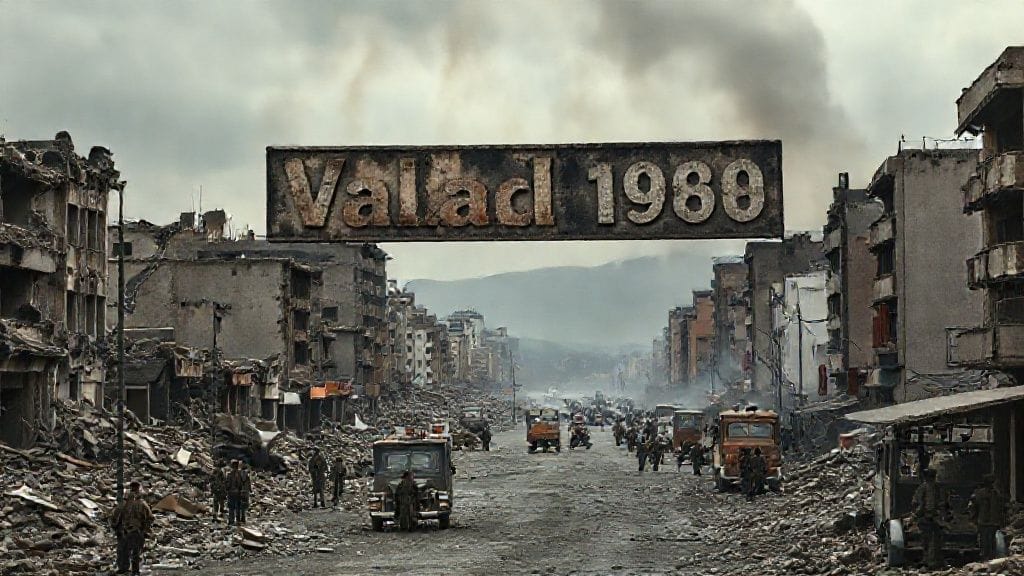
The sun had just begun its hesitant climb over the dense evergreen horizons of Washington State when, suddenly, the earth convulsed with a terrifying roar. It was 7:55 a.m. on April 13, 1949, and the ground beneath Olympia—a serene capital girded by pine forests and tranquil waters—betrayed its calm facade. Homes shuddered like fragile toys; windows exploded in showers of glittering glass; people stumbled into one another, hearts pounding in raw fear. The Olympia earthquake had awakened a sleeping beast beneath the Pacific Northwest and forever altered the region’s sense of security.
This was not just any earthquake. Measuring an estimated 7.1 in magnitude, it ranks among the most powerful ever to shake the area in recorded history. Its impact was intense but transient—lasting less than a minute—yet it left an imprint far deeper and longer-lasting than the shaking itself. This story is more than a tale of geology and tremors; it is an exploration of how nature’s unforgiving mechanics intersected with human lives, imagination, and resilience in post-war America.
2. A Landscape Primed for Disaster: The Geological Context of Washington State
Washington’s dramatic landscape is shaped by mighty forces concealed beneath the earth’s crust. Towering mountain ranges, deep river valleys, and its jagged Pacific coastline all bear witness to tectonic collisions and subductions operating invisibly over millennia. The region sits astride the Cascadia Subduction Zone—a vast fault extending over 1,000 kilometers from Northern California to British Columbia where the oceanic Juan de Fuca Plate steadily dives beneath the continental North American Plate.
This geologic boundary is capable of generating catastrophic megathrust earthquakes, among the largest on Earth, yet these phenomena occur in intervals spanning hundreds of years. The 1949 Olympia earthquake was caused by a shallower crustal fault nearby, but it nonetheless reflected the volatile tension humming beneath the ground. While small tremors are fairly common in Washington, a quake of this magnitude was rare and unsettlingly close to urban centers.
By 1949, geologists had mapped this restless territory but could not predict when or how the tectonic might would next signal its raw power.
3. The Cascadia Subduction Zone: A Sleeping Giant Beneath the Waves
The Cascadia Subduction Zone is, in some ways, North America’s hidden peril. Unlike California’s legendary San Andreas fault, Cascadia lies underwater, silently accumulating strain that eventually must be released. Its last known major rupture surged near a magnitude 9 in 1700, sending tsunami waves crashing even across Japan.
Before the mid-20th century, awareness of Cascadia's dangerous potential among the public was minimal, shrouded by a scientific veil and the absence of devastating recent quakes. The 1949 event—although smaller and shallower—served as a stark reminder that Washington State’s seismic risk was not just speculation. Emergency planners and residents alike began to grasp that beneath the tranquil forests and bustling towns, a giant stirred.
4. Prelude to Tremors: Washington’s Seismic Anxieties Before 1949
The early 1900s saw Washington grappling with the occasional jolt of seismic activity. However, the Mount St. Helens eruption and other disasters often overshadowed the region’s earthquake risk in the public imagination. Local newspapers sometimes recounted minor temblors, but these rarely galvanized serious concern.
In the decades leading to 1949, scientists had begun gathering more precise records, discovering subtle fault lines threading through Thurston County and beyond. Despite this, urban development surged as cities elsewhere in the U.S. brought post-war optimism and economic growth. Olympia, Seattle, and Tacoma were expanding, yet earthquake preparedness was minimal and reactive rather than strategic.
The region was due for a compelling wake-up call—a violent reminder that nature’s quiet patience would not last forever.
5. At the Epicenter: Olympia, Washington on That Fateful Day
Olympia, the state's political nerve center, was bustling on that chilly April Wednesday morning. The air was crisp, smells of damp earth mingled with the office coffee brewing. Untold thousands—legislators, clerks, teachers, families—were beginning their daily routines. Then, without warning, the ground beneath vibrated and heaved.
Buildings groaned and swayed; furniture toppled; nerves frayed. It was over in less than a minute, but the damage was already etched. Cracks zigzagged across sidewalks; chimneys collapsed in piles of brick dust; electric lights flickered off. The disorientation was immediate and chaotic.
For many locals, the quake was a surreal baptism by fire. It turned a familiar environment into an unstable, unpredictable domain. The city’s streets became passageways not of daily commute but of shock and wonder.
6. The Earth Breaks Loose: Detailing the Magnitude 7.1 Quake
Seismologists later estimated the earthquake at a magnitude of approximately 7.1, classifying it a major seismic event for the region. The epicenter was located near Olympia, but the shaking propagated through the Puget Sound basin, reaching Tacoma, Seattle, and even Portland with lesser but still impressive force.
This quake rattled the crustal faults rather than the subduction zone itself, but this distinction didn’t lessen the experience for those on the ground. Some aftershocks followed, though none matched the initial ferocity. The quake’s depth of roughly 50 kilometers meant a powerful surface effect, shaking buildings and infrastructure that had not been designed for such stress.
Instrumental records from that era, though less sophisticated than today’s standards, confirmed strong waves of compression and shear moving through the earth, heralding a geological event whose scale Washington had seen only sporadically before.
7. Shaking Buildings and Breaking Spirits: The Human Experience
In the immediate chaos, Olympia’s residents reacted with a mixture of awe, fear, and determination. Many fled outdoors, eyes searching for signs of collapse; others remained paralyzed, clutching loved ones. Stories abound—of children screaming as their school walls trembled, of office workers thrown from desks, of strangers lending hands amid the confusion.
One elderly woman recalled: “The ground moved like the sea, and I feared the earth itself would swallow us.” Across the city, anecdotes mirrored this universal disorientation.
Casualties were thankfully limited—thanks partly to the quake’s timing and partly to Washington’s lower density in some areas—yet the psychological shock
lingered. People confronted a new understanding of fragility in their everyday world.
8. Cascading Effects: Infrastructure, Utilities, and Daily Life Disrupted
Damage extended beyond immediate property. Water mains ruptured, cutting off supply to crucial areas; telephone lines faltered, disconnecting families from distant reassurance; power outages plunged parts of the city into darkness.
Roads cracked; bridges showed stress fractures; debris closed some passageways. Emergency services, though unprepared for an event of this magnitude, mobilized swiftly, patching ruptures and offering first aid.
Schools and government offices closed temporarily, affecting public administration and daily routines. In many ways, the quake exposed systemic vulnerabilities in Olympia’s infrastructure.
9. The Wider Impact: How Seattle, Tacoma, and Portland Felt the Earth Move
The ripple effect of the quake extended well beyond Olympia’s boundaries. Seattle’s towering skyline trembled, sending thousands into the streets; Tacoma’s industrial zones felt significant jostling, briefly shutting down operations. Even as far as Portland, Oregon—over 100 miles south—people reported alarms going off and buildings swaying.
These broader tremors, though less destructive, reinforced the quake's regional significance. It shattered any lingering complacency that seismic risk was localized or minor.
10. Emergency Response and Community Resilience in the Aftermath
Despite limited resources, local authorities, volunteers, and neighbors sprang into action. Makeshift shelters opened; communities pooled food and medical supplies; churches and civic groups organized to aid those displaced.
The earthquake fostered an emergent social solidarity, weaving a communal fabric strengthened through shared trauma. Yet challenges abounded: communication difficulties, damaged roads, and uncertainty about aftershocks tested resolve.
For many, the disaster became a catalyst for increased civic engagement and a newfound prioritization of safety.
11. Scientific Scramble: What the 1949 Earthquake Taught Seismologists
Seismologists quickly analyzed the quake’s data, gleaned from a relatively sparse network of monitoring stations. It became an invaluable case study in intraplate seismicity—the understanding that significant quakes can occur within tectonic plates, not just at their boundaries.
The Olympia event spurred greater geological research into Washington’s faults and accelerated efforts in seismic instrumentation. Experts realized the need for more comprehensive hazard mapping to mitigate future risks.
Prominent scientists of the era praised the quake's clarity in illuminating crustal fault mechanics and the necessity of integrating geology with urban planning.
12. Myths and Memories: Local Narratives and Oral Histories
In the decades since, the 1949 earthquake subsumed part of Olympia’s collective memory. Stories told and retold have become almost folkloric—children sheltered under desks, neighbors pulling survivors from rubble, the quiet dawn that followed with skies suddenly clearer as if in homage to endurance.
Some myths arose—claims of ground fissures swallowing cars or voices perceived in the tremors—yet these only enriched the community’s connection to the event.
Oral histories gathered from survivors underscore a shared narrative of vulnerability and determination, a testimony passed across generations.
13. Seismic Shifts in Policy: Disaster Preparedness Post-1949
The quake precipitated changes in government attitude and policy. Authorities began mandating stricter building codes, emphasizing seismic-resistant design. Emergency management offices were formed, focusing on coordinated response.
Schools incorporated drills; public awareness campaigns spread knowledge of earthquake safety. Olympia, and Washington State more broadly, embarked on the long, uneven journey toward becoming a more resilient region.
Yet progress was incremental, constrained by political will and resource limitations—proof that natural disasters invariably challenge human institutions as much as the ground itself.
14. The Earthquake’s Role in Driving Infrastructure Reinforcement
In the wake of destruction, reconstruction brought an opportunity to “build back better.” Engineers redesigned bridges and retrofitted key structures to withstand future shaking. Utilities invested in more flexible pipelines and redundant systems.
The lessons learned fed into the evolving science of earthquake engineering, making Olympia and its neighboring cities laboratories of seismic innovation.
While no infrastructure is impervious, these efforts undeniably reduced risk and damages in subsequent tremors.
15. A Worldwide Mirror: Positioning the Olympia Earthquake in Global Seismic History
Though overshadowed by mother-of-all disasters such as the 1906 San Francisco or 1960 Chilean earthquakes, Olympia’s 1949 quake remains a significant milestone in North American seismicity.
It illustrated the complexities of subduction-related faulting zones, the potential for damage even from “moderate” magnitudes, and the human capacity to respond.
Globally, the event fits within a mid-century awakening to the intertwined nature of earth sciences and civil safety, informing practices worldwide.
16. Lessons Remembered: How 1949 Foretold Future Catastrophes in the Northwest
The tremor foreshadowed more intense eventualities—most notably, the possibility of a Cascadia megathrust quake capable of inflicting widespread devastation. Government bodies and scientists would finger the 1949 earthquake as a harbinger, a warning not to ignore the deep fault lines beneath their feet.
It exposed gaps in infrastructure and preparedness that, if left unaddressed, could cripple the region. These warnings echo loudly today amid ongoing geological research and emergency planning.
17. The Cascade Today: Modern Monitoring and Preparedness Efforts
Fast forward to the 21st century, Olympia and its surrounds stand at the heart of one of the most closely observed seismic zones in the world. Advanced networks of seismic sensors, GPS arrays, and tsunami detection buoys now blanket the region.
Public education campaigns ensure residents know evacuation routes and emergency protocols. Retrofitting projects continue, aiming to shield fragile buildings and lifelines.
In many ways, the lessons of 1949 underpin this vigilant watchfulness—a legacy of respect earned through the shaking earth.
18. The Cultural Resonance: Artistic Responses to the Olympia Quake
Artists, writers, and musicians have long been inspired by the earthquake’s drama—the sudden rupture of the familiar, the fragile interface between nature and society.
Local galleries have exhibited paintings capturing ruptured landscapes; poets have penned verses mourning loss and celebrating resilience. Documentaries and oral history projects preserve memories for new generations.
This cultural tapestry underscores how geological events transcend science, embedding themselves in the soul of a community.
19. Remembering Through Time: Memorials and Commemorations
Though not as widely commemorated as other disasters, the Olympia earthquake holds a place in regional memory. Plaques, community gatherings, and educational events mark anniversaries, keeping the story alive.
These acts of remembrance honor not only those affected but also the enduring spirit of preparedness and survival. They remind us that history is a living conversation between past and future.
20. The Ever-Present Threat: Reflections on Cascadia’s Future
The ground beneath the Pacific Northwest remains restless. Scientists warn that it is not “if” but “when” a colossal Cascadia quake will rupture again, perhaps far more destructive than 1949.
This knowledge casts a shadow and a mandate: to prepare, to invest, and to respect the earth’s power. The lessons from Olympia’s quake continue to fuel this cautious vigilance.
The land remembers, and so too must its people.
Conclusion
The Olympia earthquake of April 13, 1949, was a fierce and sudden reminder that beneath the beauty of Washington State lurk forces that can unsettle entire communities in the blink of an eye. Its shaking was not just geological—it reverberated in human hearts and minds, prompting reflection, resilience, and reform.
Though the tremor lasted less than a minute, its legacy ripples still, teaching us about the fragility of our built world and the strength of collective response. It is a story of earth's fury met by human tenacity, a narrative as relevant now as it was then.
As modern technology and understanding grows, Olympia’s quake urges us to remember—nature commands respect, unpredictability is a certainty, and preparedness is an enduring path forward.
FAQs
Q1: What caused the Olympia earthquake of 1949?
A1: The earthquake was caused by a sudden slip on crustal faults near Olympia, related to the complex tectonic interactions in the region, particularly those involving the Cascadia Subduction Zone.
Q2: How strong was the 1949 earthquake?
A2: It measured approximately magnitude 7.1, making it a major seismic event with significant shaking felt across Washington and nearby Oregon.
Q3: Were there many casualties during the earthquake?
A3: The number of casualties was relatively low compared to the earthquake’s magnitude, partly due to the quake’s timing and population distribution, but many were injured and widespread property damage occurred.
Q4: How did the Olympia earthquake influence disaster preparedness?
A4: It heightened awareness of seismic risks, leading to improved building codes, emergency response planning, and scientific investment in earthquake monitoring.
Q5: Is Olympia at risk of future earthquakes?
A5: Yes, Olympia remains in a seismically active region, particularly due to the Cascadia Subduction Zone, so future large earthquakes are likely at some point.
Q6: How does the 1949 quake compare to other Pacific Northwest earthquakes?
A6: While significant, it was smaller than prehistoric megathrust events but larger than many minor tremors—it stands as one of the largest shallow earthquakes recorded in the region during the 20th century.
Q7: What myths or local stories arose from the earthquake?
A7: Oral histories include tales of ground fissures swallowing cars and voices heard during shaking, reflecting the quake’s deep imprint on community memory.
Q8: How is the quake remembered today?
A8: Through educational efforts, commemorations, cultural works, and ongoing scientific awareness, the 1949 earthquake is a key historical reference point for resilience in the Pacific Northwest.