Table of Contents
- The Silence Before the Tremor: A Remote Mystery Awaits
- Setting the Scene: The Prince Edward Islands in the South Indian Ocean
- Geological Foundations: Understanding the Oceanic Rift and Tectonic Plates
- August 26, 2012: The Day the Earth Shook Beneath the Waves
- Seismic Waves in a Quiet Sea: Detecting the Unseen Earthquake
- Measuring Power in the Abyss: Magnitude and Depth Explained
- The Aftershock That Reverberated: A Chain Reaction Beneath the Ocean
- A Remote Detection: How Global Networks Spotted the Tremor
- The Island Guardians: Researchers and Monitoring Stations at Work
- Immediate Impact: Did the Earthquake Trigger Tsunamis or Ecological Disturbances?
- Historical Context: Earthquakes in the Southern Ocean and Their Rarity
- Human Footprints in a Wilderness: The Scientific Significance of the Event
- Underwater Landscapes Changed: Geological Implications of the Quake
- The Ocean’s Hidden Threats: Seismic Activity and Maritime Security
- Connections to Global Seismicity: How This Event Fits Into World Patterns
- The Prince Edward Islands’ Place in Earth Science and Conservation
- Narratives from the Field: Firsthand Accounts from Scientists and Mariners
- Beyond the Tremor: Environmental and Biodiversity Considerations
- The Quiet Aftermath: Monitoring and Lessons Learned
- The Lingering Mystery: Unanswered Questions and Future Research Directions
The Silence Before the Tremor: A Remote Mystery Awaits
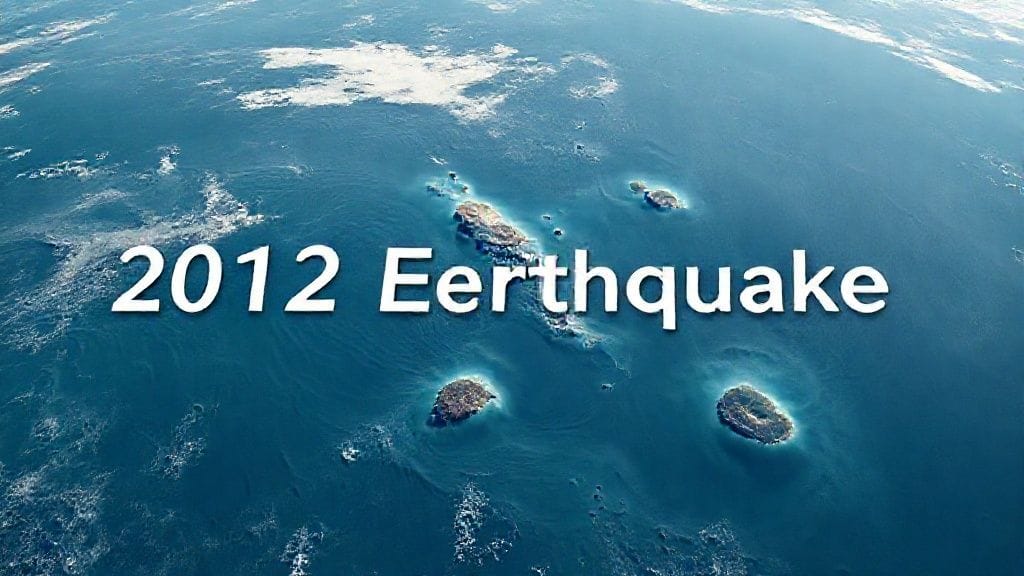
In the vast expanse of the South Indian Ocean, where icy winds sweep over volcanic peaks and sheer cliffs rise defiantly from the restless sea, there lies a set of rugged, isolated islands—the Prince Edward Islands. On a seemingly ordinary day in late August 2012, the planet beneath this remote outpost began to whisper ominously, a subtle but undeniable tremor working its way through the ocean floor. Few humans even noticed. Few would ever tell the story fully. Yet, this quiet earthquake, hidden from the world’s spotlight, unraveled a powerful chapter in Earth’s restless narrative.
It was the kind of event that can only be truly appreciated in the silence of scientific instruments—the shifting of ancient rocks miles beneath the water, reverberating through the plates that compose our planet. Imagine standing on the windswept shorelines, the sea smacking jagged rocks, unaware the colossal forces playing hard beneath your feet. The Prince Edward Islands earthquake was quietly monumental, a flash of geologic drama in one of the most isolated corners of our globe.
Setting the Scene: The Prince Edward Islands in the South Indian Ocean
To understand the significance of the 2012 earthquake, we must first grasp the remarkable isolation and fragility of the Prince Edward Islands region. These islands, comprised primarily of Marion Island and Prince Edward Island, belong to South Africa and rest thousands of kilometers from any continental mass. The islands’ frigid climate, harsh weather, and remoteness have shaped a fragile ecosystem, hosting unique seabird colonies, marine mammals, and a scientific research presence dedicated to studying climate change and biodiversity.
Far below, the ocean depth plunges thousands of meters. This region forms part of the southwestern Indian Ridge—an underwater mountain range marking a divergent tectonic boundary where the African Plate and Antarctic Plate slowly pull apart, creating rifts and volcanic activity. The islands themselves are volcanic in origin, born from fiery eruptions ages past, yet the surrounding seafloor remains a cauldron of subterranean activity, rarely witnessed by human eyes.
Geological Foundations: Understanding the Oceanic Rift and Tectonic Plates
Earthquakes beneath oceans generally occur along fault zones, where immense tectonic forces exert pressure on plates that float on the semi-fluid mantle below. Here, the process is gradual yet powerful: as the African and Antarctic plates diverge, magma rises to create new oceanic crust, pushing the plates farther apart. This motion triggers a series of seismic events, sometimes mild trembling, sometimes catastrophic ruptures.
The Prince Edward region sits close to these boundaries, meaning seismic activity, while not uncommon, remains poorly studied. The depth and isolation challenge classical monitoring, relying instead on global arrays of sensitive seismographs, satellite data, and oceanographic research. The 2012 quake was a prime example of such an event, occurring deep, but with enough power to register on international platforms and pique scientific curiosity.
August 26, 2012: The Day the Earth Shook Beneath the Waves
On August 26, 2012, at approximately 17:23 UTC, the Earth's crust betrayed a sudden, silent shift beneath the Prince Edward Islands. The earthquake was recorded at a magnitude of around 6.2—a significant tremor, especially for a remote oceanic region. Its focal depth was reported to be about 10 kilometers, relatively shallow for oceanic quakes but sufficient to make its presence known far beyond the immediate vicinity.
For many people, the event passed unremarked upon. No tsunamis followed, no coastal towns were shaken. Instead, the event sent ripples of interest through scientific communities focused on plate tectonics, volcanic activity, and oceanographic phenomena.
Seismic Waves in a Quiet Sea: Detecting the Unseen Earthquake
Because the region has no permanent human population and sparse infrastructure, the earthquake went unnoticed except by mechanical sentinels scattered across continents. Seismometers—sensitive instruments that detect and record ground motion—formed the backbone of detection.
Stations from Africa, Australia, and even as far as South America recorded the seismic waves generated. The shaking propagated in all directions: P-waves (primary compressional waves) raced fastest, followed by slower, more destructive S-waves and surface waves, their energy attenuating as they spread.
It’s incredible, isn’t it? How a shift so far beneath the waves, measured only fractionally in amplitude on our devices, can tell us volumes about Earth’s inner workings.
Measuring Power in the Abyss: Magnitude and Depth Explained
Magnitude, as determined on the Richter or moment magnitude scales, quantifies an earthquake's energy release. A 6.2 magnitude quake releases the energy of several Hiroshima-sized atomic bombs, but spread over a region, often deep offshore, this energy doesn't translate necessarily into surface devastation.
The 10-kilometer depth of this earthquake is considered shallow, increasing the likelihood for seismic impact near the epicenter but here limited by remoteness. Though far from human habitation, the quake serves as a natural laboratory, offering insights into underwater fault mechanisms.
The Aftershock That Reverberated: A Chain Reaction Beneath the Ocean
No great earthquake occurs in isolation. Following the main tremor, smaller aftershocks were detected, a cascade of brittle adjustments as the fault zone sought a new equilibrium. These aftershocks, typically weaker but still meaningful, provide clues about fault geometry and stress distribution.
Interestingly, this sequence also added to our understanding of how oceanic plates interact with one another and how strain accumulates along spreading centers.
A Remote Detection: How Global Networks Spotted the Tremor
This earthquake was a triumph of modern geoscience networks. The International Seismological Centre (ISC), the United States Geological Survey (USGS), and the South African Earthquake Monitoring System (SAEMS) all contributed seismic data vital to locating and characterizing the event.
The Prince Edward Islands region, while isolated, benefits from a web of seismic stations consulting one another via real-time data sharing, a triumph of global cooperation in Earth science.
The Island Guardians: Researchers and Monitoring Stations at Work
Fortunately, the islands host South African research bases dedicated to meteorology, biology, and geophysics. Although no residents felt the quake, sensors stationed there provide essential ground-truth data, linking satellite observations to in situ measurements.
Researchers at Marion Island seized the occasion to analyze any possible changes in volcanic activity and measured seabird behavioral changes, curious if the subterranean upheaval altered the fragile ecosystem.
Immediate Impact: Did the Earthquake Trigger Tsunamis or Ecological Disturbances?
Despite the energy unleashed, no tsunami waves of consequence were reported. This absence is linked to both the earthquake’s depth and the local topography beneath the ocean. Tsunami risks remain ever-present in tectonically active ocean basins, but here nature held its calm.
Ecologically, no immediate disruptions were detected. However, subtle shifts may take years to manifest in marine biodiversity, ocean chemistry, and bird migratory patterns—reminding us how much remains concealed in remote natural theaters.
Historical Context: Earthquakes in the Southern Ocean and Their Rarity
Earthquakes in the Southern Ocean are relatively rare compared to Pacific “Ring of Fire” activity or continental fault zones. The slow divergence of African and Antarctic plates produces periodic seismic events, but only occasionally do they reach magnitudes warranting attention.
The 2012 quake joins a historical catalog of modest yet scientifically invaluable events mapping this underexplored frontier.
Human Footprints in a Wilderness: The Scientific Significance of the Event
For scientists, this earthquake was a rare opportunity to calibrate models of oceanic plate dynamics and volcanic activity beneath a remote archipelago. It reinforced the importance of maintaining and expanding monitoring infrastructure in inaccessible regions and sharpened predictions of tectonic risk globally.
As one seismologist noted, “Every tremor beneath the waves provides a keyhole into Earth’s hidden mechanisms. The Prince Edward event was no exception.”
Underwater Landscapes Changed: Geological Implications of the Quake
Repeated seismic shifts gradually reshape the ocean floor—cracking, uplifting, collapsing. The 2012 quake likely contributed to subtle rearrangements of seafloor fault lines and volcanic vents, potentially influencing local geothermal activity.
Such changes have rarely been documented in this region, making analysis of bathymetric and geophysical surveys following the event especially valuable.
The Ocean’s Hidden Threats: Seismic Activity and Maritime Security
While these islands lie far from busy shipping lanes, seismic activity contributes to broader maritime risk assessments. Sudden underwater quakes can disrupt submarine cables, impact fishing grounds, and indirectly affect oceanic currents.
This event underscored the need for ongoing vigilance even in remote sectors of global oceans, as interconnected systems can propagate local disturbances worldwide.
Connections to Global Seismicity: How This Event Fits Into World Patterns
Though isolated, the 2012 Prince Edward earthquake forms part of a global mosaic of tectonic unrest. Its characteristics align with seafloor spreading dynamics similar to those observed along the Mid-Atlantic Ridge or East Pacific Rise.
Notably, comparing these events aids in forecasting geological hazards and refining plate tectonic theory, a cornerstone of contemporary Earth science.
The Prince Edward Islands’ Place in Earth Science and Conservation
These islands stand as a convergence point of natural beauty, biodiversity, and geoscientific fascination. Events like this earthquake spotlight both the vulnerability and grandeur of oceanic wilderness, emphasizing the necessity of protecting these environments amid climate change and human expansion.
Scientifically and symbolically, the islands embody the intersection between dynamic Earth processes and fragile life.
Narratives from the Field: Firsthand Accounts from Scientists and Mariners
Although few human observers experienced the quake directly, island scientists noted subtle ground vibrations and shifts in instrument readings. One researcher recalled the tense morning checking data: “It was a humbling reminder how small we are, how enormous the Earth’s force.”
Sailors passing nearby reported unusual sensations—brief oscillations felt aboard vessels—a rare connection between people and the deep earth beneath them.
Beyond the Tremor: Environmental and Biodiversity Considerations
Though invisible to casual eyes, the quake’s aftereffects in ocean chemistry or animal behavior remain possible. Seismic activity can alter seabed emissions, nutrient flows, or trigger displacement among marine species.
Long-term ecological studies aim to detect such changes, reminding us of the intertwined fates of geology and biology.
The Quiet Aftermath: Monitoring and Lessons Learned
Post-2012, efforts to strengthen seismic monitoring in the Southern Ocean intensified. Improved sensor arrays and data sharing provide earlier warnings and more detailed understanding.
The event taught the global scientific community about the challenges and rewards of studying remote geologic phenomena, inspiring new research projects and international collaborations.
The Lingering Mystery: Unanswered Questions and Future Research Directions
Despite advances, mysteries endure. How frequently do significant quakes strike this region? What exactly triggers such events beneath the oceanic crust? Can they herald volcanic eruptions or other hazards?
Scientists continue to pursue these puzzles, peering beneath the waves with unmanned submarines, seismic arrays, and satellite radar, drawn ever deeper into Earth’s untold stories.
Conclusion
The 2012 Prince Edward Islands earthquake was a silent drama etched beneath the South Indian Ocean’s surface—an enigmatic pulse from Earth’s restless heart felt mostly by machines and scientists. Yet, its significance transcends magnitude or damage. It tells a story of invisible forces shaping our world, of remote landscapes both fierce and fragile, and of human curiosity striving to grasp the unseen.
In the vast orchestra of Earth's geology, this seismic note resonates as a reminder: no corner is too remote, no phenomenon too obscure, to reveal secrets about the planet we call home. The tremor beneath those icy islands invites us to listen closely—not only to the Earth’s rumblings but to the delicate balance of nature held in the silence that follows.
FAQs
Q1: What caused the 2012 earthquake near the Prince Edward Islands?
A1: The earthquake was caused by tectonic activity along the boundary where the African and Antarctic plates diverge. This region forms part of an oceanic rift system where seafloor spreading and volcanic processes generate seismic events.
Q2: How strong was the earthquake in terms of magnitude?
A2: The quake registered around magnitude 6.2, a significant tremor especially for a remote oceanic region. Its relative shallowness (around 10 km deep) means energy was released closer to the seafloor.
Q3: Were there any tsunamis or immediate dangers following the quake?
A3: No tsunami or major aftereffects were recorded, likely due to the earthquake’s specific characteristics and location. The risks to human populations were minimal given the islands’ uninhabited status.
Q4: Why is the Prince Edward Islands region important for scientific study?
A4: Isolated yet geologically active, the islands serve as natural laboratories for studying tectonics, volcanism, marine ecology, and climate change. Earthquake data from this area help improve global seismic models.
Q5: How was this earthquake detected given the remoteness?
A5: Global networks of seismometers detected the event. These include stations in Africa, Australia, South America, and stations on the islands themselves, transmitting data to international scientific centers.
Q6: What are the broader implications of this earthquake for understanding Earth’s geology?
A6: The event contributes to knowledge of oceanic plate dynamics and seafloor spreading processes. It reinforces the understanding that Earth’s tectonic activity is not limited to continental margins but is widespread beneath oceans.
Q7: Has seismic activity increased in the region since 2012?
A7: Post-event monitoring shows variable activity, but no significant increase in seismic hazard has been recorded. Continued observations are essential to detect any long-term trends.
Q8: What future research is being conducted following this earthquake?
A8: Research includes improved seismic mapping, underwater geological surveys, biological impact studies, and the deployment of advanced monitoring stations to better predict and understand tectonic and volcanic activity in remote oceanic zones.