Table of Contents
- The Silent Tremor Before the Storm: A Prelude to February 24, 2021
- Iceland’s Restless Landscape: The Volcanic and Seismic Pulse of the Reykjanes Peninsula
- Historical Earthquakes and Geological Forces Shaping Reykjanes
- February 24, 2021: The Day the Earth Roared
- The First Shakes: Detecting the Initial Magnitude 5.7 Quake
- Aftershocks and Anxiety: The Unfolding Seismic Sequence
- The Human Response: Emergency Services, Government Alerts, and Local Inhabitants
- Infrastructure Under Strain: Roads, Buildings, and Critical Facilities
- Eyewitness Stories: Voices from the Ground
- Scientific Insight: Unraveling the Tectonic Puzzle
- The Role of the Mid-Atlantic Ridge and the Reykjanes Rift Zone
- Comparing 2021’s Quake to Past Seismic Episodes on the Peninsula
- Media Coverage and Public Perception: Fear Meets Fascination
- Economic Ripple Effects: Tourism, Fishing, and Local Industries
- The Psychological Impact: Living on an Active Fault Line
- Iceland’s Preparedness: Lessons from Past Earthquakes and Volcanic Eruptions
- The Broader Implications for the North Atlantic Region
- Scientific Advances Spurred by the 2021 Earthquake
- Cultural Resonance: Earthquakes in Icelandic Folklore and Modern Art
- A Changing Earth: Climate, Volcanism, and Seismicity Interlinked?
- What Comes Next? Monitoring, Warning Systems, and Future Risks
- The Resilience of Icelanders: Community, Recovery, and Hope
- Conclusion: The Enduring Dance Beneath Reykjanes’ Surface
- Frequently Asked Questions
- External Resource
- Internal Link
The fragile earth beneath the Reykjanes Peninsula began to tremble on an otherwise quiet winter morning in Iceland. It was February 24, 2021—an unassuming date destined to be etched into the collective memory of a nation. The ground shook with a sudden violence that shook not only the physical foundations of homes and land but also the nerves of a people perfectly attuned to the rhythms of Iceland’s restless geology. This seismic event was more than a mere tremor; it was a vivid reminder of the volatile relationship between Iceland’s fire-breathing underworld and the surface civilization striving to coexist on a narrow volcanic thread that stitches continents apart.
1. The Silent Tremor Before the Storm: A Prelude to February 24, 2021
In the days and weeks leading to the mainshock, seismic unrest had been quietly brewing beneath the Reykjanes Peninsula. Small tremors—imperceptible to most—pulsed through the earth, sending subtle warnings felt more acutely in the data streams of geologists than in the streets of Reykjavík or Grindavík. Yet, these were not mere random shakes. They were the stirring of an ancient, slow-moving beast shaped by tectonic forces that split Iceland like a seam in the Atlantic.
The atmosphere was tense but calm, underscored by a communal understanding that Iceland’s geology is a double-edged sword—both gift and threat. Scientists, ever watchful, were tracking seismic swarms, watching patterns emerge like the flicker before a blaze.
2. Iceland’s Restless Landscape: The Volcanic and Seismic Pulse of the Reykjanes Peninsula
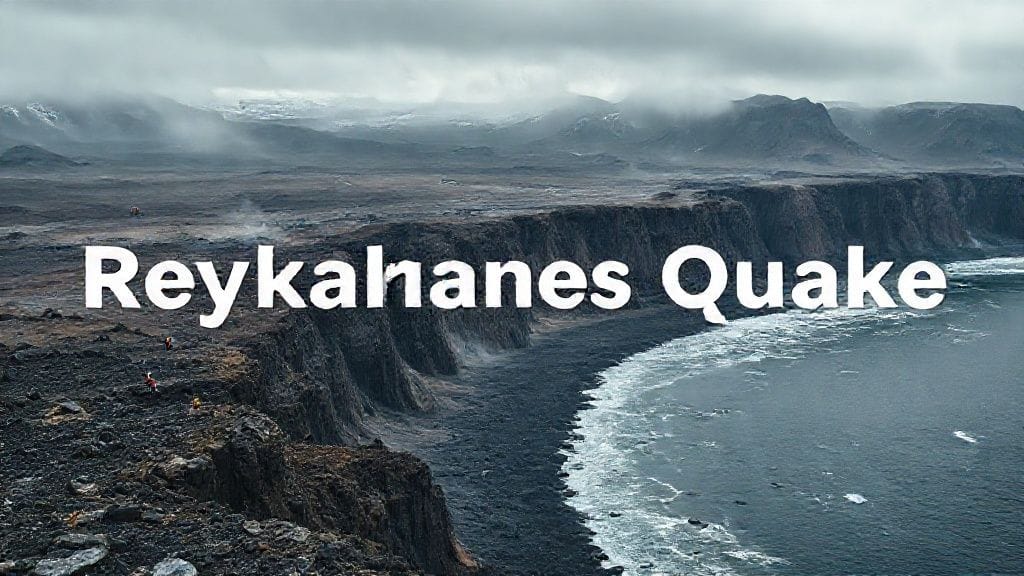
The Reykjanes Peninsula lies at the southwestern tip of Iceland, a land where the Mid-Atlantic Ridge rises from beneath the sea and tears the earth apart. It is not merely a geographical feature but a living, breathing frontier between two colossal tectonic plates: the North American and the Eurasian.
This zone is famous for geothermal fields, bubbling mud pools, and dramatic volcanic landscapes. Yet beneath these mesmerizing vistas lies a complex tectonic ballet where rifting, earthquakes, and eruptions occur in intimate proximity, reminding Icelanders daily of their island’s fiery origins.
3. Historical Earthquakes and Geological Forces Shaping Reykjanes
While moderate to strong earthquakes are not uncommon on Reykjanes, the peninsula’s history is marked by episodic seismic and volcanic bursts rather than constant activity. Records from the last century reveal episodes of earthquake swarms and occasional larger quakes correlating with volcanic unrest.
The peninsula’s crust is thin and brittle, fragmented by a network of faults that occasionally rupture with spasms felt far beyond the local region. Each event adds a new layer to the peninsula's geological story—a tale written in stone, ashes, and the shakings of the earth.
4. February 24, 2021: The Day the Earth Roared
At precisely 12:34 p.m. GMT, the earth beneath the Reykjanes Peninsula unleashed a sharp, powerful jolt—an earthquake that registered a magnitude of 5.7, the strongest in the region for over two decades. For residents, it was a sudden, terrifying reminder that beneath the rugged beauty of their land, raw geological forces were never dormant.
The quake, lasting mere seconds, was felt as far as Reykjavík and beyond, rattling windows, shaking homes, and sending tremors echoing across the landscape.
5. The First Shakes: Detecting the Initial Magnitude 5.7 Quake
Seismographs instantly recorded the rupture along a previously recognized fault line—a stark signal of strain release in the crust. The quake’s hypocenter was shallow, only about 5 kilometers beneath the surface, amplifying the intensity felt above.
Immediately, sensors picked up dozens of smaller aftershocks, setting the stage for an anxious wait as Iceland braced for the potential of further seismic unrest.
6. Aftershocks and Anxiety: The Unfolding Seismic Sequence
In the hours and days following the main event, the peninsula experienced a battery of aftershocks, the largest exceeding magnitude 4.0. These tremors kept residents on edge, disrupting daily routines and amplifying psychological stress.
Communities near the epicenter stayed alert, with many questioning whether a larger, more destructive quake might follow—an ever-present fear in a land shaped by unpredictable tectonics.
7. The Human Response: Emergency Services, Government Alerts, and Local Inhabitants
Iceland’s civil protection agencies swiftly activated emergency protocols. Public alerts were issued advising caution, and scientific teams mobilized to assess any damage. Locals were urged to inspect infrastructure, secure belongings, and prepare for possible further shifts.
Despite the intensity, there was no major damage or casualties—yet the experience reignited conversations about readiness and resilience in the face of natural calamities.
8. Infrastructure Under Strain: Roads, Buildings, and Critical Facilities
Though physical destruction was minor, the tremors exposed vulnerabilities in infrastructure. Cracks appeared in roads and buildings, prompting inspections and short-term closures in some areas. Power outages were sporadic but quickly repaired.
Crucially, airports, harbors, and geothermal power stations were evaluated, confirming the robustness of Iceland’s critical facilities but also highlighting areas for improvement.
9. Eyewitness Stories: Voices from the Ground
“I was sitting with my coffee when the whole house began to shake like never before,” recalled Jón Sigurðsson, a resident near Grindavík. “The pictures on the walls rattled, and something deep inside you just freezes for a moment.”
Children in schools felt the shaking and were comforted by teachers trained for earthquake response. Older generations shared stories of past tremors, weaving personal history into the collective memory.
10. Scientific Insight: Unraveling the Tectonic Puzzle
Geologists explained that the earthquake stemmed from a sudden slip along a transform fault where the two tectonic plates slide past one another. This movement is part of a larger pattern of crustal stretching and faulting characteristic of the Reykjanes Ridge.
Scientists emphasized that such earthquakes, while unsettling, are natural expressions of the peninsula’s tectonic dynamism—critical for accommodating the steady drift of plates at roughly 2 centimeters per year.
11. The Role of the Mid-Atlantic Ridge and the Reykjanes Rift Zone
Iceland’s unique geological position astride the Mid-Atlantic Ridge means constant creation and destruction of land masses. The Reykjanes Rift Zone, stretching across the peninsula, is a hotspot of seismicity tied to plate divergence.
The 2021 earthquake was a stark symptom of this continuous geodynamic process and part of episodic patterns connected to volcanic activity seen in the region’s recent past.
12. Comparing 2021’s Quake to Past Seismic Episodes on the Peninsula
The magnitude 5.7 quake was the strongest on the peninsula since the 2003 earthquakes, which also rattled residents but caused limited damage. Historical data shows similar pulses of seismic activity approximately every few decades, often followed by increased geothermal activity or eruptions.
This cyclical nature underscores the necessity for ongoing vigilance.
13. Media Coverage and Public Perception: Fear Meets Fascination
Icelandic and international media extensively covered the event, blending scientific facts with human stories. Social media platforms saw a flood of posts—from real-time reports to anxious speculation.
The quake rekindled both historical respect for Iceland’s volatile nature and a modern fascination for seismic science—uniting fear with curiosity.
14. Economic Ripple Effects: Tourism, Fishing, and Local Industries
While no major disruptions affected the entire country, localized impacts were palpable. Tourism operators near the peninsula reported brief cancellations, while fishing fleets awaited safe docking.
Geothermal plants, a vital part of Iceland’s energy and economy, monitored operations closely, ensuring continuity despite the shakings.
15. The Psychological Impact: Living on an Active Fault Line
For many, the earthquake brought a surge of anxiety, mingling respect with fear. Mental health professionals noted increased calls from residents struggling to cope with the unpredictability of living in such an active zone.
Community solidarity and government support programs played critical roles in mitigating the psychological toll.
16. Iceland’s Preparedness: Lessons from Past Earthquakes and Volcanic Eruptions
Iceland’s history of volcanic eruptions and seismic events has forged a culture of preparedness, emphasizing early warning systems, education, and infrastructure resilience.
The 2021 event tested these systems—and while successful, it also revealed areas for further refinement.
17. The Broader Implications for the North Atlantic Region
The earthquake was not just a local phenomenon but a marker of tectonic shifts affecting the North Atlantic basin. Researchers consider how such events might influence stress distribution along mid-ocean ridges, with implications for future seismicity and volcanic activity across the region.
18. Scientific Advances Spurred by the 2021 Earthquake
The event provided a natural laboratory for seismologists. High-resolution data enabled improved fault mapping, advanced understanding of plate interactions, and better models predicting subsequent activity.
These advances bear fruit for global earthquake science and risk management.
19. Cultural Resonance: Earthquakes in Icelandic Folklore and Modern Art
Earthquakes have long permeated Icelandic culture—from ancient sagas portraying the earth as a living entity to contemporary art capturing the island’s primal forces.
The 2021 quake inspired works of poetry, painting, and music—an artistic dialogue between earth’s fury and human resilience.
20. A Changing Earth: Climate, Volcanism, and Seismicity Interlinked?
Scientists explore how climate change—via melting glaciers reducing pressure on the crust—might influence seismicity and volcanism in Iceland. Though controversial, these theories open new fields of investigation into the complex feedbacks between earth systems.
21. What Comes Next? Monitoring, Warning Systems, and Future Risks
Following the earthquake, investments in seismic monitoring and early warning technologies accelerated. Authorities collaborated internationally to refine predictive capacities and emergency response strategies.
The goal: reduce risk while respecting the island’s inherent geology.
22. The Resilience of Icelanders: Community, Recovery, and Hope
Despite the tremors, Icelanders demonstrated remarkable solidarity and calm. Local communities rallied together, sharing resources and stories, embodying resilience born from centuries of cohabitation with their restless land.
Hope persists—not as denial of danger, but as embrace of challenge.
23. Conclusion: The Enduring Dance Beneath Reykjanes’ Surface
The 2021 Reykjanes Peninsula earthquake was not simply a rupture in the earth’s crust but a vivid chapter in Iceland’s ongoing story—a testament to nature’s power and humanity’s enduring spirit. It reminded us that beneath familiar surfaces lies a hidden world of movements shaping landscapes and lives. As science advances and communities adapt, the island’s heartbeat continues—sometimes turbulent, always remarkable.
Conclusion
The Reykjanes Peninsula earthquake of February 24, 2021, emerged as a profound moment of confrontation between humanity and the earth beneath. It was a reminder bound by sound and feeling—a shaking that connected Icelanders across generations with their volatile heritage. Yet, beyond the tremors and ruptures, what shines is the resilience of a people who greet the uncertain earth with preparedness and poignancy.
Iceland’s story is etched in fire and rock, but also in the courage and calm with which its inhabitants face each new quiver beneath their feet. The 2021 quake was not the end but rather a pulse in an ancient dance—a vivid illustration of the planet’s ceaseless energy and the human capacity to endure and understand.
Frequently Asked Questions
Q1: What caused the magnitude 5.7 earthquake on the Reykjanes Peninsula in 2021?
A1: The earthquake was caused by movement along a transform fault in the Reykjanes Rift Zone, where the North American and Eurasian tectonic plates slide past each other.
Q2: How common are earthquakes of this magnitude in Iceland?
A2: Moderate to strong earthquakes occur periodically, especially near tectonic plate boundaries like the Reykjanes Peninsula. Events of magnitude around 5 to 6 happen every few decades in this region.
Q3: Were there any fatalities or major damages caused by the 2021 earthquake?
A3: No fatalities occurred, and major structural damage was limited. The event mainly caused minor infrastructure cracks and widespread tremors felt across southwestern Iceland.
Q4: How does the Reykjanes Peninsula's geology influence Iceland’s volcanic activity?
A4: The peninsula lies on a tectonic rift zone that facilitates magma ascent, linking seismic activity with volcanic eruptions that have shaped the region’s rugged landscape.
Q5: What measures has Iceland taken to prepare for such seismic events?
A5: Iceland has advanced seismic monitoring networks, public education programs, emergency protocols, and infrastructure designed to withstand earthquakes and volcanic eruptions.
Q6: How did the local population respond to the earthquake psychologically?
A6: While anxiety and stress increased temporarily, community support and preparedness programs helped mitigate psychological impacts.
Q7: Are seismic events like the 2021 earthquake indicators of future volcanic eruptions?
A7: Sometimes earthquakes precede volcanic activity, but not always. Scientists monitor patterns closely to anticipate possible eruptions.
Q8: What scientific benefits arose from studying the 2021 Reykjanes earthquake?
A8: Researchers refined their understanding of fault mechanics in rift zones, improved seismic hazard models, and advanced early warning system technologies.