Table of Contents
- The Awakening Earth: Morning of September 27, 2021
- Crete’s Ancient Tremors: A Land Shaped by the Earth
- The Locale of Arkalochori: A Historic Crossroads
- Seismology of the Mediterranean: Where Plates Collide
- The Prelude to Disaster: Forewarnings and Quiet Rumblings
- The Tremor Unfolds: Detailing the Earthquake's Shockwaves
- Human Stories Amidst the Ruins: Eyewitness Accounts
- Infrastructure and Impact: Buildings, Roads, and Lives
- Emergency Response: The Race Against Time
- The Role of Technology: Early Warnings and Seismic Networks
- Government and Community Mobilization: Unity in Crisis
- Psychological Aftershocks: Trauma and Resilience
- Economic Consequences: From Loss to Reconstruction
- Cultural Heritage at Risk: Preserving Crete’s Historical Sites
- Lessons Learned: Advancing Earthquake Preparedness
- Global Reactions and Aid: Solidarity Beyond Borders
- Comparing 2021’s Event with Crete’s Past Quakes
- Scientific Advances Sparked by Arkalochori’s Earthquake
- The Human Spirit: Stories of Survival and Generosity
- Environmental Effects: The Earth’s Transformation Post-Quake
- Long-Term Recovery: Rebuilding a Community Together
- The Myth of Earthquakes in Greece: Ancient Beliefs and Modern Science
- Conclusion: Reflections on Nature’s Fury and Human Endurance
- FAQs: Understanding the Arkalochori Earthquake
- External Resource: Wikipedia Link
- Internal Link: Visit History Sphere
1. The Awakening Earth: Morning of September 27, 2021
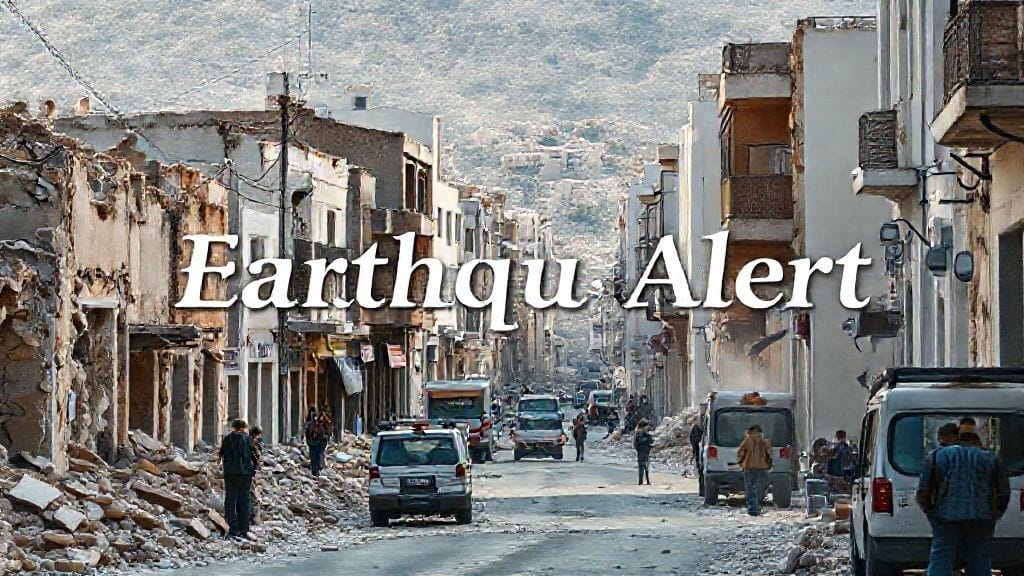
The morning sun dipped gently over the Aegean horizon as the people of Arkalochori went about their daily routines. Shops opened, children walked to school, and fishermen prepared their boats. Unbeknownst to all, beneath their feet, the earth braced for an invisible upheaval. At precisely 9:15 a.m., a sudden, violent shaking shattered the calm—the long-dormant faults beneath Crete roared to life in a seismic event that rattled nerves, shattered glass, and sent ripples of fear across the island and beyond.
In an instant, the tranquil familiarity of daily life gave way to a cacophony of collapse; the ancient town of Arkalochori confronted a raw, uncompromising force of nature. To understand this moment is to delve deep into the geological fabric of Crete, the pulse of its community, and the historical sequelae that framed this day of profound upheaval.
2. Crete’s Ancient Tremors: A Land Shaped by the Earth
Crete, the largest of the Greek islands, is more than a Mediterranean paradise; it is a living testament to the earth’s restless dynamism. Since antiquity, this land has felt the persistent pull and grind of tectonic plates—Hellenic arc dynamics have sculpted breathtaking landscapes and shaken civilizations alike.
The island rests near complex boundaries of the African and Eurasian tectonic plates, a seismically sensitive zone where the earth’s plates meet, collide, and grind in eternal, often violent conversation. History books recount numerous earthquakes that have shaped Crete’s towns, disrupted empires, and rewritten human destiny in seismic tremors parallel to their cultural narratives.
It is striking to consider that beneath Crete’s sun-soaked olive groves and rugged mountains lies a restless earth, chronically reminding its inhabitants of nature’s power. The Arkalochori earthquake of 2021 is just one chapter in this ongoing saga.
3. The Locale of Arkalochori: A Historic Crossroads
Arkalochori, a modest town nestled in the heart of central Crete, could easily be overlooked by the casual traveler. Yet its story is intertwined with the very history and geology of the island. Known for its proximity to significant archaeological finds, including the Arkalochori Axe discovered in nearby caves, this town is a nexus of the ancient and the modern.
Arkalochori’s population leads a largely agricultural lifestyle, supplemented by tourism attracted to Crete’s mythic past and Mediterranean allure. The town’s unassuming demeanor belies its resilience—a character forged over centuries of adaptation to both human and natural challenges.
On that day in September, this tight-knit community suddenly faced a catastrophe that would test not only its physical structures but also the social fabric that bound its people.
4. Seismology of the Mediterranean: Where Plates Collide
The Mediterranean region is infamous for its seismic volatility. Here, the African Plate slides beneath the Eurasian Plate in a slow but relentless subduction, pushing mountains skyward and occasionally unleashing destructive earthquakes.
Greece is considered one of Europe’s most earthquake-prone countries. Crete occupies a particularly complex fault system within this seismically charged environment, where strike-slip, thrust, and normal faults interlock in unpredictable patterns.
Scientific surveys before 2021 had identified several active faults near Arkalochori, yet predicting the timing and magnitude of an earthquake remained—then as now—a formidable challenge. The Arkalochori earthquake was generated by thrust faulting, a release of accumulated geological strain stored across decades or centuries.
5. The Prelude to Disaster: Forewarnings and Quiet Rumblings
In the days leading up to the earthquake, subtle seismic activity hinted at increased geological restlessness. Small tremors, barely perceptible to humans, were picked up by local seismographs—often dismissed as routine background noise.
Residents told of fractured walls appearing in homes over weeks, and an uneasy tension in the air palpable among elders who remembered previous calamities. Yet the fault line's imminent rupture was an unspoken, dreaded possibility.
For tectonic plates, pressure builds imperceptibly. For the people living atop them, that pressure sometimes springs without warning—a cruel and capricious fate. For Arkalochori, fate arrived without a clear herald.
6. The Tremor Unfolds: Detailing the Earthquake's Shockwaves
At 9:15 a.m., the primary seismic event struck—a magnitude 6.3 earthquake centered just 5 kilometers beneath Arkalochori. The ground heaved, buildings groaned, and a deep rumbling echoed through streets and valleys.
The shaking lasted approximately 30 seconds but felt like an eternity to those caught in its grasp. Aftershocks followed rapidly, some strong enough to add to the damage and keep the population on edge.
The seismic waves radiated outward, felt across much of Crete and even neighboring islands. Windows shattered, roads cracked, and panic gripped the inhabitants.
The event was characterized by thrust faulting on a steeply dipping fault plane consistent with Crete’s complex geology, registering among the most intense quakes in recent decades on the island.
7. Human Stories Amidst the Ruins: Eyewitness Accounts
Maria, a schoolteacher, recounted the moment in vivid detail: “The ground began to shake violently. Children screamed and scrambled under desks. The walls cracked and dust filled the air. I still hear the echo of the crumbling plaster.”
Nikolas, a fisherman, described how the quake interrupted his morning ritual, causing boats to sway dangerously in the harbor and storefronts to collapse like dominoes.
Among many stories, themes of fear, confusion, and desperation emerged, but also those of courage and solidarity. Neighbors rushed to pull the trapped from debris; strangers comforted frightened elders. In the chaos, humanity shone with remarkable dignity.
8. Infrastructure and Impact: Buildings, Roads, and Lives
The earthquake’s toll was heavy but not apocalyptic. An estimated 1,200 structures suffered damage, including homes, schools, and public buildings. Older buildings constructed without modern seismic codes bore the brunt.
Critical infrastructure such as roadways and water systems cracked or failed in places, complicating emergency responses. Power outages disrupted communication and added a layer of uncertainty.
Casualty figures, thankfully, remained relatively low—though dozens were injured, and several fatalities were reported, a stark reminder of nature’s unpredictable cruelty. Damage assessments painted a sobering picture of a town grappling with sudden devastation.
9. Emergency Response: The Race Against Time
Within hours of the earthquake, Greek emergency services sprang into action. Rescue teams coordinated search and rescue operations, medical personnel tended to the wounded, and authorities set up temporary shelters.
International aid was also mobilized—European support mechanisms enabled rapid deployment of resources. Civil protection measures prioritized clearing debris and securing unstable buildings.
Local volunteers played a pivotal role, reinforcing bonds within the community. The disaster highlighted both the strengths and limitations of Greece’s emergency preparedness in seismic crises.
10. The Role of Technology: Early Warnings and Seismic Networks
Though powerful, the Arkalochori earthquake revealed the state of seismic detection technology in the region. Greece’s seismological network provided real-time data that was essential for understanding and reporting the event.
However, early-warning systems capable of alerting populations seconds before shaking remain limited. Post-quake analyses spurred intensified calls for investments in technology to provide seconds—vital seconds—that can save lives.
Satellite imaging and drone surveys in the aftermath helped map damage swiftly, marking a new era in disaster response for less accessible areas.
11. Government and Community Mobilization: Unity in Crisis
The Hellenic government responded swiftly, declaring a state of emergency in the affected region. Funds were allocated for immediate relief and long-term rebuilding.
Community centers became hubs of activity, welcoming displaced families, distributing supplies, and organizing medical aid. The vibrant spirit of Arkalochori’s citizens roused hope amid hardship.
Local officials coordinated with scientific experts to prioritize structural inspections and design reconstruction with enhanced safety.
12. Psychological Aftershocks: Trauma and Resilience
Earthquakes leave scars beyond the physical. Survivors grappled with anxiety, sleepless nights, and fear of aftershocks, particularly vulnerable were children and the elderly.
Mental health professionals mobilized to provide counseling, and community initiatives fostered solidarity and psychological healing.
Remarkably, archaeological and historical narratives of survival gave many a cultural anchor—stories of ancestors who rebuilt from ruin—instilling strength in face of adversity.
13. Economic Consequences: From Loss to Reconstruction
The earthquake dealt a serious blow to Arkalochori’s local economy. Agricultural disruption, loss of homes, and reduced tourism footholds created a ripple effect.
Insurance claims mounted, budgets strained, and livelihoods threatened. Yet, reconstruction efforts also created jobs and opportunities for modernization.
Aid programs aimed to balance immediate relief with sustainable development, emphasizing resilient infrastructure and diversified local economy.
14. Cultural Heritage at Risk: Preserving Crete’s Historical Sites
Crete’s rich archaeological legacy always hangs in delicate balance with natural threats. The Arkalochori Axe caves and nearby sites required urgent assessment.
Conservationists feared irreversible damage to artifacts and monuments. Recovery efforts balanced urgency with meticulous care to protect heritage.
This episode highlighted the vulnerability of cultural treasures embedded in seismic zones and the need for protective strategies combining science and tradition.
15. Lessons Learned: Advancing Earthquake Preparedness
Arkalochori’s ordeal served as a somber catalyst for improvements in disaster readiness. Public education campaigns stressed building codes, emergency drills, and community planning.
Scientific collaboration enhanced fault monitoring, risk mapping, and communication.
The crisis underscored a universal truth: prevention and preparation, though expensive and challenging, are vital shields against geological hazards.
16. Global Reactions and Aid: Solidarity Beyond Borders
International organizations and neighboring countries extended condolences and practical help.
The European Civil Protection Mechanism facilitated medical aid, technical teams, and financial support.
This show of global solidarity reinforced bonds not only of geography but of shared humanity confronting the indifferent forces of nature.
17. Comparing 2021’s Event with Crete’s Past Quakes
Crete’s seismic history includes devastating events such as the 1953 Ionian earthquake and earlier, the 365 AD quake that reshaped the eastern Mediterranean.
Though less catastrophic, the Arkalochori earthquake reaffirmed patterns of recurrence and lessons on building resilience.
Historians and seismologists alike revisited archives to place 2021 in a continuum of challenge and recovery.
18. Scientific Advances Sparked by Arkalochori’s Earthquake
Research intensified on fault system behavior, rupture dynamics, and aftershock sequences.
New models emerged explaining the interaction of shallow thrust faults and overlying fault zones in Crete.
Seismological data from this quake enriched global understanding of Mediterranean tectonics, revealing nuanced complexities.
19. The Human Spirit: Stories of Survival and Generosity
Beyond the rubble, countless narratives of heroism emerged—neighbors sheltering those injured, volunteers rebuilding homes, and strangers donating food.
Maria, the teacher, later organized community gatherings to remember and heal.
Nikolas, the fisherman, restored his boat with help from generous hands, symbolizing the town’s perseverance.
Such stories remind us that in crises, human kindness often outshines destruction.
20. Environmental Effects: The Earth’s Transformation Post-Quake
Crete’s landscape subtly changed as crevices appeared and soil liquefaction affected some plains.
Water sources shifted, and minor landslides altered local ecosystems.
Scientists used these changes to understand seismic impacts on landscapes, crucial for future hazard assessment and land-use planning.
21. Long-Term Recovery: Rebuilding a Community Together
Two years on, Arkalochori’s streets bustle anew with life. Reconstruction respects tradition while embracing modern seismic safety.
Economic recovery proceeds cautiously, aided by government and EU funds.
Community initiatives focus on social cohesion, education, and sustainability—honoring the past and preparing for an uncertain future.
22. The Myth of Earthquakes in Greece: Ancient Beliefs and Modern Science
Earthquakes have long inspired myth and legend in Greek culture, from Poseidon’s anger to the tales of shattered cities.
Such narratives offered early explanations and moral lessons but often fueled fear.
Modern science demystifies these events, equipping societies to confront nature with knowledge and prudence.
Yet, culture and myth remain integral to identity, blending ancient wisdom with contemporary resilience.
23. Conclusion: Reflections on Nature’s Fury and Human Endurance
The Arkalochori earthquake of 2021 was more than a geological incident—it was a moment where nature’s raw power intersected with human vulnerability and strength.
The shaking earth tested physical structures and human spirits alike. Through tragedy, the community demonstrated courage, solidarity, and an unwavering will to rebuild.
In reflecting on this event, we recognize our place within a dynamic planet—forever attentive to its moods, cherishing the bonds that sustain us, and learning anew how to coexist with the restless earth beneath our feet.
Conclusion
The seismic events that unfolded near Arkalochori on that September morning were a profound reminder of the tenuous relationship between human civilization and the forces of the natural world. In the face of sudden destruction, the people of Crete rose—from rescue to recovery—with a resolve rooted deeply in their history and culture.
This earthquake was not just a test of bricks and mortar but a testament to communal resilience, scientific progress, and shared human compassion. It underscored the urgent need for preparedness and thoughtful planning in a world shaped by shifting tectonics.
And while the earth beneath Arkalochori will no doubt continue its slow, mysterious movements, the legacy of 2021’s quake endures as a beacon of hope and learning—a story for future generations about loss, renewal, and the enduring power of the human spirit.
FAQs
Q1: What caused the Arkalochori earthquake in Crete on September 27, 2021?
The earthquake was triggered by thrust faulting along a seismically active fault beneath central Crete, part of the convergent boundary where the African Plate subducts under the Eurasian Plate.
Q2: How strong was the earthquake and how long did it last?
It registered a magnitude of 6.3 and the intense shaking lasted around 30 seconds, with multiple aftershocks following.
Q3: What were the immediate impacts on the Arkalochori community?
There was significant damage to buildings and infrastructure, several injuries and fatalities, power outages, and disruptions to daily life.
Q4: How did emergency responders and the government react to the earthquake?
Greek national and local authorities declared a state of emergency, coordinated search and rescue operations, mobilized medical aid, and initiated recovery and rebuilding efforts.
Q5: What role has technology played in monitoring earthquakes in Greece?
Seismic networks provide real-time data, but limitations in early-warning systems exist. The Arkalochori event spurred calls for improving technology to provide earlier alerts.
Q6: How does the earthquake fit into Crete’s broader seismic history?
It is one of the more significant recent quakes, reaffirming Crete’s long history of seismic activity and the need for ongoing vigilance and preparedness.
Q7: What are the long-term consequences of the earthquake?
Economic disruption, mental health challenges, rebuilding costs, cultural heritage preservation efforts, and increased community resilience are among the key consequences.
Q8: How is the event remembered and commemorated today?
Arkalochori holds community gatherings and memorials, with educational programs emphasizing disaster preparedness and cultural heritage awareness.