Table of Contents
- A Day of Unthinkable Shakes: The Dead Sea Transform Earthquake, May 20, 1202
- The Dead Sea Transform: A Tectonic Fault Line of Ancient Violence
- A Region Poised on the Edge: The Levant in the Early 13th Century
- Prelude to Disaster: Signs, Rumors, and the Earth’s Murmurs
- May 20, 1202: When the Earth Roared
- The Tremor That Changed Cities: From the Golan Heights to the Jordan Valley
- Jerusalem’s Silent Cracks and the Fate of the Crusader Kingdom
- The Earthquake's Wrath: Coastal Cities and Rural Devastation
- Ravaging the Heartland: The Impact on Population, Agriculture, and Infrastructure
- The Secondary Disasters: Landslides, Floods, and Aftershocks
- Stories from the Ground: Chroniclers and Eyewitnesses of 1202
- Political Earthquake: Shifts in Power and the Fragile Crusader States
- Religious Interpretations: Angels, Omens, and the Will of God
- The Lesser-Known Casualties: Cultural Heritage Lost Beneath Rubble
- The Earthquake in the Context of the Crusades and Regional Conflicts
- Archaeological Revelations: Unearthing the Past Through Rubble
- Long-Term Effects on Settlement Patterns and Trade Networks
- Scientific Understandings Today: Decoding the 1202 Earthquake
- Lessons Learned and Forgotten: Infrastructure and Seismic Risk in the Levant
- Memory and Silence: How the 1202 Earthquake Echoes (or Vanishes) in Local History
- The Dead Sea Fault Today: Living with a Legacy of Pressure
- Conclusion: Earth’s Fury and Human Resilience on the Dead Sea Transform
- FAQs: Understanding the 1202 Levant Earthquake
- External Resource
- Internal Link
1. A Day of Unthinkable Shakes: The Dead Sea Transform Earthquake, May 20, 1202
The morning of May 20, 1202, dawned as any other day on the ancient, sun-soaked lands surrounding the Dead Sea. Terraced hills glistened with dew, fishermen cast their nets in the still waters of the sea, and towns buzzed with daily commerce under the familiar watch of stone fortresses. And yet, beneath the earth’s crust, tensions had been quietly mounting for centuries. Suddenly, without warning, the ground heaved, buildings shuddered, and centuries-old stones crumbled into dust. It was an earthquake unlike any other, born from the fierce movements along the Dead Sea Transform fault line, a violent boundary between the African and Arabian tectonic plates. The event of 1202 would devastate cities, shatter political hopes, and alter the physical and human geography of the Levant forever.
2. The Dead Sea Transform: A Tectonic Fault Line of Ancient Violence
Stretching over 1,000 kilometers from the Red Sea in the south to the Taurus Mountains in the north, the Dead Sea Transform (DST) is a major strike-slip fault system. It is a geologic seam where two massive tectonic plates—the African and the Arabian—rub alongside each other in a slow, relentless tectonic dance. Over millions of years, this strike-slip fault has shaped the rugged ridges, deep depressions, and volcanic fields of the Levant. But it is also a zone prone to seismic upheaval. The 1202 earthquake was one of the greatest historic manifestations of this hidden but deadly geological fault.
3. A Region Poised on the Edge: The Levant in the Early 13th Century
In the early 1200s, the Levant was a crossroads of empires, faiths, and cultures. Christian Crusader states dotted the landscape, having carved footholds from a mosaic of Muslim territories and Byzantine remnants. Jerusalem—though changed hands repeatedly—and cities like Acre, Nablus, and Damascus were hubs of military, religious, and commercial life. Agriculture thrived in the fertile valleys; pilgrims and traders from Europe and the Islamic world animated these lands. But the political balance was fragile, and the region was already bracing for shifts as powerful forces jockeyed for control aided by complex alliances.
4. Prelude to Disaster: Signs, Rumors, and the Earth’s Murmurs
Chroniclers of the time recorded whispers of unusual phenomena leading up to May 1202. Animals reportedly fled the countryside; the air felt charged with unease. Some local inhabitants spoke of minor tremors in the months prior—quiet murmurs of the earth anticipating a great release of energy. Although scientific understanding was absent, these people knew their lands as living things, sensitive to the smallest changes. These ominous signs were precursors to a catastrophic event that would shatter their very foundations.
5. May 20, 1202: When the Earth Roared
At an indeterminate hour— historians debate whether it was morning, afternoon, or even at night—the earth cracked violently. The ground lurched horizontally, rocks tore apart, and violent shaking upended towns perched above the Dead Sea Transform fault. The earthquake reportedly reached a magnitude approximating 7.6 to 7.8 on today’s logarithmic scale—a catastrophic jolt capable of instant destruction over hundreds of kilometers. Gutted walls collapsed, wells turned to mud, and roofs caved in under enormous forces. It was as if the earth beneath the Levant shook off centuries of slumber in one terrible, unforgiving convulsion.
6. The Tremor That Changed Cities: From the Golan Heights to the Jordan Valley
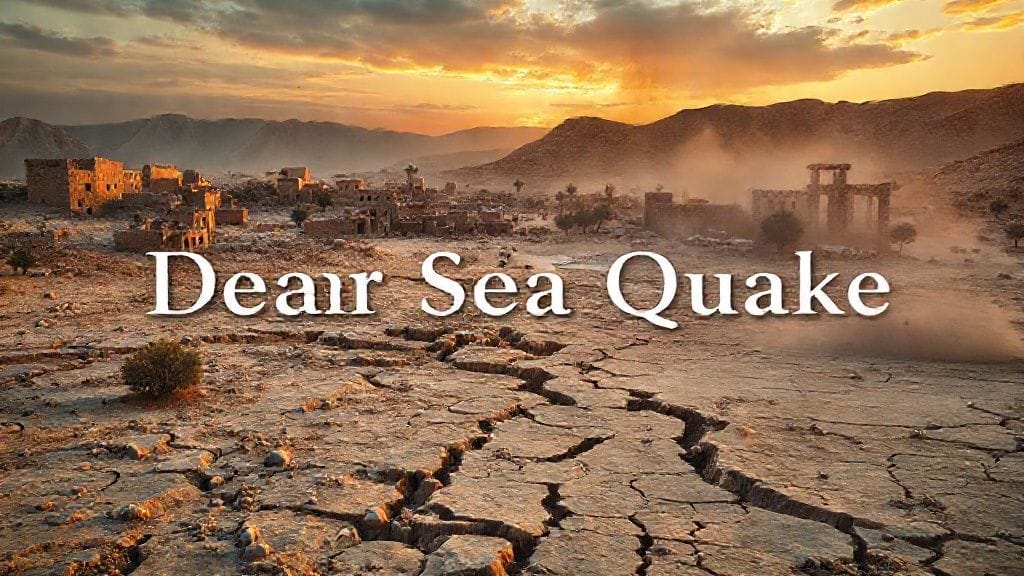
The reach of destruction was vast. The Golan Heights—strategically vital and dotted with fortresses—bore massive damage. The Jordan Valley experienced fissures that split roads and jettisoned trees. The Dead Sea itself reportedly foamed and surged, with accounts of landslides plunging into its depths. Cities upon hills, including ancient Gamla and Tiberias, experienced widespread ruin. Those who survived spoke of streets cleaved in two, water supplies interrupted, and the decay of infrastructure that supported life and trade.
7. Jerusalem’s Silent Cracks and the Fate of the Crusader Kingdom
Jerusalem’s medieval stones told a quieter story. Though spared total destruction, the city’s walls and edifices groaned under the quake’s aftermath. The famous Church of the Holy Sepulchre showed signs of damage, necessitating repairs funded by various crusading nobles. For the rulers of the Christian Kingdom of Jerusalem, already fraught with political challenge, the earthquake was a dark omen—a shaking of divine favor sensed by both Christians and Muslims alike. It disrupted pilgrim routes and compounded the kingdom's precarious hold on the region.
8. The Earthquake's Wrath: Coastal Cities and Rural Devastation
Further west, coastal cities like Acre and Caesarea felt the earth’s fury, if with less intensity. Still, the shockwaves shattered towers, houses, and docks, interrupting commerce and naval activities essential to the Crusader states and Muslim ports alike. Away from cities, villages and farms bore the brunt of loss, with collapsed houses and ruined terraces that threatened food supplies. The rural population—predominantly farmers and shepherds—endured hardship alongside urban survivors, marking a shared crisis across social layers.
9. Ravaging the Heartland: The Impact on Population, Agriculture, and Infrastructure
Demographic consequences were grave. Casualty figures are debated but certainly numbered in the tens of thousands. Vital irrigation systems broke, olive groves and vineyards were laid waste, and grain stores disappeared beneath rubble. The social fabric frayed as communities grappled with hunger, disease, and displacement. Roads became impassable, hampering aid and trade. The quake undermined not just stone but livelihoods, reverberating through the very sustenance of Levantine peoples.
10. The Secondary Disasters: Landslides, Floods, and Aftershocks
The initial quake was followed by days—perhaps weeks—of aftershocks that kept survivors in terror. The steep slopes along the fault unleashed landslides that buried hamlets and blocked river courses. Flooding from disrupted water channels and underground springs added to the misery. The Dead Sea’s shoreline changed subtly as underwater mass movements triggered waves and altered sedimentation patterns. These secondary effects underscored the complex, multi-layered nature of seismic disasters in tectonically sensitive regions.
11. Stories from the Ground: Chroniclers and Eyewitnesses of 1202
The preserved written records from the 13th century provide tantalizing, vivid glimpses into this calamity. Muslim historians like Ibn al-Athir described the quake as a divine punishment; Christian chroniclers noted the destruction of fortresses and churches. In a rare surviving eyewitness account, pilgrims recorded the terror of the shaking and the desperate prayers of those trapped under rubble. These human voices transform the event from mere geology to lived tragedy.
12. Political Earthquake: Shifts in Power and the Fragile Crusader States
Beyond the physical destruction, the earthquake reconfigured political realities. The Crusader states, already beset by internal divisions and external pressure from the Ayyubid Sultanate, found their military and administrative capabilities weakened. Fortresses damaged or destroyed meant vulnerabilities in frontier defenses. It delayed military campaigns and may have helped embolden Muslim rulers seeking to reclaim territory. The earthquake was both a literal and symbolic upheaval during an era of conflict and fragile alliances.
13. Religious Interpretations: Angels, Omens, and the Will of God
The medieval mindset instinctively framed earthquakes as supernatural signs. Clergy from diverse faiths preached that the catastrophe was a manifestation of divine anger or judgment. Some believed it was a celestial warning to repent; others interpreted it as preparation for prophesied events. These spiritual explanations shaped responses as much as physical rebuilding, influencing morale, religious devotion, and political rhetoric. Earth’s fury became a language of faith and ideology.
14. The Lesser-Known Casualties: Cultural Heritage Lost Beneath Rubble
The earthquake also erased or damaged innumerable works of art, architecture, and cultural heritage. Temples, mosaics, manuscript libraries, and fortifications that carried the imprint of centuries vanished or were severely impaired. The loss of these treasures left voids in the historical record—reminders that seismic disasters do not just claim lives but also the unique creations of human civilization, intangible losses that challenge historians and archaeologists alike.
15. The Earthquake in the Context of the Crusades and Regional Conflicts
The Levant of 1202 was no stranger to war and conquest, but the earthquake introduced an uncontrollable element into this volatile mix. Armies struggling for dominion had to contend not only with foes but with devastated lands and disrupted supply lines. The quake may have accelerated political changes and offered strategic advantages to some actors over others, shifting the momentum in ongoing crusading campaigns and Muslim counterattacks.
16. Archaeological Revelations: Unearthing the Past Through Rubble
Modern archaeology has slowly peeled back layers of history buried by the earthquake. Sites along the DST reveal destruction layers consistent with upheaval in 1202. Collapsed buildings, shifted earth, and broken artifacts tell stories corroborated by texts. These tangible clues allow contemporary scientists and historians to reconstruct the quake’s magnitude, spread, and human impact—bringing the distant disaster to life with renewed clarity.
17. Long-Term Effects on Settlement Patterns and Trade Networks
The 1202 earthquake did more than destroy infrastructure: it prompted shifts in settlement. Some towns were abandoned or relocated; trade routes adjusted to avoid damaged regions. Agricultural production fluctuated for decades, influencing population movements and economic realignments. Over time, some sites recovered while others faded, traces of the seismic event shaping the region’s developmental trajectory well into the later Middle Ages and beyond.
18. Scientific Understandings Today: Decoding the 1202 Earthquake
With modern seismology and geology, scientists estimate the 1202 event's power and situate it within the seismic history of the Dead Sea Transform. Studies indicate the fault can produce devastating shocks every few hundred years, a reminder of continuing danger. The earthquake's legacy informs risk assessment, urban planning, and disaster preparedness in modern Israel, Jordan, Lebanon, and Syria—countries still very much alive atop this restless fault line.
19. Lessons Learned and Forgotten: Infrastructure and Seismic Risk in the Levant
Despite centuries of experience with earthquakes, vulnerability remains high in the region. The 1202 quake underscores the necessity of resilient infrastructure and preparedness. Historically, recovery was slow, and memorialization scant. Contemporary efforts to build earthquake-resistant structures often face economic and political challenges. The memory of 1202 should be a call to action—lest the ground shake again with cruel familiarity.
20. Memory and Silence: How the 1202 Earthquake Echoes (or Vanishes) in Local History
Strikingly, the 1202 earthquake does not feature prominently in popular memory or folklore in the Levant today. Its colossal impact seems muted by the passage of time and subsequent historical traumas. Why has this event—so catastrophic—largely fallen into historical obscurity? Scholars debate whether political upheavals, cultural priorities, or religious explanations contributed to collective forgetting, creating a historical silence over an event that reshaped lives and lands.
21. The Dead Sea Fault Today: Living with a Legacy of Pressure
Today, the Dead Sea Transform continues its slow, inexorable motion. Millions of people reside in seismic hazard zones along this fault—metropolitan areas like Amman, Jerusalem, and Beirut lie within reach of future earthquakes. The 1202 quake remains a sobering benchmark for the potential fury lurking below, reminding scientists, governments, and citizens that the earth’s restless behavior is a shadow stretched long through history and into the present.
22. Conclusion: Earth’s Fury and Human Resilience on the Dead Sea Transform
The 1202 Dead Sea Transform earthquake was more than a natural disaster; it was a pivotal moment that reshaped political borders, shattered societies, and realigned human destinies. It stands as a stark reminder of the intimate relationship between our fragile human endeavors and the ceaseless movements of the earth beneath. Yet, amidst the devastation, tales of survival, rebuilding, faith, and adaptation spark a filament of human resilience that threads through the Levant’s tumultuous history. Remembering this earthquake is an act of honoring those who endured the shaking ground and learning from their trials to prepare for the inevitable tremors yet to come.
23. FAQs: Understanding the 1202 Levant Earthquake
Q1: What caused the 1202 Dead Sea Transform earthquake?
A1: The earthquake resulted from a rupture along the Dead Sea Transform, a strike-slip fault marking the boundary between the African and Arabian tectonic plates. The fault accumulated stress over centuries and finally released it in a massive quake.
Q2: How powerful was the 1202 earthquake?
A2: Though exact measurements are impossible, scientific estimates place it around magnitude 7.6 to 7.8, making it one of the largest seismic events in the Levant’s recorded history.
Q3: Which areas suffered the most damage?
A3: The Golan Heights, Jordan Valley, and cities along the fault line such as Tiberias, Jerusalem’s environs, and parts of the Dead Sea region endured significant destruction, with widespread damage to infrastructure and population centers.
Q4: How did the earthquake affect the Crusader Kingdoms?
A4: The quake weakened fortifications, disrupted pilgrim routes, and compounded political vulnerabilities, influencing the fragile balance between Crusader and Muslim powers in the region during a period of active conflict.
Q5: How do modern scientists study an earthquake from 1202?
A5: Researchers combine seismic modeling, geological field studies, archaeological evidence, and historical records to reconstruct the quake’s characteristics and impacts.
Q6: Is the Dead Sea Transform still active today?
A6: Yes, the DST remains a major seismic hazard, with slow but ongoing tectonic movement that poses risk to millions living in the Levant.
Q7: Why is the 1202 earthquake less known than other historical disasters?
A7: Its relative obscurity may stem from limited contemporary record-keeping, overshadowing by later events, and cultural-political shifts that affected collective memory.
Q8: What lessons does the 1202 earthquake offer modern societies in the Levant?
A8: It highlights the critical need for earthquake-resistant infrastructure, early warning systems, and disaster preparedness in a region with deep historical and present seismic risks.