Table of Contents
- The Tremor Before Dawn: A Night that Shook Tbilisi
- Georgia at the Turn of the Millennium: A Fragile Landscape
- Historical Seismic Activity in the Caucasus
- April 25, 2002: The Earth Opens Its Mouth
- The Epicenter and Seismic Details: Understanding the Quake
- Shattered Foundations: The Immediate Human Toll
- Tbilisi Region's Vulnerabilities: Urban Growth and Infrastructure
- Stories from the Rubble: Personal Accounts and Heroism
- The Georgian Government's Response: Between Chaos and Coordination
- Local and International Aid: A Concerted Rescue Effort
- The Media’s Role: Narrating Tragedy and Hope
- Seismological Science Advances: Lessons Learned from 2002
- Economic Impact: Recovery Amidst Poverty
- Cultural and Psychological Aftershocks: The Trauma of Disaster
- Reconstruction and Resilience: Rebuilding Tbilisi’s Heart
- The Quake in Global Context: Comparing Earthquakes in the Post-Soviet Sphere
- Policy Changes and Urban Planning Reforms after 2002
- Remembering 2002: Memorials and Collective Memory
- Earthquake Preparedness Today: Georgia’s Ongoing Challenges
- The People’s Spirit: How Tbilisi Became Stronger
- Conclusion: Endurance and Renewal in the Face of Nature’s Wrath
- FAQs: Unveiling Common Questions About the 2002 Tbilisi Earthquake
- External Resource
- Internal Link
1. The Tremor Before Dawn: A Night that Shook Tbilisi
It was just before dawn on April 25, 2002, when the earth beneath the Tbilisi region whispered ominously and suddenly roared into a violent upheaval. In the quiet streets of Georgia’s capital and its surrounding areas, countless lives were shattered within seconds. The usually steady hum of morning—stirring families, merchants preparing for a new day—was abruptly replaced by a cacophony of collapsing structures, frightened screams, and an eerie silence that followed. For many, it was not just an earthquake; it was a rupture in the continuity of day-to-day existence, an instant when history stopped and survival began.
2. Georgia at the Turn of the Millennium: A Fragile Landscape
The early 2000s were a poignant era for Georgia, a nation wrestling with the aftershocks of its Soviet past, political turbulence, and economic hardship. Emerging from years of conflicts and economic collapse, the people of Georgia were still trying to stitch together a fragile peace and rebuild their shattered institutions. Tbilisi, once a jewel of the Caucasus with its ancient streets and Byzantine echoes, was simultaneously a cradle of hope and a hub of vulnerability. Urban sprawl, aging Soviet-era construction, and limited resources set the stage for disaster when nature finally voiced its silent tension.
3. Historical Seismic Activity in the Caucasus
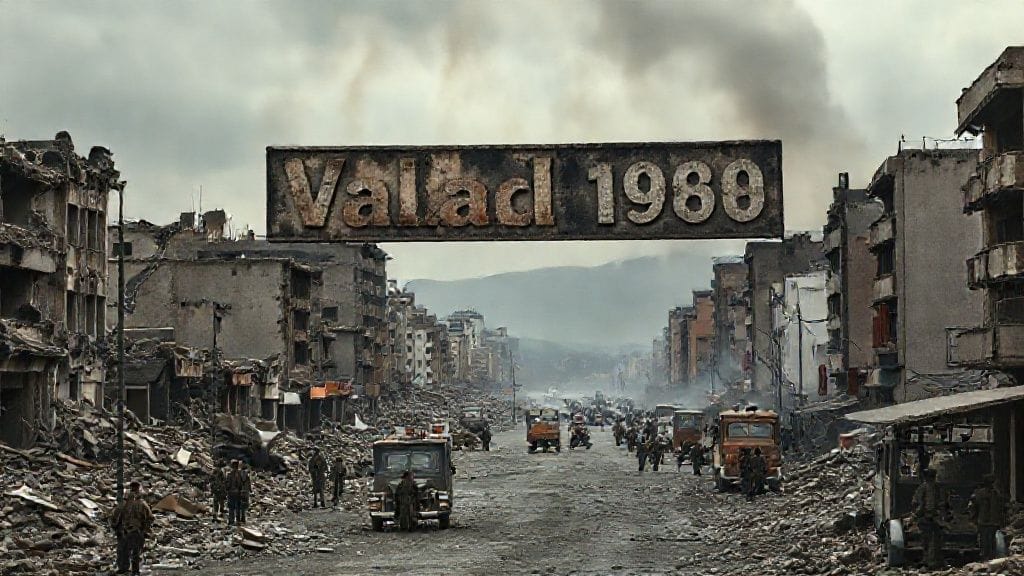
Georgia lies in a seismically active region where the collision of the Eurasian and Arabian tectonic plates generates frequent tremors. Historically, the Caucasus has experienced devastating earthquakes—dating back centuries, a reminder that the earth’s forces often overshadow human ambitions. The 1920 earthquake near Krasnaya Polyana, or the 1989 earthquake in Tbilisi’s vicinity, left marks not just on buildings but on the collective memory of its people. These past shocks were warnings that were never fully heeded, underscoring the region’s vulnerability.
4. April 25, 2002: The Earth Opens Its Mouth
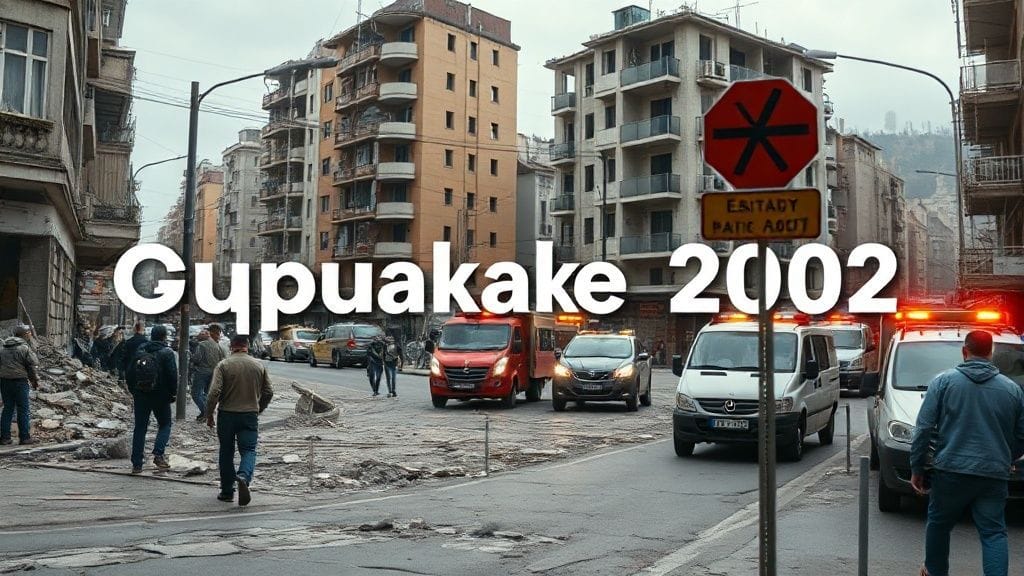
At 03:08 a.m. local time, the ground began to shake with a magnitude estimated at 4.8 on the Richter scale. Although moderate by global standards, the quake’s shallow depth—less than 10 kilometers—intensified its effect, causing significant damage across the Tbilisi region. The epicenter near the capital’s outskirts brought unprepared residents face-to-face with nature’s fierce reminder. Power lines snapped, walls cracked and tumbling debris blocked streets. Panic surged as people fled homes, unsure if their safe havens had transformed into death traps.
5. The Epicenter and Seismic Details: Understanding the Quake
Geologists quickly pinpointed the quake’s epicenter in the Tbilisi region, near villages that bore most of the brunt. The local seismic network confirmed it as a crustal event linked to the complex fault systems that crisscross the Caucasus Mountains. The relatively low magnitude masked its destructiveness, highlighting how shallow quakes and local geology severely influence damage patterns. Scientists debated the possibility that this event was a precursor to larger quakes, and the government’s seismic monitoring system was put under scrutiny.
6. Shattered Foundations: The Immediate Human Toll
In the hours following the quake, casualty figures trickled in, painting a grim tableau. Although no single catastrophic loss comparable to world-shattering quakes occurred, dozens lost lives, hundreds were injured, and thousands were rendered homeless. Hospitals filled quickly, with emergency wards overwhelmed. Families were torn apart—not just by death or injury, but by the trauma of displacement. Schools, hospitals, and residential buildings suffered damage; fragile infrastructures faltered, further complicating rescue efforts.
7. Tbilisi Region's Vulnerabilities: Urban Growth and Infrastructure
Decades of unchecked urban development had left many neighborhoods in Tbilisi precariously perched on unstable geological formations. Soviet-era housing, often constructed in haste and with minimal seismic norms, crumbled more easily. The city’s infrastructure, from bridges to water mains, revealed cracks under pressure. This earthquake exposed the critical need for stringent urban planning policies and modern building codes to prevent future tragedies. It also highlighted the socio-economic disparities that left the poorest communities most at risk.
8. Stories from the Rubble: Personal Accounts and Heroism
Amidst destruction, human spirit blazed brightly. Take the story of Eka, a young mother who, her apartment collapsing around her, shielded her two toddlers with her own body until rescuers arrived. Or that of the elderly Mr. Gvamichava, who despite his frailty, organized a neighborhood search party to help trapped residents. These personal stories transformed statistics into living narratives—reminders that every number was a person with fears, hopes, and courage.
9. The Georgian Government's Response: Between Chaos and Coordination
The immediate aftermath revealed both the strengths and weaknesses of Georgia’s disaster management. The government mobilized emergency services and the military, but logistical challenges slowed aid. Roads blocked by debris hindered access to some communities. Simultaneously, political tensions complicated cooperation between local authorities and central government. Nevertheless, a national emergency committee was established, and coordination with international organizations began within days, marking a turning point for institutional responses to natural disasters.
10. Local and International Aid: A Concerted Rescue Effort
The earthquake attracted swift international attention. Aid agencies from neighboring countries and global organizations dispatched teams of medical personnel, engineers, and relief workers. Field hospitals and temporary shelters emerged as critical lifelines. Countries like Turkey, Russia, and Armenia sent supplies and experts. The collaboration exposed not only geopolitical complexities in the region but also the humanitarian impulse transcending borders. Donations poured in, and civil society in Tbilisi mobilized volunteers to support rescue and rebuilding.
11. The Media’s Role: Narrating Tragedy and Hope
The Georgian press became a vital conduit of information, alternating between harrowing tales and uplifting accounts. Reporters risked their safety to cover rescue operations, offering voices to survivors and warning others about preparedness. Television channels broadcast continuous updates, while newspapers ran special editions. International media tentatively spotlighted this relatively overlooked earthquake, framing it amid Georgia’s broader struggles. The media framed the quake as a pivot—a test of national resilience and emerging civic consciousness.
12. Seismological Science Advances: Lessons Learned from 2002
Scientists studying the 2002 quake gained valuable data on the seismicity of the Tbilisi region. The event spurred reforms in monitoring technologies and enhanced public seismic education. Georgia began investing in stronger seismic networks and cross-border scientific partnerships. The earthquake illustrated the need for continuous hazard assessments in urban planning and inspired academic inquiry into the Caucasus’ complex geology.
13. Economic Impact: Recovery Amidst Poverty
The economic consequences, while not catastrophic on a national scale, further strained an already fragile economy. Damage to homes, schools, and businesses required considerable investment at a time when Georgia was struggling with unemployment and inflation. Many displaced families lost livelihoods. The government allocated budgets for compensation and reconstruction, but international financial assistance proved essential. This event underscored how natural disasters disproportionally affect countries still adapting economically.
14. Cultural and Psychological Aftershocks: The Trauma of Disaster
Beyond physical ruins, the psychological scars endured. Survivors grappled with loss, anxiety, and the haunting memory of a night when the earth betrayed them. Psychosocial support programs were limited but slowly developed. The trauma reverberated in schools and workplaces, altering community dynamics. Cultural expressions—songs, poems, and visual arts—emerged as coping mechanisms, capturing grief and hope intertwined.
15. Reconstruction and Resilience: Rebuilding Tbilisi’s Heart
In the months and years that followed, Tbilisi's scars healed gradually. Reconstruction efforts prioritized not only restoring what was lost but also strengthening structures against future quakes. International partnerships introduced modern architectural techniques. Urban renewal projects replaced unsafe Soviet-era buildings with more robust housing. Public awareness campaigns encouraged disaster preparedness, fostering a culture of resilience that helped redefine the city’s identity.
16. The Quake in Global Context: Comparing Earthquakes in the Post-Soviet Sphere
The 2002 Tbilisi earthquake, though modest in magnitude, resonates when compared to other post-Soviet disasters, such as the 1988 Spitak earthquake in Armenia. It highlighted the unique challenges faced by countries transitioning politically and economically while facing natural hazards. Unlike catastrophic quakes in wealthier nations, Georgia’s quake exposed vulnerabilities rooted as much in social systems as in geology.
17. Policy Changes and Urban Planning Reforms after 2002
The event galvanized policymakers to confront deficiencies in construction standards and emergency responses. New seismic codes were drafted, and a government body was designated to oversee compliance. Urban planning incorporated risk assessments, and public drills became more common. Though progress was uneven and resources limited, the quake marked a watershed moment, moving disaster risk reduction higher on the national agenda.
18. Remembering 2002: Memorials and Collective Memory
Annual commemorations bear witness to those who died and those who survived. Memorials stand both in Tbilisi and affected villages, serving as tangible reminders of nature’s power and human fragility. School curricula include disaster awareness, while public space art captures the event’s emotional landscape. The earthquake has entered the collective narrative, a chapter in Georgia’s ongoing story of endurance.
19. Earthquake Preparedness Today: Georgia’s Ongoing Challenges
Two decades later, Georgia continues to grapple with earthquake preparedness. Urban expansion tests regulatory frameworks, and rural areas remain under-equipped. However, public education and emergency exercises have improved. The 2002 quake remains a benchmark, motivating authorities to refine disaster management and prioritize science-based policies to mitigate future risks.
20. The People’s Spirit: How Tbilisi Became Stronger
Above all, the April 2002 earthquake revealed the indomitable spirit of Tbilisi’s people. In the wake of destruction, neighbors became rescuers, communities became families, and grief transformed into hope. The shared trauma forged bonds transcending ethnic, political, and social divides. It was a moment when survival became collective, and the city’s heartbeat resumed, stronger and wiser.
Conclusion
The 2002 earthquake in the Tbilisi region was more than a natural phenomenon—it was a moment of reckoning for Georgia. It exposed vulnerabilities of infrastructure, governance, and social inequality, yet it catalyzed resilience, cooperation, and a renewed commitment to building a safer future. The tremor beneath the Caucasus Mountains shook the ground, but it also stirred the human spirit, reminding all that within every rupture lies an opportunity for renewal. It is this balance between fragility and strength, chaos and order, destruction and rebirth, that shapes Georgia’s continuing journey—a story still unfolding under the watchful eyes of its mountains and skies.
FAQs
Q1: What caused the Tbilisi earthquake of April 25, 2002?
A1: The earthquake was caused by tectonic movements along active fault lines in the Caucasus region, where the Eurasian and Arabian plates converge. Its relatively shallow depth amplified the damage experienced near the epicenter.
Q2: How strong was the earthquake and why was it so damaging?
A2: The quake measured around 4.8 on the Richter scale, considered moderate globally. However, its shallow depth and local geological conditions, combined with vulnerable infrastructure, caused disproportionate damage.
Q3: How did the government respond to the disaster?
A3: The Georgian government mobilized emergency services and coordinated with international aid agencies, although logistical challenges and limited resources complicated the immediate response.
Q4: Were there any significant changes in building codes or disaster preparedness after the earthquake?
A4: Yes, the quake prompted reforms in seismic building standards and disaster management policies, leading to improved construction regulations and public awareness programs.
Q5: How many people were affected by the earthquake?
A5: While exact numbers vary, dozens died, hundreds were injured, and thousands were displaced. The quake deeply affected both urban and rural populations around Tbilisi.
Q6: How is the 2002 Tbilisi earthquake remembered today?
A6: It is commemorated through memorials, educational programs, and cultural expressions, serving as a reminder of the importance of resilience and preparedness in the face of natural disasters.
Q7: What scientific insights were gained from this earthquake?
A7: The event provided valuable data on seismic activity in the Caucasus, encouraging enhancements to monitoring networks and contributing to better understanding of earthquake risks in the region.
Q8: How does this earthquake compare to other regional seismic events?
A8: Though less severe than some regional quakes like the 1988 Spitak earthquake, the 2002 event demonstrated the heightened risks faced by rapidly urbanizing post-Soviet societies with outdated infrastructure.