Table of Contents
- The Stillness Before the Tremor: Gazli, May 17, 1976
- Unearthing Gazli: Geographical and Historical Context of Uzbekistan
- A Sleeping Giant: Seismic Activity in Central Asia
- Gazli Before Disaster: A City on the Edge of Modernity
- The Morning Shakes: The Earthquake Strikes
- The Scale and Science of the 1976 Gazli Earthquake
- Voices from the Rubble: Eyewitness Testimonies and Human Stories
- The Immediate Aftermath: Rescue and Relief Efforts in Soviet Uzbekistan
- Soviet Secrecy and Disaster Management: The Political Shadow
- Geological Insights: What Gazli Taught Seismologists
- The Human Cost: Lives Lost and Communities Shattered
- Reconstruction Under the Red Banner: Rebuilding Gazli
- The Psychological Legacy: Trauma and Resilience Among Survivors
- Gazli’s Place in the Soviet Disaster Chronicles
- Uzbekistan’s Long Dance with Earthquakes: Continuing Risk and Preparedness
- Commemoration and Collective Memory of the Gazli Quake
- Lessons Learned: Scientific and Social Advances Rooted in Tragedy
- Earthquakes and Identity: How Gazli Shaped Uzbek National Consciousness
- Gazli in Global Perspective: Comparing Seismic Disasters of the 20th Century
- Conclusion: From Ruin to Remembrance
- FAQs: Understanding the 1976 Gazli Earthquake
- External Resource
- Internal Link
The Stillness Before the Tremor: Gazli, May 17, 1976
At dawn on May 17, 1976, an eerie calm draped over the remote town of Gazli, nestled in the heart of Uzbekistan’s vast Kyzylkum desert. The early morning light cast long shadows on the salt flats and oil rigs that punctuated this once-sleepy Soviet outpost. Residents stirred from their slumber, unaware that beneath their feet, the earth was preparing to rewrite their lives in an instant. Suddenly, the ground shuddered, an invisible giant flexing its muscles deep below. Buildings trembled, walls cracked, and the fragile veneer of safety shattered in seconds. The Gazli earthquake had arrived—a formidable reminder of nature’s unpredictable power, one that would ripple through history long after the dust settled.
Unearthing Gazli: Geographical and Historical Context of Uzbekistan
To truly grasp the drama of May 1976, we must first journey to Gazli itself. Located in what was then the Uzbek Soviet Socialist Republic, Gazli is situated in the southwestern part of the country, surrounded by arid desert landscapes and dotted with oil extraction complexes vital to the Soviet economy. Uzbekistan, a landlocked bridge between Central Asia and the wider Soviet realm, carried the marks of millennia of human settlement, conquest, and cultural fusion. But beneath the surface, it also housed a web of tectonic faults—a ticking time bomb in the earth’s crust.
This region lies near the complex collision zone between the Eurasian and Indian tectonic plates. Millions of years of geological strain have etched faults that periodically ignite, releasing devastating seismic energy. Uzbekistan’s seismic history is punctuated by earthquakes, yet Gazli was not seen as a hotspot—until that spring morning changed everything.
A Sleeping Giant: Seismic Activity in Central Asia
Central Asia’s seismicity is often overshadowed by the notorious quakes of places like Japan, California, or Turkey. Yet this vast expanse, where mountain ranges like the Tian Shan and Pamirs thrust skyward, is one of the world’s most volatile seismic zones. The collision of the Indian subcontinent with the Eurasian plate reverberates across thousands of kilometers, creating a mosaic of faults beneath the earth’s crust.
In the 1970s, Soviet geologists had mapped parts of this fault system, but the extent of potential destruction remained largely uncertain. Gazli sat perilously close to an active fault known as the Gazli fault zone, a system previously responsible for smaller tremors but not a major seismic event as extensive as the one in 1976.
Gazli Before Disaster: A City on the Edge of Modernity
Before the upheaval, Gazli was more than a dusty desert town; it was a burgeoning center of the Soviet oil industry. Drilling rigs and pipelines sculpted the landscape like iron monuments to industrial progress. Workers arrived from across the Soviet Union, enticed by employment and the promise of a better life under the communist vision.
Schools, clinics, and housing blocks sprang up in typical Soviet architectural style—functional, sturdy, and uniform. Yet despite this rapid development, Gazli’s isolated nature engendered a tight-knit community, people bound by harsh living conditions and shared dreams. The unexpected earthquake would soon shatter both the physical infrastructure and the communal spirit.
The Morning Shakes: The Earthquake Strikes
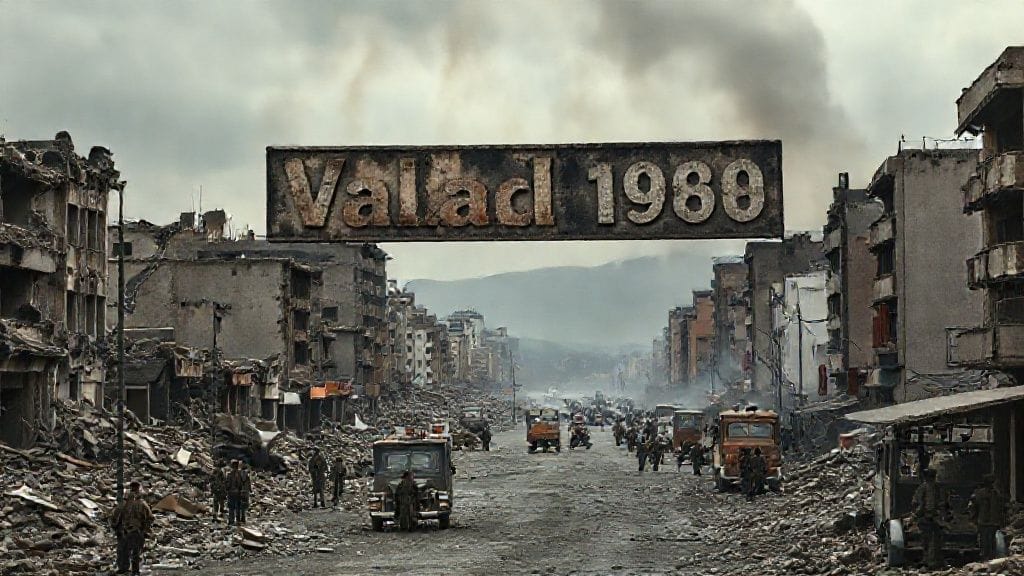
At precisely 2:23 a.m. local time, the earth began to vibrate violently, catching residents unawares. The seismic waves traveled swiftly, reaching a magnitude of 7.3 on the Richter scale—a force sufficient to topple buildings and rupture the land. The initial quake lasted mere seconds, but it felt like eternity to those trapped inside collapsing structures or scrambling for safety.
Chimneys crumbled, power lines twisted, and oil facilities ruptured, sending flares of fire into the night sky. Gazli was plunged into darkness and chaos, the silent desert now a scene of destruction and fear. This violent awakening was just the beginning of what would become a harrowing ordeal.
The Scale and Science of the 1976 Gazli Earthquake
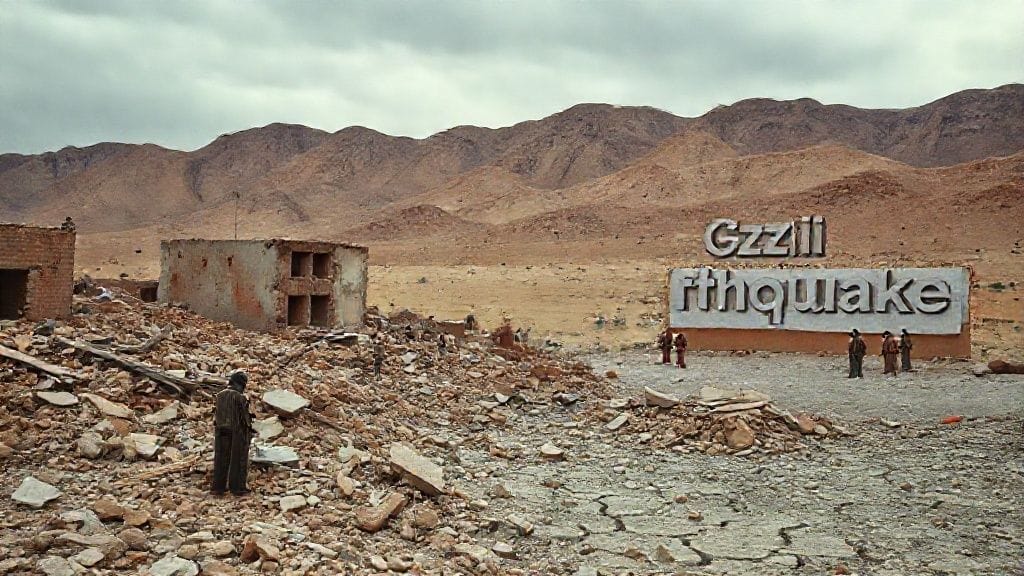
Measured at magnitude 7.3, the Gazli earthquake ranks among the strongest seismic events recorded in Central Asia during the 20th century. Its epicenter lay a few kilometers beneath the earth’s surface, amplifying the devastation. The quake ruptured a segment of the Gazli fault for over 30 kilometers, causing ground displacements of up to 3 meters in some places—a dramatic upheaval that scarred the landscape.
Seismologists from the Soviet Union and beyond studied the event extensively. The earthquake provided crucial data on intraplate seismic activity—a type of earthquake that occurs within a tectonic plate rather than at its boundaries—and on the behavior of faults under the central Asian seismic regime.
Voices from the Rubble: Eyewitness Testimonies and Human Stories
Amid the scientific figures and political reports were the lived experiences—the cries, the struggles, the courage. A nurse recalled rushing through crumbling halls to help wounded patients, her hands trembling as building debris fell around her. A father carried his young daughter from the ruins of their apartment, eyes wide with disbelief at the shattered world.
Stories of neighbors pulling each other from wreckage, strangers offering water and blankets in the cold desert night, illuminated the human spirit’s resilience. Yet grief was pervasive. Dozens perished, and hundreds more suffered injuries or displacement.
The Immediate Aftermath: Rescue and Relief Efforts in Soviet Uzbekistan
The Soviet state mobilized swiftly, dispatching military units, emergency workers, and medical teams to Gazli. But the sheer remoteness of the town complicated relief efforts. Roads and communication lines were damaged, slowing assistance.
Despite these obstacles, the responders dug tirelessly, often at great personal risk. Makeshift shelters were erected, and local hospitals treated the injured in overcrowded conditions. The disaster revealed both strengths and limitations in the Soviet emergency response apparatus.
Soviet Secrecy and Disaster Management: The Political Shadow
The Soviet Union was notorious for carefully controlling information, particularly about disasters that might appear to expose state vulnerabilities. Official reports about the Gazli earthquake were sparse and framed as minor setbacks quickly overcome through socialist determination.
This veil of secrecy affected not only international perception but also hindered deeper understanding and transparency about the quake's impact. Families oftentimes struggled to get accurate information about missing relatives or the full scale of destruction. This political atmosphere shaped Gazli’s historical memory in complex ways.
Geological Insights: What Gazli Taught Seismologists
Beyond its human toll, the earthquake unlocked new geological knowledge. Researchers studied the fault ruptures captured in detail by field investigations, revealing unexpected complexities in how energy accumulates and releases in continental interiors.
The event spurred development of improved seismic monitoring networks across Central Asia and contributed to broader models of earthquake prediction and risk management. Gazli became a critical case study for intraplate fault dynamics.
The Human Cost: Lives Lost and Communities Shattered
Official figures estimate that several dozen people died, with hundreds injured—a staggering number for a relatively small community. Homes were rendered uninhabitable; infrastructure destroyed. Many families lost generational belongings, their lives uprooted overnight.
Beyond physical losses, the quake fractured social networks. Displacement forced people into temporary camps; psychological trauma lingered. The event reshaped Gazli’s demographic and emotional landscape deeply.
Reconstruction Under the Red Banner: Rebuilding Gazli
In the months and years following, Soviet authorities launched a monumental reconstruction campaign. New housing blocks rose from the rubble, designed with improved safety standards. Oil operations restarted, underscoring economic imperatives.
However, rebuilding was not only architectural—it was also about restoring community, trust in institutions, and the hope that Gazli could rise stronger. Yet scars remained visible, both in the urban fabric and in collective memory.
The Psychological Legacy: Trauma and Resilience Among Survivors
Survivors grappled with loss, uncertainty, and lingering fear of aftershocks. Mental health support was rudimentary by today’s standards and often stigmatized. Oral histories reveal a culture that quietly endured, valorizing stoicism.
Still, stories of solidarity, mutual aid, and renewal emerged. Gazli’s residents demonstrated remarkable resilience, weaving disaster into the tapestry of their lives while striving to reclaim normalcy.
Gazli’s Place in the Soviet Disaster Chronicles
Though overshadowed by larger catastrophes like the 1988 Armenian earthquake or Chernobyl a few years later, Gazli etched its mark in Soviet disaster history. It highlighted vulnerabilities in the USSR’s far-flung regions and prompted systemic reflections on preparedness amid fragile infrastructure.
Gazli became a cautionary tale—and a catalyst for reforms in regional planning and civil defense programs.
Uzbekistan’s Long Dance with Earthquakes: Continuing Risk and Preparedness
Gazli was neither the first nor the last earthquake in Uzbekistan’s seismic saga. The nation continues to face significant seismic risks, especially in mountainous areas and along fault lines.
Investments in early warning systems and building codes have advanced since independence, yet challenges persist. Gazli remains a somber reminder that nature’s unpredictability demands perpetual vigilance and adaptation.
Commemoration and Collective Memory of the Gazli Quake
Annual remembrances, memorial plaques, and survivor gatherings keep the memory of May 17, 1976, alive in Gazli and among Uzbek society. Yet, as generations pass, the stories risk fading.
Efforts by historians, journalists, and community leaders seek to preserve this vital chapter—not only as a record of tragedy but also as a testament to endurance.
Lessons Learned: Scientific and Social Advances Rooted in Tragedy
Gazli’s earthquake revealed much about seismic hazards in seemingly stable regions. It accelerated scientific collaboration and ushered in new safety protocols in Soviet infrastructures.
Socially, the disaster exposed gaps in communication and care, informing future humanitarian approaches. Gazli stands as a milestone in the evolution of disaster science and management in Central Asia.
Earthquakes and Identity: How Gazli Shaped Uzbek National Consciousness
Beyond technical implications, the 1976 quake united Uzbek communities around shared grief and recovery. In the larger mosaic of Uzbek identity—woven through centuries of conquest, Soviet rule, and independence—the Gazli tragedy became an integral emotional marker.
It symbolizes the fragile human existence amid harsh natural forces, inspiring reflections on resilience and solidarity.
Gazli in Global Perspective: Comparing Seismic Disasters of the 20th Century
While overshadowed in global memory by colossal disasters like the 1976 Tangshan earthquake in China or the 1964 Alaska quake, Gazli’s event underscores how localized tragedies carry universal themes.
Its scale, context, and response shed light on the diversity of seismic disasters' impacts worldwide and enrich the global discourse on disaster preparedness.
Conclusion: From Ruin to Remembrance
The 1976 Gazli earthquake was more than a geological rupture; it was a rupture in human lives—a sudden, violent upheaval that tested the fabric of a community, a nation, and a scientific field. Through destruction rose stories of courage, suffering, and tenacity. Gazli teaches us that the earth’s tremors resonate beyond physical damage—they shape our histories, identities, and futures.
As we remember this event, we honor the lives changed, lessons learned, and enduring spirit of those who faced the unknown depths beneath their feet. Gazli remains a powerful reminder that in the face of nature’s fury, humanity’s resolve shines brightest.
FAQs: Understanding the 1976 Gazli Earthquake
Q1: What caused the 1976 earthquake in Gazli, Uzbekistan?
A: The event was caused by a sudden release of strain along the Gazli fault, part of the tectonic boundary zone between the Eurasian and Indian plates, leading to a magnitude 7.3 earthquake.
Q2: How significant was the damage caused by the earthquake?
A: The quake resulted in extensive destruction of infrastructure, dozens of deaths, hundreds of injuries, and widespread displacement, particularly impacting housing and the oil industry.
Q3: How did the Soviet authorities respond to the disaster?
A: Emergency teams and military units were rapidly deployed for rescue and relief, and a large-scale reconstruction effort followed, though state secrecy limited public knowledge.
Q4: What scientific insights came from studying the Gazli earthquake?
A: Researchers gained a better understanding of intraplate earthquakes, fault rupture patterns, and regional seismic risks, informing advancements in earthquake monitoring.
Q5: Has Uzbekistan experienced other major earthquakes?
A: Yes, Central Asia is seismically active, with several significant earthquakes occurring in the region historically and continuing risks today.
Q6: How is the Gazli earthquake remembered today?
A: Through memorials, survivor stories, and scholarly work, the Gazli earthquake remains a significant chapter in Uzbekistan’s history and disaster preparedness efforts.
Q7: Did the earthquake affect the Soviet Union’s policies on disaster management?
A: The quake highlighted weaknesses in infrastructure and emergency response, prompting reforms in civil defense, although much information remained classified.
Q8: What lessons does the Gazli earthquake offer for today?
A: It emphasizes the importance of seismic monitoring, transparent communication, community resilience, and continuous preparedness in earthquake-prone regions.