Table of Contents
- The Fateful Dawn of January 18, 1932: A Region Shaken to Its Core
- Tunisia in the Early 20th Century: A Land of Complexity and Transition
- The Geology of the El Kef Region: Beneath the Surface of Calm
- Preceding Tremors: Signs the Earth Was Stirring
- The Earthquake Unfolds: Witnessing the Unthinkable
- The Immediate Aftermath: Chaos, Fear, and the Human Toll
- The Response of Colonial Authorities: Administration in Crisis
- Local Communities: Stories of Survival and Loss
- The Physical Devastation: Towns Reduced to Rubble
- Scientific Observations: How the 1932 El Kef Quake Expanded Seismology
- Comparing the El Kef Earthquake to Other Mediterranean Quakes
- The Earthquake’s Impact on Tunisian Society and Infrastructure
- Economic Repercussions: A Colonial Economy Strained to Breaking Point
- Cultural Expressions of the Disaster: Oral Histories and Memory
- Rebuilding Amid Uncertainty: The Post-Quake Reconstruction Effort
- Legacy of the 1932 Earthquake in Modern Tunisia
- Lessons Learned and Modern Seismic Preparedness in Tunisia
- Conclusion: Remembering the Day the Earth Trembled
- FAQs: Understanding the 1932 El Kef Earthquake
- External Resource
- Internal Link
1. The Fateful Dawn of January 18, 1932: A Region Shaken to Its Core
Just before sunrise on January 18, 1932, a chilling silence blanketed the El Kef region in northwestern Tunisia. The air was crisp, the villagers awakening to the promise of a new day — but what awaited them was something far more unsettling. At exactly 5:48 a.m., the earth convulsed with a terrifying anger, shaking foundations, toppling homes, and fracturing the very land beneath their feet. In a matter of seconds, normal life shattered. The ground roared; stones fell from ancient walls; frightened voices cried out in the dark. For many, what followed was a descent into chaos and despair that no one could have anticipated. The 1932 El Kef earthquake, though not the most widely remembered seismic event in global history, left an indelible mark on Tunisia’s social, cultural, and geological landscape.
2. Tunisia in the Early 20th Century: A Land of Complexity and Transition
Tunisia in 1932 was a land caught between epochs. It was still a French protectorate, a jewel within the colonial empire, but nationalism was quietly brewing beneath the surface. The region of El Kef, nestled close to Algeria’s border, was predominantly rural, dotted with Berber villages and small towns where traditions held firm even as the modern world encroached. Economic development was uneven; some roads and railways linked distant parts, yet many lived in subsistence farming conditions, vulnerable to natural disasters and political upheaval alike.
The protectorate government, led by Governor-General Théodore Steeg at the time, held firm control but with growing challenges from local movements longing for autonomy. Into this volatile mix came an unexpected natural disaster, one which would test the colonial administration’s capability and shake the hearts of Tunisians.
3. The Geology of the El Kef Region: Beneath the Surface of Calm
The El Kef region sits on a fascinating geological crossroads. The North African margin is shaped by the complex interaction of the African and Eurasian tectonic plates. Though Tunisia is not as famous for earthquakes as neighboring Algeria, the area is laced with faults capable of significant seismic activity.
Beneath the quiet olive groves and terraced fields, the earth’s crust constantly harbours tension and strain. The el Kef earthquake originated along one of these concealed fault lines, where slow tectonic movements accumulated stress until the ground suddenly slipped. This moment of failure unleashed energy that rippled across the land in formidable waves.
4. Preceding Tremors: Signs the Earth Was Stirring
In the days leading up to January 18, many residents reported unsettling phenomena—minor tremors that rattled windowpanes and unsettled animals. Superstitions ran high in rural communities, and some anecdotally recalled odd behavior among livestock, as though nature itself was whispering an ominous warning.
Yet, scientific instruments at the time, sparse and rudimentary in North Africa, provided little clear evidence. The world was not yet fully attuned to seismic precursors, and colonial authorities paid scant heed, unprepared for what would transpire.
5. The Earthquake Unfolds: Witnessing the Unthinkable
At just before six in the morning, a violent jolt shattered the early light. One survivor described it later: “It was as if the mountain itself groaned and moved. Houses vibrated, stones fell like rain, and the earth opened beneath my feet.” The earthquake reached a magnitude estimated around 6.9 to 7.1—strong enough to level poorly constructed buildings and throw entire communities into disarray.
In some villages, entire neighborhoods crumbled in moments. The quake’s intensity was such that aftershocks rattled inhabitants for weeks afterward, prolonging the terror of the initial rupture.
6. The Immediate Aftermath: Chaos, Fear, and the Human Toll
In the chaos that followed, rescuers scrambled to pull victims from the ruins. Medical services were limited, especially in rural El Kef, and many were left untreated in pain. Records from the time suggest that hundreds perished and thousands were injured, though exact figures remain debated.
Fear lingered—the knowledge that the earth could betray at any moment forced people to sleep outdoors despite winter’s chill, turning villages into ghostly camps beneath open skies. Stories emerged of heroic rescues and tragic losses, weaving a tapestry of human resilience and vulnerability.
7. The Response of Colonial Authorities: Administration in Crisis
The French colonial administration was caught off guard but rapidly mobilized to coordinate relief. Governor-General Steeg dispatched military units and emergency crews to the worst-hit areas. Infrastructural damage severely hampered efforts; roads were blocked, communication lines down.
Aid poured in from Tunis and other urban centers, including food, tents, and medical supplies. Yet the response revealed the limitations of colonial governance, which prioritized order and control sometimes over the immediate needs of local populations.
8. Local Communities: Stories of Survival and Loss
The people of El Kef were no strangers to hardship, but the earthquake carved fresh wounds. Oral histories later preserved by ethnographers tell of families pulled from rubble, neighbors sharing scant resources, and prayers offered amidst the ruins.
One tale from the village of Sakiet Sidi Youssef narrates how an elderly woman, trapped beneath a collapsed roof, survived thanks to her grandson’s courage. These personal recollections bring a poignant depth to the cold statistics, reminding us that history is lived by individuals whose stories often go untold.
9. The Physical Devastation: Towns Reduced to Rubble
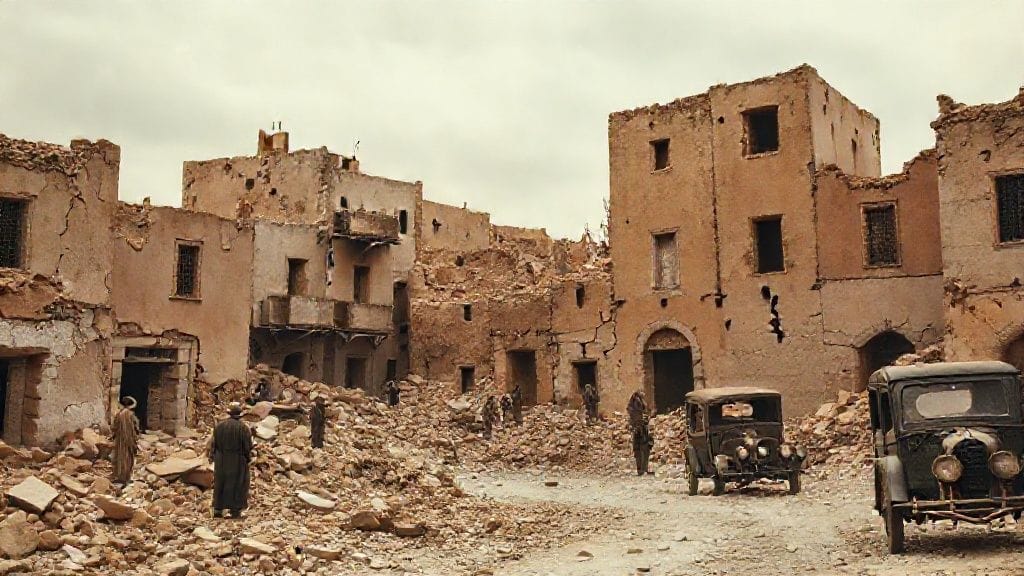
Architectural damage was extensive. Many of the region’s traditional stone and adobe houses, unable to withstand the tremors, crumbled like sandcastles. In the historic town of El Kef itself, civic buildings, mosques, and ancient medinas sustained serious damage.
The landscape bore scars: landslides altered the topography; damaged water channels threatened agriculture. The earthquake did not just destroy buildings; it imperiled the very livelihoods of those who depended on the land.
10. Scientific Observations: How the 1932 El Kef Quake Expanded Seismology
The El Kef earthquake, though lesser-known than other Mediterranean quakes, became a case study for seismologists. Data collected helped refine understanding of seismic faults in North Africa and raised awareness of the region’s vulnerability.
Researchers like Georges Maspero, a geologist working in Tunisia, analyzed aftershock patterns and ground ruptures, contributing to early 20th-century seismology. The event underscored the need for better seismic monitoring across colonial territories.
11. Comparing the El Kef Earthquake to Other Mediterranean Quakes
The 1932 quake was part of a seismic theatre spanning from Italy to Morocco—a region fractured by fault lines and tectonic collisions. When compared with the 1909 Messina earthquake or the devastating 1927 Jericho earthquake, El Kef’s event was moderate in magnitude but significant in its impact on a rural population unprepared for disasters.
Its relative obscurity today contrasts with the shared history of Mediterranean seismic risk, reminding us how disasters’ remembrance often hinges on geopolitical visibility.
12. The Earthquake’s Impact on Tunisian Society and Infrastructure
Beyond immediate destruction, the earthquake revealed the precariousness of Tunisian infrastructure under colonial rule. Roads and bridges vital to trade suffered damage; schools and hospitals were incapacitated.
Socially, the disaster heightened awareness among Tunisians of their marginalization within colonial governance structures. Some historians argue the quake subtly fueled nationalist sentiments by exposing the fragility of French administration.
13. Economic Repercussions: A Colonial Economy Strained to Breaking Point
Agricultural lands were affected by landslides and disrupted irrigation, threatening crops crucial for local and colonial economies. Repair costs strained colonial budgets already tight during the interwar period.
Merchants in El Kef and nearby markets faced losses. The disaster exposed vulnerabilities in supply chains and underscored the fragility of rural economies dependent on a precarious balance of human and natural factors.
14. Cultural Expressions of the Disaster: Oral Histories and Memory
Though few written records exist directly from survivors, local poets, storytellers, and historians preserved the earthquake in collective memory. Songs and tales passed through generations kept alive the trauma and resilience of affected communities.
Anthropologists collecting these narratives decades later highlighted how the disaster shaped identity and community bonds through shared mourning and rebuilding.
15. Rebuilding Amid Uncertainty: The Post-Quake Reconstruction Effort
Reconstruction took years, complicated by limited resources and colonial priorities. Traditional building techniques slowly gave way to stronger materials, incorporating lessons learned from the collapse.
Communities united to restore homes and infrastructure, though many mourned losses irreparable. The physical rebuilding paralleled a psychological reconstruction—trust in the stability of the land and governance had been shaken.
16. Legacy of the 1932 Earthquake in Modern Tunisia
Today, the 1932 El Kef earthquake stands as an important chapter in Tunisia’s natural history. The event prompted seismic zoning regulations and eventually influenced building codes in the region.
Its memory survives in the geology of the land and in the cultural fabric of El Kef’s people. For Tunisian historians and citizens alike, the quake serves as a sobering reminder of nature’s power and human perseverance.
17. Lessons Learned and Modern Seismic Preparedness in Tunisia
Modern Tunisia has invested in seismic monitoring and emergency response frameworks, shaped by past experiences like El Kef. The country’s preparedness still contends with challenges—population growth, urbanization, and climate change bring new vulnerabilities.
Yet, the earthquake of 1932 remains a foundational story informing policies, education, and resilience-building programs designed to save lives in future tremors.
18. Conclusion: Remembering the Day the Earth Trembled
The El Kef earthquake of January 18, 1932, was more than a geological event—it was a human tragedy embedded deeply in Tunisia’s history. From the ground shaking beneath sleepy villages to the determined efforts at rebuilding, the story resonates with universal themes of loss, endurance, and hope.
In recalling this moment, we honor those who suffered and those who persevered, acknowledging that history is not merely a timeline of events but a living testament to the human spirit confronting the unpredictable forces of nature.
FAQs
Q1: What caused the 1932 El Kef earthquake?
A1: The earthquake was caused by the sudden rupture along a fault line related to the complex tectonic interface between the African and Eurasian plates beneath northern Tunisia.
Q2: How severe was the earthquake in terms of magnitude and damage?
A2: It was estimated at around magnitude 6.9 to 7.1, causing significant damage particularly to the rural architecture of the El Kef region, with hundreds of fatalities and extensive destruction.
Q3: How did the French colonial authorities respond to the disaster?
A3: The colonial administration mobilized military and emergency relief forces, provided aid and supplies, but their response revealed limitations in resources and attention toward local needs.
Q4: Did the earthquake influence Tunisian nationalism?
A4: Some historians suggest that the disaster exposed colonial shortcomings and contributed indirectly to the growing nationalist sentiments by highlighting vulnerabilities in colonial governance.
Q5: What lessons did Tunisia learn from the earthquake in terms of building codes and preparedness?
A5: The quake led to improved seismic awareness, influencing future building regulations and emergency preparedness protocols to mitigate the impact of future earthquakes.
Q6: Are there significant cultural memories or traditions linked to the earthquake?
A6: Yes; oral histories, songs, and storytelling traditions in the El Kef region have preserved memories of the event, cementing its place in local cultural identity.
Q7: How does the El Kef earthquake compare to other Mediterranean earthquakes?
A7: While significant locally, it was less devastating than some other Mediterranean quakes like those in Messina or Jericho but remains important for regional seismic studies.
Q8: What is the current seismic risk in Tunisia?
A8: Tunisia remains at moderate seismic risk, especially in northern regions near fault zones; modern monitoring and preparedness efforts continue to reduce vulnerability.