Table of Contents
- The Day the Earth Roared: March 27, 1964
- Setting the Scene: Alaska and the Pacific at Mid-Century
- The Making of a Cataclysm: Tectonic Pressures Beneath Prince William Sound
- 5:36 P.M. – The Ground Trembles: The Earthquake Unfolds
- Shocks and Aftershocks: The Roar Reverberates Across North America
- The Birth of the Tsunami: Waves That Would Defy the Coast
- Coastal Towns in Peril: Valdez, Kodiak, and Beyond
- Human Stories Amid the Waves: Survivors, Witnesses, and Loss
- Death Toll and Damage: The Scale of Destruction Across Alaska and the Pacific Northwest
- The Scientific Race: Understanding the 1964 Great Alaska Earthquake
- How Warnings Were Missed: Communication Breakdowns and Lessons Learned
- Emergency Response: Rescue, Relief, and Rebuilding Lives
- The Tsunami’s Reach: From the Alaskan Shores to Distant Hawaii and Japan
- Changing the Map of Seismology: What 1964 Revealed About Earth’s Secrets
- Memorials and Memory: Honoring the Victims and Resilience of Alaskans
- Long-Term Impact: How 1964 Transformed Alaskan Infrastructure and Policies
- Scientific Legacy: Advances in Earthquake and Tsunami Research Post-1964
- Cultural Imprints: The Event in Literature, Film, and Local Folklore
- Global Tsunami Awareness: The Catalyst for International Warning Systems
- Remembering Alaska’s Greatest Natural Disaster: Annual Remembrances and Education
- Conclusion: The Earth Remembers – A Story of Pain, Survival, and Understanding
- FAQs: Key Questions on the 1964 Alaska-Pacific Tsunami
- External Resource
- Internal Link
1. The Day the Earth Roared: March 27, 1964
On the late afternoon of March 27, 1964, a hushed, almost innocent silence blanketed the remote forests and vast waters of southern Alaska. Families prepared dinners, fishermen returned to their boats, townsfolk—many unaware of the latent forces beneath their feet—carried on with daily life. Suddenly, the earth erupted. A titanic rumble shattered the tranquility: the most powerful earthquake recorded in North American history. Taller than any structure, fiercer than any storm, the Great Alaska Earthquake of 1964 announced itself with a force that the world would not forget. But this quake was just the overture—the more terrifying act was yet to arrive from the deep blue waters of Prince William Sound.
The earthquake’s magnitude reverberated through the crust, but beneath the waves, massive slabs of ocean floor shifted abruptly. This sudden displacement thrust a colossal wave into motion—a tsunami traveling thousands of miles, devouring coastlines, testing human courage, and reshaping landscapes. The story of the Alaska-Pacific tsunami is one of nature’s raw power, human vulnerability, and scientific revelation.
2. Setting the Scene: Alaska and the Pacific at Mid-Century
Alaska in 1964 was the youngest, least populated state of the United States, having gained statehood just five years prior in 1959. Its rugged terrain—from ice-capped mountains to dense forests—was a land of extremes. The Prince William Sound, a fjord riddled with glaciers and islands, was home to small but thriving communities like Valdez, Cordova, and Whittier. The economy was linked closely to fishing, shipping, and oil exploration that promised growth amidst the harsh climate.
Geologically, Alaska sat at the volatile edge of the Pacific “Ring of Fire,” a hotspot for earthquakes and volcanic eruptions. The Pacific Plate and the North American Plate clashed here with relentless pressure. Scientists had long known the danger, but few could imagine the immense scale of the event that was about to unfold.
3. The Making of a Cataclysm: Tectonic Pressures Beneath Prince William Sound
Beneath the serene surface of the Prince William Sound lies a subterranean battleground. The Pacific Plate, relentlessly pushing northwestward, subducts beneath the smaller North American Plate at a rate of several centimeters per year. This friction causes stress buildup, much like a spring wound tight. Over decades, the rocks locked together beneath the sound had accumulated energy—energy that demanded release.
By March 1964, the strain along this megathrust fault had reached a crescendo. Eventually, it gave way in a monumental slip, some 1000 kilometers in extent, unleashing forces whose echoes would circle the globe. The result: the Great Alaska Earthquake, or as some called it, the “Good Friday Earthquake,” for it occurred on that Christian holy day.
4. 5:36 P.M. – The Ground Trembles: The Earthquake Unfolds
At precisely 5:36 PM local time, residents first felt a low rumble, quickly escalating to violent shaking lasting an incredible four and a half minutes. Buildings swayed grotesquely, roads cracked, bridges collapsed. Despite the remote locations, the earthquake could be felt as far south as Seattle and Vancouver, west to the Aleutian Islands, and east into Canada.
The shaking peaked at an estimated 9.2 on the moment magnitude scale, making it the second largest earthquake ever recorded globally. Along the fault line, the ground uplifted by as much as 30 feet in places and subsided dramatically in others—a fracturing of the earth both literal and symbolic.
5. Shocks and Aftershocks: The Roar Reverberates Across North America
After the initial shock, a terrifying sequence of aftershocks rattled Alaska’s coast. Scientists recorded hundreds of tremors over days, some potent enough to restart panic among the population. These aftershocks complicated rescue and relief efforts as structures weakened by the main tremor further collapsed.
Across the continent, seismographs picked up the seismic waves, giving geologists a unique opportunity to study the event in unprecedented detail. Still, for those on the ground, the greatest dangers loomed offshore.
6. The Birth of the Tsunami: Waves That Would Defy the Coast
The sudden shift of the ocean floor in Prince William Sound triggered a massive displacement of water. In the immediate seconds following the quake, towering walls of water surged outward, rushing at speeds comparable to a jetliner. Unseen beneath the churning sea, the tsunami began its destructive march.
Depending on the shape of the underwater landscape and shoreline, wave heights varied drastically — some reaching over 220 feet in narrow fjords—waves that dwarfed any human construction. The tsunami waves raced beyond Alaska’s fragmented coastline, poised to impact communities thousands of miles away.
7. Coastal Towns in Peril: Valdez, Kodiak, and Beyond
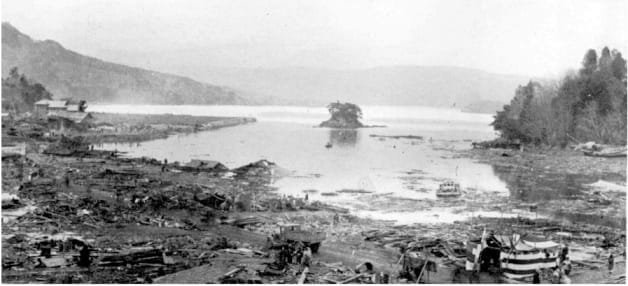
Valdez, a port town nestled at the terminus of the Richardson Highway, was among the hardest hit. First, the shaking destroyed critical infrastructure, then the tsunami rolled in. Waves inundated the town, wiping out docks, houses, and ships alike.
Farther south, Kodiak Island witnessed a tsunami surge that swept away homes and boats, cutting off communication and transportation links. Prince Rupert, British Columbia, and even distant coastal towns in California, Oregon, and as far away as Hawaii braced for the immense power hurtling toward them.
8. Human Stories Amid the Waves: Survivors, Witnesses, and Loss
The human dimension of the disaster is both heartbreaking and heroic. Stories abound of families torn apart, of frantic last-minute escapes as waters rose, and of the resolve to save lives amid chaos. Among these was the tale of the residents of Chenega Bay, a small Alaska Native village, whose community was devastated with over 20 lives lost.
In Seward, townspeople described how water surged through streets and forcibly relocated boats into buildings. Many survivors recounted the sheer terror of being trapped in collapsing structures, hearing the roar not just of the earth but of the ocean itself.
9. Death Toll and Damage: The Scale of Destruction Across Alaska and the Pacific Northwest
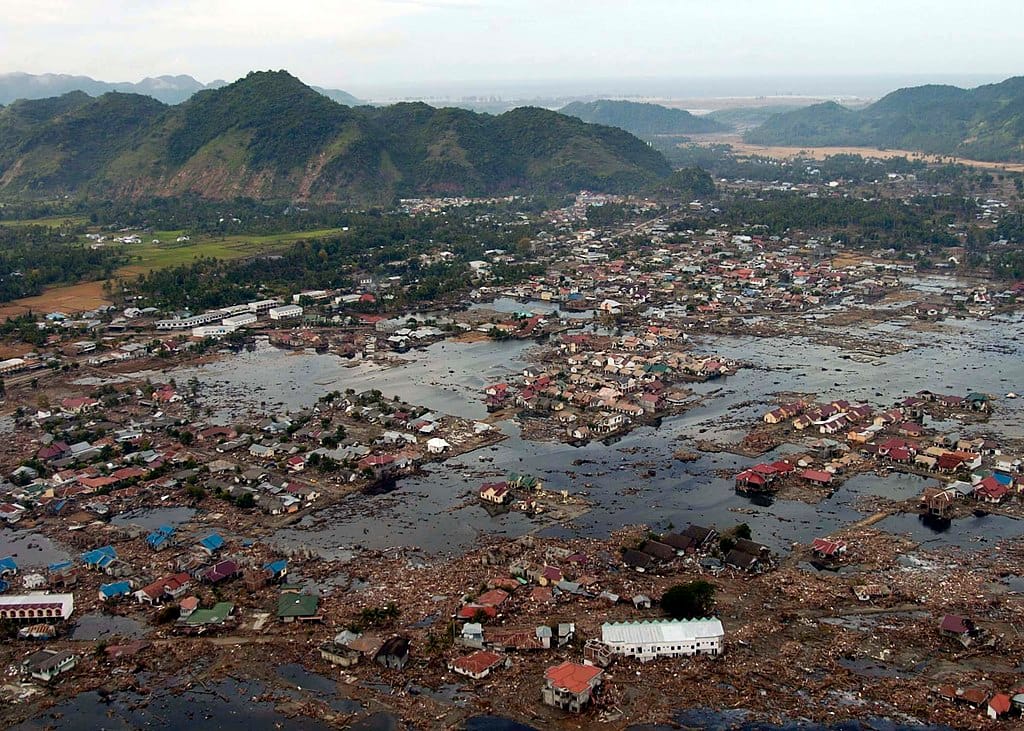
The earthquake and consequent tsunami claimed 131 lives across Alaska and the Pacific Northwest. While lower than might be expected for such a disaster, this number reflects both the remoteness of the region and varying population densities. Material damage was staggering—wholesale destruction of towns, the obliteration of miles of highways and railroads, and critical disruptions to the burgeoning oil industry.
In terms of economic impact, the event caused damages estimated at $311 million (nearly $3 billion today when adjusted for inflation). More importantly, it exposed Alaska’s extreme vulnerability to natural disasters.
10. The Scientific Race: Understanding the 1964 Great Alaska Earthquake
The catastrophe galvanized geologists and seismologists worldwide. For decades, the science of plate tectonics had been speculative; the 1964 earthquake became one of the first convincing pieces of evidence supporting the theory. Scientists documented the megathrust phenomenon—a massive fault slip releasing enormous energy.
The earthquake’s data helped refine seismic intensity scales, deepened understanding of subduction zones, and catalyzed new technologies in earthquake detection.
11. How Warnings Were Missed: Communication Breakdowns and Lessons Learned
Despite the dramatic scale of the event, early tsunami warning systems were primitive or nonexistent in 1964. Many coastal residents had no warning of the incoming waves and little time to react. Communication infrastructures, already compromised by the quake, failed to transmit timely alerts.
The tragedy underscored the urgent need for coordinated tsunami warning networks, particularly in Pacific Rim nations vulnerable to such disasters. In the years that followed, international cooperation led to the establishment of systems that have undoubtedly prevented further loss of life.
12. Emergency Response: Rescue, Relief, and Rebuilding Lives
The immediate aftermath saw Alaskan communities rallying together amid devastation. The U.S. Army, National Guard, Coast Guard, and federal agencies coordinated relief, though the remoteness and destruction challenged logistics severely. Aid arrived by air and sea, delivering food, medical supplies, and shelter.
Reconstruction took years. Roads were rebuilt with seismic resilience in mind, towns relocated, and new building codes implemented. The human spirit, tested and battered, revealed depths of resilience and compassion.
13. The Tsunami’s Reach: From the Alaskan Shores to Distant Hawaii and Japan
Remarkably, the tsunami generated by this earthquake did not confine its wrath to North American shores. Alerts came in Hawaii as waves surged in harbors, causing damage and fatalities. Japanese coasts recorded unusual oscillations, reminding the world that nature’s fury knows no borders.
This event seeded a new global respect for the interconnectedness of oceanic and seismic phenomena — a sobering lesson even today.
14. Changing the Map of Seismology: What 1964 Revealed About Earth’s Secrets
The Good Friday Earthquake changed how science perceived seismic risks. It was the first time extensive ground uplifting and subsidence were measured directly above a fault zone. Geodesists used aerial photography and field expeditions to chart the drastic morphological changes. These shifts challenged prior assumptions about earthquake mechanics and reinforced the notion that subduction zones are among the planet’s most dangerous real estate.
15. Memorials and Memory: Honoring the Victims and Resilience of Alaskans
In the decades since, Alaska has embraced remembrance through monuments, museums, and annual commemorations. Parks in Anchorage and Valdez serve as living memorials, while educative programs ensure that each generation learns of the catastrophe—and the lessons it imparts.
The event also shaped Alaska’s identity, marking it as a land forged in the crucible of nature’s might and human endurance.
16. Long-Term Impact: How 1964 Transformed Alaskan Infrastructure and Policies
One cannot overstate how the 1964 disaster reshaped Alaska’s approach to planning and governance. State and federal investment boosted seismic monitoring stations and emergency preparedness. Building standards were overhauled; highways and railroads were designed with automated shutdowns and redundancy.
These changes saved countless lives in later events, embedding a culture of caution and respect for the earth’s subtle, deadly moods.
17. Scientific Legacy: Advances in Earthquake and Tsunami Research Post-1964
The 1964 earthquake inspired technological innovation — from better seismographs and tsunami gauges to computational modeling of wave behavior. It laid groundwork for plate tectonic theory, influencing generations of researchers.
Modern tsunami warning centers, like the Pacific Tsunami Warning Center in Hawaii, are direct descendants of the necessity born from this disaster.
18. Cultural Imprints: The Event in Literature, Film, and Local Folklore
The catastrophe’s imprint extends into Alaska’s cultural fabric. Novels, documentaries, and oral histories recount the horror and heroism. Arts organizations commemorate the event through exhibitions capturing survivor testimony and the landscape’s transformation.
Local Alaska Native traditions also integrate the quake and tsunami into their storytelling, blending modern science with ancestral memory.
19. Global Tsunami Awareness: The Catalyst for International Warning Systems
Beyond Alaska, the disaster sent ripples through the global scientific and political communities. The International Tsunami Information Center was established, and communication protocols between nations were formalized.
Today, the Pacific Tsunami Warning System routinely transmits alerts serving hundreds of millions of people—a legacy of the 1964 event.
20. Remembering Alaska’s Greatest Natural Disaster: Annual Remembrances and Education
Every year since March 27, Alaskans gather to honor those lost, to share stories, and to educate about earthquake and tsunami preparedness. School programs, public drills, and media campaigns emphasize that vigilance against natural threats remains crucial.
This living memory ensures that pain transforms into protection.
21. Conclusion: The Earth Remembers – A Story of Pain, Survival, and Understanding
The Alaska-Pacific Tsunami of 1964 was not merely a natural disaster; it was a profound chapter in humanity’s evolving relationship with the planet. It revealed vulnerabilities and strengths alike, spoke of nature’s unpredictable wrath, and unveiled mysteries hidden deep beneath the earth.
From shattered villages to scientific breakthroughs, from grief to resilience, the story of March 27, 1964, continues to inspire humbling awe. It reminds us that while we cannot tame the earth’s forces, we can learn, prepare, and honor those who endured. The earth remembers—and so shall we.
FAQs
Q1: What caused the 1964 Alaska earthquake and tsunami?
A1: The disaster was caused by a massive slip along the megathrust fault where the Pacific Plate subducts beneath the North American Plate. This tectonic movement triggered the earthquake and a subsequent displacement of ocean water, generating the tsunami.
Q2: Why is the 1964 earthquake considered so significant?
A2: At magnitude 9.2, it remains the second-largest earthquake ever recorded globally. It provided crucial scientific data that supported plate tectonics and led to advances in geophysical research and disaster preparedness.
Q3: How many people died during the event?
A3: Approximately 131 people lost their lives due to the earthquake and tsunami, with many casualties in Alaska and some in other Pacific regions.
Q4: What were some key failures in warning systems in 1964?
A4: Early tsunami warning systems were minimal or absent, and communication infrastructure was compromised by the quake, leaving many communities unaware of the approaching waves in time.
Q5: How did this event change Alaskan infrastructure?
A5: It prompted stricter building codes, seismic-resistant engineering, improved roads and bridges, and the development of emergency response strategies.
Q6: What is the legacy of the 1964 tsunami on global tsunami warning?
A6: The tragedy accelerated the creation of international monitoring and warning centers, enhancing cooperation and public safety worldwide.
Q7: How is the earthquake commemorated today?
A7: Alaska observes annual memorials, educational programs, and maintains museums and monuments that preserve the event’s memory.
Q8: Did the tsunami affect areas outside Alaska?
A8: Yes, the tsunami caused damage and fatalities in Hawaii and produced noticeable sea disturbances as far as Japan and the Pacific Northwest coast.