Table of Contents
- The Dawn of Disaster: November 4, 1952
- The Geographical and Geological Theatre of Kamchatka
- A Volatile Frontier: Understanding the Pacific “Ring of Fire”
- The Building Tension beneath the Ocean: Seismic Origins
- Witnesses to a Tremor: Initial Earthquake Impact in Kamchatka
- The Unseen Aftershock: Generating the Pacific Tsunami
- The Journey of the Wave: Across the Pacific Ocean
- Hawaii in the Crosshairs: The Tsunami Arrives
- California and Beyond: Minor Ripples or Ominous Warnings?
- The Human Face of the Tsunami: Victims, Survivors, and Witnesses
- Early Scientific Responses and Challenges in the 1950s
- The Soviet Union’s Approach: Disaster Management in Kamchatka
- International Awareness: How the World Learned and Reacted
- Technological Advances Spurred by the 1952 Tsunami
- The Cultural Memory of Kamchatka’s Dark Day
- Comparing the 1952 Kamchatka Tsunami to Later Pacific Disasters
- Lessons Etched in Water and Earth: Political and Environmental Implications
- The Cascading Impact: Socioeconomic Ripples in Remote Kamchatka
- The Legacy of the 1952 Tsunami in Modern Tsunami Science
- Conclusion: Enduring Echoes from the Depths of the Sea
- FAQs About the 1952 Kamchatka Pacific Tsunami
- External Resources
- Internal Link
The Dawn of Disaster: November 4, 1952
On the cool morning of November 4, 1952, the quiet solitude of the Kamchatka Peninsula was shattered beneath a violent rumble from the Earth itself. Far from the world’s bustling metropolises, this remote region of the Soviet Far East bore witness to a cataclysm that would ripple across oceans, teetering on the edge of global consciousness during the early years of the Cold War. The ground trembled, houses shook, and skies darkened with dust and fear, but what followed was far more insidious and invisible—a wall of water racing thousands of miles across the Pacific, a tsunami born from a monstrous undersea quake.
At 16:58 UTC, the Earth convulsed with a force almost unimaginable. Measuring a staggering magnitude of 9.0, this mega-thrust earthquake near the Kamchatka subduction zone ruptured the ocean floor with violent intent. Though the immediate destruction struck a sparsely populated land, the resulting Pacific tsunami unleashed devastating waves, striking as far as Hawaii with terrifying speed. This event underscored nature’s profound power and the fragile human relationship with the restless planet beneath our feet.
But the story of the 1952 Kamchatka tsunami is not merely one of destruction; it is a profound narrative of scientific discovery, human resilience, political veilings, and lessons learned in the shadow of silence.
The Geographical and Geological Theatre of Kamchatka
The Kamchatka Peninsula juts dramatically into the North Pacific, a wild and rugged land dotted with volcanoes, steaming fumaroles, and ancient forests. Positioned on the edge of the Pacific “Ring of Fire,” this region bears the raw scars and gifts of tectonic upheaval. Here, the Pacific Plate slides beneath the North American Plate along a complex, jagged subduction zone. This geological setup makes it one of the most earthquake-prone areas in the world.
The peninsula’s isolation—harsh winters, few roads, and a sparse population—formed a natural fortress against the outside world, delaying immediate news of natural disasters like earthquakes or tsunamis. Yet, beneath the cold exterior lay a restless earth, capable of violent releases of energy that could be felt thousands of miles away.
Understanding the environment in which the 1952 event unfolded is essential. Kamchatka’s volcanic activity, frequent seismic tremors, and its position astride colliding tectonic plates created a tinderbox waiting for a spark.
A Volatile Frontier: Understanding the Pacific “Ring of Fire”
To appreciate the enormity of the 1952 earthquake and tsunami, one must grasp the significance of the “Ring of Fire.” This horseshoe-shaped zone around the Pacific Ocean is a constellation of fault lines, trenches, volcanoes, and subduction zones responsible for about 90% of the world’s earthquakes and a significant portion of volcanic eruptions.
Stretching from New Zealand and the islands of the South Pacific, curving through Japan and Kamchatka, wrapping down to Alaska, and sweeping along the west coasts of North and South America, the Ring of Fire is a planet’s restless seam. The Kamchatka region, in particular, resides at a strategic knot where the Pacific and North American plates interact intensely.
Despite its dangerous reputation, this region’s geodynamic activity also molds landscapes and biodiversity, influencing human habitation and migration patterns. The 1952 earthquake is one among many moments where tectonic forces converged to remind the world of nature’s overwhelming power.
The Building Tension beneath the Ocean: Seismic Origins
Beneath the turbulent waters off Kamchatka lies a fault line capable of storing enormous stress. Over decades, the Pacific Plate inexorably dove beneath the North American Plate, locking into place like a giant spring wound tight beneath the ocean floor. When this stress exceeds the rock’s ability to hold, it releases in a cataclysmic rupture, radiating seismic waves and displacing immense volumes of water.
The 1952 earthquake was the product of such a locked zone snapping after years of accumulating strain. The quake’s thrust fault mechanism forced a massive segment of the seabed upwards by several meters—an abrupt vertical displacement perfect for generating a tsunami.
Contemporary seismology, limited by 1950s technology, could only infer the mechanisms with partial precision. Still, the epicenter was identified near the Kamchatka Trench, an active subduction zone known for producing large megathrust quakes that have the potential to unleash devastating tsunamis.
Witnesses to a Tremor: Initial Earthquake Impact in Kamchatka
Although the region was thinly inhabited, the earthquake sent shockwaves felt strongly through Kamchatka’s towns and military installations. Residents described a prolonged shaking that buckled the earth, overturned furniture, and collapsed poorly constructed buildings.
Many local indigenous communities—Kamchadals and Itelmens—relied on oral storytelling after the earthquake to recount that day’s chaos: houses “dancing” violently, animals frightened and fleeing, the crack of the earth seeming to split open beneath them. Winter’s approach magnified the trauma, as heating and transportation infrastructure temporarily failed.
Deaths were reported, but numbers remain uncertain owing to the region’s remoteness and Soviet-era censorship practices. What was clear, however, was that the quake was felt over hundreds of kilometers, shaking not only the ground but the nerves of those who lived in this fragile land.
The Unseen Aftershock: Generating the Pacific Tsunami
Less obvious at first was the tsunami’s generation beneath the dark ocean. The abrupt displacement of the seafloor caused a colossal column of water to lift, then collapse, sending waves radiating outward in all directions.
The ocean’s cold, deep waters off Kamchatka turned violent. The water column’s seismic energy morphed into long, powerful waves traveling across the Pacific basin at speeds exceeding 700 km/h (about 430 mph)—fast enough to reach distant shores in mere hours or less.
Despite the seismic intensity, Kamchatka residents’ prior experiences with tsunamis were limited, reducing awareness and preparedness for the oncoming wave. The Soviet Union at that time lacked an organized tsunami warning system, which added to the disaster potential.
The Journey of the Wave: Across the Pacific Ocean
The tsunami unleashed in the North Pacific did not linger long near its source. Instead, it transformed into a fleeting, invisible menace rushing across thousands of miles of water—an invisible predator bent on distant destruction.
The wave fronts spread across the Pacific basin, converging, refracting, and sometimes amplifying as they encountered submarine topography and coastal shelves. Most alarming was the tsunami’s arrival at Hawaii’s shores, especially on the island of Hilo, where the waves struck more than five hours after the initial quake.
The dramatic journey showcased how a single undersea event could transcend geopolitical boundaries and natural barriers, intertwining the fates of disparate and distant peoples.
Hawaii in the Crosshairs: The Tsunami Arrives
When the waves slammed into Hawaii’s eastern shores, they caught many residents by surprise. In the early hours of November 5, 1952 (local time), tsunami waves ranging from 5 to 10 meters high battered the coast.
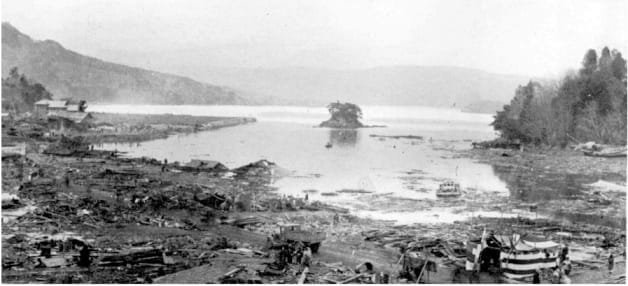
The damage was significant: homes and piers were destroyed, boats torn from moorings, and lives lost. At least 61 people were killed in Hawaii, underscoring the deadly potential of transoceanic tsunamis even when the epicenter lies far away.
Local radio operators and meteorologists scrambled to issue warnings, but the Soviet origin of the earthquake limited early international information exchange during the Cold War’s thick fog.
Once again, the waves rippled further—thinning but undeniable—toward the west coast of the United States and other Pacific rim nations, serving as a chilling reminder that the oceans connect us in peril as much as they bind us in trade and culture.
California and Beyond: Minor Ripples or Ominous Warnings?
In California and other Pacific coastal areas, the tsunami manifested as unusual tides and minor flooding. Although the wave heights were lower—typically under two meters—the event heightened awareness of tsunami risks far beyond the immediate earthquake zone.
Scientists recorded the wave’s arrival using tide gauges, beginning a more rigorous collection of data that would feed into oceanographic and seismic research. Communities from Oregon to Mexico detected small tsunami effects, sparking reflection on coastal vulnerability and emergency preparedness.
It is astonishing to consider that a distant quake in the Kamchatka Peninsula could ripple through lives, economies, and ecosystems thousands of miles away.
The Human Face of the Tsunami: Victims, Survivors, and Witnesses
Behind the statistics and scientific reports lie countless personal stories etched by loss, survival, and hope. Survivors in Kamchatka spoke of waking to shaking ground and uncertain skies. Families who lost homes or loved ones grappled with the cold reality beneath a Soviet regime that often downplayed such news.
In Hawaii, survivors recounted the terror of waking to rapidly rising waters, the heroism of rescuers braving debris-filled seas, and communities pulled together in the aftermath. Oral histories gathered decades later reveal how the event shaped local culture, awareness, and remembrance.
The disaster also exposed inequalities—rural and indigenous populations faced greatest challenges in escaping danger and receiving aid, a timeless theme with modern echoes.
Early Scientific Responses and Challenges in the 1950s
The 1952 Kamchatka tsunami occurred during a period when seismology and oceanography were rapidly evolving but still limited by technology and Cold War opacity.
Scientists utilized analog seismographs and tide gauges to piece together the narrative, but the Soviet Union’s relative isolation complicated international collaboration. Early tsunami detection relied on indirect observation rather than predictive modeling.
Despite these limitations, the event catalyzed research into megathrust earthquakes and transoceanic tsunamis, stimulating advancements that would culminate decades later in global warning systems and multidisciplinary study.
The Soviet Union’s Approach: Disaster Management in Kamchatka
Details about the Soviet response to the disaster remain nebulous, shaped by state secrecy and propaganda.
Structurally, Kamchatka was a militarized zone, with restricted access for foreigners, limiting outside reports. The government prioritized control over information, sometimes at the expense of timely warnings.
Nonetheless, the disaster prompted internal reflection on emergency preparedness, infrastructure resilience, and the necessity of monitoring seismic activity near Soviet borders. These efforts, however, were largely overshadowed by larger geopolitical preoccupations.
International Awareness: How the World Learned and Reacted
News of the event reached the West slowly and often filtered through secondhand channels. With Cold War hostility simmering, scientific cooperation was tentative.
Still, the destruction in Hawaii prompted renewed interest in Pacific tsunami risks. International scientific bodies, such as the International Tsunami Information Center founded later in Hawaii, would eventually incorporate data from 1952 among the earliest examples of global tsunami hazard awareness.
The 1952 Kamchatka tsunami thus played a subtle but pivotal role in awakening the world to the interconnected oceanic threats transcending political divides.
Technological Advances Spurred by the 1952 Tsunami
In the following decades, the terrifying experience of the 1952 tsunami helped foment innovations in earthquake monitoring, seismic networks, and tsunami detection systems.
By the 1960s and 1970s, agencies in the United States, Japan, and elsewhere established early warning systems combining seismic data with deep-ocean tide sensors. The disaster underscored the need for rapid communication and comprehensive mapping of undersea faults.
Today’s sophisticated arrays of GPS, ocean bottom pressure sensors, and satellite imaging owe part of their motivation to tsunami events such as Kamchatka’s 1952 earthquake.
The Cultural Memory of Kamchatka’s Dark Day
While overshadowed globally by other disasters, the 1952 tsunami remains etched in the memories of Kamchatka’s inhabitants. Folklore, oral histories, and local commemorations recount the day when nature’s fury burst forth with unparalleled force.
Across the Pacific, Hawaiian communities honor their own experiences through memorials and educational programs aimed at tsunami preparedness, linking their history to a broader Pacific narrative of resilience.
These memories remind us how natural events shape cultural identity as profoundly as they alter physical landscapes.
Comparing the 1952 Kamchatka Tsunami to Later Pacific Disasters
When compared to future catastrophes—such as the 1964 Alaskan earthquake and tsunami or the 2011 Tōhoku disaster in Japan—the 1952 Kamchatka event offers a crucial historical benchmark.
Each event deepened scientific knowledge and improved emergency response, yet the 1952 tsunami stands out for originating from a remote location, testing international alert systems in their infancy, and bridging geopolitical divides through natural calamity.
Lessons Etched in Water and Earth: Political and Environmental Implications
The 1952 event illuminated the pressing need for international cooperation in disaster monitoring—a complicated ambition amid Cold War tensions.
Environmentally, it highlighted the scale at which ocean-floor processes could alter not just local but global geographies and communities. Politically, it stressed the vulnerability shared by countries bordering the Pacific and the imperative to transcend ideological barriers for common protection.
The Cascading Impact: Socioeconomic Ripples in Remote Kamchatka
In Kamchatka, the tsunami’s aftermath translated into struggles for rebuilding homes, fishing communities, and military installations. Economic activity slowed in some sectors while emergency resources were marshalled with difficulty.
Moreover, the disaster exposed the limits of infrastructure and social support systems in remote Soviet territories, influencing future regional development policies and strategic planning.
The Legacy of the 1952 Tsunami in Modern Tsunami Science
Today, the Kamchatka 1952 event features regularly in academic studies as a classic "megathrust" earthquake example and a benchmark for understanding transoceanic tsunamis.
Its data helped refine wave propagation models, deepen understanding of fault mechanics, and shape emergency preparedness protocols globally. In essence, it marks a pivotal chapter in humanity’s evolving relationship with Earth’s dynamism.
Conclusion: Enduring Echoes from the Depths of the Sea
The story of the 1952 Kamchatka Pacific tsunami is one of awe and tragedy, a moment when the deep forces of planet Earth leapt unbidden into human history. It is a tale of raw, elemental power, where invisible waves raced silently across oceans, challenging human boundaries, fears, and hopes.
Yet it is also a testament to human resilience—the courage of those who survived, the vital progress in scientific understanding birthed from disaster, and the enduring message that with knowledge and vigilance, we might better prepare for nature’s next dramatic call.
From the volcanic slopes of Kamchatka to the shores of Hawaii, the tsunami’s ripples remind us that we inhabit a world connected in profound, sometimes perilous ways—forever shaped by the restless Earth beneath our feet.
FAQs About the 1952 Kamchatka Pacific Tsunami
Q1: What caused the 1952 Kamchatka earthquake and tsunami?
A1: The disaster was caused by a megathrust earthquake along the subduction zone where the Pacific Plate dives beneath the North American Plate near Kamchatka. The abrupt vertical displacement of the ocean floor triggered the tsunami.
Q2: How strong was the earthquake, and why was it significant?
A2: The earthquake had a magnitude of around 9.0, making it one of the strongest recorded. Such a powerful megathrust quake is capable of generating widespread tsunamis and significant ground damage.
Q3: What areas were most affected by the tsunami?
A3: Kamchatka experienced immediate shaking and localized damage, while tsunami waves caused significant destruction in Hawaii, including loss of life. Minor effects were reported along California and other Pacific coastlines.
Q4: How did the Cold War influence the international response to the disaster?
A4: The political tensions of the era limited information exchange between the Soviet Union and Western countries, delaying warnings and reducing scientific collaboration initially.
Q5: What advancements in tsunami science emerged from this event?
A5: The disaster emphasized the need for better seismic monitoring, early warning systems, and international cooperation, which contributed to the development of more sophisticated tsunami detection technologies in later decades.
Q6: How is the 1952 tsunami remembered in Kamchatka and Hawaii today?
A6: In Kamchatka, the event lives on through local stories and cultural memory, while in Hawaii, it remains a solemn reminder highlighted in educational programs and memorials aimed at tsunami preparedness.
Q7: Could a similar tsunami occur again in the Kamchatka region?
A7: Yes. Kamchatka remains an active seismic zone capable of producing large megathrust earthquakes and tsunamis, necessitating ongoing vigilance and monitoring.
Q8: Did the 1952 tsunami influence tsunami warning system development globally?
A8: Indeed, it was one of several events that underscored the importance of developing coastal monitoring, rapid warning dissemination, and international protocols to mitigate tsunami risks.