Table of Contents
- The Dawn of April 1, 1946: A Peaceful Morning Shattered
- The Unimak Aleutian Tsunami: Nature’s Sudden Wrath
- The Aleutian Islands: Geography of a Volcanic Chain
- The Mystery Beneath the Waves: Earthquake Origins and Mechanics
- The Initial Cataclysm: Unimak Island’s Volcanic Eruption
- Tsunami Genesis: How the Waves were Born
- Warning Without a Voice: The Absence of a Tsunami Alert System
- The First Wave Hits the Aleutians: Immediate Impact and Devastation
- Across the Pacific: The Tsunami Travels 4,000 Miles
- The Destruction in Hawaii: Hilo’s Tragedy Unfolds
- Eyewitness Accounts: Survivors Speak of the Sea’s Fury
- A Wake-Up Call: U.S. Response to the Disaster
- Birth of the Pacific Tsunami Warning Center: From Tragedy to Prevention
- Scientific Advances Spurred by the 1946 Tsunami
- Human Stories: Courage, Loss, and Hope Amidst Disaster
- Cultural Impact: How the Tsunami Shaped Coastal Communities
- Comparing 1946 to Modern Tsunamis: Lessons Learned
- Global Ripple Effects: Tsunamis in a Connected World
- The Role of Media: Reporting Disaster in the Mid-20th Century
- Remembering the 1946 Unimak Tsunami: Memorials and Historical Memory
- Conclusion: The Enduring Legacy of Unimak’s Wrath
- FAQs: Understanding the 1946 Unimak Aleutian Tsunami
- External Resource
- Internal Link
The Dawn of April 1, 1946: A Peaceful Morning Shattered
On that tranquil spring morning in Alaska, the world seemed still and untouched by calamity. In the remote Aleutian archipelago, the first hints of an unseen menace stirred beneath the cold Pacific waters. Villagers went about their routines, unaware that under their feet, in the depths below, tectonic plates were grinding and shifting in a deadly dance, soon to unleash a flood of biblical proportions. It was April 1, 1946, an ordinary day marked by an extraordinary and haunting event — the Unimak Aleutian Tsunami.
The sea had been calm, its vast expanse sparkling under the early sun, but beneath its placid surface lurked a force capable of reshaping coastlines and lives. When the earth finally trembled violently, the eruption of Unimak Island’s volcano and the resulting seismic rupture triggered a tsunami that would ripple through the Pacific Ocean, leaving a scar etched into history.
The Unimak Aleutian Tsunami: Nature’s Sudden Wrath
Tsunamis are not unfamiliar to the Pacific Rim, yet the 1946 Unimak event embodies the raw power and unpredictability of these natural disasters. It was a brutal reminder of how the planet’s geological forces can strike without warning. This tsunami was one of the deadliest in U.S. history, catching many completely off guard—largely because there was no official tsunami warning system in place.
The waves caused staggering loss of life and destruction, particularly in distant Hawaii, where entire communities were devastated. But the roots of this catastrophe, and its transformational aftermath, tell a much broader story about human vulnerability, scientific progress, and the persistent efforts to coexist with Earth’s volatile rhythms.
The Aleutian Islands: Geography of a Volcanic Chain
Stretching like a broken crescent from mainland Alaska out toward Russia, the Aleutian Islands are a rugged and remote chain formed by tectonic collisions. Known for their fierce weather and volatile geology, these islands lie along the so-called “Ring of Fire” — a horseshoe-shaped zone of intense seismic activity encircling the Pacific Ocean.
Unimak Island, the easternmost of the main Aleutian group, has a history of volcanic eruptions and earthquakes. The same subduction zones that fuel the region’s volcanic activity also generate powerful seismic shifts capable of triggering tsunamis. The geographic urgency of this setting creates an environment that is as beautiful as it is dangerous.
The Mystery Beneath the Waves: Earthquake Origins and Mechanics
On April 1, 1946, a massive undersea earthquake with a magnitude estimated between 7.4 and 8.6 struck off the coast of Unimak Island. This seismic event was caused by the Pacific Plate sliding beneath the North American Plate in a sudden release of pent-up energy along the Aleutian trench.
This tectonic slip displaced vast amounts of seawater, generating waves that radiated rapidly outward. But there was another critical factor: the concurrent eruption of the nearby volcano on Unimak Island amplified the disruption beneath the ocean. The mixture of seismic and volcanic activity created one of the most potent tsunami-generating disasters of the 20th century.
The Initial Cataclysm: Unimak Island’s Volcanic Eruption
As the earthquake rocked the Aleutians, a volcano on Unimak Island also roared to life. The sudden expulsion of magma, ash, and gases contributed to destabilizing the seabed and surrounding underwater slopes, adding landslides into the deadly equation.
Eyewitnesses on the island described the ground shaking violently — homes collapsing, the air thick with the scent of sulfur and dust. These natural phenomena combined to generate the massive displacement of water that formed the towering waves now racing across the Pacific.
Tsunami Genesis: How the Waves were Born
Tsunamis occur when large volumes of water are displaced rapidly. In this case, the underwater earthquake, volcanic eruption, and submarine landslides combined synergistically to create waves reaching as high as 50 feet (15 meters) near their point of origin.
Unlike typical ocean waves caused by wind, tsunami waves have incredibly long wavelengths and travel at jetliner speeds across the ocean. As they approached shallower coastal waters, their speed slowed, but their height increased dramatically, turning into destructive breakers.
Warning Without a Voice: The Absence of a Tsunami Alert System
In 1946, coastal communities were alarmingly unprepared for tsunamis of this magnitude. There was no Pacific-wide warning system, no rapid communication networks designed to alert people far from the epicenter. The idea of anticipating and mitigating such disasters was still in its infancy.
In the Aleutian Islands, the sparse population suffered immediate losses, but when the tsunami reached Hawaii nearly 4,000 miles away, it caught residents off guard. This lack of preparation significantly amplified the human toll.
The First Wave Hits the Aleutians: Immediate Impact and Devastation
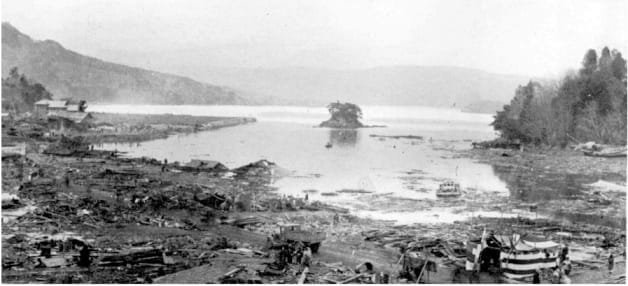
The initial tsunami waves slammed into the Aleutian archipelago within minutes of the earthquake, obliterating villages, sweeping away boats, and drowning many residents. The remote location and harsh weather conditions hampered emergency responses.
Despite the wreckage, it was the aftermath—waves traveling vast distances across the Pacific—that would deliver the severest blow to human life and infrastructure.
Across the Pacific: The Tsunami Travels 4,000 Miles
The tsunami generated by the Unimak earthquake raced across the vast expanse of the Pacific Ocean, reaching the Hawaiian Islands approximately five hours later. Traveling at speeds approaching 500 miles per hour, the tsunami’s relentless momentum turned the sea from a life-giving force into a terrifying harbinger of destruction.
For island communities thousands of miles from the source, the ocean’s fury was both unexpected and devastating — a haunting testament to the interconnectedness of Earth’s ecosystems.
The Destruction in Hawaii: Hilo’s Tragedy Unfolds
When the tsunami struck the east coast of the Big Island of Hawaii, the harbor town of Hilo was hardest hit. Men, women, and children were swept away; entire neighborhoods were demolished. In the chaotic aftermath, 159 people lost their lives—a heartbreaking number given the island’s tight-knit communities.
Homes, schools, businesses, and fishing fleets were destroyed, with the economic and emotional impact lingering for decades. Hilo’s waterfront was transformed from a place of livelihood to a graveyard of wooden ships and shattered dreams.
Eyewitness Accounts: Survivors Speak of the Sea’s Fury
"I heard the ocean roaring like a monstrous beast,” recalled one Hilo resident. “Then the water surged as if possessed by some terrible power, swallowing everything in its path.” Stories like this echoed across the affected communities, capturing the suddenness and terror of the tsunami.
Accounts of frantic escapes up hillsides, families separated by the waves, and heroic rescues illustrate the human dimension of the disaster amid the overwhelming scale of nature’s force.
A Wake-Up Call: U.S. Response to the Disaster
The profound shock inflicted by the 1946 tsunami spurred the U.S. government into action. Recognizing the vulnerability of Pacific coastal communities, officials embarked on an unprecedented mission to develop a system that could detect tsunamis and provide timely warnings.
Scientific bodies, military installations, and international partners collaborated to establish protocols that would save lives in the future, turning tragedy into a catalyst for resilience.
Birth of the Pacific Tsunami Warning Center: From Tragedy to Prevention
In 1949, just three years after the disaster, the Pacific Tsunami Warning Center (PTWC) was established in Honolulu. This pioneering organization revolutionized tsunami preparedness by combining seismology, oceanography, and real-time data monitoring to detect and forecast tsunami activity.
Today, the PTWC remains an indispensable line of defense, protecting millions across the Pacific basin through advanced warning technologies born of the Unimak catastrophe.
Scientific Advances Spurred by the 1946 Tsunami
The disaster was not only a human tragedy but also a redefining moment for earth sciences. Researchers gained invaluable insights into the behavior of underwater earthquakes, wave propagation, and ocean-floor geomorphology.
Studies following the tsunami helped refine models of seismic risk and deepened understanding of subduction zones, informing everything from geological theories to engineering practices in vulnerable coastal regions.
Human Stories: Courage, Loss, and Hope Amidst Disaster
Amid the ruins, human resilience emerged. Survivors partnered with relief workers to rebuild homes and communities. Families grieved lost loved ones but found strength in collective memory and renewal.
The tsunami’s legacy is inscribed not only in historical records but in the enduring spirit of those who faced the unimaginable and chose hope over despair.
Cultural Impact: How the Tsunami Shaped Coastal Communities
For many Pacific Islanders and Alaskans, the tsunami was a defining moment that influenced cultural narratives and traditions. Stories passed down through generations serve as cautionary tales and reminders of humanity’s fragile place within nature’s vast arena.
Communities enhanced their resilience, blending traditional knowledge with scientific methods to coexist more harmoniously with their environment.
Comparing 1946 to Modern Tsunamis: Lessons Learned
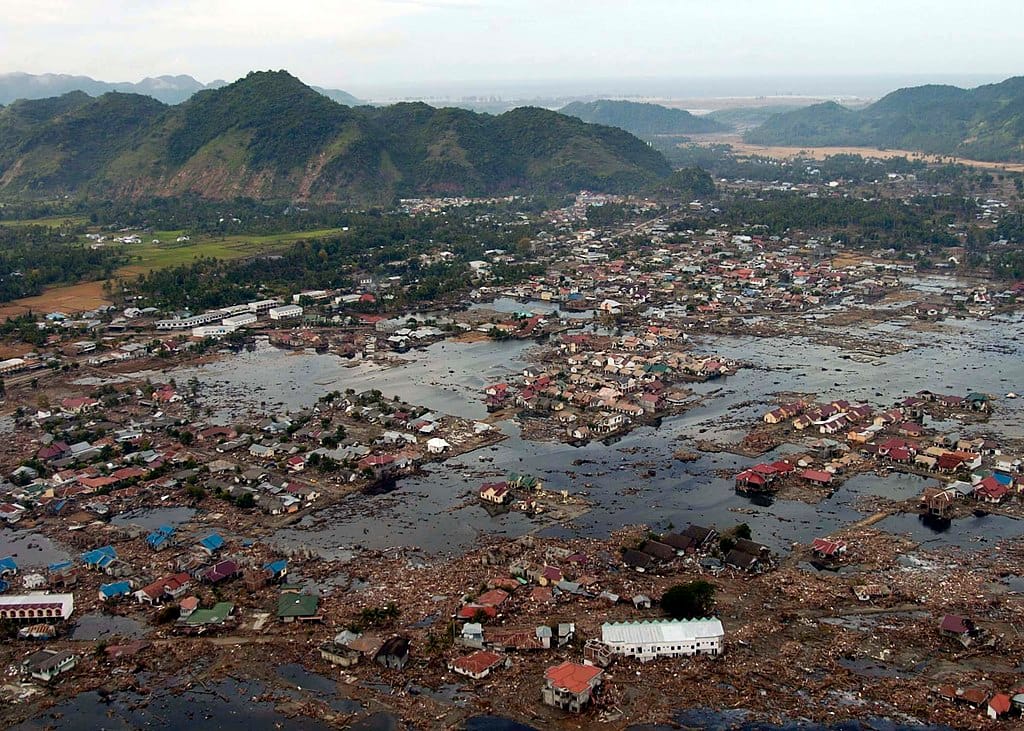
The Unimak tsunami set benchmarks that later waves, like those in 1960 Chile and 2004 Indian Ocean, would reinforce. Advances in global monitoring, evacuation planning, and international cooperation owe much to lessons first learned in 1946.
Comparison reveals how progress has reduced casualties, even as climate change and population growth continue to heighten risks in coastal zones worldwide.
Global Ripple Effects: Tsunamis in a Connected World
Today’s interconnected world means that the seismic shifts beneath one ocean’s surface can resonate worldwide, affecting economies, politics, and international aid policies. The Unimak tsunami was one of the earliest reminders of this global interdependence.
It also sparked discussions about shared responsibility in disaster response and preparedness, themes increasingly relevant in our era of climate uncertainty.
The Role of Media: Reporting Disaster in the Mid-20th Century
In 1946, news of the tsunami traveled via radio broadcasts and newspaper reports. While limited by the technology of the time, these outlets played a crucial role in mobilizing aid and raising awareness.
The media coverage humanized the disaster, turning isolated stories into a collective human experience that galvanized governmental and public will to act.
Remembering the 1946 Unimak Tsunami: Memorials and Historical Memory
Monuments, museums, and annual commemorations in Alaska and Hawaii honor those lost and celebrate the survivors’ resilience. These acts of remembrance serve as bridges between past and present, ensuring that history remains a guide for future generations.
Preserving such memories fosters respect for nature’s power and motivates continuous vigilance.
Conclusion
The Unimak Aleutian Tsunami of April 1, 1946, remains etched in history as a powerful testament to nature’s might and humanity’s vulnerability. Yet, beyond the devastation, it also symbolizes resilience and progress—the capacity to learn, adapt, and build protective measures that save countless lives. This traumatic event forced a reckoning with the unpredictable forces beneath the ocean and inspired a legacy of cooperation, science, and community strength. Each wave that crashed then still echoes as a call to respect the earth’s forces and to prepare wisely for their next surge.
FAQs
Q1: What caused the Unimak Aleutian tsunami in 1946?
A1: The tsunami was triggered by a massive undersea earthquake off Unimak Island, Alaska, combined with volcanic activity and submarine landslides, which displaced huge volumes of water.
Q2: How far did the tsunami waves travel?
A2: The tsunami traveled approximately 4,000 miles across the Pacific Ocean, reaching distant locations such as Hawaii, where it caused significant destruction.
Q3: Why were the communities unprepared for the tsunami?
A3: At the time, there was no established tsunami warning system across the Pacific, and limited scientific understanding and communication infrastructure left coastal populations vulnerable.
Q4: How did the disaster influence future tsunami preparedness?
A4: The tragedy led to the creation of the Pacific Tsunami Warning Center and spurred advancements in seismic monitoring and emergency alert systems.
Q5: What was the human impact of the tsunami, particularly in Hawaii?
A5: In Hawaii, especially in Hilo, 159 people lost their lives, with widespread destruction of homes, infrastructure, and livelihoods, profoundly affecting local communities.
Q6: How has scientific understanding of tsunamis improved since 1946?
A6: Research following the event enhanced knowledge of earthquake dynamics, wave propagation, and hazard mapping, leading to improved prediction and mitigation strategies worldwide.
Q7: Are tsunamis still a threat today in the Aleutian region?
A7: Yes, the Aleutian Islands remain seismically active, meaning tsunami threats persist, but advanced warning systems now significantly mitigate risks.
Q8: What lessons does the Unimak tsunami hold for current disaster management?
A8: It underscores the importance of early warning systems, public education, international cooperation, and respect for environmental signals in protecting lives and property.