Table of Contents
- The Calm Before the Storm: Valparaíso on July 7, 1730
- A City on the Pacific Edge: Valparaíso’s Geographical and Economic Importance
- Tremors of Doom: The Earthquake That Shook Central Chile
- The Ground Breaks: The Massive 1730 Valparaíso Earthquake
- When Mountains Collapse: Landslides and Coastal Devastation
- The Surge Unleashed: The Tsunami’s Deadly March
- The Sea Retreats: Initial Signs of the Coming Catastrophe
- Waves of Destruction: The Tsunami Hits Valparaíso and Beyond
- Fires in the Aftermath: The City Caught in a Double Disaster
- Eyewitness Accounts: Voices from the Rubble
- The Human Toll: Lives Lost and Survivors’ Struggles
- Colonial Governance in Crisis: The Response of Spanish Authorities
- The Ripple Effect: Regional Impact Across the Chilean Coast
- Natural Disasters and Society: How Communities Adapted
- The 1730 Tsunami in Scientific Perspective: Understanding the Pacific’s Fury
- Remembering the Disaster: Historical Narratives and Legacy
- Lessons for the Future: Tsunami Awareness in Chile
- The Trauma That Shaped Valparaíso: Social and Economic Repercussions
- Reconstruction and Resilience: Rebuilding the Pacific Port
- The Earth Speaks Again: Later Earthquakes and the Memory of 1730
- Conclusion: The Enduring Shadow of the 1730 Valparaíso Tsunami
- FAQs About the 1730 Valparaíso Tsunami
- External Resource: Wikipedia Link
- Internal Link: Visit History Sphere
The Calm Before the Storm: Valparaíso on July 7, 1730
Under a pale, early winter sky, the bustling port city of Valparaíso sat quietly, its wooden docks draped with the everyday life of colonial Chile. Merchants bargained over gleaming silver from the mines inland, fishermen mended nets by lantern light, and families flocked through the narrow, cobblestone streets. The scent of ocean salt mingled with that of roasted corn and tobacco smoke, while the distant chatter of sailors echoed against steep hillsides.
No one could have imagined the nightmare hours away. The night seemed serene, almost indifferent to the immense forces gathering beneath the earth—a sleeping giant, ready to roar.
A City on the Pacific Edge: Valparaíso’s Geographical and Economic Importance
In the early 18th century, Valparaíso was Chile’s premier Pacific port, a vital node for commerce between Spain’s colonial empire and the riches of the Americas. Its location — cradled within a natural harbor bordered by rocky hills — made it a critical gateway for silver, wheat, and exotic goods flowing towards Lima and Europe.
Yet this strategic positioning came with a devastating price: Valparaíso sat astride one of the most seismically volatile regions on earth, a restless boundary where the Nazca and South American tectonic plates collide. The region’s rugged beauty masked an underlying volatility, a tectonic tension honed over millennia.
Tremors of Doom: The Earthquake That Shook Central Chile
In the early morning hours of July 8, 1730, this tension ruptured violently. The earth convulsed with a force unparalleled in living memory. What began as a tremble quickly escalated into a catastrophic seismic event, shaking the very foundations of Valparaíso and the surrounding coastline.
Contemporary chronicles described homes rocking “as if caught by the grip of some angry giant,” the ground cracking and swallowing streets. For approximately six agonizing minutes, the earthquake ravaged the region, setting the stage for further horrors.
The Ground Breaks: The Massive 1730 Valparaíso Earthquake
Estimated today at a staggering magnitude 8.7 to 9.0, the 1730 quake ranks among the most powerful in Chile’s seismic history. It fractured an enormous segment of the subduction zone offshore, unleashing energy along the fault line.
Entire hillsides collapsed, smashing buildings and blocking rivers. The very coastline was reshaped, subsiding in some places and rising in others—an early hint of the devastating tsunami to come. The rumble of the earth faded, but nature's next chapter was only beginning.
When Mountains Collapse: Landslides and Coastal Devastation
As the shaking subsided, the newfound chaos manifested in landslides cascading down steep slopes. Vast landslips buried homes and killed many who sought refuge. In some places, the earth opened chasms that swallowed livestock and entire villages.
These collapses compounded the disaster’s immediate toll, blocking roads and isolating communities in a prime maritime trade hub. The very earth seemed hostile, indifferent to human suffering.
The Surge Unleashed: The Tsunami’s Deadly March
But it was the ocean's response that sealed Valparaíso’s fate. The monstrous quake had lifted and dropped the seabed offshore, displacing incomprehensible volumes of water in a giant cataclysmic pulse.
Following the earth’s fury came a silence—a vast, eerie withdrawal of the sea—as if the Pacific itself was gasping before unleashing its wrath. This prelude heralded a tsunami that would breach the shorelines with devastating force.
The Sea Retreats: Initial Signs of the Coming Catastrophe
Fishermen and residents along the coast watched in horror as the ocean pulled back hundreds of meters—a spectacle they scarcely understood. This retreat of the waters from the shore created strange dry zones where coral reefs and sea life lay exposed for moments before the land was engulfed.
Local oral traditions later recalled seeing strange fish stranded on the ocean floor, a terrifying sign of the vast wave to come.
Waves of Destruction: The Tsunami Hits Valparaíso and Beyond
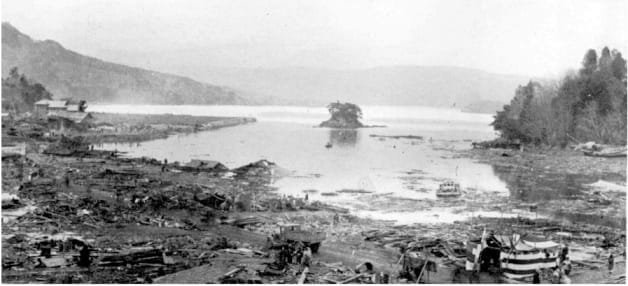
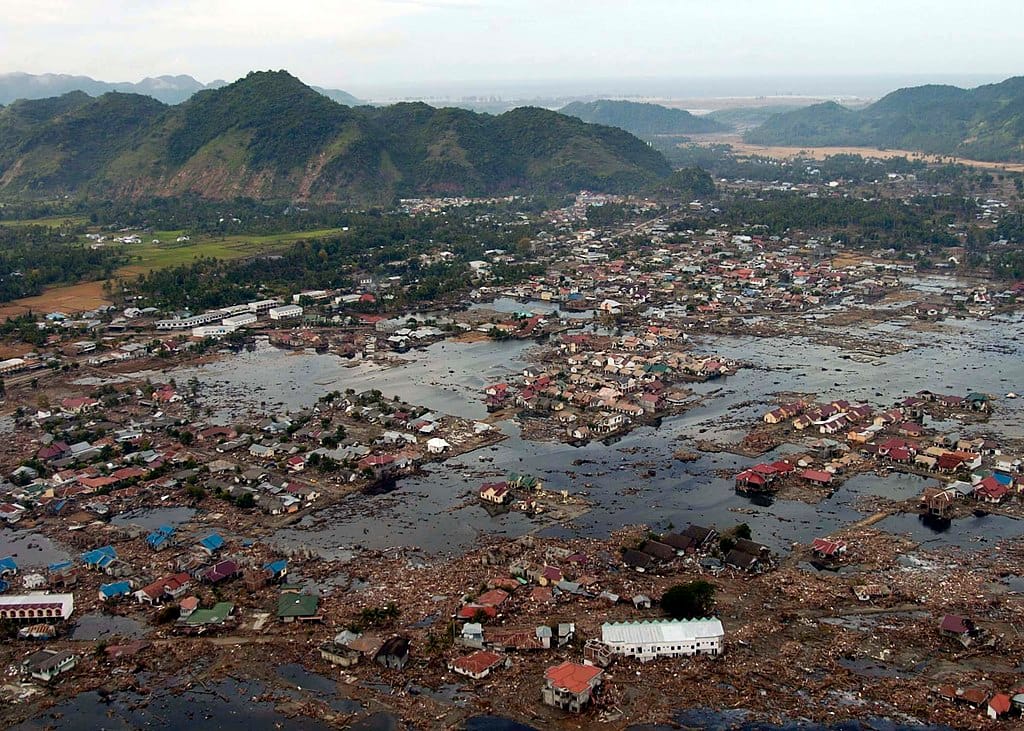
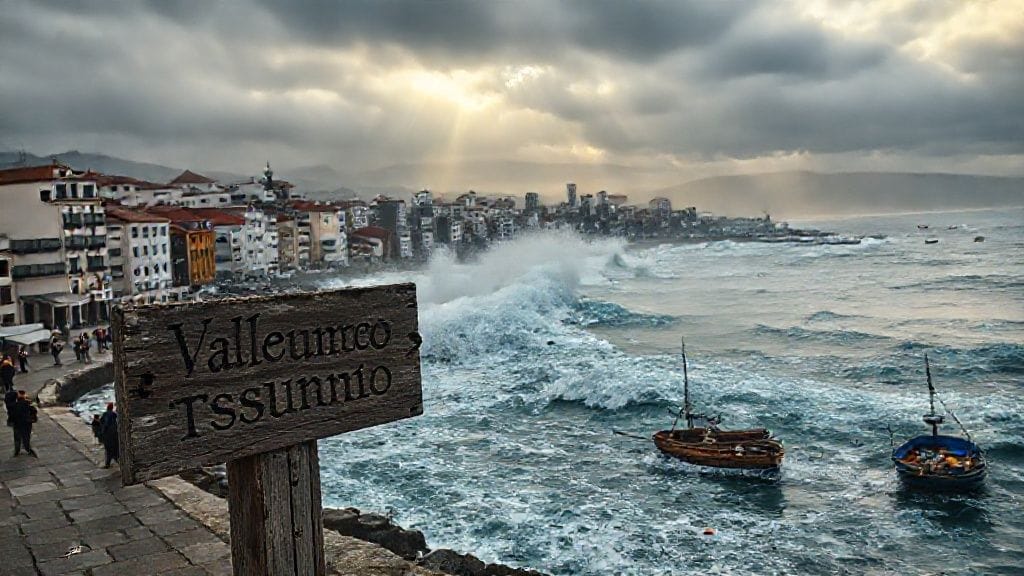
Suddenly, a towering wave surged against the harbor, swallowing docks, warehouses, and ships. The ocean’s fury swept through the city like an unstoppable force of nature, destroying structures, drowning people in its merciless pull, and tearing apart the fragile infrastructure.
Other coastal settlements, from Coquimbo in the north to Concepción in the south, suffered equally catastrophic wave impacts, transforming miles of tranquil shoreline into scenes of ruin and chaos.
Fires in the Aftermath: The City Caught in a Double Disaster
As Valparaíso was drowning, fires ignited from overturned lamps and ruptured stoves turned the city into a blaze. Wind fanned the flames among ruined buildings and dry timber piles. This final insult to the battered city meant that survivors were forced to flee not only floodwaters but also choking smoke and burning ruins.
The conflagration destroyed many of the city’s administrative and trade centers, disrupting recovery long after the waters receded.
Eyewitness Accounts: Voices from the Rubble
Among the scattered records emerge poignant human accounts: a soldier describing the earth's shaking “as though the heavens had fallen;” merchants documenting the loss of shipments and livelihoods; mothers clutching children through landslides, fire, and shaking ground.
These testimonies provide priceless glimpses into the anguish and resilience of the survivors, grounding the catastrophe in raw human emotion.
The Human Toll: Lives Lost and Survivors’ Struggles
Contemporary estimates suggest upwards of 2,500 lives lost—with many more injured or displaced. In a city then home to around 15,000 inhabitants, this level of mortality was staggering. Families were torn apart, homes obliterated, and the social fabric strained to breaking.
Orphans wandered amidst ruins, the sick and wounded uncounted, the emotional scars sunk deep.
Colonial Governance in Crisis: The Response of Spanish Authorities
The colonial administration, led by the Spanish Crown's representatives, faced onerous challenges in this moment of catastrophe. Communication lines were severed, resources scant, and panic widespread. Relief efforts struggled to mobilize, hindered by damaged roads and overwhelmed officials.
Yet, the authorities undertook public works to restore order, repair port infrastructure, and provide limited aid, all while balancing bureaucratic inertia and harsh realities.
The Ripple Effect: Regional Impact Across the Chilean Coast
The tsunami didn't stop at Valparaíso. Entire coastal communities north and south reported massive damage. Ports, fishing villages, agricultural settlements—all were disrupted in ways that echoed for years.
Trade stagnated as coastal routes became treacherous. The economic consequences rippled well beyond the immediate vicinity, touching Lima, Buenos Aires, and Spain’s global empire.
Natural Disasters and Society: How Communities Adapted
In the disaster’s wake, survivors grappled with displacement and fear of recurrence. New construction methods sought to resist future tremors, settlements moved, and local knowledge about natural warnings—like water withdrawal signaling tsunami approach—deepened.
This tragic event seeded cultural memories and practical adaptations crucial to communal resilience.
The 1730 Tsunami in Scientific Perspective: Understanding the Pacific’s Fury
Though centuries before modern seismology, the 1730 event now forms a benchmark to understand Chile’s seismic cycles. Geological surveys reveal uplifted shorelines and tsunami deposits matching historical records.
Modern science sees this event as part of a repeating pattern on the South American subduction zone, crucial for assessing present-day risks in a region where a "big one" is always waiting.
Remembering the Disaster: Historical Narratives and Legacy
Over generations, the 1730 Valparaíso tsunami passed from living memory into historical record and folklore. Chroniclers painted it as a divine punishment; later historians saw lessons in human frailty and resilience.
Today, it marks a somber chapter in Chile’s collective identity—remembered through museums, literature, and coastal commemorations.
Lessons for the Future: Tsunami Awareness in Chile
Chile’s modern emergency protocols owe much to catastrophes like 1730. Public education campaigns, early warning systems, and evacuation routes trace their roots to centuries of seismic experience.
This enduring vigilance honors the victims and prioritizes preparedness for the inevitable forces of nature still unleashed along the Pacific Rim.
The Trauma That Shaped Valparaíso: Social and Economic Repercussions
The disaster gripped the city with trauma beyond the physical. Economically, the destruction of port facilities delayed trade and prolonged poverty for decades. Socially, the disaster highlighted class divides, as wealthier neighborhoods rebuilt faster, while poorer citizens endured neglect.
Yet, within this adversity, seeds of urban renewal and communal solidarity emerged—hallmarks of a city determined to survive.
Reconstruction and Resilience: Rebuilding the Pacific Port
By the mid-18th century, Valparaíso's renaissance began taking shape. Rebuilding efforts incorporated lessons learned from the disaster: sturdier construction, better urban planning, and improved harbor defenses.
The city’s resilience inspired pride and shaped Chile’s maritime future, heralding a new chapter grounded in the memory of destruction and rebirth.
The Earth Speaks Again: Later Earthquakes and the Memory of 1730
Valparaíso and Chile more broadly would face numerous earthquakes and tsunamis in the centuries following. Each disaster rekindled memories of 1730, reinforcing the sense of an eternal battle against natural forces.
The event remains a constant in how Chileans narrate their relationship with the land and sea—a story of respect, fear, and resolve.
Conclusion
The 1730 Valparaíso tsunami was more than a natural disaster; it was a crucible, testing the endurance of a city and its people. In the wake of the earthquake and overwhelming waves, Valparaíso’s inhabitants confronted a shattered world—with lives lost, homes destroyed, and futures uncertain.
Yet, human determination to rebuild, adapt, and survive shone brightly in the floodwaters’ aftermath. The event carved itself into the geological and cultural strata, a vivid reminder not only of nature’s wrath but also of humanity’s unyielding spirit.
As we trace the waves, tremors, and stories left behind, we glimpse the deep dialogue between earth and man—a timeless refrain that continues beneath Chile’s winds and waters.
FAQs
1. What caused the 1730 Valparaíso earthquake and tsunami?
The event was triggered by the subduction of the Nazca tectonic plate beneath the South American plate, releasing massive seismic energy along the Pacific coast, which in turn caused a tsunami via seabed displacement.
2. How powerful was the 1730 Valparaíso earthquake?
Estimates place the earthquake magnitude between 8.7 and 9.0, making it one of the most powerful in Chile’s recorded history.
3. How many people died during the disaster?
Contemporary estimates suggest at least 2,500 fatalities, though the actual number may have been higher considering the scale of destruction.
4. What was the immediate impact on Valparaíso?
Massive structural damage from the earthquake, landslides, flooding from the tsunami, followed by widespread fires, all led to enormous loss of life and disruption of the city’s function as a vital port.
5. How did colonial authorities respond to the disaster?
Spanish colonial officials struggled with limited resources and infrastructure but attempted to provide relief, restore order, and rebuild critical facilities amid the post-disaster chaos.
6. Has Chile experienced similar disasters since 1730?
Yes, Chile faces frequent seismic activity; notable subsequent earthquakes include those of 1960 (the largest recorded globally) and 2010, each accompanied by tsunamis.
7. How is the 1730 tsunami remembered in Chile today?
It holds significant historical and cultural importance and is studied for disaster preparedness, with its memory preserved through records, folklore, and educational initiatives.
8. What lessons does the 1730 Valparaíso tsunami teach modern societies?
It highlights the necessity for early warning systems, resilient urban planning, community preparedness, and respect for natural warning signs—key to mitigating the impacts of inevitable natural disasters.