Table of Contents
- On the Morning of May 25, 1751: The Sky Darkens Over Concepción
- The Geographical Heart of Colonial Chile: Why Concepción Was So Vulnerable
- Colonial Ambitions and Natural Threats: Life on the Edge of the Pacific
- The Earth’s Fury Unleashed: The Seismic Prelude to the Tsunami
- The Tsunami’s First Wave: When the Sea Receded Like a Tragic Omen
- The Flood of Destruction: Waters Engulf the City and Surroundings
- Human Stories Amidst Chaos: Courage, Despair, and Survival
- The Role of Indigenous Knowledge and Local Wisdom during the Disaster
- Spanish Colonial Authorities React: Immediate Relief and Governance Challenges
- Economic Shockwaves: The Ruin of a Strategic Port City
- The Tsunami in the Context of 18th Century Pacific Earthquakes
- Scientific Understanding in 1751: Myths, Mysteries, and Emerging Knowledge
- Religious Interpretations: Faith in Crisis and Consolation
- Reconstruction Efforts and the Resilience of Concepción’s People
- Long-Term Consequences on Urban Planning and Coastal Defense
- The 1751 Tsunami in Chilean Collective Memory and Oral Tradition
- Global Significance: Connecting the Event to the Pacific’s Seismic History
- Lessons Learned: How the 1751 Disaster Influenced Chilean Disaster Preparedness
- Untold Anecdotes: Personal Letters, Journals, and Eyewitness Accounts
- The Modern Legacy: Commemorations and Scientific Research Today
On the Morning of May 25, 1751: The Sky Darkens Over Concepción
The early light of May 25, 1751, crept uneasily over the colonial city of Concepción, nestled at the edge of the Pacific Ocean, surrounded by jagged hills and silently watching the restless sea. It was a day inked with ominous calm, a deceptive quiet before the storm unleashed by the trembling Earth beneath. The air itself seemed taut with anticipation, as if nature was holding its breath. Suddenly, the ground quaked with the violent force of a monstrous heartbeat, shaking the wooden homes, the adobe walls, and the very stones of the streets. Then, just as the inhabitants scrambled to steady themselves, the sea began its sinister dance—a retreat so profound it left a silence in its wake, soon foreshadowing an unimaginable deluge.
For those living in the shadow of the Andes in mid-18th century Chile, earthquakes were a known terror. Yet, the scale of the destruction that day marked a stark turning point. The Concepción tsunami would carve its memory deep into the fabric of regional history, a tragic testament to the raw power of the Pacific Ring of Fire and the fragility of human settlement on its volatile edge.
The Geographical Heart of Colonial Chile: Why Concepción Was So Vulnerable
Located about 500 kilometers south of Santiago, the city of Concepción was the linchpin of Spanish colonial administration and trade in southern Chile, a bustling port sewn into a landscape both beautiful and precarious. Its bay, shaped like a crescent, offered safe anchorage but also served as a natural amphitheater amplifying the power of Pacific storms and seismic events.
The region sat astride the junction of the Nazca and South American tectonic plates, a restless boundary that harbored frequent and devastating earthquakes. These tremors did not arrive alone but were often paired—first the violent shaking, then the terrifying call of the ocean as it receded and returned with monstrous waves. Concepción’s foothold on the edge of the world was both a blessing and a curse.
Such geological vulnerability had profound consequences in colonial times, when building techniques were rudimentary, and seismic science was in its infancy. The dense population of indigenous Mapuche peoples living in the hinterlands contrasted with the European settlers, whose towns echoed with stone fortifications and the echoes of Spanish power—a power ill-prepared for nature’s wrath.
Colonial Ambitions and Natural Threats: Life on the Edge of the Pacific
The mid-1700s were a time of consolidation for the Spanish Crown in Chile. Concepción was no mere remote outpost but a critical military and commercial hub guarding the southern frontier of the Viceroyalty of Peru’s territories. Its fortresses overlooked the sea routes, which mixed the promise of prosperity with the constant fear of pirate raids, indigenous uprisings, and environmental calamities.
Yet, the very ocean that supplied wealth through fishing and trade held a darker side. Stories of past quakes and floods were woven into local lore, but colonial administrators and settlers often perceived the landscape as hostile yet conquerable.
The tension between imposing human order and submitting to natural forces was at the core of every day’s life. The city’s stone churches, administrative offices, and adobe homes were all designed without fully understanding the seismic dances in which the land was engaged. This gap in knowledge would prove tragic on that fateful spring day.
The Earth’s Fury Unleashed: The Seismic Prelude to the Tsunami
At approximately mid-morning, the earth began to shudder, a low rumble that rapidly escalated into violent shaking. Contemporary chronicles describe the ground rolling like ocean waves, splitting sidewalks, collapsing poorly built homes, and toppling trees.
Historians estimate the quake reached an estimated magnitude of 8.5 or higher on the Richter scale—an intensity enough to radically shift the seabed off the coast and set off the tsunami. Modern seismology confirms that such powerful megathrust earthquakes along the Peru-Chile Trench are responsible for some of the largest seismic events recorded in history.
Residents, unaware of the specific mechanics unfolding beneath their feet, scrambled for safety with what urgency they could muster, holding on to hope or clutching loved ones in quiet prayer. But the ground was only the beginning.
The Tsunami’s First Wave: When the Sea Receded Like a Tragic Omen
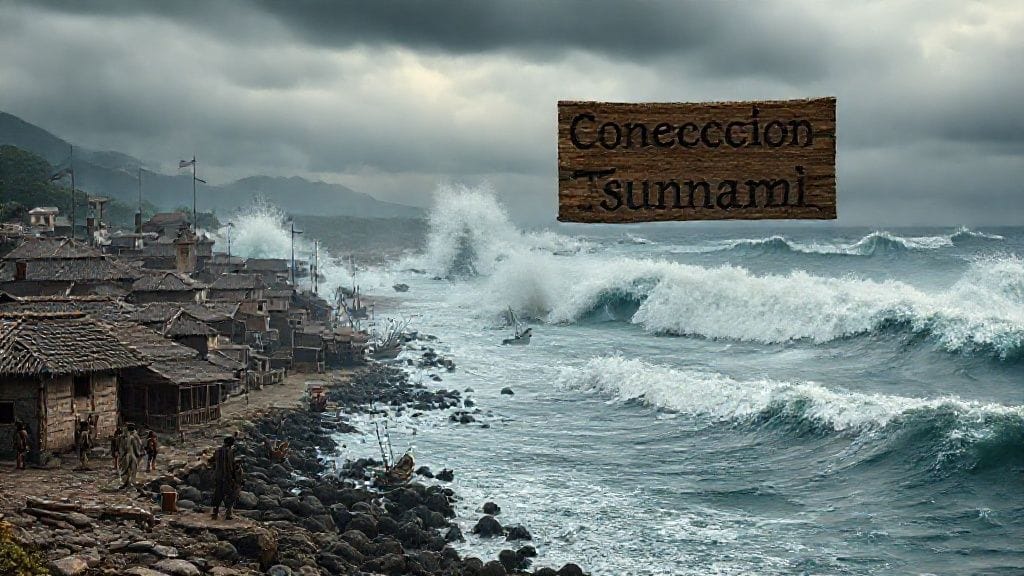
As the tremors faded, many eyes turned to the ocean, which had begun a harrowing retreat. The water line, once touching the bustling docks and fishermen’s boats, drew back violently, stretching across coastal flats and exposing reefs and sandbars that were normally hidden. Eyewitnesses would later describe the scene as eerie and unnatural—the sea seemingly being pulled by an angry giant.
This phenomenon, known today as a tsunami trough, is often the warning before the fatal wave hits. Early warnings were instinctual rather than scientific—a natural alarm bell ringing for survival. Some inhabitants fled inland, while others hesitated, frozen by disbelief.
And then, the monstrous wave arrived.
The Flood of Destruction: Waters Engulf the City and Surroundings
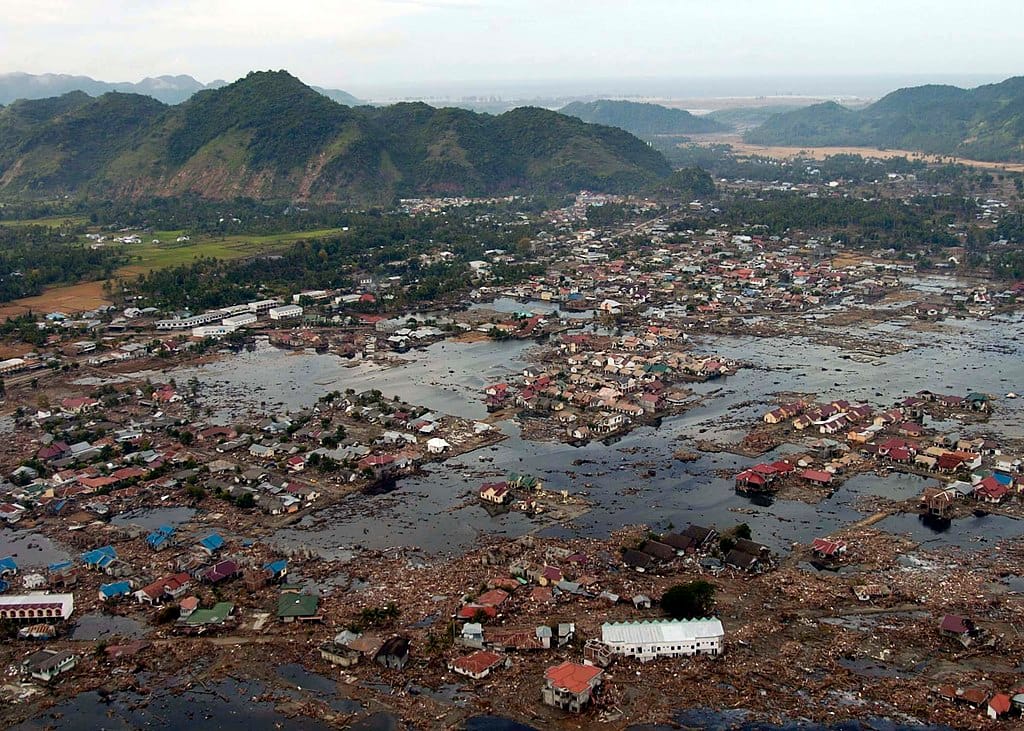
The tsunami’s first surge swept ashore with brutal speed and overwhelming force, swallowing boats, docks, and entire neighborhoods. Water levels rose dramatically, inundating the low-lying city and drowning inhabitants caught unprepared. The combination of seismic damage and flooding carved a path of death and ruin.
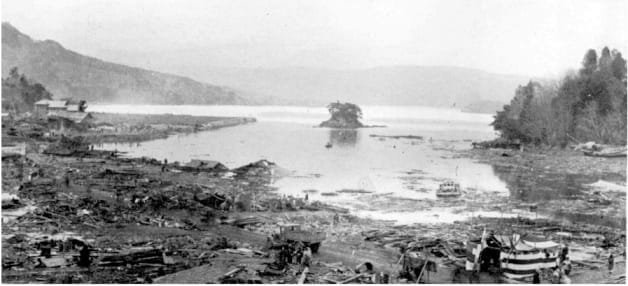
Colonial records talk of entire families lost, streets turned into rivers, and churches shattered as the waves tore through the landscape. The floodwaters carried debris, destroying crops, homes, and livelihoods, while also depositing thick layers of mud that would reshape the shoreline and complicate recovery.
Despite the carnage, the people of Concepción fought tooth and nail to survive; some clung to rooftops, others scrambled to hillsides above the surge. The sheer human determination in the face of natural catastrophe became a defining feature of the tragedy.
Human Stories Amidst Chaos: Courage, Despair, and Survival
Personal letters and survivor testimonies reveal a spectrum of human experiences in the wake of the tsunami. One account tells of a mother who lost three children but shielded her infant beneath debris; another describes fishermen who risked the still-thundering sea to rescue neighbors stranded by the flooding.
The sense of chaos was palpable, but so was the solidarity that arose. Neighbor helped neighbor, soldiers redirected efforts toward rescue, and local indigenous guides led vulnerable families to higher ground. Yet with every act of bravery, there was profound grief—entire families vanished, cultural artifacts destroyed, and a community’s future placed in doubt.
The Role of Indigenous Knowledge and Local Wisdom during the Disaster
Far from being passive victims, the indigenous Mapuche communities displayed remarkable knowledge of seismic events and tsunamis, passed down through generations. Their oral traditions spoke of the earth swallowing villages and the sea retreating before waves of death. This wisdom likely contributed to their survival strategies during the disaster.
In contrast to the relatively new Spanish settlements, the Mapuche tended to inhabit regions less exposed to direct tsunami waves and used early warning signs linked to animal behavior and environmental changes to inform their movements.
This indigenous expertise often contrasted with the colonial city’s slower or more chaotic response, highlighting a profound link between nature and culture sometimes overlooked in historical narratives.
Spanish Colonial Authorities React: Immediate Relief and Governance Challenges
The disaster tested not only the physical limits of Concepción but also the administrative capacities of Spanish colonial governance. Officials scrambled to organize relief, marshal soldiers for rescue operations, and restore order amid looting rumors and widespread panic.
The colonial authorities’ response was hampered by damaged infrastructure and limited resources, but letters to the Viceroy in Lima indicate a determined effort to rebuild the city and reestablish trade networks. These bureaucratic responses revealed the tension between military priorities and humanitarian needs, as well as the strain such disasters placed on the vast Spanish Empire.
Economic Shockwaves: The Ruin of a Strategic Port City
Concepción’s economy was heavily reliant on maritime trade, agriculture, and resource extraction from the surrounding forests and plains. The tsunami devastated docks, warehouses, fields, and transportation routes, cutting off vital supplies and crippling exports.
This economic paralysis not only affected local commerce but also slowed the flow of goods to and from other parts of the colony, amplifying the disaster’s reach far beyond the immediate destruction.
Rebuilding the economic base took years, and many families who had previously prospered found themselves impoverished, reshaping social dynamics within the region.
The Tsunami in the Context of 18th Century Pacific Earthquakes
The 1751 Concepción tsunami was part of a series of massive seismic events that rattled the Pacific Rim throughout centuries. It followed notable earthquakes in Lima (1746) and preceded others like the great 1960 Valdivia quake, the strongest ever recorded.
This history situates the event within a broader tectonic narrative of the Ring of Fire, where shifting earth plates regularly produce disasters that shape human history and settlement patterns. Comparing these events illuminates both the constancy and evolution of natural threats.
Scientific Understanding in 1751: Myths, Mysteries, and Emerging Knowledge
In 1751, scientific explanation for earthquakes and tsunamis was rudimentary and mixed with superstition. Theories ranged from divine punishment to the anger of subterranean dragons and spirits—explanations that colonists and indigenous peoples alike might have shared in various forms.
At the same time, early natural philosophers began to observe patterns, though the mechanisms of plate tectonics would not be elucidated for another two centuries. The event thus stands at a crossroads between myth and emerging science, shaping how societies sought to explain and anticipate such calamities.
Religious Interpretations: Faith in Crisis and Consolation
The Catholic Church played a dual role as both spiritual refuge and social institution during the disaster. Earthquakes and tsunamis were often interpreted as manifestations of divine wrath or tests of faith, prompting public prayers, processions, and religious ceremonies aimed at appeasing God.
Eyewitnesses recount clergy comforting survivors amid the floodwaters, highlighting how faith provided both solace and moral guidance during the darkest hours. Yet, the disaster also raised troubling questions about justice and suffering that theologians wrestled with in the following years.
Reconstruction Efforts and the Resilience of Concepción’s People
Despite the overwhelming destruction, Concepción was rebuilt, slowly but determinedly. Reconstruction efforts combined indigenous building techniques with European architectural styles, adapting to the lessons learned about seismic risk with stronger foundations and elevated structures.
Community solidarity fueled the recovery: neighbors shared resources, craftsmen resurrected shattered homes, and farmers cleared fields beneath a new sense of urgency.
This resilience speaks to a broader human capacity to recover from trauma and to transform tragedy into renewal, an enduring narrative in the city’s history.
Long-Term Consequences on Urban Planning and Coastal Defense
The 1751 tsunami forced reevaluation of settlement patterns and urban design in Chilean coastal towns. Early attempts to raise buildings above potential flood levels and improve drainage systems reflect the beginning of a long struggle to coexist with natural hazards.
Authorities considered relocating some facilities to safer ground, modifying fortifications, and developing communication lines to warn of future dangers. Although technology limited these efforts, the event sparked an ongoing discourse about how best to protect vulnerable populations.
The 1751 Tsunami in Chilean Collective Memory and Oral Tradition
For generations, survivors’ tales passed through families and communities, embedding the tsunami in collective memory. Oral traditions preserved not only the facts but also the emotions, warnings, and resilience associated with the disaster.
These narratives influenced local identity, art, and folklore, often intertwining with Mapuche cosmology and the broader Chilean cultural landscape. Remembering the event became both a tribute to the lost and a reminder to respect the forces that shape existence.
Global Significance: Connecting the Event to the Pacific’s Seismic History
The Concepción tsunami of 1751 is more than a local tragedy; it is a chapter in the global story of tectonic turmoil along the Pacific Rim. This event contributes historical data crucial to modern science, helping to map earthquake recurrence intervals and the potential reach of tsunamis.
It also illustrates the interconnectedness of coastal communities facing shared perils, from Japan to California, tied together by the ocean and the restless plates beneath.
Lessons Learned: How the 1751 Disaster Influenced Chilean Disaster Preparedness
Though limited by contemporary knowledge, the disaster prompted early efforts at hazard awareness and emergency response in Chile. Lessons about evacuation, the importance of higher ground, and the dangers of complacency began to take root.
In the centuries that followed, these seeds would grow into more sophisticated disaster preparedness, influencing policy, education, and infrastructure design. The shadow of 1751 informs Chile’s modern reputation as a leader in earthquake and tsunami resilience.
Untold Anecdotes: Personal Letters, Journals, and Eyewitness Accounts
Behind official records lie personal stories: a landowner’s desperate letter to family recounting the loss of his estate; a soldier’s journal describing heroic rescue attempts; the diary of a nun noting prayers and lamentations.
These voices provide humanity to the disaster, peeling back layers of history to reveal fear, hope, love, and loss. They remind us that history is not merely dates and facts but the lived experiences of ordinary people caught in extraordinary circumstances.
The Modern Legacy: Commemorations and Scientific Research Today
Today, the 1751 Concepción tsunami remains a focal point for both historical remembrance and scientific inquiry. Annual commemorations honor the victims and celebrate survivors’ courage, blending indigenous and colonial histories.
Meanwhile, geologists, seismologists, and historians collaborate to reconstruct the event, using underwater mapping, sediment analysis, and archival research. Their work informs modern warning systems and urban planning, underscoring the enduring dialogue between past and future.
Conclusion
The Concepción tsunami of May 25, 1751, is a vivid narrative of nature’s might, human endurance, and the intricate dance between fragility and resilience on the edge of the Pacific. It offers a window into the colonial world—its fears, hopes, and limitations—while echoing timeless themes of survival and community.
Through trembling earth and engulfing waves, the people of Concepción faced annihilation but refused to be erased. Their stories, preserved in stone and memory, remind us that history is not only about destruction but also about the unyielding spirit that rebuilds, remembers, and ultimately reclaims life.
As we look back two and a half centuries later, the event stands both as a solemn warning and a beacon of human courage—a testament written in water and stone, felt in every rumbling beneath the Chilean sky.
FAQs
Q1: What caused the May 25, 1751, tsunami in Concepción, Chile?
A1: The tsunami was triggered by a powerful megathrust earthquake along the boundary between the Nazca and South American tectonic plates beneath the Pacific Ocean, causing underwater displacement that generated massive waves reaching the Chilean coast.
Q2: How severe was the earthquake that preceded the tsunami?
A2: Estimates suggest the earthquake had a magnitude of around 8.5 or higher, strong enough to cause widespread destruction in Concepción and to shift the seafloor, setting off the subsequent tsunami.
Q3: How did indigenous communities respond to the tsunami compared to Spanish settlers?
A3: Indigenous Mapuche peoples drew on traditional knowledge passed through generations to interpret natural warning signs and often took protective actions earlier, which contributed to lower casualty rates among their communities compared to the less-prepared Spanish settlers.
Q4: What were the immediate and long-term impacts of the tsunami on Concepción?
A4: Immediately, the tsunami caused death, destruction of homes and infrastructure, and economic paralysis. Long-term, it influenced urban reconstruction efforts, disaster preparedness, and social dynamics in the region.
Q5: How did religious faith influence the community’s response to the disaster?
A5: The Catholic Church provided spiritual consolation and social order, interpreting the tsunami as a divine test. Religious ceremonies and prayers were a key part of coping mechanisms, though the disaster also challenged some theological views.
Q6: What lessons from the 1751 tsunami remain relevant for Chile’s disaster management today?
A6: The event underscored the need for early warning, evacuation planning, and resilient building practices. Modern Chilean policies on disaster preparedness reflect these lessons, aimed at reducing vulnerability to similar future events.
Q7: How has the 1751 tsunami been remembered in Chilean culture?
A7: Through oral traditions, literature, and local commemorations, the disaster remains part of Chile’s collective memory, blending indigenous and colonial narratives of tragedy and resilience.
Q8: Where can I find more detailed information about the Concepción tsunami of 1751?
A8: The Wikipedia page dedicated to the topic offers a comprehensive overview with references: Concepción earthquake and tsunami, 1751.