Table of Contents
- The Night the Sea Roared: A Caribbean Nightmare Unfolds
- The Mysterious Depths Beneath the Waves: Geological Origins
- The Caribbean in the 19th Century: A Region on the Brink
- November 18, 1867: The Earthquake That Shook the Virgin Islands
- From Tremor to Tsunami: The Deadly Transition
- The First Wall of Water: The Surge Hits St. Thomas
- Destruction Across the Islands: Tortola, St. John and Beyond
- Human Stories of Survival and Tragedy
- Immediate Aftermath: Chaos, Rescue, and Rumors
- Colonial Powers React: Denmark, Britain, and the United States in Crisis
- Scientific Understanding: How the Tsunami Redefined Caribbean Geology
- Long-Term Economic and Social Impact on Virgin Islands Communities
- The Tsunami in Caribbean Memory and Oral Traditions
- How 1867 Shaped Future Disaster Preparedness in the Caribbean
- Lessons for Today: The Forgotten Tsunami That Warns Us Still
- Conclusion: Remembering the Fury Beneath the Waves
- FAQs About the Virgin Islands Tsunami of 1867
- External Resource
- Internal Link
1. The Night the Sea Roared: A Caribbean Nightmare Unfolds
The Caribbean night of November 18, 1867, was meant to be calm and unremarkable; a mild tropical breeze caressed the palm fronds and whispered through the alleys of Charlotte Amalie, the port capital of St. Thomas, nestled in the Virgin Islands. But then, beneath that serene sky, nature unleashed a fury that would forever engrave itself into the history of the Caribbean.
Suddenly, the ground shuddered violently, as if the island itself was convulsing in torment. The earth’s trembling was only the prelude to a more dreadful spectacle. From the depths of the sea emerged a towering wall of water, racing toward the shore like an unstoppable beast, swallowing everything in its path. Houses shattered against rocks, boats were hurled inland, and screams of terror filled the air. The sea had turned against its children.
This was no ordinary earthquake or storm. What struck the Virgin Islands that night was a powerful tsunami, a rare and devastating phenomenon in the Caribbean. Over the course of minutes, entire communities vanished beneath the surging waves, leaving a trail of destruction and heartbreak that historians and survivors would recount for generations.
But how did this happen in a region not commonly associated with tsunamis? What geological forces were at play? And how did the colonial powers that ruled these islands respond to such unprecedented disaster? This article delves into the tragic events of that November night, tracing the causes, the unfolding calamity, and its long-lasting consequences for the Virgin Islands and the Caribbean at large.
2. The Mysterious Depths Beneath the Waves: Geological Origins
Beneath the turquoise waters of the Caribbean lies a complex and restless tectonic region. The Virgin Islands, like their Caribbean neighbors, are perched upon the volcanic arc created by the convergence of the North American Plate and the Caribbean Plate. This geological tension zone is prone to earthquakes — though tsunamis are far less frequent in the Caribbean than in the Pacific “Ring of Fire.”
The earthquake of November 18, 1867, originated near the Puerto Rico Trench, the deepest part of the Atlantic Ocean, located just northwest of the Virgin Islands. This trench marks the boundary where the North American Plate is subducting beneath the Caribbean Plate. The intense geological pressure had been building for decades, unseen and unheard, until it finally ruptured with catastrophic force.
At approximately 4:30 PM local time, a massive underwater thrust fault snapped, sending seismic shockwaves through the earth and displacing billions of tons of water. This displacement generated a tsunami that rushed toward the Virgin Islands and northern Puerto Rico with unforgiving speed.
Though the region was no stranger to earthquakes—mankind and islanders alike had felt tremors before—the horror was multiplied as that trembling ground signaled an impending tsunami, an oceanic monster few in the Caribbean had ever witnessed.
3. The Caribbean in the 19th Century: A Region on the Brink
To understand the impact of the 1867 tsunami, one must see the Virgin Islands not merely as tropical idylls but as a patchwork of colonial ambitions, struggling economies, and resilient communities.
During the mid-19th century, the Virgin Islands were divided under different colonial flags: St. Thomas and St. John were Danish colonies, while Tortola and the other British Virgin Islands belonged to the British Empire. The US had begun to gaze southward with increasing interest but had not yet acquired these islands.
Economically, the Virgin Islands were recovering from the upheavals caused by the abolition of slavery in 1848 in the Danish West Indies and similar changes in British territories. Plantations were in decline; free people of color, sailors, merchants, and workers filled the ports and towns. A fragile yet vibrant society teetered between hope and hardship.
In this context, the earthquake and tsunami would not only devastate physical structures but also strike a deep blow to social fabrics and fragile economic bases. The islands' isolation and the colonial administration’s limited capacity for disaster response heightened the tragedy.
4. November 18, 1867: The Earthquake That Shook the Virgin Islands
The afternoon began quietly, as the sun poured gold upon rooftops. Yet, at 4:37 PM, all past tranquility shattered.
A violent earthquake rocked the islands, felt violently for over a minute. Residents described the ground rolling, buildings swaying, and glass rattling ominously. Many rushed outdoors, fearing collapse. The shaking was accompanied by a low rumble — an unsettling prelude to disaster.
Ships anchored in the harbor heaved dramatically. The water, at first calm, suddenly drew back from the shore, exposing the sea floor — a terrifying oceanic drought signaling the arrival of something monstrous.
Within minutes, the first wave rose, a dark and foaming wall racing over reefs and docks, obliterating wharfs and sweeping boats ashore. The mighty ocean had turned from provider to executioner.
5. From Tremor to Tsunami: The Deadly Transition
The transition from earthquake to tsunami was mercilessly swift. The underwater rupture created a massive displacement of water, and multiple waves followed in succession.
The initial withdrawal of the sea was eerily silent and caused both panic and fascination among islanders who had never witnessed such a phenomenon. Some fishermen ventured further into the sea, curious or perhaps desperate.
Then the tsunami struck.
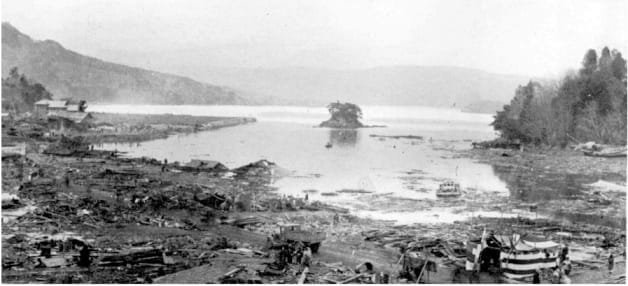
Eyewitnesses would later recount a wall of water at least 6 to 9 meters high crashing onto the shores of St. Thomas, obliterating entire neighborhoods. The waves battered the island’s hillsides, engulfed small boats, and drowned crops and livestock alike.
But, tragically, the wave did not spare Tortola and St. John either. Each island suffered individual waves, and entire coastlines disappeared beneath the pounding surge.
6. The First Wall of Water: The Surge Hits St. Thomas
Charlotte Amalie, the commercial heart of the Danish West Indies, bore the brunt of the tsunami’s impact. Its busy harbor was suddenly transformed into a scene of chaos and devastation.
The tsunami entered the harbor with immense force, destroying dozens of ships, including schooners, small fishing vessels, and steamships used for inter-island commerce. Buildings along the waterfront collapsed under the pressure, stores and markets were inundated, and the cries of those caught in the flood echoed through the streets.
The wave’s power was so overwhelming that it rolled up the steep slopes behind the city, undermining hilltop plantations and homes. Eyewitnesses spoke of the sea swallowing entire families and disappearing with them beneath its depths.
The death toll on St. Thomas alone was estimated to be in the hundreds, though precise figures escaped record due to the chaos and poor documentation of the time.
7. Destruction Across the Islands: Tortola, St. John and Beyond
While St. Thomas suffered the largest blow, the tsunami’s fury spread mercilessly.
Tortola, the largest of the British Virgin Islands, saw coastal plantations flooded and small villages wiped out. The island’s economy, heavily reliant on agriculture and shipping, was dealt a severe blow. Fishermen lost their boats, and fields were swept away by saltwater contamination.
St. John was almost entirely immersed by waves, forcing survivors to flee inland or into the hills. The small settlements, already struggling with a lack of infrastructure, faced near-total destruction.
Beyond the Virgin Islands, northern Puerto Rico also experienced seismic shaking and some tsunami effects, though less severe. Together, the Caribbean witnessed one of its most devastating natural disasters of the 19th century.
8. Human Stories of Survival and Tragedy
Among the shouts and waters rose countless human dramas — stories of courage, sorrow, and endurance.
Maria Jensen, a Danish widow living on the waterfront, heroically saved her children by escaping just moments before the wave swept her home away. In contrast, the Anderson family on Tortola was lost to the sea, leaving only echoes of their laughter behind.
One stirring account tells of sailors who, chained to the docks, were dragged to their deaths by collapsing piers. Contrastingly, local fishermen who fled to higher ground managed to guide neighbors to safety, saving dozens.
These personal narratives remind us that beyond the statistics, every wave swallowed a life and a dream.
9. Immediate Aftermath: Chaos, Rescue, and Rumors
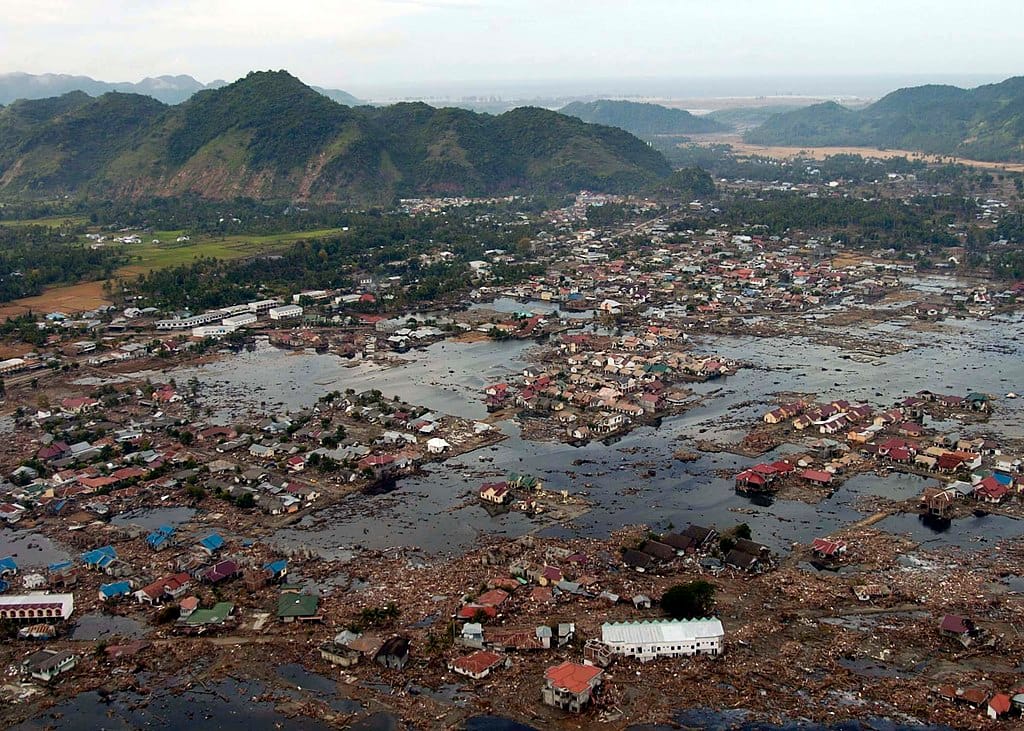
As the floodwaters receded, survivors were left amidst a tableau of ruin and despair. Towns were in ruins, fresh water sources contaminated, and bodies floated in harbors and rivers. Disease threatened to spread as sanitation collapsed.
Colonial officials scrambled to form rescue parties and distribute relief. However, communication with other islands was hampered by destruction to ports and the limited technology of the era.
Tales of ghostly cries and “sea monsters” in the darkness spread among frightened locals, adding a layer of superstition to the practical nightmare of rebuilding.
10. Colonial Powers React: Denmark, Britain, and the United States in Crisis
The Danish government responsible for St. Thomas and St. John faced criticism over inadequate disaster readiness and slow response. Relief supplies arrived but were insufficient for the scale of destruction.
Britain tended to the British Virgin Islands with similar challenges, hampered by the remoteness and political priorities elsewhere in the empire.
Meanwhile, the United States, eyeing strategic interests in the region amid growing tensions in the Caribbean, sent ships to assist in relief efforts — an early indication of Washington’s expanding influence overseas.
This disaster exposed the vulnerability of colonial administrative structures in the face of natural calamities and influenced subsequent policy debates on regional security and development.
11. Scientific Understanding: How the Tsunami Redefined Caribbean Geology
At the time, scientific knowledge about tsunamis was limited, especially outside the Pacific.
The Virgin Islands tsunami of 1867 became a case study in marine geology and seismology, prompting Caribbean and European scientists to increase their investigations into tectonic activity.
The event also fueled debates on the risks faced by other coastal populations in the Atlantic Basin, long considered relatively safe from tsunami threats.
Later geological surveys confirmed the existence of active fault lines and subduction zones near the Caribbean, reclassifying the region’s seismic risk profile.
12. Long-Term Economic and Social Impact on Virgin Islands Communities
The destruction wrought by the tsunami devastated local economies. Plantations, though waning in dominance, suffered severe agricultural losses, hitting export crops such as sugar and cotton.
The breakdown of ports in St. Thomas disrupted trade routes across the Caribbean, impairing commercial growth, which took years to recover.
Socially, families were displaced, and communities fractured. The disaster accelerated emigration trends as many sought safer opportunities on the American mainland or other islands.
Nonetheless, resilience shone through as survivors rebuilt homes, churches, and stores. The tsunami etched itself into collective memory as a symbol of both tragedy and tenacity.
13. The Tsunami in Caribbean Memory and Oral Traditions
While official records remained scarce, oral histories kept the memory of that fateful November night alive.
Elders recounted the sea withdrawing and then roaring back, teaching new generations to respect the ocean’s power.
Folklore incorporated the disaster, blending it with local beliefs about spirits and nature’s wrath.
These narratives preserved the lessons of vulnerability and preparedness long before formal warning systems existed.
14. How 1867 Shaped Future Disaster Preparedness in the Caribbean
Though the tsunami remained a relatively isolated event for decades, it sowed seeds for later disaster awareness.
Colonial administrations began to consider earthquake risks more seriously, leading to early building code adjustments and the monitoring of seismic activity.
By the 20th century, improved communication and scientific advances allowed for faster alerts, although tsunami warning systems in the Caribbean would only emerge much later.
The 1867 event stands as an early, tragic reminder that the Caribbean’s beauty conceals deadly geological forces.
15. Lessons for Today: The Forgotten Tsunami That Warns Us Still
In the 21st century, amid concerns over climate change and rising sea levels, the 1867 Virgin Islands tsunami gains new relevance.
Modern scientists continue to study the region’s seismic potential, aware that similar earthquakes could once again generate destructive tsunamis.
The event calls attention to the necessity of coastal preparedness, education, and resilient infrastructure, particularly for vulnerable island nations.
Remembering the 1867 disaster challenges us not to be complacent, but to honor the past by protecting the future.
16. Conclusion: Remembering the Fury Beneath the Waves
The Virgin Islands tsunami of November 1867 remains a haunting chapter in Caribbean history — a night when the sea transformed from a source of life to a bringer of death.
Beyond the destruction, this tragedy reveals the deep connection between humans and the earth’s forces, a relationship marked by awe, unpredictability, and resilience.
As the islands rebuilt and their people moved forward, the memory of that wave became a silent guardian, a caution etched into collective consciousness.
Today, as we reflect on that dark night, we are reminded that history is not just dates and facts — it is the living echo of human endurance and the natural world’s formidable power.
Conclusion
The catastrophic Virgin Islands tsunami of 1867 is a monumental yet often overlooked event in Caribbean history. It was a tragic collision of geological forces and human vulnerability, set against the complex tapestry of colonial society. The story of those tumultuous hours — the earthquake’s violent shaking, the sea’s terrifying retreat, and the engulfing waves — is a powerful narrative of nature’s might and humanity’s fragility.
Yet, within this disaster lies a tale of resilience. Communities devastated to their core found strength amid ruin, rebuilding homes and lives in defiance of despair. The event also expanded scientific understanding of seismic risks in the Caribbean and shaped the evolution of disaster awareness in the region.
In remembering the 1867 tsunami, we do more than recount catastrophe; we honor those whose lives were forever changed and reaffirm our responsibility to learn from history. This memory, buried beneath layers of time, offers invaluable warnings and hope as the Caribbean continues to live alongside the shifting forces of the earth and sea.
FAQs About the Virgin Islands Tsunami of 1867
Q1: What caused the Virgin Islands tsunami of 1867?
A1: The tsunami was triggered by a massive earthquake along the Puerto Rico Trench, where tectonic plates converge, causing the seafloor to rupture and displace a large volume of water.
Q2: How significant was the earthquake that caused the tsunami?
A2: The earthquake was estimated to have a magnitude of around 7.5 to 8.0, powerful enough to create a tsunami and cause widespread shaking felt across the northern Caribbean.
Q3: What were the immediate effects of the tsunami on the Virgin Islands?
A3: The tsunami destroyed waterfronts, ships, homes, and crops across St. Thomas, Tortola, and St. John, killing hundreds and displacing many more, leaving entire communities in ruins.
Q4: How did colonial governments respond to the disaster?
A4: Danish and British colonial administrations attempted rescue and relief efforts, but were hindered by limited resources and infrastructure. The US also aided with naval support, signaling increased American involvement in the region.
Q5: Did this event change how the Caribbean prepared for natural disasters?
A5: While immediate change was limited, the earthquake and tsunami raised awareness of seismic risks and eventually contributed to improved scientific research and disaster preparedness in the Caribbean.
Q6: Is the Caribbean still at risk for tsunamis today?
A6: Yes, the Caribbean remains at risk due to its tectonic activity. Modern monitoring and warning systems exist today but require continuous improvement to protect vulnerable coastal populations.
Q7: How is the 1867 tsunami remembered in local culture?
A7: The event survives mainly through oral histories and folklore, embedding lessons on respect for nature’s power and warnings passed down through generations.
Q8: What lessons can modern coastal communities learn from the 1867 disaster?
A8: The key lessons include the importance of early warning systems, resilient infrastructure, public education on natural risks, and coordinated emergency responses to mitigate the impact of similar catastrophes.