Table of Contents
- The Fateful Dawn of August 4, 1946
- A Quiet Morning on the Shores of Samaná Bay
- Geological Origins: The Caribbean’s Restless Fault Lines
- The Undersea Earthquake: Shaking the Atlantic Floor
- The Birth of the Tsunami: Nature’s Unseen Fury
- The Initial Tide: Waves Surging Toward Samaná
- The Town’s Response: Between Panic and Paralysis
- Eyewitness Accounts: Voices from the Water’s Edge
- The Aftermath: Buildings Reduced to Rubble
- Human Toll: Lives Lost and Families Shattered
- Rescue Efforts: Heroes Amidst Devastation
- Regional Impact: Waves Reverberate Beyond the Dominican Coast
- Scientific Understanding: How the 1946 Tsunami Changed Knowledge
- The Role of Early Warning Failures and Lessons Learned
- Cultural Memories: The Tsunami in Dominican Oral History
- Rebuilding and Resilience: The Community’s Path Forward
- Environmental Consequences: Changes to the Coastal Landscape
- International Attention: Aid and Solidarity from Abroad
- Tsunami Legacy: Impact on Policies and Preparedness in the Caribbean
- Comparing 1946 to Later Caribbean Tsunamis
- The Samaná Tsunami in the Context of Global Disaster History
- Modern Commemorations and the Memory of 1946
- Conclusion: The Enduring Echo of Nature’s Wrath
- FAQs: Uncovering More About the 1946 Dominican Republic Tsunami
- External Resources and Further Reading
- Visit History Sphere
The Fateful Dawn of August 4, 1946
The calm before the storm is often the most deceiving. On the morning of August 4, 1946, the sun rose gently over the turquoise waters of Samaná Bay in the northeastern Dominican Republic. Fishermen prepared their boats, children played along sandy shores, and vibrant life unfolded under a soothing tropical sky. Yet beneath this peaceful facade, the earth had already begun a silent and deadly upheaval — one that would soon ripple through the Atlantic and transform this coastal haven into a site of tragedy and survival.
The story of the 1946 Samaná tsunami is not just a tale of natural destruction; it is a human saga marked by sudden loss, resilience, and a gradual awakening to the ocean’s hidden dangers. To understand what unfolded, one must look both into the geological forces that churn beneath the sea and the lives of those who faced the tsunami’s wrath without warning. This narrative unfolds not just as an historical event, but as a living memory etched into the heart of the Dominican Republic.
A Quiet Morning on the Shores of Samaná Bay
Samaná Bay, known for its rich biodiversity and strategic location along the Atlantic coast, had long been a place of tranquility and prosperity. The town of Samaná and surrounding fishing villages relied heavily on the harvest from the sea. Its community was tight-knit and accustomed to the rhythms of nature — but not to the kind of catastrophe that would soon descend.
That early morning, skies were clear, the breeze warm, and the sea deceptively still. Children’s laughter echoed across the shore, fishermen cast their nets in anticipation of a fruitful day. No one expected what the ocean’s depths would unleash. Yet beneath the surface lurked tectonic forces inexorably preparing to strike.
Geological Origins: The Caribbean’s Restless Fault Lines
To grasp why the tsunami occurred, one must journey below the waves to the geological stage beneath the Caribbean Sea. The Dominican Republic sits atop the boundary between the North American Plate and the Caribbean Plate — a zone of seismic activity and volcanic potential. This convergent plate boundary, riddled with faults and fractures, has historically produced significant earthquakes, volcanic eruptions, and related disasters.
On August 4, 1946, an earthquake of magnitude 8.1 ignited a violent rupture along an underwater fault line off the northern coast of the Dominican Republic. Stretching beneath the Atlantic floor, this fault unleashed seismic energy powerful enough to displace millions of cubic meters of water and create a tsunami.
The catastrophe was not merely a product of localized shaking but of the ocean’s violent reaction to sudden seabed movement — a reminder of the deep, dynamic forces shaping the Caribbean landscape.
The Undersea Earthquake: Shaking the Atlantic Floor
At 4:51 AM local time, beneath the waves of the Mona Passage between Hispaniola and Puerto Rico, the seafloor fractured. The earth split with a force that sent a shockwave traveling through the earth’s crust and up to the surface. This undersea earthquake was felt across the region, rattling homes and sparking panic, but it was only the first act in a more devastating spectacle.
The rupture’s thrust on the seabed rapidly elevated and depressed the ocean floor, displacing massive volumes of water. This displacement triggered a tsunami — waves racing across the ocean, initially invisible, but gathering strength as they neared the shore.
Such a powerful quake had precedent in the region, but what made 1946 different was the accompanying sea wave, an enormous and destructive force both misunderstood and underestimated at the time.
The Birth of the Tsunami: Nature’s Unseen Fury
Unlike storm waves or tides, a tsunami is born of seismic activity beneath the ocean floor. The plates’ sudden movement acted like a giant pistoning mechanism lifting and dropping the sea’s surface. The ocean, forced out of equilibrium, sought to restore balance, creating waves moving at jetliner speeds — up to 800 kilometers per hour — across the Atlantic basin.
But in the vastness of the open sea, these waves travel as gentle undulations, nearly imperceptible to ships. Their true threat lies in their wavelength and volume. As they approach shallow coastal waters, the energy compresses upward, transforming into towering walls of water capable of engulfing entire shorelines.
Samaná Bay was ill-prepared for this phenomenon. Residents would have had mere minutes from the earthquake's tremor to the tsunami's arrival, too brief to comprehend or respond effectively.
The Initial Tide: Waves Surging Toward Samaná
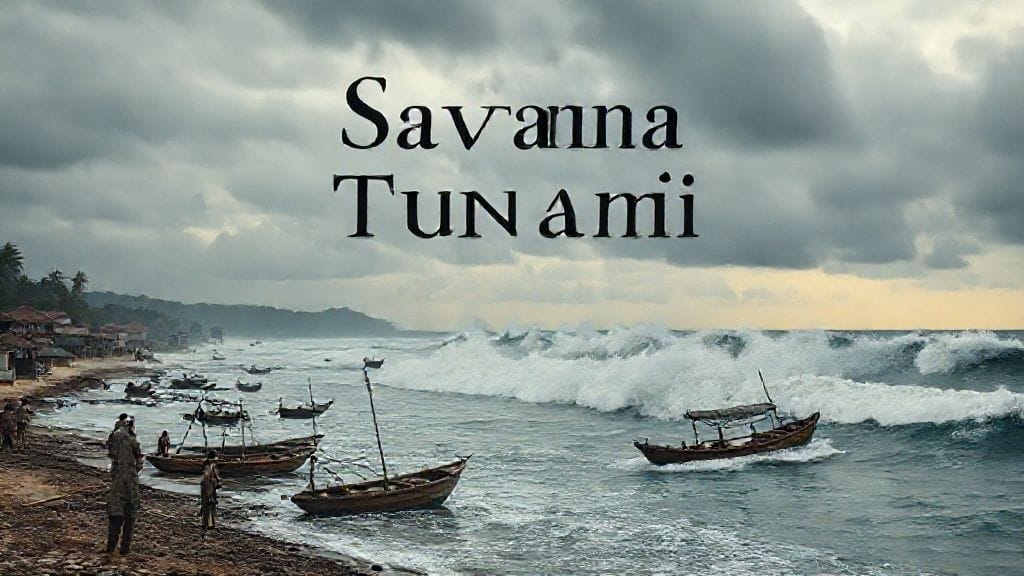
Just after dawn, the first wave crashed into the coast of Samaná. It was a rapid, furious pulse that caught people mid-action — fishermen returning to shore, children playing, households beginning their day. Eyewitnesses described the sea retreating suddenly before surging back in an angry roar that consumed docks, homes, and anything unfortunate enough to stand in its path.
This withdrawal and return of the water are classic tsunami behavior — a brief and ominous sign that precedes a future wave that is often even stronger. Samaná's people faced a terrifying ordeal, trying to flee without access to any early warning systems or knowledge of what the giant wave meant.
The Town’s Response: Between Panic and Paralysis
Chaos quickly overtook calm. Many reported a sense of disbelief as water inundated streets, flooding homes and uprooting trees. People ran inland, but the geography of Samaná Bay funneled the wave’s power directly inward, limiting escape routes.
Local authorities were overwhelmed. Communication lines failed, and help was slow to arrive. Panic gave way to shock as the scope of devastation became evident. Entire neighborhoods had been razed or heavily damaged within minutes, affecting hundreds of families.
Yet amidst the fear, stories emerge of quiet courage — neighbors pulling others from wreckage, improvised shelters forming, and elders recalling tales of past floods to comfort the frightened.
Eyewitness Accounts: Voices from the Water’s Edge
Maria Pérez, then a young woman of seventeen, would later recount: “The sea first ran away from us, like it was breathing out, and then came back roaring like a beast — we barely had time to hold our children before the water was upon us.”
Another fisherman, José Gómez, survived by climbing to a tree: “The wave lifted my boat from the shore and carried it inland before dumping it like a toy. When I looked down, I saw the village disappearing beneath the water.”
These personal narratives give the disaster a pulse — transforming statistics into flesh and blood, fear and endurance. They remind us the tsunami was not just an act of nature but a collective human tragedy.
The Aftermath: Buildings Reduced to Rubble
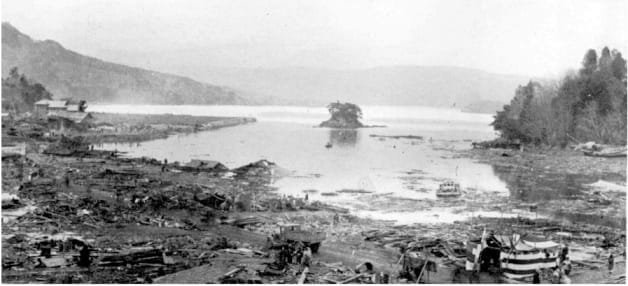
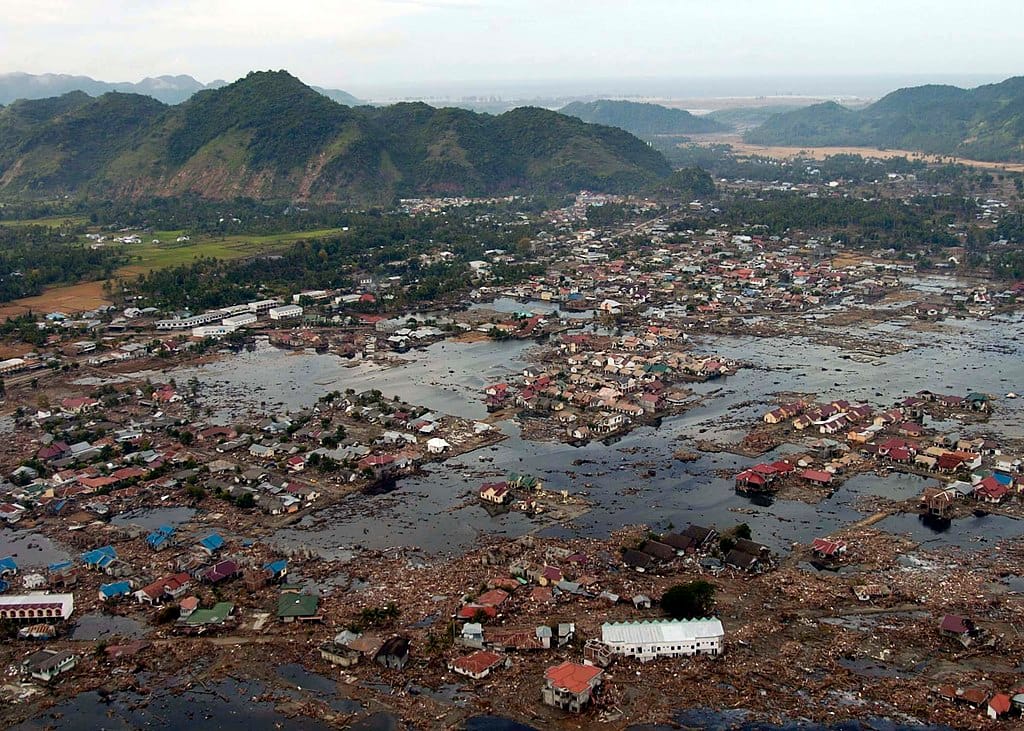
When the waters receded, an eerie silence settled over Samaná. The tsunami had wrought destruction on an unprecedented scale. Wooden houses sat splintered, boats wrecked beyond repair, and infrastructure shattered. Roads were impassable, and supply lines cut off.
Medical facilities, already limited, struggled to tend to the wounded. The death toll rose as many injured either succumbed to wounds or were lost amid the chaos. Food and drinking water shortages compounded the crisis, marking the beginning of an arduous recovery.
The scale of physical destruction was immense for a town so small and isolated, marking a turning point in local disaster awareness.
Human Toll: Lives Lost and Families Shattered
Exact figures vary, but estimated fatalities were in the dozens, with many more injured or displaced. Families lost loved ones without warning, community leaders vanished, and children were orphaned overnight.
Loss was not just numeric but psychological. Survivors dealt with trauma and bereavement on an epic scale, some stories never fully told. The tsunami tore at the social fabric of this quiet coastal community, underscoring nature’s raw and impersonal force.
Rescue Efforts: Heroes Amidst Devastation
Despite chaos, rescue efforts gradually organized. Local authorities, with limited resources, mobilized quickly. Neighbors shared what they had—food, shelter, labor—to cope with the emergency.
International aid, though slow, began trickling in weeks later. Nearby islands and countries sent supplies and personnel. Religious and charitable groups played pivotal roles in caring for orphans and the wounded.
These acts of kindness and bravery signaled the resilience that would define Samaná’s recovery in the months and years ahead.
Regional Impact: Waves Reverberate Beyond the Dominican Coast
While the Dominican Republic bore the brunt, the tsunami’s ripples were felt across Puerto Rico, the Virgin Islands, and even farther along the Caribbean and Atlantic coasts. Some accounts mention flooded harbors, ship damage, and scattered casualties in these neighboring zones.
The event spotlighted the region’s vulnerability to sea-related seismic hazards, a reality largely underestimated before 1946. It helped bring the Caribbean into the wider international conversation about tsunami risk prevention and disaster readiness.
Scientific Understanding: How the 1946 Tsunami Changed Knowledge
Before 1946, tsunamis were mostly associated with the Pacific Ocean’s “Ring of Fire.” This Caribbean event challenged the prevailing assumptions, demonstrating that severe tsunamis could strike the Atlantic basin with deadly results.
Seismologists and oceanographers intensified their study of the region, mapping fault lines and deep-sea topography with greater urgency. The 1946 tsunami contributed to the creation of scientific monitoring networks, though early warning systems would take decades more to develop.
It was a pivotal moment in expanding modern earthquake and tsunami science into new fronts, merging geological insight with growing technology.
The Role of Early Warning Failures and Lessons Learned
The absence of an effective early warning system left Samaná and surrounding areas vulnerable. Despite shaking from the earthquake itself, residents had little to guide immediate action.
This tragedy underlined the critical need for seismic monitoring, community education, and evacuation protocols. Over subsequent decades, authorities in the Dominican Republic and the wider Caribbean worked with international organizations to improve tsunami preparedness — a legacy borne from the pain of 1946.
Cultural Memories: The Tsunami in Dominican Oral History
Beyond textbooks and scientific journals, the tsunami remains alive in Dominican cultural memory. Passed down through families, songs, and local stories, the event shapes collective identity.
Stories anthropomorphize the ocean’s fury, framing it as a force both respected and feared. Festivals and rituals in Samaná sometimes incorporate elements honoring lost ancestors and the sea’s power, blending history with local spirituality.
This intangible heritage keeps the tsunami’s lessons vivid, fostering respect for nature’s unpredictability.
Rebuilding and Resilience: The Community’s Path Forward
Reconstruction was slow but steady. Wooden houses were rebuilt with local materials, often on higher ground. Infrastructure improvements included better roads and community centers designed with disaster resilience in mind.
The social bonds forged in crisis strengthened communal solidarity. Schools reopened, fisheries were revitalized, and economic life gradually resumed. The tsunami’s shadow remained, yet it also inspired a deep-seated tenacity and hope.
Samaná would remember — and recover.
Environmental Consequences: Changes to the Coastal Landscape
The tsunami transformed the coastline physically. Erosion altered beaches; sediment deposits reshaped harbors. Changes in salinity affected mangroves and estuarine ecosystems crucial for fish nurseries.
These environmental shifts sometimes complicated fishing and agriculture, adding a natural dimension to the human challenges after the disaster.
Yet, over time, ecosystems demonstrated remarkable adaptability — a testament to the resilience of both nature and community.
International Attention: Aid and Solidarity from Abroad
News of the tsunami crossed oceans. Governments, humanitarian organizations, and diaspora communities contributed aid. Modest donations helped fund reconstruction, medical supplies, and food relief.
While the geopolitical environment of the post-WWII era sometimes slowed large-scale intervention, international goodwill underscored the interconnectedness of disaster and compassion.
Samaná’s tragedy became part of a larger narrative about global responses to natural calamities.
Tsunami Legacy: Impact on Policies and Preparedness in the Caribbean
The 1946 disaster inspired governmental and regional efforts to create seismic monitoring and emergency response frameworks. It laid groundwork for the later Caribbean Tsunami Warning System, formalized in the late 20th century with international partnerships.
Public education campaigns integrated tsunami awareness, and building codes in some areas were revised. The event remains a case study in how emerging nations can mobilize knowledge and cooperation after catastrophe.
Comparing 1946 to Later Caribbean Tsunamis
Other Caribbean tsunamis, such as the 1991 Puerto Rico event or the 2010 Haiti earthquake-triggered waves, have drawn on the 1946 precedent for scientific and policy analysis.
Each event highlights evolving understanding of risk, yet the 1946 tsunami remains unique for its early and dramatic manifestation of Atlantic tsunami hazards.
Its lessons continue to inform contemporary disaster risk reduction efforts.
The Samaná Tsunami in the Context of Global Disaster History
Globally, the 1946 Dominican Republic tsunami stands as a pivotal moment in mid-20th century natural disasters. While overshadowed in popular memory by Pacific tsunamis or World War II’s aftermath, its significance to tsunami science and Caribbean history is undeniable.
It exemplifies the quiet, underreported stories of smaller communities caught in the web of global natural phenomena, reminding historians to listen to every coastline’s tale.
Modern Commemorations and the Memory of 1946
Today, on August 4th each year, survivors’ families and local officials gather to remember the victims. Commemorative plaques and ceremonies honor those lost and celebrate the community’s resilience.
Museums and cultural centers in the Dominican Republic also keep the memory alive, educating new generations about earth’s power and humanity’s responsibility to prepare.
It is a solemn yet hopeful tradition — memory as warning, remembrance as strength.
Conclusion
The 1946 Samaná tsunami was more than an environmental catastrophe; it was a profound human ordeal that tested the limits of life and society in the Dominican Republic’s northeastern coast. Born from the deep convulsions of the earth’s crust, the tsunami tore through communities without mercy, leaving behind scars both tangible and invisible.
Yet, in the faces of survivors, in the rebuilding of homes and traditions, the story does not end in despair but with resilience. Their journey from sudden upheaval to recovery offers timeless lessons about nature’s unpredictability, the necessity of preparedness, and the unyielding spirit of communities united by tragedy.
This event remains a powerful chapter in Caribbean history and a beacon reminding us all of the fragile interplay between humans and the vast forces beneath their feet.
FAQs
Q1: What caused the 1946 tsunami in the Dominican Republic?
A1: A powerful undersea earthquake off the northern coast of the Dominican Republic, caused by tectonic movement along the fault lines between the North American and Caribbean Plates, displaced the ocean floor, generating the tsunami.
Q2: How many people were affected by the tsunami?
A2: While precise numbers vary, dozens lost their lives, hundreds were injured, and thousands were displaced, especially in Samaná and adjacent coastal areas.
Q3: Did the tsunami affect regions beyond the Dominican Republic?
A3: Yes, the tsunami's waves were detected across the Caribbean, including Puerto Rico and the Virgin Islands, causing some damage and raising alarm in neighboring regions.
Q4: Why was there no early warning for the tsunami?
A4: In 1946, the Caribbean lacked the seismic monitoring and communication systems necessary to issue tsunami warnings promptly. Awareness of tsunami risks in the Atlantic basin was also limited.
Q5: How has the event influenced tsunami preparedness in the Caribbean?
A5: The disaster highlighted the need for monitoring and warning systems, catalyzing efforts to establish the Caribbean Tsunami Warning System and improve emergency response plans.
Q6: Are there cultural commemorations of the tsunami?
A6: Yes, annual memorial events, local stories, and educational programs honor the victims and teach about the disaster’s significance, preserving it in collective memory.
Q7: How did the tsunami impact the environment around Samaná?
A7: It altered coastal geography, damaged ecosystems like mangroves, and affected fisheries, though natural environments have partially recovered over time.
Q8: What scientific advances resulted from the 1946 event?
A8: The tsunami expanded understanding of Atlantic seismic risks, encouraging broader geological research and the development of tsunami science beyond the Pacific Ocean.