Table of Contents
- A Night of Terror: The New Britain Tsunami Unfolds
- The Geological Canvas of Papua New Guinea
- The Pacific’s Restless Heart: A Region Prone to Disaster
- Moments Before Impact: The Seismic Prelude
- The Earth’s Fury: The Undersea Earthquake That Triggered the Tsunami
- Waves of Destruction: The Tsunami’s Arrival on New Britain’s Shores
- Human Stories Amidst the Chaos: Eyewitness Accounts and Survival
- The Towns and Villages Ravaged by the Waves
- Infrastructure and Livelihoods: What Was Lost?
- The Immediate Response: Emergency Measures and Rescue Efforts
- International Solidarity and Aid Mobilization
- The Psychological Aftershock: Trauma and Resilience in the Communities
- Reconstruction and Recovery: The Long Road Ahead
- Scientific Revelations: What the Event Taught Experts About Tsunami Behavior
- The Role of Traditional Knowledge and Local Response Strategies
- Environmental Consequences: Coastal Ecosystems and Marine Life Impacted
- Preparedness in Papua New Guinea: Lessons Learned and Reforms Initiated
- The New Britain Tsunami in the Broader Context of Pacific Disasters
- Media Coverage and Global Awareness of the 2000 Tsunami
- Commemorating the Tragedy: Memorials and Oral Histories
- The Enduring Legacy of the New Britain Tsunami
- Conclusion: From Devastation to Determination
- FAQs About the New Britain Tsunami
- External Resource
- Internal Link
1. A Night of Terror: The New Britain Tsunami Unfolds
It was late in the evening of November 16, 2000, under a velvet sky scattered with stars over the Bismarck Sea, when the earth suddenly gave a ferocious shudder. Villagers along the coasts of New Britain, Papua New Guinea, were going about their daily routines, unaware that the very ground beneath them was about to betray their sense of normalcy. A powerful undersea earthquake, invisible yet devastating, ruptured along tectonic plates, unleashing a monstrous wave that swept across shorelines in minutes. The calm waters of the Pacific turned into a towering wall of water, crushing villages, homes, and dreams. Families were ripped apart. People who had lived in harmony with the sea faced its cruelest fangs.
This was no ordinary disaster—it was a cataclysm that carved its name into the collective memory of Papua New Guinea and resonated throughout the Pacific. The New Britain Tsunami of 2000 devastated coastal communities and forced a rethinking of preparedness in one of the world's most geologically complex regions.
2. The Geological Canvas of Papua New Guinea
Papua New Guinea’s dramatic landscape—a mosaic of volcanic peaks, dense rainforests, and sprawling coral reefs—has always been shaped by powerful geological forces. Sitting on the volatile boundary where the Pacific Plate meets the Indo-Australian Plate, the archipelago is a seismically vibrant theater. The New Britain region, located on one of the many microplates swirling in this tectonic cauldron, is particularly prone to earthquakes and volcanic eruptions.
The local geology features a series of subduction zones where one tectonic plate slides beneath another, a process that stores immense potential energy over decades or centuries. When suddenly released, the result can be an earthquake powerful enough to displace the ocean floor and create tsunami waves racing across the Pacific basin. Understanding this backdrop is essential to grasping the scale and inevitability of the November 2000 catastrophe.
3. The Pacific’s Restless Heart: A Region Prone to Disaster
The “Ring of Fire” stretches in a fiery arc around the Pacific Ocean, encompassing countries from Japan to Chile, including the volcanic and seismic hotspot of Papua New Guinea. Historically, this zone has been the stage for some of humanity’s deadliest natural disasters—both seismic and volcanic.
The people of New Britain had lived with the threat for generations. Unlike places where tsunamis were rare, here they were a known hazard, whispered about in legend and experienced firsthand. Yet, the sheer force and speed of the 2000 tsunami caught many off guard. The Pacific’s restless heart continued its dance of creation and destruction, and the night of November 16 was its cruelest performance yet.
4. Moments Before Impact: The Seismic Prelude
At precisely 10:51 pm local time, an earthquake of magnitude 8.0 exploded beneath the ocean near New Britain’s northern coast. This was no gentle tremor; it was a jolt strong enough to register on seismic stations worldwide. The rupture extended along several fault lines, rapidly displacing huge volumes of seawater and generating waves that would race towards the land at jetliner speeds.
Locally, the shaking itself was intense but transient, lasting barely a minute. To many, the earthquake seemed to be the worst of it—a powerful yet familiar hazard. Meanwhile, beneath the waves, the sea began to pull back, an ominous sign few recognized in the dark. The calm before the storm, quite literally.
5. The Earth’s Fury: The Undersea Earthquake That Triggered the Tsunami
The earthquake struck along the New Britain Trench, a subduction zone where the Pacific Plate plunges beneath the smaller South Bismarck Plate. This subduction causes episodic releases of pent-up tectonic pressure, and this particular rupture was mighty and sudden.
The vertical displacement of the sea floor—sometimes reaching several meters—triggered waves that spread in all directions. Unlike regular ocean swells, these tsunami waves travel with enormous energy and can rise suddenly when reaching shallow coastlines. The precise mechanics of this event fascinated seismologists and oceanographers alike, revealing the raw power lurking beneath the ocean’s surface.
6. Waves of Destruction: The Tsunami’s Arrival on New Britain’s Shores
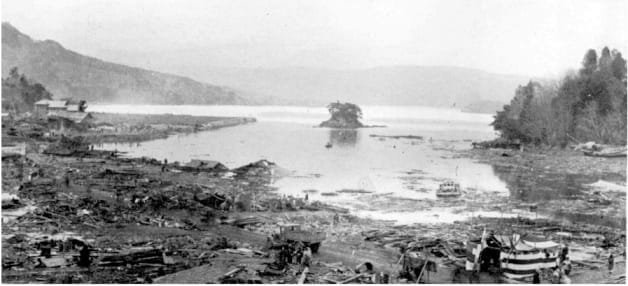
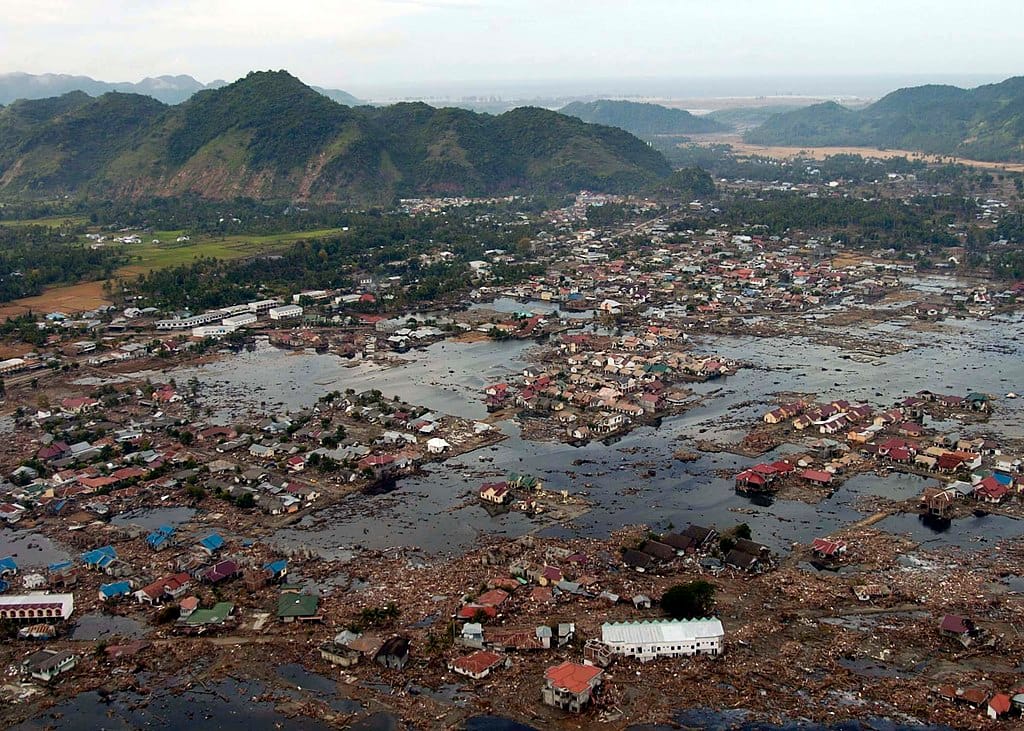
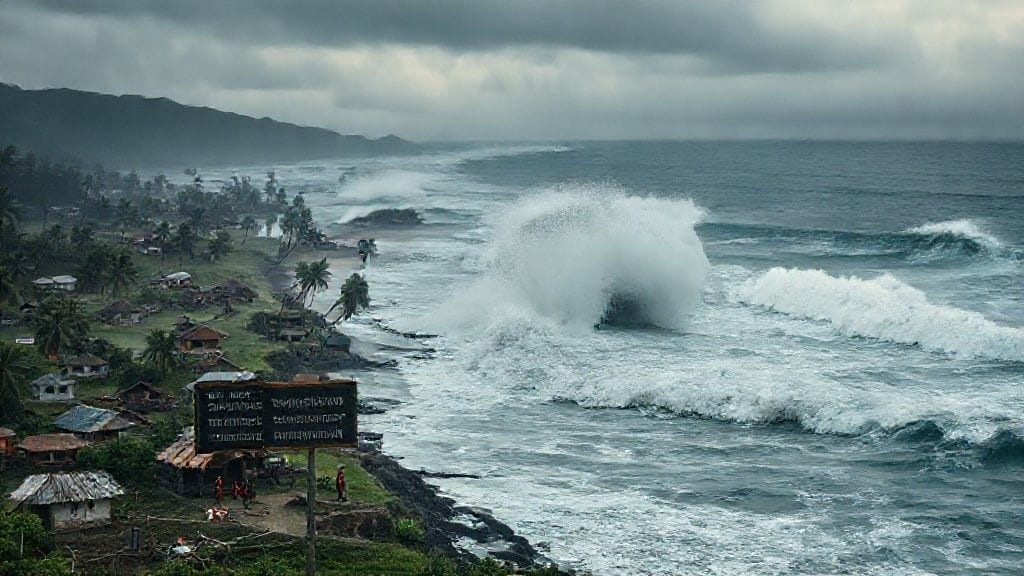
Within minutes, the first monstrous wave slammed into the northern and eastern shores of New Britain. Villages situated on low-lying coasts were inundated. Wooden homes were uprooted like toothpicks; fishing boats were hurled far inland or shattered against rocks.
Eyewitnesses describe how the ocean seemed to disappear, withdrawing several hundred meters from the shore, exposing coral reefs and sandy seabeds—only to surge back violently moments later. The force of water swept away everything in its path. The darkness amplified the horror, with screams mingling with the roar of collapsing structures.
In one village, a woman clung to a tree for hours, watching water submerge familiar landmarks. Children and the elderly were particularly vulnerable. Many bodies were never recovered, swallowed forever by the turbulent sea.
7. Human Stories Amidst the Chaos: Eyewitness Accounts and Survival
Among the chaos, stories of survival and loss emerged like shards of glass in the daylight. A fisherman recalled sensing the earthquake and immediately running uphill with his family—a decision that saved their lives. Elsewhere, a schoolteacher organized a frantic evacuation in the middle of the night, using flashlight signals and shouted warnings.
Yet, for many, the disaster struck too swiftly. Families were torn apart; homes and belongings vanished in seconds. One survivor spoke of the uncanny silence that descended after the wave’s passage, broken only by the sobs and prayers of the battered community.
Such personal narratives transform statistics into human tragedy and enduring strength.
8. The Towns and Villages Ravaged by the Waves
The tsunami’s path of destruction was uneven but extensive. Coastal communities such as Witu and Rabaul bore the brunt, with the latter already vulnerable due to recent volcanic activity from nearby Mount Tavurvur. In several settlements, entire neighborhoods were obliterated.
Traditional stilt houses, constructed to withstand floods, proved powerless against the immense wave forces. Critical infrastructure—schools, clinics, and supply lines—were demolished, compounding the tragedy and hampering rescue efforts.
9. Infrastructure and Livelihoods: What Was Lost?
Beyond the immediate human toll, the tsunami shattered livelihoods. Fishing, the lifeblood of many communities, suddenly became impossible. Boats, nets, and processing facilities were lost or damaged, plunging families into economic uncertainty.
Roads and bridges washed away or buried in mudslips severed crucial links to the interior and emergency aid. Health facilities struggled to cope with injuries and prevent outbreaks of disease as sanitation systems were compromised. The full scope of material losses unfolded over months, highlighting the vulnerability of Papua New Guinea’s coastal infrastructure.
10. The Immediate Response: Emergency Measures and Rescue Efforts
Response to the disaster was swift though challenging. Local authorities, often working with limited resources, mobilized to search for survivors and provide basic aid. Villagers themselves became first responders, guiding emergency teams through difficult terrain and passing on invaluable knowledge of the landscape.
Nearby towns and government agencies prioritized clearing communication lines and establishing temporary shelters. Yet, isolation and damaged roads slowed efforts, and in many cases, help arrived only after survivors had endured harrowing days and nights.
11. International Solidarity and Aid Mobilization
News of the tsunami rapidly spread across the globe, prompting international relief organizations and governments to mobilize support. The United Nations, Red Cross, and various non-governmental organizations dispatched emergency supplies, medical teams, and financial aid.
Aid flights landed in Port Moresby and nearby airports, but the logistical challenges of Papua New Guinea’s rugged terrain complicated distribution. Many shipments were rerouted via helicopters or small boats. Despite these obstacles, the international community’s response illuminated a rare moment of global solidarity focused on a region often neglected by media attention.
12. The Psychological Aftershock: Trauma and Resilience in the Communities
The tsunami’s impact was not only physical but deeply psychological. Survivors suffered from post-traumatic stress disorder, anxiety, and a profound sense of loss. The destruction of homes and ancestral lands shattered identities tied closely to place and tradition.
Community leaders and psychologists worked to provide emotional support, often integrating traditional healing practices with modern counseling. Local resilience shone through as people banded together to rebuild and support one another amid the ruins.
13. Reconstruction and Recovery: The Long Road Ahead
Reconstruction stretched over years. Rebuilding homes above possible flood lines, restoring fisheries, and repairing schools and clinics became priorities. International aid helped fund infrastructure improvements, though local governments struggled with limited budgets.
Efforts also focused on improving disaster preparedness through education campaigns and early warning systems to mitigate future risks. The slow but steady progress symbolized a collective determination to transform tragedy into a foundation for safer futures.
14. Scientific Revelations: What the Event Taught Experts About Tsunami Behavior
The 2000 New Britain tsunami became a critical case study for geologists and oceanographers. Seismic data allowed researchers to better understand the mechanics of subduction earthquakes in the region and the associated tsunami wave generation.
These insights refined predictive models used across the Pacific and informed the development of improved tsunami warning systems. The event underscored how even regions accustomed to seismic hazards require constant vigilance and updated scientific knowledge.
15. The Role of Traditional Knowledge and Local Response Strategies
Interestingly, indigenous knowledge played a vital role. Elders' stories of past tsunamis prompted some villagers to move to higher ground immediately after the earthquake. Communities with cultural memories of ocean retreats and unusual animal behavior fared better in risk reduction.
This blending of ancestral wisdom and modern science suggested pathways toward more effective disaster management rooted in local realities.
16. Environmental Consequences: Coastal Ecosystems and Marine Life Impacted
Beyond human tragedy, the tsunami altered coastal ecosystems dramatically. Coral reefs—essential habitats for fish populations—were fractured, mangrove forests uprooted, and freshwater springs contaminated by saltwater infiltration.
The loss of biodiversity had cascading effects on fishing yields and local food security. Environmental monitoring became a key component of recovery plans, emphasizing the interdependence of natural and human systems.
17. Preparedness in Papua New Guinea: Lessons Learned and Reforms Initiated
In the aftermath, Papua New Guinea recognized the urgent need to enhance its disaster readiness. Government agencies collaborated with international partners to establish early warning infrastructure, community education programs, and evacuation procedures.
These reforms aimed to build a culture of preparedness, emphasizing swift, coordinated responses as a safeguard against future disasters in a region where geological upheaval is an ever-present threat.
18. The New Britain Tsunami in the Broader Context of Pacific Disasters
The event stands among the significant Pacific tsunamis of recent decades, such as the 1998 Papua New Guinea tsunami and the 2004 Indian Ocean tsunami. Each catastrophe shaped regional and global understanding of earthquake and tsunami risks.
The New Britain tsunami, though less globally publicized, reminded the world that even less urbanized, remote areas suffer profoundly. It called attention to the inequities in disaster awareness and aid distribution that often leave isolated communities vulnerable.
19. Media Coverage and Global Awareness of the 2000 Tsunami
While the 2004 Indian Ocean tsunami later dominated international headlines, the 2000 New Britain tsunami received more modest media attention. Local and regional news covered the tragedy extensively, but global awareness was limited.
This disparity highlighted challenges in communication infrastructure and the media’s focus on high-profile disasters. Still, the event remains a powerful narrative of nature’s unpredictability and human endurance.
20. Commemorating the Tragedy: Memorials and Oral Histories
Communities affected have sought to honor those lost through memorial ceremonies and storytelling. Oral histories passed down hold vital memory roles, preserving the events for younger generations.
In some places, monuments stand as somber reminders of the night the ocean rose in anger. These acts of remembrance serve both mournful reflection and educational purpose, embedding the tsunami’s legacy in the cultural fabric.
21. The Enduring Legacy of the New Britain Tsunami
Two decades on, the New Britain Tsunami remains a defining episode in Papua New Guinea’s recent history. It reshaped disaster policy, scientific research, and community engagement with natural hazards.
Most importantly, it underscored the resilience of human spirit amid upheaval, inspiring efforts to build safer, more informed societies in the face of nature’s unpredictable temperament.
22. Conclusion: From Devastation to Determination
The New Britain Tsunami of November 2000 was more than a natural disaster—it was a profound human experience that tested the limits of endurance and the bonds of community. In the quiet aftermath of towering waves and shattered homes, the people of New Britain faced daunting challenges but responded with courage and solidarity.
Their story teaches us about the fragility of life on a restless planet, and the extraordinary capacity to rebuild and adapt. The ocean’s fury was undeniable, but so was the resolve to rise from the devastation stronger and wiser.
FAQs About the New Britain Tsunami
Q1: What caused the New Britain Tsunami in 2000?
A1: It was triggered by a powerful undersea earthquake of magnitude 8.0 occurring along the New Britain Trench, a subduction zone where tectonic plates collide, suddenly displacing the ocean floor and generating the tsunami.
Q2: How severe was the impact of the tsunami?
A2: The tsunami caused widespread destruction along New Britain’s northern and eastern coasts, destroying villages, infrastructure, and claiming numerous lives. The exact death toll varies but was significant for the local population.
Q3: What were the immediate responses to the disaster?
A3: Local communities, supported by Papua New Guinea’s government and international aid organizations, launched rescue and relief operations despite infrastructure damage and logistical challenges.
Q4: Did traditional knowledge play a role in survival?
A4: Yes, some communities heeded ancestral warnings about signs of a tsunami, such as the sea retreating, leading to quicker evacuations and saving lives.
Q5: How did the tsunami affect the environment?
A5: Coastal ecosystems such as coral reefs and mangroves suffered damage, impacting biodiversity and fisheries critical to local livelihoods.
Q6: What lessons were learned for future disaster preparedness?
A6: The event highlighted the need for improved early warning systems, community education, and infrastructure planning to mitigate future tsunami risks.
Q7: How does the New Britain Tsunami compare to other Pacific tsunamis?
A7: While overshadowed by larger events, it remains a significant case study due to its geological context and the challenges faced by remote island communities.
Q8: Are there memorials or commemorations for the victims?
A8: Yes, local communities hold ceremonies and maintain oral histories honoring those lost, preserving the memory of the tsunami’s impact for future generations.