Table of Contents
- The Night the Earth Roared: March 28, 2005
- The Geography of Disaster: Nias Island and Its Volcanic Roots
- Indonesia’s Place on the Ring of Fire: A Powder Keg of Tectonic Struggles
- Tensions Beneath the Waves: The Build-Up to the 2005 Earthquake
- The Magnitude of Catastrophe: Understanding the 8.6 Mw Earthquake
- A Moment Frozen in Time: The Seismic Shocks That Shattered Nias
- The Immediate Aftermath: Waves of Panic and Destruction
- The Human Face of the Tsunami: Tragedy on Nias and Surrounding Coasts
- The Response: Local Resilience and International Aid
- Technology Meets Tragedy: Early Warning Systems and Their Limits
- Political Ripples: National and Regional Impacts in Indonesia
- Stories of Survival: Accounts from the Eye of the Storm
- Environmental Toll: The Changed Landscape and Marine Life
- Reconstruction and Recovery: Rebuilding a Shattered Island
- Lessons Learned: The Science and Policy After Nias
- The Global Wake-Up Call: How Nias Shaped Tsunami Preparedness
- Remembering Nias: Memorials and Collective Memory
- Conclusion: The Enduring Legacy of the 2005 Nias Tsunami
- Frequently Asked Questions
- External Resource
- Internal Link
The Night the Earth Roared: March 28, 2005
It was a night cloaked in the usual tropical darkness, quiet waves brushing the shores of Nias Island, an Indonesian jewel in the Indian Ocean. But beneath the serene calm, the Earth was stretching, twisting, and breaking in a violent embrace. At 5:09 a.m. local time, a monstrous quake measuring 8.6 on the moment magnitude scale shattered the fragile peace. The violent shaking lasted nearly two minutes, bending palm trees, cracking houses, and rupturing the very earth underfoot. And just as the trembling ceased, an even more sinister force rose—a tsunami, a deadly wall of water born from the seabed’s rupture, destined to sweep away everything in its path.
For the inhabitants of Nias and nearby coastlines, this was not just a natural disaster; it was a cataclysm so profound it would forever alter their lives, landscapes, and futures. The 2005 Nias Earthquake and Tsunami—often overshadowed in the Western media by the 2004 Boxing Day tsunami—remain a striking example of nature’s raw fury and humanity’s fragile resilience.
The Geography of Disaster: Nias Island and Its Volcanic Roots
Nias Island is part of the western Indonesian archipelago, nestled off the west coast of Sumatra. Characterized by lush forests, terraced hillsides, and vibrant traditional villages, Nias is a land of cultural richness and geographical complexity. Its location on the Indo-Australian plate’s northern edge places it directly beside the Sunda megathrust fault—a section of the larger tectonic boundary that defines the notorious “Ring of Fire,” the world’s most active seismic belt.
This region’s volcanic soils and rugged topography are testimonies to millions of years of colossal land-building forces, but these geological gifts come with a perilous price: the ever-present threat of earthquakes and tsunamis. The people of Nias have lived alongside tremors and occasional waves for centuries, constructing stilt houses and developing local knowledge to cope with the forces of the Earth. But 2005 would test their traditions like never before.
Indonesia’s Place on the Ring of Fire: A Powder Keg of Tectonic Struggles
Indonesia curves like a vast arc over several tectonic plates: the Eurasian, Indo-Australian, Pacific, and Philippine Sea plates all converge here. This confluence makes the nation one of the world’s most geologically volatile places. Beneath the waves off Sumatra’s west coast, the Indo-Australian plate slips beneath the Sunda Plate in a slow but powerful dance known as subduction.
For years, stress has built along this plate boundary, a potential cataclysm waiting to explode. The 2004 earthquake off Sumatra, measuring 9.1, was one such rupture—a massive unforeseen shock that caused one of the deadliest tsunamis in modern history. But just months later, the fault still smoldered, a powder keg primed for further fury. The world had turned its eyes to this dangerous underworld, and on that late March morning in 2005, the earth's rage descended again.
Tensions Beneath the Waves: The Build-Up to the 2005 Earthquake
Seismologists watched nervously after the 2004 disaster, aware that the incredible rupture had perhaps only partly released tectonic stress along the Sunda megathrust. Tensions remained high, with shifts of smaller tremors and foreshocks hinting at future instability. Nias and Simeulue, islands just south of Aceh—focuses of the previous year’s catastrophe—were bracing for impact.
Communities, however, had little time or resources to prepare for what came next. Despite increasing warnings about threats in the region, early warning systems were still in their infancy, and many villagers had limited knowledge or access to safety education programs.
The Magnitude of Catastrophe: Understanding the 8.6 Mw Earthquake
On March 28, 2005, the Indo-Australian plate suddenly thrust north beneath the overriding Sunda Plate in a violent subduction rupture roughly 400 kilometers south of the 2004 epicenter. The earthquake registered an astonishing 8.6 magnitude—a reminder that nature’s forces could still surprise, shock, and devastate.
This was no ordinary rumbling. The quake ruptured a massive stretch of the fault, lifting the ocean floor by several meters. The result: a seismic sea wave, a tsunami hazard born almost instantly from the violent ocean bed movement. Shaking was felt as far as southern Thailand and main Sumatra, but Nias bore the brunt of the quake’s destructive power.
A Moment Frozen in Time: The Seismic Shocks That Shattered Nias
Eyewitnesses recall the terrifying roar in the sky, the bonds of their homes shudders violently, and the ground rolling beneath their feet like ocean waves. Buildings collapsed, landslides blocked escape routes, and communication lines were severed. It was a cataclysm that rewrote Nias’s geography in mere minutes.
One man, armed with nothing but determination and will, later recounted fleeing a collapsing structure, hearing the screams of neighbors swallowed by the rubble. Others describe the inconceivable silence that followed the quaking—the fearful calm before the tsunami’s arrival.
The Immediate Aftermath: Waves of Panic and Destruction
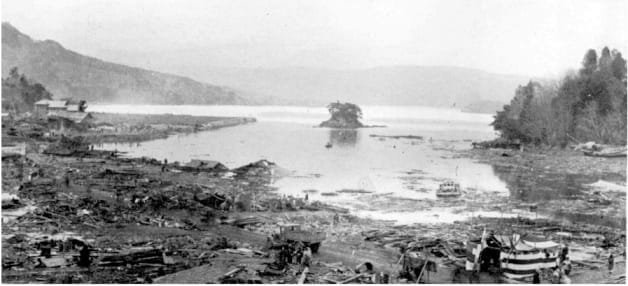
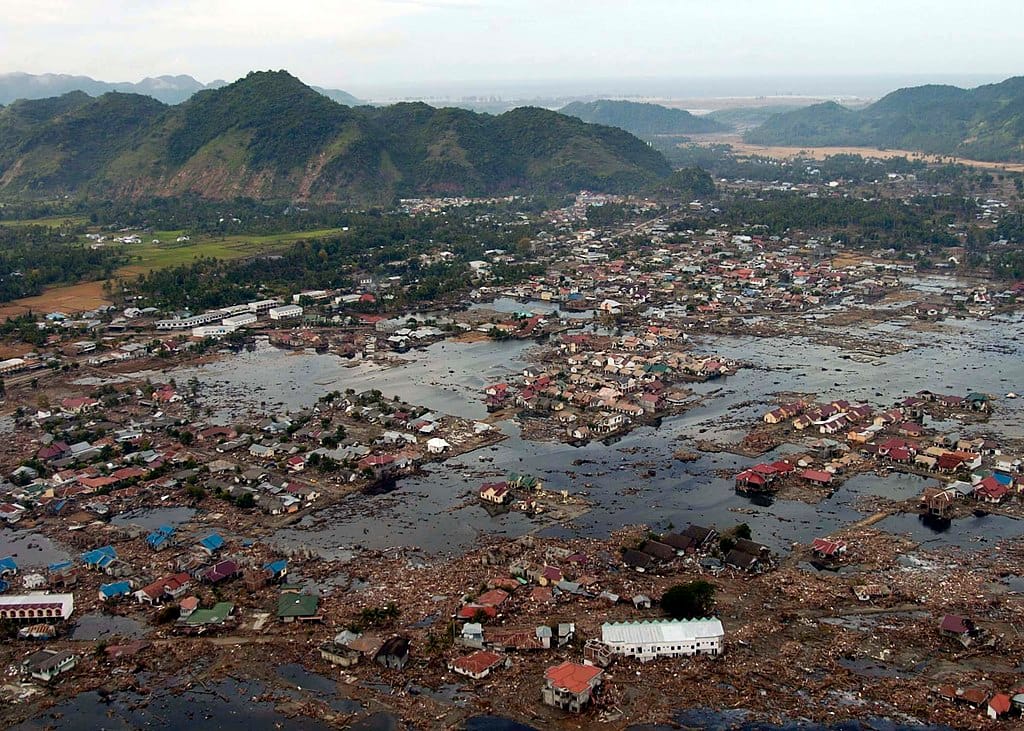
Then came the tsunami—an immense, sweeping wall of seawater up to 10 meters high—that surged inland across coastal villages with ruthless speed and force. Homes, crops, and livelihoods were drowned under the cold embrace of the ocean. Rescue efforts were stifled by the challenging landscape; roads were impassable, and aid could take days to arrive.
The tsunami’s destruction was merciless. Entire hamlets vanished beneath the waves, and the survivors were left with trauma and uncertainty. The death toll on Nias alone was in the thousands; the official figures estimated at least 1,300 lives lost, with thousands injured and even more displaced.
The Human Face of the Tsunami: Tragedy on Nias and Surrounding Coasts
Behind the staggering numbers lie stories of heartbreak and hope. Families lost loved ones in seconds; children were orphaned; fishermen’s boats were torn from moorings, their equipment lost to the depths. Villages that had thrived for generations lay in ruin.
Yet, amid despair, human resilience shone. Community leaders organized local rescue teams, shared scarce food and water, and constructed temporary shelters. The spiritual and cultural fabric of Nias became crucial for psychological healing, as rituals and traditions offered solace and a way to remember those lost.
The Response: Local Resilience and International Aid
Indonesia’s government faced a monumental challenge: coordinating emergency services over difficult terrain, ensuring survivors received food, water, and medical care, and mobilizing resources for reconstruction. International aid agencies, from the UN to NGOs and neighboring countries, swiftly mobilized to assist in relief operations.
Medical teams treated injuries, engineers assessed infrastructure damage, and logisticians brought vital supplies. Yet, despite this response, the scale of devastation made recovery daunting, and many communities remained isolated and vulnerable in the weeks following the tsunami.
Technology Meets Tragedy: Early Warning Systems and Their Limits
The 2005 disaster also exposed gaps in tsunami preparedness. Although the Indian Ocean Tsunami Warning System had been hurriedly implemented after December 2004, it was not yet fully operational or reliable, especially in remote islands like Nias.
The absence of real-time alerts meant many people were caught unaware. This tragedy was a catalyst, intensifying efforts to improve detection, communication, and education programs to minimize loss in future events. The vision of a fully integrated early warning network began to take shape more urgently after Nias.
Political Ripples: National and Regional Impacts in Indonesia
The tsunami disaster did not only challenge humanitarian logistics but also political stability and governance. Indonesia, still recovering from the 2004 event and internal conflicts in Aceh province, had to reassert authority and cooperation between central and local governments.
Environmental policies were reexamined, resources reallocated, and disaster management frameworks reconstructed. The event underscored the fragile balance between human development and natural hazards in a country spread over thousands of islands and cultures.
Stories of Survival: Accounts from the Eye of the Storm
Personal testimonies from survivors add color and depth to the statistics. One woman, trapped under debris for over twelve hours, recounted how a small pocket of air and the strength of a nylon blanket saved her life. Another man described rowing a makeshift raft across treacherous waters to bring his injured family to safety.
These narratives provide not only human perspective but critical data to understand disaster response patterns, traditional coping mechanisms, and cultural adaptations to nature’s fury.
Environmental Toll: The Changed Landscape and Marine Life
The earthquake and tsunami altered Nias’s natural environment as drastically as its human fabric. Coastal forests were stripped bare; coral reefs—the marine life nurseries—were fractured; freshwater sources were contaminated with saltwater intrusion. The island’s agricultural fields faced years of reduced fertility.
Scientists have since monitored these changes, noting both destruction and surprising regeneration patterns—a testament to nature’s ability to heal given time and care.
Reconstruction and Recovery: Rebuilding a Shattered Island
Recovery was a marathon, not a sprint. Infrastructure projects, housing programs, and economic assistance initiatives rolled out slowly but steadily over the following years. International partnerships built schools, roads, and healthcare centers. NGOs worked alongside local governments to improve building codes and community preparedness.
Yet, for many, the psychological wounds lingered. Trauma counseling, cultural rituals, and community gatherings became pillars of healing as society endeavored to restore not just structures, but spirits.
Lessons Learned: The Science and Policy After Nias
The Nias tragedy emphasized the urgent need for integrating scientific research with policy-making. Seismologists refined models of megathrust behavior, while engineers adapted architecture to withstand powerful tremors. Governments invested in public education, drills, and infrastructural resilience.
Nias became a case study in disaster risk reduction, influencing how vulnerable regions worldwide prepare for and mitigate the effects of seismic sea waves.
The Global Wake-Up Call: How Nias Shaped Tsunami Preparedness
While overshadowed by the monumental events of 2004, the 2005 Nias earthquake and tsunami resonated globally. It reinforced the necessity for international cooperation in earthquake and tsunami warning systems, encouraged information exchange between scientific communities, and inspired humanitarian strategies that prioritize rapid deployment in fragile island settings.
The disaster’s lessons continue to inform global frameworks such as the Sendai Framework for Disaster Risk Reduction.
Remembering Nias: Memorials and Collective Memory
In villages across Nias, monuments stand in quiet remembrance of those lost. Annual ceremonies, educational programs, and storytelling traditions keep the memory alive, ensuring that generations remember both the fragility and the extraordinary resilience of their island.
Nias’s tragedy and recovery have become part of Indonesia’s collective identity—a poignant reminder of nature's power and humanity’s courage.
Conclusion
The 2005 Nias tsunami remains a powerful story of nature’s fury and human endurance. It was a catastrophe that tested the limits of geological forces and societal preparedness, a tragedy beneath the shadow of a larger, even deadlier neighboring disaster. Yet, it is also a story of hope—of communities rebuilding brick by brick, of science advancing to save lives, of memories forging identity and fostering resilience.
This event reminds us, in vivid detail, that the earth beneath our feet is alive, restless, and sometimes cruel. But also that, in the face of upheaval, human beings find ways to stand taller, to heal, and to prepare for the uncertain tomorrows. The legacy of Nias is not just death and destruction, but the triumph of spirit and knowledge enduring against the odds.
FAQs
Q1: What caused the 2005 Nias earthquake and tsunami?
A1: The disaster was triggered by an 8.6 magnitude earthquake on the Sunda megathrust fault, where the Indo-Australian plate subducts beneath the Eurasian plate. The sudden rupture uplifted the ocean floor, causing the tsunami.
Q2: How many people were affected by the Nias tsunami?
A2: Official estimates report over 1,300 deaths on Nias alone, with thousands injured and tens of thousands displaced. The tsunami affected coastal communities across western Sumatra and nearby islands.
Q3: Why was the early warning system ineffective during the Nias tsunami?
A3: The warning system was still under development and lacked full coverage and rapid communication infrastructure, especially for remote islands, leading to a delayed or absent alert for many residents.
Q4: What were the main challenges in rescue and recovery?
A4: Difficult terrain, damaged infrastructure, limited communication, and the scale of devastation hampered quick emergency response. Coordination between local and international agencies was crucial but complex.
Q5: How did the Nias tsunami influence global disaster preparedness?
A5: It accelerated improvements in tsunami early warning systems, disaster education, and international cooperation, especially in developing quick response capabilities for island nations vulnerable to seismic events.
Q6: What is the legacy of the 2005 Nias tsunami in Indonesia today?
A6: The event remains a reminder of the nation’s seismic vulnerability but also showcases its resilience and progress in disaster management, urban planning, and scientific research.
Q7: How has the environment of Nias changed since the tsunami?
A7: Coastal ecosystems were extensively damaged, including forests and coral reefs, but gradual natural recovery has been observed, aided by conservation efforts.
Q8: Are there memorials or commemorations for the Nias tsunami victims?
A8: Yes, several monuments and annual ceremonies honor those lost, and community education ensures that the memory and lessons are passed down through generations.