Table of Contents
- The Calm Before the Catastrophe: Simeulue Island in Late 2002
- The Beginning of November 26th: Nature’s Fury Awakens
- The 2002 Sumatra Earthquake: A Precursor to Disaster
- Simeulue’s Unique Geographic and Cultural Context
- A Sudden Surge: The Anatomy of the Tsunami Wave
- The People of Simeulue: Guardians of an Ancient Knowledge
- “Smong”: The Tsunami Warning Foretold by Tradition
- Immediate Impact: Waves, Destruction, and Survival
- Contrasting Tragedies: Simeulue versus Mainland Aceh
- The Role of Oral History and Indigenous Wisdom
- Scientific Understanding and Local Knowledge: A Rare Harmony
- The Rescue and Recovery: Community Efforts Amidst Chaos
- International Response and the Aid That Followed
- Aftermath and Reconstruction: Simeulue’s Slow Path Forward
- Legacy of the 2002 Tsunami for Simeulue and the World
- Tsunami Preparedness and the Revival of Indigenous Practices
- The Unwritten Lessons of Simeulue Island
- Conclusion: Humanity’s Relationship with the Sea and Memory
- Frequently Asked Questions
- External Resource
- Internal Link
1. The Calm Before the Catastrophe: Simeulue Island in Late 2002
In the balmy tropics of the Indian Ocean, Simeulue island lay peacefully on November morning, 2002. The island, hugged by coral reefs and embraced by calm seas, seemed almost untouched by time. Coconut palms swayed in gentle ocean breezes, children played along the shore, and fishing boats set sail with the first light. The air was filled with the scent of salt and promise—a day like any other. Yet, unbeknownst to many beyond its shores, Simeulue was perched on the edge of a colossal geological tempest.
This island, off the western coast of Sumatra in Indonesia, would soon become a testament to resilience and indigenous wisdom—a story that defied the overwhelming catastrophic forces of nature that hammered much of its region just days before the devastating 2004 tsunami that would scar global memory.
2. The Beginning of November 26th: Nature’s Fury Awakens
Days before the infamous 2004 tsunami, the earth beneath Simeulue convulsed violently on November 26, 2002. At 10:26 a.m. local time, a powerful undersea earthquake with a magnitude of approximately 7.3 struck near the western coast of Sumatra. The tremors rippled through the island, causing brief panic. Trees swayed heavily, homes trembled, and the sea behaved oddly—receding inexplicably from the shoreline.
But what followed was far more terrifying: a tsunami, a series of towering waves racing across the Indian Ocean toward coastal villages. Unlike many regions where destruction was total and swift, Simeulue stood almost miraculously preserved, with relatively minimal loss of life. How was this possible, in the face of an oceanic force that had elsewhere spelled doom?
3. The 2002 Sumatra Earthquake: A Precursor to Disaster
The November 26, 2002, earthquake was part of a string of seismic activity along the Sunda megathrust fault, where the Indo-Australian Plate is subducting beneath the Eurasian Plate. This tectonic boundary is known for violent shifts, and in this period, the fault produced a series of quakes, shaking coastal communities and foreshadowing the devastation to come two years later.
Though smaller than the catastrophic 2004 quake, this seismic event was powerful enough to rupture the seafloor and displace massive volumes of water. The quake unleashed energy that fractured the ocean floor, sending waves radiating outward with a deadly velocity.
For many islands and coastal settlements nearby, it would be the first warning—and, tragically, for some, the last.
4. Simeulue’s Unique Geographic and Cultural Context
Simeulue’s geography is deceptively serene. The island spans roughly 150 kilometers in length, characterized by rugged coastlines, dense tropical forests, and a population clustered in modest fishing villages. The islanders depend on the sea for sustenance, navigating it daily with intimate knowledge honed over generations.
What sets Simeulue apart is not just its isolation or geography but its cultural fabric: a closely-knit society with deep oral histories and traditions linked intimately to the rhythms of nature. The island is predominantly inhabited by the Simeulue people, whose language, customs, and mythology have long preserved memories of past tsunamis.
5. A Sudden Surge: The Anatomy of the Tsunami Wave
When the earthquake ruptured the seafloor near Simeulue, it caused a rapid and immense displacement of water. Tsunami waves differ from ordinary waves; they possess a long wavelength and travel at speeds comparable to jet airplanes in deep ocean waters.
Before the tsunami’s arrival, the sea swiftly receded—a telltale sign often witnessed by islanders that a tsunami is imminent. The first wave struck within minutes, sweeping across the shore with a ferocity that destroyed homes and inundated fields.
Yet, for Simeulue, the wave heights were significantly lower compared to other parts of Aceh province and Sumatra’s west coast—averaging about 5 to 8 meters—enough to destroy lives and property but not the entire island infrastructure.
6. The People of Simeulue: Guardians of an Ancient Knowledge
Simeulue's survival from the tsunami catastrophe is woven into its cultural memory—specifically through the legend of the “smong.” Smong is the local term for a tsunami and the name of a traditional oral narrative that warns of the ocean’s ominous withdrawal and the need to escape to higher ground immediately.
Elders passed down smong stories through generations, describing the sound of the earth shaking, the sea retreating, and the waves crashing ashore—a narrative not documented in any textbook but deeply embedded in community consciousness.
This knowledge shaped survival strategies unconsciously implemented during the 2002 tsunami, where islanders fled to the hills minutes after sensing the warning signs. Mothers recalling smong legends urged children to run, fishermen abandoned boats, and prayers mingled with the sound of panicked footsteps ascending towards safety.
7. “Smong”: The Tsunami Warning Foretold by Tradition
The legend of smong is more than folklore—it is an oral alarm system, a community’s earliest warning crafted from lived experience with the sea’s fury. Simeulue has a documented history of tsunamis dating back to the 1907 earthquake and tsunami event, which decimated the island but also etched into collective memory the importance of immediate evacuation.
In practice, the smong story embodies practical knowledge: “When the earth shakes, and the sea recedes, run to the hills!” This oral tradition empowered Simeulue’s inhabitants to react intuitively and decisively in 2002, significantly reducing casualties.
Thus, smong represents a remarkable example of indigenous disaster resilience—knowledge passed through generations, tested by time, and tragically lacking in other parts of Indonesia during the catastrophic 2004 tsunami.
8. Immediate Impact: Waves, Destruction, and Survival
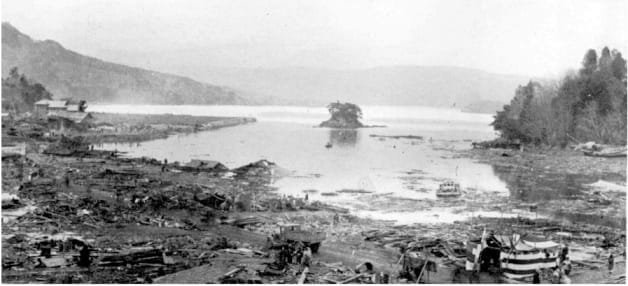
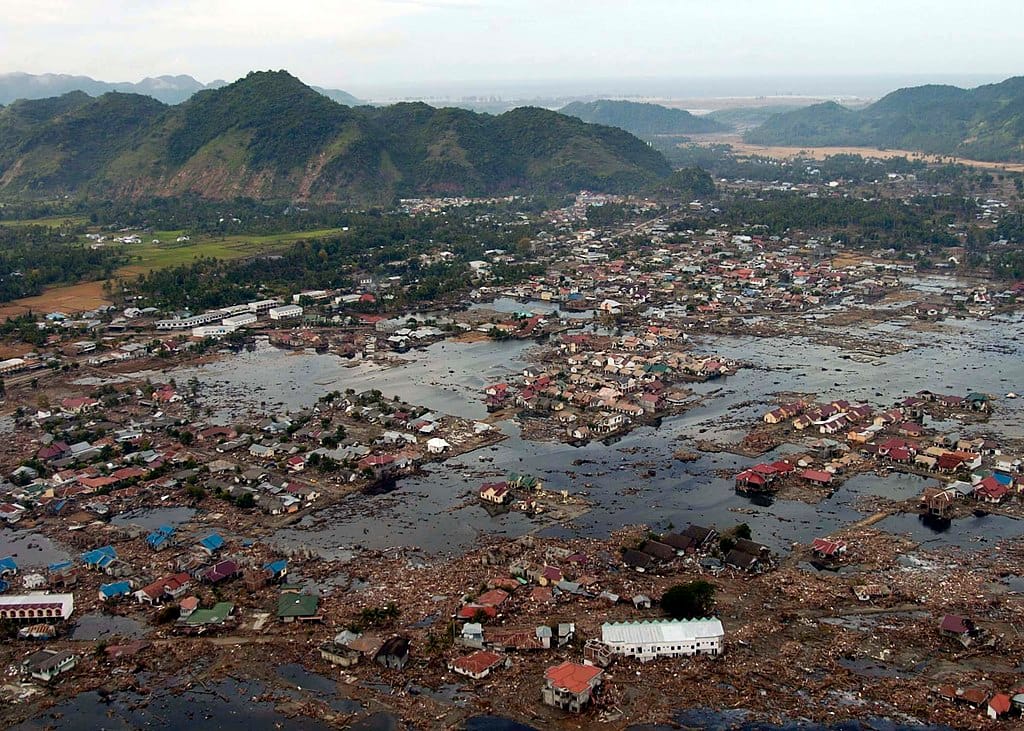
Despite Simeulue’s relative safety, the tsunami wrought considerable damage. Coastal villages suffered flooding, homes were washed away, and fishing boats destroyed; infrastructure damage isolated communities.
Still, the death toll was astonishingly low. Reports attribute the survival of approximately 70,000 inhabitants—most of the island's population—to their swift response and reliance on traditional tsunami lore.
One eyewitness recounted: "When the sea pulled back, I remembered my grandfather’s words. I took my children and ran — high and fast. Minutes later, the wave came crashing through our village, but we were already safe."
Simultaneously, nearby areas of Aceh province and mainland Sumatra experienced devastating loss of life, with thousands drowned and thousands more displaced.
9. Contrasting Tragedies: Simeulue versus Mainland Aceh
While Simeulue’s story is one of survival, nearby coastal communities endured horrific devastation. Mainland Aceh, only a few hundred kilometers away, suffered deaths numbering in the tens of thousands during the 2002 tsunami. In some towns, entire populations were wiped out.
The difference lay largely in preparedness—or more exactly, the absence of it. Many affected populations failed to recognize the natural warning signs, lacked evacuation plans, and had no access to early-warning systems.
This contrast raised critical questions for researchers and policymakers about the role of cultural memory in disaster mitigation. Simeulue's ancient narrative had saved countless lives, while modern scientific predictions and bureaucratic warnings elsewhere had failed to reach or convince many.
10. The Role of Oral History and Indigenous Wisdom
Simeulue's survival demonstrates the potent protective power of oral history and indigenous wisdom. These knowledge systems, often overlooked by formal disaster management, offer community-tailored strategies rooted in lived experience.
Anthropologists and disaster scientists gained new appreciation for the role that local traditions play in resilience. The “smong” narrative became a model case for combining scientific tsunami knowledge with cultural storytelling for effective risk reduction.
Moreover, the island’s experience challenged modern assumptions that only advanced technology and government-mandated plans could save lives during natural disasters.
11. Scientific Understanding and Local Knowledge: A Rare Harmony
The 2002 Simeulue tsunami thus occupies a unique place in disaster history. It was a rare moment when scientific understanding and traditional knowledge aligned to save lives.
Seismologists and oceanographers have since collaborated with local communities to integrate indigenous warnings with modern early-alert technologies. The island became a living laboratory for adaptive disaster preparedness.
Efforts were made to document and preserve smong stories, providing a critical bridge between generations and disciplines, emphasizing that technology should complement, not replace, cultural heritage.
12. The Rescue and Recovery: Community Efforts Amidst Chaos
In the immediate aftermath, Simeulue’s inhabitants faced the dual challenge of recovery and maintaining hope. Without external aid arriving immediately, communities organized themselves — fishermen retrieving boats, villagers repairing homes, and elders counseling the young.
The internal solidarity was remarkable. Shared trauma consolidated social cohesion, while resilience fostered a stoic determination to rebuild in harmony with nature’s caprices.
Local leaders coordinated grassroots clean-up, food distribution, and temporary shelters, effectively cushioning a calamity that could easily have unraveled the community.
13. International Response and the Aid That Followed
News of the 2002 tsunami and Simeulue’s unusual survival reached the international community, sparking efforts to provide humanitarian aid to the broader Aceh province and surrounding islands.
However, Simeulue received less attention compared to mainland Aceh’s overwhelming devastation. Aid organizations focused on water, food, and infrastructure rehabilitation but increasingly acknowledged the importance of community-led initiatives and indigenous knowledge.
This recognition laid groundwork for future disaster response policies emphasizing local empowerment alongside technological solutions.
14. Aftermath and Reconstruction: Simeulue’s Slow Path Forward
Recovery took months and years. Homes were rebuilt with greater awareness of tsunami risks. Education systems incorporated smong into curricula, strengthening youth preparedness.
Economic activities resumed cautiously; fishermen adapted their practices, and new infrastructure aimed to withstand future waves.
Yet, psychological scars lingered—memories of shaking earth and surging water engraved in collective memory—but so too was the pride of survival and resilience.
15. Legacy of the 2002 Tsunami for Simeulue and the World
The event became emblematic of the power of cultural memory. Simeulue’s story traveled beyond its shores to influence global discourse on disaster risk reduction.
It challenged the world to rethink preparedness strategies, recognizing that in many vulnerable areas, indigenous traditions remain vital tools for survival.
This event contributed indirectly to shaping the international tsunami warning systems enhanced after 2004 and inspired efforts to preserve and integrate traditional knowledge into official frameworks.
16. Tsunami Preparedness and the Revival of Indigenous Practices
Post-2002, Simeulue and others renewed focus on blending scientific methods with local wisdom. Tsunami drills began including legendary narratives; evacuation routes respected sacred sites.
It became clear that community engagement with their own history was a foundation stronger than any external warnings imposed top-down.
This revival formed part of a wider global movement calling for culturally sensitive approaches to disaster management.
17. The Unwritten Lessons of Simeulue Island
Beyond the explicit warnings, Simeulue offers broader human lessons: The necessity to listen to elders, to value oral history, and to respect the intertwined bond between people and nature.
In a modern world often dominated by technology and data, the island reminds us that ancestral stories encapsulate truths as vital as any emergency alert.
Simeulue’s example stands as a beacon that sometimes “old ways” are not just relics of the past but lifelines for the future.
Conclusion
On that fateful day in 2002, as the earth roared and the seas surged, Simeulue Island did not succumb to nature’s wrath as many of its neighbors did. Instead, it survived—thanks to the powerful legacy of “smong,” an ancient oral story etched into the minds of its people. This survival was not a miracle born of chance but of memory, wisdom, and respect for nature’s rhythms.
Simeulue’s tale is a profound lesson for humanity. It whispers that in the face of overwhelming forces, survival often depends less on technology or modern science, and more on our connection to place, history, and community.
In an age of growing environmental uncertainty, Simeulue invites us to listen closely to the stories our ancestors have told and to recognize that sometimes, the past holds the key to navigating the future’s storms.
FAQs
Q1: What caused the 2002 Simeulue tsunami?
A: The tsunami was triggered by a powerful magnitude 7.3 earthquake beneath the Indian Ocean near western Sumatra on November 26, 2002. The quake ruptured the seafloor, displacing massive volumes of water and generating tsunami waves.
Q2: Why did Simeulue experience fewer casualties than mainland Aceh?
A: Simeulue's population was guided by a traditional oral history called “smong,” which warned them to evacuate to higher ground immediately after feeling the earthquake and observing the sea’s unusual recession.
Q3: What is “smong”?
A: Smong is the local term and legend describing tsunamis. It is an oral narrative passed through generations, describing natural warning signs and advising immediate evacuation to avoid disaster.
Q4: How has Simeulue’s experience influenced tsunami preparedness globally?
A: Simeulue’s survival underscored the importance of integrating indigenous knowledge with modern scientific early-warning systems, inspiring more culturally inclusive disaster risk reduction strategies worldwide.
Q5: What was the international response to the 2002 tsunami in Simeulue?
A: While aid focused primarily on the heavily affected mainland areas of Aceh, Simeulue saw community-led recovery efforts and later international recognition of its unique disaster resilience.
Q6: Are there other places where oral traditions help communities survive natural disasters?
A: Yes, in various cultures worldwide, traditional stories and rituals related to natural disasters play vital roles in community preparedness and response.
Q7: Did the 2002 Simeulue event prepare the island for the 2004 tsunami?
A: Absolutely. The 2002 event reinforced smong traditions and evacuation behavior, which helped Simeulue survive with fewer casualties during the much more devastating 2004 Indian Ocean tsunami.
Q8: How is knowledge about smong preserved today?
A: Local schools incorporate smong narratives in teaching, and NGOs and researchers document the stories, ensuring future generations maintain this critical cultural inheritance.