Table of Contents
- The Quiet Dawn Before Disaster: Morning of September 12, 2007
- Sumatra’s Restless Earth: A Geologic Prelude
- The Tectonic Setting: The Indo-Australian Plate Meets Eurasia
- Bengkulu Province: Life and Landscape on the Western Coast
- Early Warnings and Missed Signals: The Science of Tsunami Prediction in 2007
- At 10:49 a.m.: The Massive Earthquake that Shook Sumatra
- First Signs of Fury: Water Recedes, Then Surges
- The Tsunami's Wrath: Thousands Displaced, Cities Devoured
- Eyewitness Accounts: Personal Stories of Desperation and Survival
- Immediate Response: Local and National Efforts to Save Lives
- International Aid Arrives: Coordinated Relief under Pressure
- Challenges Facing Rescue and Recovery: Infrastructure, Communication, and Geography
- The Human Toll: Deaths, Injuries, and Psychological Trauma
- Ecological Damage: How Nature Was Altered by the Waves
- Government and NGO Roles: Lessons and Critiques after Disaster
- The Rebirth of Bengkulu: Reconstruction and Resilience
- Reexamining Warning Systems: Advances Stemming from the 2007 Tsunami
- Indonesia’s National Disaster Management Plan: Evolution Post-2007
- The Role of Communities: Traditional Knowledge Versus Modern Science
- The 2007 Tsunami in Global Context: Comparing Catastrophes Across Oceans
- Building Back Better: Sustainable Architecture in Bengkulu’s Reconstruction
- Memory and Memorialization: How the Tsunami is Remembered Today
- Lessons Learned: From Tragedy to Preparedness
- The Continuing Threat: Living Along the Ring of Fire
- Conclusion: Between Vulnerability and Hope
The Quiet Dawn Before Disaster: Morning of September 12, 2007
On the morning of September 12, 2007, the sun rose gently over the Indian Ocean, bathing the lush western coastline of Sumatra in a golden light. Children played along the shore, fishermen prepared their boats, and markets buzzed with the vibrant rhythm of daily life. Bengkulu, a tranquil province marked by verdant hills and a string of seaside villages, seemed the picture of serenity. Yet beneath this calm surface, the restless plates deep below the ocean floor were orchestrating a cataclysmic symphony that would soon shatter lives, homes, and landscapes.
The day would not end tranquilly. At precisely 10:49 a.m., the Earth would convulse violently. An earthquake of magnitude 8.4 surged beneath the ocean floor, unleashing a tsunami that raced across the Indian Ocean, hitting the coasts of Bengkulu with devastating force. This was no ordinary natural event—it was a vivid reminder of the raw power of our planet and the fragile thread upon which human existence hangs in certain corners of the world.
To understand the full magnitude and import of the 2007 Bengkulu tsunami, one must dive deep below the waves into the geologic, human, and emotional currents that converged on that day—and its aftermath, which reshaped not just the landscape, but the societal approach to disaster in Indonesia and beyond.
Sumatra’s Restless Earth: A Geologic Prelude
Sumatra, Indonesia’s western giant, lies cradled along one of the most geologically active zones on Earth. Here, the relentless collision between the Indo-Australian Plate and the Eurasian Plate has sculpted dramatic landscapes and cultivated a volatile ground beneath the feet of millions.
This tectonic interface is known as the Sunda Megathrust, a major subduction zone that stretches for thousands of kilometers, capable of generating some of the most powerful earthquakes recorded in history. The famously tragic 2004 Indian Ocean earthquake and tsunami—a catastrophic event that claimed over 230,000 lives—was born from this very fault line, illustrating the persistent volatility of the region.
Well before September 2007, scientific instruments recorded increasing stress along these plates. The Earth's crust buckled and strained, accumulating energy inexorably. Yet, everyday life flowed in Bengkulu, as if impervious to the seismic warnings written in the rumbling earth.
The Tectonic Setting: The Indo-Australian Plate Meets Eurasia
The collision of the Indo-Australian Plate with the Eurasian Plate is a defining feature of Southeast Asia’s geology. The Indo-Australian Plate, moving northwards at a rate of several centimeters per year, plunges beneath the Eurasian Plate, a process known as subduction. This action triggers tremendous pressure, deformation, and eventually, the release of stored energy in the form of earthquakes.
Sumatra’s long western coastline skirts this boundary. The subduction zone culminates in the Sunda Trench off the Sumatran coast—an underwater chasm that acts as the epicenter corridor for many of the region’s seismic upheavals. The chain of volcanic peaks stretching inland from the coastline is a visible imprint of this tectonic struggle.
The momentous quake of September 12, 2007, emanated at around 34 kilometers depth along this unstable juncture. Its power was magnified by the ocean’s vast basin geometry—waves formed in the submarine uplift raced toward shore with few natural barriers.
Bengkulu Province: Life and Landscape on the Western Coast
Bengkulu province lies at the western edge of Sumatra, bordered by tropical rainforests, volcanic highlands, and the expansive Indian Ocean. Known for its rich biodiversity and cultural mosaic, Bengkulu’s economy relies heavily on agriculture, fishing, and increasingly, tourism.
Its coastal settlements, however, often exist precariously close to the ocean’s edge, a vulnerability in the face of tsunami risk. Buildings and communities hug the shoreline, their daily livelihoods interwoven with the rhythms of the sea.
Despite periodic seismic disturbances, the community had developed a resilient spirit—marked by a strong connection to tradition and nature. Local knowledge of past tsunamis was preserved in oral histories, yet the scale of the coming disaster surpassed all past memory.
Early Warnings and Missed Signals: The Science of Tsunami Prediction in 2007
In 2007, tsunami early warning systems for the Indian Ocean were still in their infancy. The catastrophic tsunami of 2004 had exposed the glaring deficiency in real-time seismic monitoring and communication networks.
Though some warning mechanisms had been installed around Sumatra, they were far from comprehensive or universally effective. Scientific technology lagged behind the urgent need to transform seismic data into swift, clear alerts for distant communities.
Local authorities and civilians had minimal time to interpret danger signs, as the nature of undersea megathrust earthquakes allowed little margin for human reaction. The ocean’s sudden retreat was often the first visible indication that disaster was imminent—yet only moments before the deadly waves arrived.
At 10:49 a.m.: The Massive Earthquake that Shook Sumatra
On that fateful morning, a tremendous rupture occurred beneath the seabed near Bengkulu. The magnitude 8.4 earthquake unleashed a violent shockwave that roared through the region.
Recorded by seismographs worldwide, the quake’s power was felt not only locally but across the Indonesian archipelago. The shaking toppled buildings, ruptured roads, and sent communities scrambling for shelter.
But it was the sea that bore the brunt of this titanic movement. An enormous volume of water was displaced as the seabed fractured and lifted, setting off a tsunami that would race at speeds exceeding 700 km/h.
First Signs of Fury: Water Recedes, Then Surges
One of the most haunting early signals of an impending tsunami is the sudden and unusual retreat of ocean water—a phenomenon many coastal residents witnessed with a chilling mix of awe and terror.
In Bengkulu, local eyewitnesses reported water withdrawing hundreds of meters from the shoreline, exposing reefs and sandbars usually hidden beneath waves. This eerie spectacle, though alarming, provided mere moments to react before the tsunami’s devastating wall of water surged back with frenetic force.
Villages closest to the shore were swallowed almost instantly. Buildings crumbled, boats were swept inland, and fields were inundated by the relentless tide.
The Tsunami's Wrath: Thousands Displaced, Cities Devoured
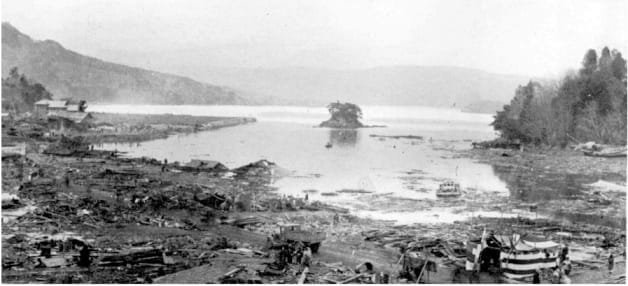
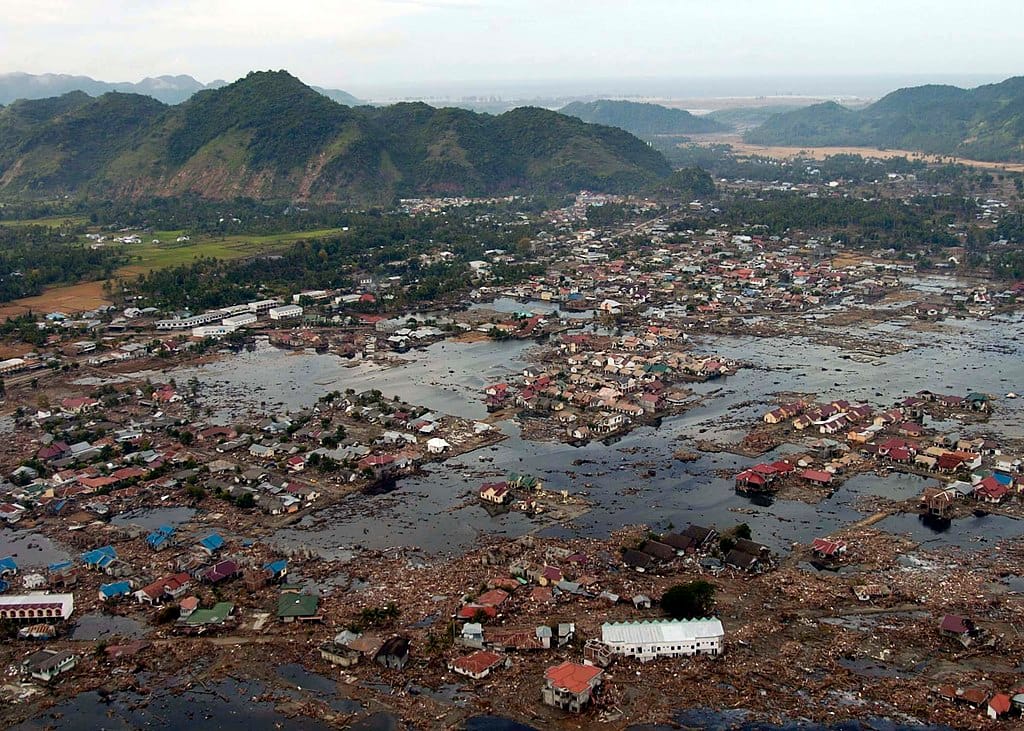
The tsunami wrought havoc across Bengkulu’s coast with brutal efficiency. Thousands were displaced, thousands more lost. Entire neighborhoods were reduced to rubble, roads were torn apart, and the fragile economic lifeline of fishing fleets and markets was severed.
The toll was not merely in bricks and mortar but in human lives—families torn apart, children orphaned, and a community thrust into chaos. The waves left behind a scarred landscape marked by saltwater intrusion, debris fields, and the silent testimony of uprooted trees.
Eyewitness Accounts: Personal Stories of Desperation and Survival
Amidst the turmoil, stories of harrowing escape and profound loss emerged. Maryati, a young mother from a coastal village, recalled the moment the ocean vanished: “The sea just walked away. I remember thinking, ‘This is strange, but maybe it’s normal.’ Then, the wave came. I grabbed my child and ran to the hill. All I could hear was the roar.”
Another survivor, an elderly fisherman named Agus, described his narrow escape: “I was out at sea and saw the tsunami as a tall wall of water. I barely managed to ride my boat through the waves.”
These individual narratives breathe life into the statistics, reminding us of the deep human cost woven into the fabric of natural disasters.
Immediate Response: Local and National Efforts to Save Lives
In the chaotic aftermath, local authorities and communities mobilized swiftly despite overwhelming challenges. Makeshift shelters were erected, medical aid dispatched, and frantic search-and-rescue missions launched.
Indonesia’s national disaster response agencies coordinated with military units to deliver aid, clear roads, and restore communication lines. However, poor infrastructure, damaged transport routes, and limited warning time hampered these efforts considerably.
International Aid Arrives: Coordinated Relief under Pressure
The global humanitarian community responded with urgency. The United Nations, Red Cross, neighboring countries, and international NGOs provided essential supplies—food, water, medicine—and technical support.
Yet the rapid infusion of aid was complicated by logistical hurdles and the sheer scale of affected populations. Coordinating relief efforts in geographically fragmented islands necessitated tactical flexibility and cultural sensitivity.
Challenges Facing Rescue and Recovery: Infrastructure, Communication, and Geography
Bengkulu’s rugged terrain, combined with damaged infrastructure, created formidable barriers. Roads were clogged or washed away, communication networks were down, and many remote villages remained inaccessible for days.
This delay prolonging assistance meant that survivors faced harsh conditions, exacerbating risks of disease, exposure, and psychological trauma.
The Human Toll: Deaths, Injuries, and Psychological Trauma
Though exact numbers are debated, thousands perished or were severely injured. Survivors faced not only physical wounds but deep psychological scars. The suddenness of the disaster, loss of loved ones, and destruction of homes plunged many into states of shock and grief.
Mental health services were scarce, forcing communities to rely on traditional support mechanisms or face isolation.
Ecological Damage: How Nature Was Altered by the Waves
The tsunami’s impact extended beyond human domains. Coastal ecosystems were ravaged; coral reefs were damaged, mangrove forests uprooted, and saltwater intrusion altered farmland.
These environmental shifts threatened local biodiversity and undermined fisheries, compounding economic hardship for coastal dwellers.
Government and NGO Roles: Lessons and Critiques after Disaster
Post-tsunami analyses revealed both strengths and shortcomings in institutional responses. While the government acted decisively, bureaucratic delays and coordination gaps underscored the need for improved preparedness.
NGOs played critical roles but also faced criticism regarding cultural insensitivities and sustainability of aid projects.
The Rebirth of Bengkulu: Reconstruction and Resilience
Despite overwhelming devastation, Bengkulu embarked on a path of recovery. International funding, combined with community-driven initiatives, fostered rebuilding efforts aimed not only at restoring but improving infrastructure.
Schools, hospitals, and homes were reconstructed with a focus on disaster resilience—raised buildings, evacuation routes, and public awareness campaigns became central components.
Reexamining Warning Systems: Advances Stemming from the 2007 Tsunami
The 2007 tsunami served as a catalyst for revitalizing Indonesia’s tsunami early warning systems. High-tech sensors, rapid communication networks, and community-based alerts were progressively implemented.
These improvements aim to give coastal communities precious minutes to evacuate, a difference between tragedy and survival.
Indonesia’s National Disaster Management Plan: Evolution Post-2007
Recognizing vulnerabilities, Indonesia overhauled its disaster management framework. Coordinated multi-agency responses, training exercises, and public education undertakings have bolstered national resilience.
This evolution reflects wider recognition of climate and geological risks facing the archipelago.
The Role of Communities: Traditional Knowledge Versus Modern Science
In many ways, the blending of ancestral wisdom and contemporary science created a new paradigm of preparedness. Indigenous knowledge of warning signs—such as unusual ocean behavior—combined with technological alerts, empowered communities to act decisively.
This synergy remains a model for disaster risk reduction worldwide.
The 2007 Tsunami in Global Context: Comparing Catastrophes Across Oceans
The Bengkulu tsunami, while overshadowed in scale by the 2004 disaster, remains a poignant reminder of the perils facing countries on the Pacific ‘Ring of Fire’ and beyond.
Comparative studies of tsunamis in Japan, Chile, and the Indian Ocean highlight patterns in human impact, response challenges, and technological innovation.
Building Back Better: Sustainable Architecture in Bengkulu’s Reconstruction
Architects and planners seized the opportunity to embed sustainability into rebuilding efforts. Utilizing local materials, creating raised flood-resistant homes, and designing evacuation signage became standard.
The resilience of the built environment was prioritized, emphasizing adaptability to future natural threats.
Memory and Memorialization: How the Tsunami is Remembered Today
Annually, Bengkulu holds ceremonies honoring those lost, reinforcing the collective memory of the event. Memorial monuments dot the coastline, serving as stark reminders of nature’s fury and community endurance.
Educating younger generations ensures that the lessons of 2007 remain alive, fostering vigilance and respect for the environment.
Lessons Learned: From Tragedy to Preparedness
Ultimately, the 2007 tsunami underscored the necessity of a multi-layered approach to disaster risk: scientific research, infrastructure investment, community engagement, and cultural sensitivity.
It challenged complacency and galvanized action—both local and global—to mitigate future risks.
The Continuing Threat: Living Along the Ring of Fire
Sumatra and Bengkulu’s story is far from unique. Millions live daily in the shadow of powerful geological forces.
The 2007 tsunami is a chapter in the ongoing narrative of human resilience in the face of nature’s unpredictable and often violent moods.
Conclusion
The September 12, 2007 tsunami that struck Bengkulu, Sumatra, was a tragic and powerful reminder of the delicate balance humanity holds with the natural world. The day began with the promise of routine and ended with the upheaval of thousands of lives and landscapes. Yet, amid destruction grew undeniable resilience—a community’s resolve to rebuild not as it was, but stronger and wiser.
Nature’s fury is relentless, but so too is human courage and ingenuity. The tragedy forged advances in science, policy, and public awareness that resonate far beyond Indonesia’s shores. It is a sobering yet inspiring testament to the strength found in unity and preparedness—a reminder that history’s harshest lessons can light the path forward.
FAQs
Q1: What caused the 2007 Sumatra (Bengkulu) tsunami?
A1: The tsunami was triggered by a powerful magnitude 8.4 earthquake along the Sunda Megathrust subduction zone off the western coast of Sumatra, where the Indo-Australian tectonic plate plunges beneath Eurasia.
Q2: How many people were affected by the tsunami?
A2: Thousands of people were displaced, with significant loss of life and injuries across Bengkulu province. Precise casualty numbers vary, but the human toll was substantial.
Q3: Were there any early warning systems in place during the tsunami?
A3: Warning systems were limited and insufficient at the time. The rapid onset of the tsunami left very little time for evacuation, highlighting the need for improved detection and communication infrastructure.
Q4: What role did local communities play in the aftermath?
A4: Local communities were crucial in initial rescue efforts, providing shelter, guidance, and utilizing traditional knowledge to enhance survival and recovery.
Q5: How did the 2007 tsunami influence disaster management in Indonesia?
A5: The event spurred significant improvements in early warning systems, national disaster response coordination, public education, and infrastructure resilience.
Q6: What environmental impacts did the tsunami have?
A6: The tsunami damaged coastal ecosystems, including coral reefs, mangrove forests, and agricultural lands affected by saltwater intrusion.
Q7: How is the 2007 tsunami remembered today in Bengkulu?
A7: Through annual memorials, monuments, educational programs, and community ceremonies, the event remains a deeply significant moment in local history.
Q8: Can another tsunami occur in the Bengkulu region?
A8: Yes, the tectonic activity along the Sunda Megathrust continues, making future tsunamis a persistent risk—and reinforcing the importance of preparedness.