Table of Contents
- The Calm Before the Wave: Bay of Bengal in the Late 19th Century
- The Geology of Disaster: Understanding the Nicobar-Andaman Region
- December 31, 1881: The Day the Earth Roared
- The Unseen Menace: The Earthquake that Shook the Bay of Bengal
- The Birth of a Giant Wave: Tsunami Genesis Explained
- The First Signs: Coastal Communities Awaken to Horror
- Flight and Fear: The Human Experience of the 1881 Tsunami
- Across Islands and Shores: The Tsunami’s Path of Destruction
- Silent Toll: Estimating the Loss of Life and Property
- Colonial Authorities: Response and Limitations in a Remote Region
- Anecdotes from Survivors: Voices from the Aftermath
- Scientific Curiosity and Confusion: Early Observations and Theories
- The Forgotten Disaster: Why the 1881 Event is Overshadowed
- Waves Through Time: Tsunamis in the Bay of Bengal Before and After 1881
- Lessons from 1881: How History Shapes Modern Preparedness
- The Nicobar-Andaman Islands Today: Remembering and Resilience
The Calm Before the Wave: Bay of Bengal in the Late 19th Century
As 1881 drew to a close, the Bay of Bengal was a quiet, seemingly benign expanse of water edged by the dense jungles and volcanic islands of the Nicobar and Andaman archipelagos. This remote stretch of ocean, nestled between the burgeoning economies of British India and Southeast Asia, was home to indigenous communities whose rhythms followed the tides, the monsoon winds, and the ancient pulse of the Earth itself.
Life here was a delicate balance between man and nature. The forests teemed with untamed wildlife, the waters bustled with fishermen casting their nets, and isolated villages eked out survival far from colonial centers of power. Yet, beneath this tranquility simmered one of nature’s most devastating forces: the restless tectonic plates cradling the seismically volatile Andaman Sea. Few in this region, or indeed in the wider world in 1881, foresaw that the end of the calendar year would bring a catastrophe of monumental scale.
But this calm was deceptive.
The Geology of Disaster: Understanding the Nicobar-Andaman Region
Nestled along the convergent boundary where the Indian Plate dives beneath the Burma Plate, the Nicobar and Andaman Islands occupy a geological hotspot. This subduction zone, stretching over 1500 kilometers, is a restless seam in the Earth's crust. Here, immense tectonic pressures accumulate without warning, only to be released in violent ruptures that shift seabeds and summon monstrous waves.
In 1881, the understanding of plate tectonics was decades away from development, but the region’s violent past whispered ominous clues. Volcanoes, earthquakes, and sudden coastal subsidence had long been recorded by local communities and early European settlers alike. The very landscape bore witness to recurrent upheavals, a reminder that the ground beneath was both cradle and executioner.
December 31, 1881: The Day the Earth Roared
The final day of 1881 began like many others—warm tropical air, fragrant sea breezes, and the distant cries of forest birds. Then, without warning, the earth convulsed.
At dawn, a powerful earthquake struck underwater, registering an estimated magnitude of around 7.9 to 8.2 on modern scales—a titanic release of energy equivalent to thousands of Hiroshima bombs. Its epicenter lay somewhere in the trench west of the Nicobar Islands, triggering a violent upheaval of the seafloor.
Communities scattered along the coasts felt the earth tremble, trees swayed wildly, and houses shook as if caught in a giant’s grasp. The ground beneath their feet betrayed them; the ocean began to retreat—a silent precursor to catastrophe.
The Unseen Menace: The Earthquake that Shook the Bay of Bengal
Though devastating in its own right, the earthquake was only the prologue. The real horror was hidden beneath the waves.
Witnesses later reported a series of intense shocks followed by an eerie stillness as the waterline pulled away by hundreds of meters along the coasts. This retreat signaled the arrival of the tsunami—a name given only decades later but an ancient and relentless killer in these parts.
The earthquake event itself was poorly documented at the time due to the region’s remoteness and the limited communication capabilities of the late 19th century. However, colonial records and local oral histories reveal that the shaking was felt over hundreds of kilometers, leaving communities anxious and vulnerable.
The Birth of a Giant Wave: Tsunami Genesis Explained
The underwater earthquake violently displaced millions of cubic meters of seawater. The seabed's sudden uplift and subsidence sent powerful shockwaves racing across the Bay of Bengal’s surface, rising as towering walls of water.
The tsunami waves moved swiftly—traveling at speeds up to 800 kilometers per hour in deep water—unseen but terrifyingly imminent. By the time the waves approached shallower coastal waters around the Nicobar and Andaman Islands, their speed decreased, but height and destructive power grew exponentially.
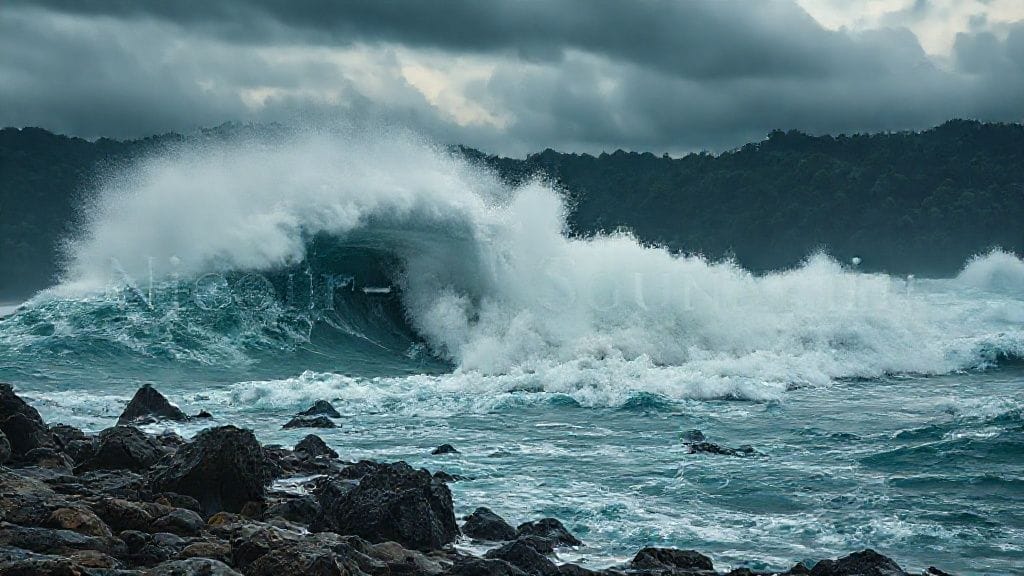
Each crest crashed upon the land with devastating force, swallowing villages, uprooting trees, and sweeping away everything unmoored. Some accounts describe waves rising as high as 10–15 meters—a deadly tsunami by any standard.
The First Signs: Coastal Communities Awaken to Horror
For many indigenous peoples, a receding sea marks danger. Some villagers reportedly observed fish stranded on the drying reef and hurried inland in alarm. Yet, the magnitude of the threat was unlike anything experienced before.
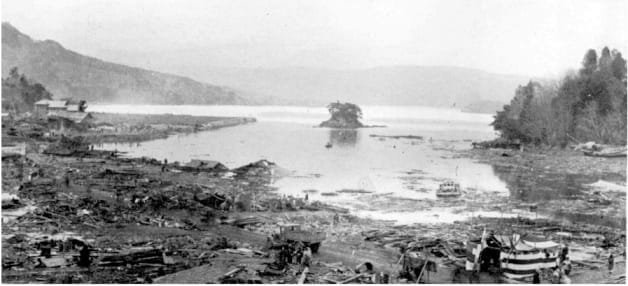
Eyewitnesses recalled "a monstrous wall of water" advancing inexorably, dark and frothing, engulfing shorelines without mercy. Fishing boats were destroyed or stranded, homes swept away, and crops ruined—livelihoods wiped out in moments.
However, the lack of formal warning systems and the isolation of many settlements made mass evacuation impossible. The tsunami struck swiftly after the earthquake, leaving little time for preparation or escape.
Flight and Fear: The Human Experience of the 1881 Tsunami
Survivors’ testimonies, though sparse, reveal the horror’s scale. People clung to trees, clambered onto rocks, or sought refuge on higher ground where possible. Some recount agonizing hours spent clinging to debris, watching as the monstrous sea devoured their villages.
Fear of the unknown compounded the physical chaos. For the tribal inhabitants unaccustomed to scientific explanations, the event held spiritual dread—signs of wrathful deities or curses. For British colonial officials and traders, it was a perplexing natural disaster of unprecedented proportions in their jurisdiction.
The trauma was lasting. Entire families were lost, social structures fractured, and a sense of vulnerability engulfed the once seemingly stable coasts.
Across Islands and Shores: The Tsunami’s Path of Destruction
The tsunami did not limit its wrath to a single isle or beach. Instead, it rippled across the Bay of Bengal, affecting the Nicobar Islands first, then sweeping towards the Andamans and even to mainland coasts.
Nikobar’s sparse populations suffered particularly devastating losses. Fishing communities found themselves obliterated, while thick forest cover was stripped bare where the waves surged inland. In the Andamans, the impact was significant but somewhat moderated by varied topography.
Contemporary reports from colonial administrators indicated widespread destruction of infrastructure—small ports, communication lines, and military installations. Agricultural land was flooded with saltwater, rendering it infertile for years.
The scale was unprecedented for the region, effectively shaking the foundations of colonial governance and local livelihoods.
Silent Toll: Estimating the Loss of Life and Property
Determining exact numbers is fraught with difficulty. Sparse population documents, incomplete reports, and vast geographical isolation contribute to uncertainty. Estimates range from several hundred to a few thousand deaths, though the true figure may never be known.
Property losses were equally profound. Entire villages vanished, fishing gear was destroyed, and crops drowned beneath layers of saltwater and debris. The economic repercussions echoed for years, pushing many communities into deeper poverty.
Beyond tangible losses, the psychological imprint was profound. Survivors spoke of nightmares, a persistent fear of the sea, and communal mourning that shaped oral traditions for generations.
Colonial Authorities: Response and Limitations in a Remote Region
The British colonial administration faced immense challenges. The remoteness of the Nicobar and Andaman Islands, along with minimal infrastructure and communication delays, hampered relief efforts.
Dispatches in early 1882 reveal slow mobilization of resources. Medical aid, reconstruction materials, and food supplies were sent, but often arrived months late. The administrative focus remained limited, perhaps seen as a minor calamity within the sprawling empire.
This neglect sowed seeds of resentment among local communities, highlighting the colonial dynamics of the period—disasters affecting colonized peoples often remained sidelines in the imperial agenda.
Anecdotes from Survivors: Voices from the Aftermath
Within family circles and tribal lore, stories persisted. One Andamanese hunter, according to accounts collected decades later, recounted how an entire beach vanished beneath the sea, swallowing a group of children returning from a fishing trip. Another Nicobarese elder spoke of how his grandfather had foretold dark waters from a sudden wall of silence after the quake.
These personal narratives, fragmented but vivid, illuminate the human dimension often lost in official records. They tell of grief, resilience, and a profound respect for the forces of nature.
Scientific Curiosity and Confusion: Early Observations and Theories
In 1881, scientific understanding of tsunamis was embryonic. Many observers saw the event as a seaquake or massive storm surge. A few British scientists attempted to chart the waves’ timing and effects, but explanations were largely speculative.
The lack of an early warning system and absence of a global communication network meant lessons learned were isolated, confined to obscure bulletins rather than widespread scientific discourse.
Still, the 1881 tsunami entered the annals of natural history as a grim reminder: the Bay of Bengal was not immune to the fury of the sea.
The Forgotten Disaster: Why the 1881 Event is Overshadowed
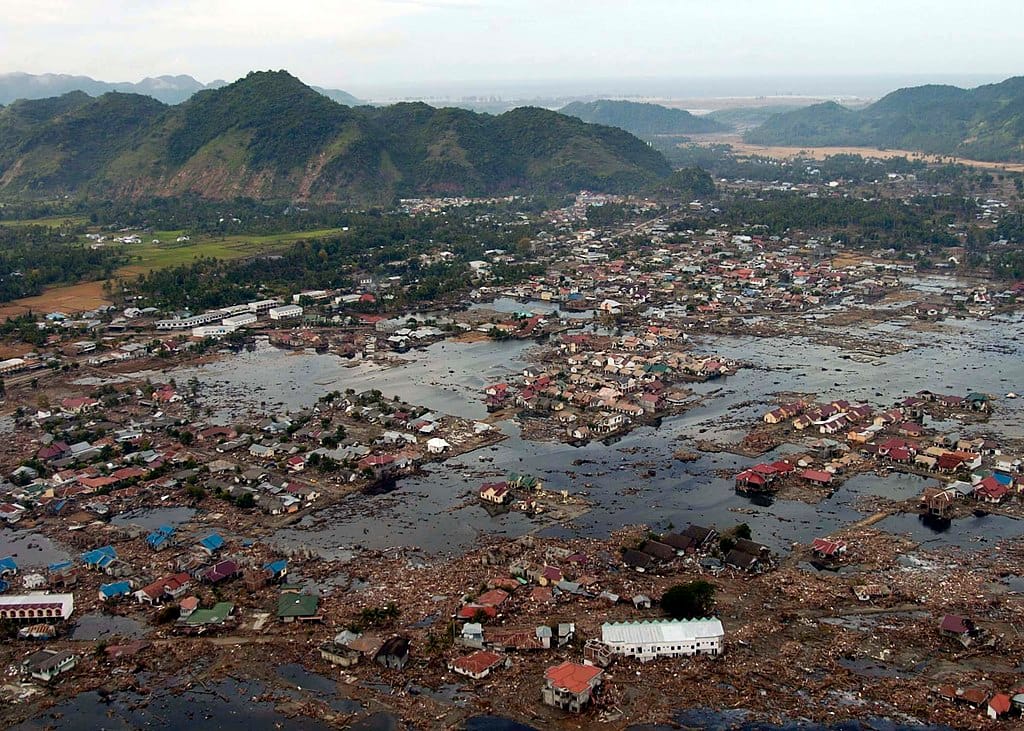
Compared to later and more devastating tsunamis—like the 2004 Indian Ocean tragedy—the 1881 event fades from popular memory. Its remote location, limited media coverage, and sparse documentation conspired to relegate it to obscurity.
Moreover, the lack of dramatic urban destruction or millions of victims rendered it less sensational. Yet, the 1881 Nicobar-Andaman tsunami remains a crucial piece in understanding regional seismic hazards.
Understanding why history forgets disasters is as poignant as the disasters themselves, highlighting the interplay of memory, scale, and narrative.
Waves Through Time: Tsunamis in the Bay of Bengal Before and After 1881
The 1881 tsunami was neither first nor last. The Bay of Bengal has been the theater for several seismic upheavals: in 1941, 1947, and especially the cataclysmic 2004 Indian Ocean tsunami—all bearing similar genetic signatures.
Each disaster adds layers to the historical and scientific narrative. By placing 1881 within this continuum, we see a region shaped repeatedly by the restless earth, where cycles of destruction prompt cycles of rebuilding.
Lessons from 1881: How History Shapes Modern Preparedness
While early warnings were absent in 1881, today’s coastal communities in the Bay of Bengal have instituted myriad systems. Tsunami warning centers, international cooperation, and local education aim to prevent such horror from repeating.
But lessons from 1881 endure beyond technology. They speak to respect for indigenous knowledge, the urgency of inclusive disaster management, and the sober acknowledgment of nature’s caprices.
The disaster serves as a historical touchstone, urging vigilance and humanity in the face of unpredictable power.
The Nicobar-Andaman Islands Today: Remembering and Resilience
Today, the Nicobar and Andaman Islands balance tourism, conservation, and the memory of their tumultuous past. Memorials and cultural festivals sometimes evoke ancestral tragedies, keeping collective memory alive.
Inhabitants have rebuilt amidst ecological fragility and geopolitical shifts. The islands’ story is one of survival—anchored equally in remembrance of loss and hope for a future safer from the terrors of the deep.
Conclusion
The Nicobar-Andaman Tsunami of December 31, 1881, remains one of the Bay of Bengal’s most dramatic, yet underappreciated natural disasters. Hidden by the veil of time and geography, this event reveals nature’s profound power to reshape lives, landscapes, and histories with terrifying suddenness.
For those who lived through it, the tsunami was a day of unimaginable loss and unwavering fear—a rupture of the delicate thread that binds humans to their environment. For historians and scientists today, it stands as a compelling reminder: that even in the shadows of empires and oceans, the Earth’s ancient rhythms command both respect and preparation.
As we look back over 140 years, the waves of 1881 ripple still—an eternal call to listen, learn, and honor the human stories embedded within our planet’s restless crust.
FAQs
1. What caused the Nicobar-Andaman Tsunami of 1881?
A powerful underwater earthquake in the subduction zone west of the Nicobar Islands lifted the sea floor, triggering a massive tsunami that struck the Bay of Bengal coasts.
2. How strong was the earthquake that caused the tsunami?
Modern estimates place the quake’s magnitude between 7.9 and 8.2, unleashing immense energy and sudden displacement of water.
3. Which areas were most affected by the tsunami?
The Nicobar Islands suffered the greatest damage, followed by the Andaman Islands and some parts of the mainland coast along the Bay of Bengal.
4. How many people died during the 1881 tsunami?
Exact figures are uncertain due to poor records but estimates range from several hundred to a few thousand fatalities.
5. How did the British colonial authorities respond?
They launched relief efforts but were hampered by isolation, limited communication, and infrastructure, resulting in delayed and inadequate assistance.
6. Why is the 1881 tsunami less known than the 2004 Indian Ocean tsunami?
Its remote location, smaller death toll, and scant media coverage limited its global impact; it has largely been overshadowed by more recent disasters.
7. What lessons does the 1881 tsunami offer to modern societies?
It emphasizes the importance of early warning systems, inclusive disaster planning, and respect for indigenous knowledge in vulnerable coastal regions.
8. Are the Nicobar and Andaman Islands still at risk of similar tsunamis?
Yes, the region remains seismically active, and modern monitoring systems work to mitigate future risks, but the threat persists due to tectonic plate dynamics.