Table of Contents
- The Dawn of November 27, 1945: A Quiet Coast Awaits Disaster
- The Tectonic Setting: A Volatile Border Between Earth’s Plates
- Seismic Rumblings: The Makran Subduction Zone Awakens
- The Great Earthquake: Shaking the Shores of Pakistan and Iran
- Birth of the Tsunami: From Earthquake to Ocean Fury
- The Tsunami’s Wrath: Waves Who Broke the Calm of Makran
- Tragedy Unfolds: Communities Devastated Along the Coast
- Eyewitness Accounts: Voices from the Edge of the Waves
- The Human Toll: Loss and Survival Amidst Ruin
- Early Responses: Rescue, Relief, and Rebuilding Efforts
- Scientific Understanding: How the Makran Tsunami Shaped Seismology
- Cross-border Impact: Pakistan and Iran in Shared Catastrophe
- The Legacy of 1945: Long-term Economic and Social Consequences
- Remembering the Disaster: Collective Memory in Makran’s Culture
- Modern Insights: Tsunami Preparedness Stemming from 1945
- Geological Aftershocks: The Ongoing Pulse of the Makran Region
- Narratives of Resilience: How Communities Reclaimed Their Shores
- The Event in Global Context: Tsunamis and Their Place in History
- Concluding Thoughts: The Makran Tsunami’s Enduring Lesson
1. The Dawn of November 27, 1945: A Quiet Coast Awaits Disaster
The first light of November 27, 1945, stretched gently over the rugged and sparse coastline of Makran, a region straddling southern Pakistan and southeastern Iran. Fishermen prepared for their daily journeys, children played among the rocks, and market vendors arranged fresh catches, all unaware of the coming cataclysm that would rend their lives along with the shifting earth beneath them.
In the tranquil calm of that early morning, the vast Arabian Sea whispered softly against semi-arid shores, a veil of normalcy masking a subterranean fury poised to strike. This was not the story of a commonplace day but of a monumental natural event whose echoes would shake millions and reshape the scientific understanding of tectonic dangers lurking in neglected corners of the world.
2. The Tectonic Setting: A Volatile Border Between Earth’s Plates
Makran sits at a fierce geological crossroads where the Arabian Plate meets the Eurasian Plate. This is no ordinary boundary; it is a dynamic subduction zone extending for hundreds of kilometers beneath the Arabian Sea. Here, one tectonic plate slides beneath another, accumulating strain over decades or centuries, only to release it in violent ruptures that reshape the seafloor and the coastlines above.
Before 1945, Makran’s seismic potential was little known or understood on the world stage, partly because the region was remote and poorly monitored. Yet beneath those deceptively quiet waves, colossal forces churned, storing energy with a merciless patience. This geodynamic environment proved a precursor to one of the most devastating tsunamis in 20th-century history—a natural drama set on the edge of empire, amidst the final days of British India and the fledgling stages of Pakistan’s nationhood.
3. Seismic Rumblings: The Makran Subduction Zone Awakens
On the evening of November 26, subtle seismic tremors began to ripple through the Makran region. Initial foreshocks unsettled animals and made some villagers uneasy. But without modern seismic networks or public awareness, these signs passed largely unnoticed or misunderstood. The Makran Subduction Zone, though known to geologists, had not yet been established as a critical point of tectonic stress accumulation.
As hours passed, the tension beneath the earth’s crust escalated. Deep under the ocean floor, the Arabian Plate stubbornly slid beneath the Eurasian Plate. Locked in their fierce embrace, the contact zone stored vast energy, a precarious balance that, when broken, would unleash a geological rupture felt across seas and lands.
4. The Great Earthquake: Shaking the Shores of Pakistan and Iran
Then, at approximately 21:00 local time on November 27, 1945, the long-awaited rupture occurred. The ground shook violently as a powerful earthquake struck the Makran coastal region, registering estimates ranging from magnitude 7.8 to 8.1. The epicenter lay offshore, along the subduction fault where the Arabian Plate descended beneath the continental margin.
This quake was not only fierce but prolonged, lasting long enough to terrify communities along hundreds of kilometers of coastline in both Pakistan’s Balochistan province and Iran’s Sistan and Baluchestan. Traditional mud-brick homes crumbled, fishing boats were tossed like toys on swollen waves, and the earth itself seemed to heave and groan.
5. Birth of the Tsunami: From Earthquake to Ocean Fury
But it was the ocean that would deliver an even darker menace than the shaking earth. The abrupt displacement of the seafloor caused by the earthquake generated a massive tsunami that surged outward at jet-like speeds. These waves raced toward the coastlines, timed terrifyingly as night fell and residents prepared for sleep.
The earthquake’s undersea rupture created a sudden uplift and subsidence of the seabed, displacing vast volumes of water. As these waves neared shallow shores, they grew in height and ferocity—a towering wall of churning water bearing down on fishermen, villages, and trading ports spread along the Makran coast.
6. The Tsunami’s Wrath: Waves Who Broke the Calm of Makran
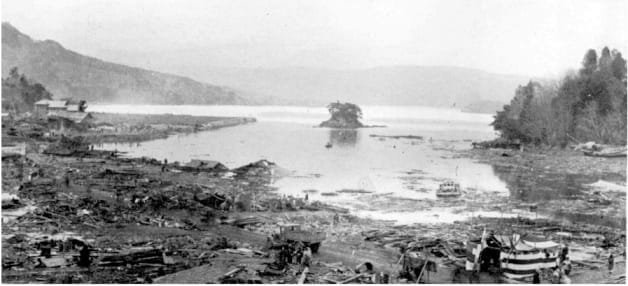
Eyewitness reports describe the tsunami as an immense, roaring wall of water, sometimes estimated at 10 meters or more in height, crashing inland and sweeping away anything in its path. Coastal villages were inundated, their inhabitants caught between the twin terrors of earth and sea.
According to accounts and later scientific reconstructions, waves struck coastal towns such as Pasni, Ormara, and Gwadar in Pakistan, as well as ports and fishing hamlets across southern Iran. Entire neighborhoods disappeared beneath the floodwaters, farmlands were salted by the salty ocean spray, and livelihoods were shattered beyond immediate repair.
7. Tragedy Unfolds: Communities Devastated Along the Coast
The human cost of the Makran tsunami was heartbreaking yet difficult to quantify precisely. Sparse population density, limited contemporary reporting, and disrupted communication made exact death toll assessments elusive, but estimates suggest hundreds to potentially thousands perished.
Families were torn apart, homes destroyed, and centuries-old ways of life undermined. Survivors described scenes of utter desolation—rescuing loved ones from wreckage, burying the dead, and staring at landscapes turned alien by water and debris. Tribal and fishing communities, tightly woven into coastal ecosystems, faced a profound existential blow.
8. Eyewitness Accounts: Voices from the Edge of the Waves
In oral histories collected decades later, elders recounted the eerie quiet before the waves surged, the ground shaking beneath their feet, and the impossible sight of the sea withdrawing rapidly before roaring back to unleash its fury. One fisherman from Pasni recounted: “The sea fled far away like it was scared, then came rushing back with a terrible roar, swallowing the shore like a giant beast.”
Such testimonies offer more than data—they humanize the disaster, reminding us of raw fear, loss, and courage. The personal dimension breathes life into the geological facts and statistics, grounding history in lived experience.
9. The Human Toll: Loss and Survival Amidst Ruin
Amidst the destruction, stories of survival and solidarity emerged. Villagers warned neighboring communities when foreshocks struck, some managed to climb rocky outcrops just moments before the water came, and others held firm, setting the foundations for eventual recovery.
Yet the scale of loss was immense. Fishing fleets decimated, agricultural lands drowned, and infrastructure stretched thin by long-standing poverty left many communities vulnerable to famine and disease in the disaster’s aftermath. The rhythm of life along the Makran coast would never be the same.
10. Early Responses: Rescue, Relief, and Rebuilding Efforts
The immediate response was local and improvised. Tribal leaders, elders, and neighbors organized rescue efforts, using what little means they had to search for survivors and provide shelter. Yet in 1945, governmental and international disaster relief mechanisms were rudimentary, especially in this remote cross-border region.
News of the catastrophe spread slowly, hampered by the rugged terrain and limited infrastructure. Nonetheless, humanitarian aid from regional authorities and neighboring settlements trickled in, helping communities begin the arduous process of rebuilding not just homes but their very sense of security.
11. Scientific Understanding: How the Makran Tsunami Shaped Seismology
The Makran tsunami was a critical moment in the scientific study of subduction zones and tsunamis. Prior to this, much of the world’s focus had been on the Pacific Rim—the notorious “Ring of Fire”—but the Makran event underscored that tsunamigenic earthquakes could strike outside these traditionally monitored areas.
This disaster spurred greater geological investigation into the Makran Subduction Zone, revealing its potential to generate large earthquakes and tsunamis. It also highlighted the need for increased seismological monitoring and public education, themes that resonate strongly even today.
12. Cross-border Impact: Pakistan and Iran in Shared Catastrophe
The tsunami was a geopolitical event as much as a natural one, bridging two nations still adjusting to the upheavals of World War II’s aftermath and the nearing partition of British India. Pakistan had yet to be officially formed—it would emerge less than a year later in 1947—while Iran was under the rule of Mohammad Reza Pahlavi, navigating socio-political modernization.
Cooperation between Pakistani and Iranian authorities in relief efforts was constrained but marked the beginning of a shared recognition of common geological threats. The disaster laid the groundwork for regional dialogue about natural hazard management that continues into contemporary times.
13. The Legacy of 1945: Long-term Economic and Social Consequences
Economically, the Makran tsunami struck a fragile area dependent heavily on fishing, limited agriculture, and trade. The destruction of ports and boats meant livelihoods evaporated overnight. Socially, displacement led to migrations within the region, altering demographic balances and exacerbating pre-existing poverty and marginalization.
Yet, out of hardship grew resilience. Communities gradually rebuilt, incorporating new knowledge of the region’s dangers into their collective psyche. Infrastructure was improved where possible, and the shock of 1945 fostered a cautious respect for the forces beneath their feet.
14. Remembering the Disaster: Collective Memory in Makran’s Culture
The Makran tsunami remains etched in the cultural memory of the local populations. Folklore, songs, and oral traditions recount the event as a cautionary tale—a story passed from generation to generation warning of nature’s power and the need for vigilance.
Commemorations may be modest, yet the disaster inhabits the identity of the region. It is a reminder of vulnerability, the fragility of human existence in the face of nature’s grandeur, and the enduring spirit that animates coastal communities.
15. Modern Insights: Tsunami Preparedness Stemming from 1945
Today, the legacy of the Makran tsunami informs regional disaster preparedness strategies. Pakistani and Iranian scientists collaborate in seismic monitoring, early warning systems are being developed, and public education campaigns emphasize evacuation protocols.
In a region once deemed quiet and low-risk, the 1945 tragedy has prompted a science-driven reappraisal of coastal hazards, emboldening efforts to protect future generations from similar fates.
16. Geological Aftershocks: The Ongoing Pulse of the Makran Region
Decades after the catastrophe, the Makran subduction zone remains a region of frequent earthquakes and subtle geomorphologic changes. Smaller tremors continue to remind inhabitants that beneath the seemingly peaceful landscape, Earth’s restless forces are ever-present.
Research into sediment layers and marine geology reveals hints of prehistoric tsunamis, indicating that the 1945 event was one in a long series of such occurrences. This cyclical violence commands respect and vigilance.
17. Narratives of Resilience: How Communities Reclaimed Their Shores
In the years following the disaster, Makran’s peoples demonstrated remarkable resolve. Rebuilding homes with improved designs, adapting fishing practices, and replanting fields all signaled not defeat but defiance.
This resilience threads through the human story of the tsunami, showing that while nature can destroy, it also unwittingly forges courage, innovation, and communal bonds necessary for survival against the odds.
18. The Event in Global Context: Tsunamis and Their Place in History
While eclipsed in popular memory by other 20th-century tsunamis, such as the 2004 Indian Ocean disaster, the Makran tsunami of 1945 holds a significant place in the history of natural catastrophes. It both prefigured later science and portended the vulnerability of coastal societies worldwide.
Its lessons—about risk, preparedness, and human vulnerability—resonate far beyond Makran’s rugged shores, reminding us how interconnected geology and human fate truly are.
19. Concluding Thoughts: The Makran Tsunami’s Enduring Lesson
The catastrophic tsunami that unfolded on the night of November 27, 1945, speaks to the unpredictable majesty and terror of our planet. It shows us how a remote coastline can become the stage for elemental forces, how ordinary lives can be swept up in extraordinary events, and how memory can preserve both loss and hope.
As we look to the future, the story of the Makran tsunami urges us to blend science with empathy, to prepare but not live in fear, and to remember that every wave that crashes carries with it lessons carved from the depths of time.
Conclusion
The Makran tsunami of 1945 stands as a powerful testament to nature’s dual capacity for destruction and renewal. From the searing earthquake that cracked the depths of the Arabian Sea floor to the towering waves that tore through coastal villages, this event transformed Makran forever, imprinting a story of loss, adaptation, and resilience in its wake.
Beyond the physical devastation, the disaster awakened regional and scientific consciousness to the unseen, persistent powers beneath the ocean’s surface and the urgent necessity of understanding and respecting them. The story of Makran reveals the deep interconnection between human communities and the planet’s tectonic rhythms—a relationship both delicate and daunting.
Yet, amid tragedy, there shines the enduring spirit of survival. Coastal villages rebuilt and adapted, scientific knowledge expanded, and cultural memory ensured the disaster’s lessons would not be forgotten. The Makran tsunami teaches that while we cannot control the forces of the earth, we can face them with courage, preparedness, and an informed respect. It is a history carved by waves—both fierce and enlightening.
FAQs
Q1: What caused the Makran tsunami of 1945?
A1: The tsunami was triggered by a powerful earthquake (estimated magnitude 7.8–8.1) along the Makran Subduction Zone, where the Arabian Plate subducts beneath the Eurasian Plate. The sudden displacement of the seabed displaced vast water volumes, generating the tsunami.
Q2: How many people were affected by the tsunami?
A2: Precise figures are difficult due to limited record-keeping, but estimates suggest hundreds to thousands of people died, with many more injured or displaced across coastal regions of Pakistan and Iran.
Q3: Why was the event not well known internationally?
A3: The remote location, lack of modern monitoring and communication infrastructure, and geopolitical contexts of the time limited the disaster's visibility on the global stage until scientific investigations highlighted its significance later.
Q4: How did the Makran tsunami influence scientific understanding?
A4: It highlighted the seismic potential of the Makran Subduction Zone, spurred research in lesser-known tsunami-prone regions, and emphasized the need for improved seismic monitoring and tsunami preparedness globally.
Q5: What has been done to prevent such catastrophes today?
A5: Pakistan and Iran have invested in geological research, early warning systems, and public education to mitigate the risks of future tsunamis in the region, improving disaster readiness.
Q6: How do local communities remember the 1945 tsunami?
A6: Through oral histories, folklore, and cultural narratives, the tsunami remains a cautionary and formative event, passed down as a story of tragedy and resilience that shapes local identity.
Q7: Is the Makran Subduction Zone still active?
A7: Yes, the region continues to experience seismic activity and remains a source of concern for potential future earthquakes and tsunamis.
Q8: How does the 1945 tsunami compare to other historical tsunamis?
A8: While not as devastating as some more recent events, the Makran tsunami was one of the largest recorded in the Arabian Sea and contributed valuable knowledge to global tsunami science.