Table of Contents
- The Morning the Sea Turned Deadly
- A Perfect Storm Beneath the Waves
- The Geological Roar: Understanding the Earthquake
- Myanmar’s Vulnerable Coastline: Between Nature and Neglect
- The Andaman Sea: Jewel and Threat
- Tsunami Warning Systems: A World Unprepared
- The Wave That Carved History
- Eyewitnesses Speak: Voices from the Shore
- The Immediate Aftermath: Destruction and Despair
- Human Stories Amidst the Ruins
- National and International Response: A Race Against Time
- The Hidden Toll: Myanmar’s Quiet Suffering
- Environmental Impact on the Andaman Sea Ecosystem
- The Role of Local Communities and Resilience
- Myanmar’s Government and Disaster Management: Lessons Learned
- The Global Wake-Up Call: Changes in Tsunami Preparedness
- Memorialization and the Collective Memory of 2004
- Scientific Advances Born from Tragedy
- The Continuing Legacy: Myanmar and the Andaman Sea Today
- Reflections on Nature’s Power and Human Vulnerability
1. The Morning the Sea Turned Deadly
December 26, 2004. For many along the tranquil shores of Myanmar’s coast, it was a morning like any other. Fishermen set sail at dawn, children played by the water’s edge, and communities prepared for everyday life. Yet beneath this serene surface, an unprecedented crisis was quietly building—a colossal earthquake, miles beneath the seafloor of the Andaman Sea, was about to unleash a monstrous tsunami.
The sky was a canvas of soft pastel hues as the swelling waves grew ominous and fierce. Then, without warning, the ocean retreated violently, a harbinger of the deadly wall of water rushing back at unimaginable speed. Panic spread as the tsunami surged onto the coastal villages, swallowing homes, boats, and lives within minutes. In Myanmar, a country often overlooked in the narrative of the 2004 Indian Ocean tsunami, this tragic event marked a profound moment of destruction that would ripple through local communities and the world’s conscience.
2. A Perfect Storm Beneath the Waves
The 2004 Indian Ocean tsunami was not a single, isolated event but a complex convergence of tectonic violence and geographical vulnerabilities. At 7:58 a.m. local time, a massive undersea earthquake registering 9.1 on the Richter scale ruptured along the Sunda megathrust fault. This seismic upheaval altered the seafloor drastically, displacing billions of cubic meters of water and creating waves that radiated across the entire Indian Ocean.
Myanmar’s coast, nestled along the northeastern edge of the Andaman Sea, bore the brunt of these waves. Its geographic location placed it in an unprepared and perilous zone where tsunami waves arrived within minutes of the earthquake, offering little time for warning and evacuation. The geological realities intertwined cruelly with socio-political challenges, deepening the human toll.
3. The Geological Roar: Understanding the Earthquake
The seismic event on that December day was one of the most powerful ever recorded. The earthquake occurred along the interface between the Indian Plate and the Burma Plate – a site of immense strain due to tectonic plate interaction. Scientists later described it as “the great rupture,” spanning nearly 1,300 kilometers from near Sumatra to offshore Myanmar.
Unlike most earthquakes, this was an underwater megathrust event—where one tectonic plate thrusts beneath another, causing sudden uplift. This cataclysmic shift caused the overlying water column to be displaced vertically, a key mechanism in tsunami formation.
Geologists determined that the rupture propagated northwards, meaning that the Andaman Sea and the western coasts of Myanmar experienced towering waves mere minutes after the quake, with little warning. This swift arrival left coastal populations staggered and exposed, unable to escape the floods roaring toward them.
4. Myanmar’s Vulnerable Coastline: Between Nature and Neglect
Myanmar’s coastline along the Andaman Sea is a diverse landscape of mangrove forests, fishing villages, resort towns, and remote islands. Yet, while the natural beauty of the region is undeniable, so too is its vulnerability. Years of political isolation and limited infrastructure development had left early warning systems non-existent or rudimentary.
Government priorities compounded this challenge—a secretive regime with limited engagement in international disaster preparedness meant few mechanisms were in place for rapid response. The densely forested mangroves, crucial buffers against storms and floods, had been degraded in some areas by logging and shrimp farming, further undermining natural protective barriers.
Most strikingly, local populations had little knowledge or experience with tsunamis—there was no cultural memory of a catastrophe of such scale, and no drills or evacuation plans existed.
5. The Andaman Sea: Jewel and Threat
Stretching between the Malay Peninsula and the west coast of Myanmar and Thailand, the Andaman Sea is an ecological treasure trove. Coral reefs, mangroves, and a wealth of marine biodiversity define the region, supporting the livelihoods of millions.
But the Andaman Sea is also a seismic hazard zone. Hidden beneath its blue waters lies a complex system of fractures and faults, capable of unleashing giant earthquakes. The tectonic dance along the Sunda megathrust not only shapes the ocean floor but also poses an enduring danger to humans and ecosystems.
This duality of beauty and threat was tragically underscored in 2004, when the sea, source of sustenance and identity, became an agent of destruction.
6. Tsunami Warning Systems: A World Unprepared
In 2004, the Indian Ocean region was glaringly absent of an effective tsunami warning system. Unlike the Pacific Ocean, which had developed monitoring networks following the deadly 1960s tsunamis, the Indian Ocean’s warning infrastructure was almost nonexistent.
Myanmar, under military rule and international isolation, was especially unprepared. Despite being in a known seismic risk area, no sensor arrays, sirens, or local communication channels were in place. The earthquake was already underway and the resulting tsunami approaching long before word could spread.
This gap in preparedness proved catastrophic—highlighting how political and economic marginalization can transform natural disasters into humanitarian catastrophes.
7. The Wave That Carved History
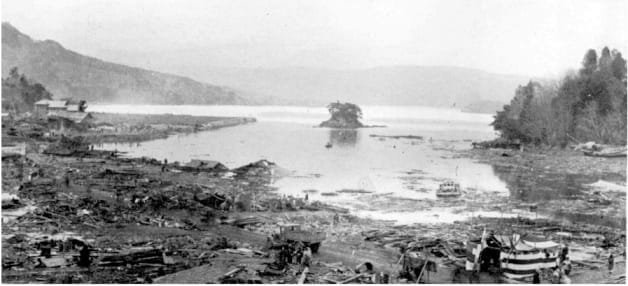
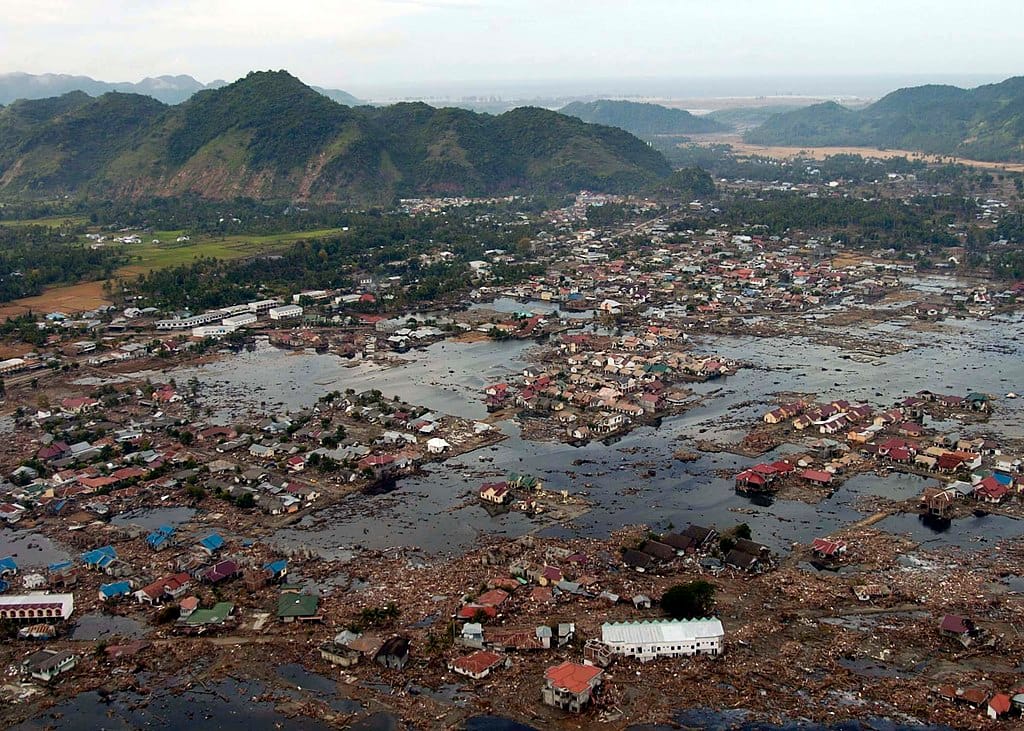
The tsunami waves that hit Myanmar were estimated at heights of between 3 to 6 meters, sufficient to devastate entire villages. The water rushed inland with terrifying force, flattening structures, uprooting trees, and sweeping away people. Entire communities vanished beneath the surging water.
Yet for many Myanmar survivors, the disaster was only partially documented. The regime’s secrecy, limited media access, and poor infrastructure meant that the full scale of damage and death toll was underreported internationally. Despite this, local testimonies and later investigations revealed the devastating power of the tsunami on Myanmar’s shores.
8. Eyewitnesses Speak: Voices from the Shore
“My father told us the sea pulled back like a breath—it was quiet, almost peaceful. Then the water came, roaring and angry, like nothing we’d ever seen,” recalled Daw Nu, a survivor from the southern coast near Kawthaung. Stories like hers echoed throughout the coastal villages: sudden withdrawal of the sea, a moment of eerie calm, followed by an overwhelming wall of water.
Fishermen who returned to shore found their boats smashed, homes destroyed, and loved ones missing. Children clung to floating debris; others fled to higher ground, guided only by instinct. These personal recollections bring a human face to the statistics, transforming numbers into the cries and resilience of individuals.
9. The Immediate Aftermath: Destruction and Despair
In the hours and days following the tsunami, communities grappled with unprecedented destruction. Many villages were wiped off the map. Roads washed out, communications severed, and survivors disoriented and traumatized.
Hospitals strained to cope. Food and clean water quickly became scarce. Rescue efforts were hampered by poor infrastructure, limited resources, and Myanmar’s political isolation, which complicated international aid.
The Burmese government initially provided little information or coordinated response, prioritizing control over transparency. This delay deepened suffering and hampered relief.
10. Human Stories Amidst the Ruins
Amid the wreckage, stories of hope and tragedy emerge. A local teacher in Tanintharyi Division transformed her school into a shelter for the displaced. A group of villagers formed chains to pull survivors from the floodwaters. A small fisherman's family, despite losing everything, vowed to rebuild, finding strength in community ties.
Yet there were bitter losses too—children orphaned, elders lost, livelihoods forever destroyed. The emotional scars ran deep as survivors wrestled with grief and uncertainty.
11. National and International Response: A Race Against Time
The global outpouring of support after the tsunami was unprecedented. Countries and NGOs mobilized resources, sending food, medicine, and personnel. The United Nations launched extensive relief operations.
However, Myanmar’s political climate complicated aid distribution. Concerns over sovereignty and regime control led to delays and logistical challenges. Aid workers faced restrictions, and distribution was uneven.
Still, slowly, help reached those in need. International cooperation underscored an important lesson—natural disasters know no borders and require collective action.
12. The Hidden Toll: Myanmar’s Quiet Suffering
While Thailand, Indonesia, and Sri Lanka’s tsunami impacts dominated headlines, Myanmar’s suffering was less visible. Official tallies estimated nearly 90,000 dead across the region, with Myanmar’s casualties estimated in the thousands.
The regime’s suppression of information, limited media presence, and minimal international scrutiny contributed to this invisibility. Additionally, many remote communities went uncounted, their losses buried beneath societal neglect.
Memorializing Myanmar’s tsunami victims remains a challenge decades later, reflecting how political realities can shape historical memory.
13. Environmental Impact on the Andaman Sea Ecosystem
The tsunami wrought havoc not only on people but on fragile ecosystems. Mangrove forests, crucial buffers and nurseries for marine life, were torn apart or flooded with saltwater. Coral reefs faced sedimentation and physical damage.
These environmental shocks jeopardized fisheries and biodiversity, threatening long-term economic and ecological stability. Restoration efforts have since focused on rehabilitating mangroves and reefs, underscoring the interdependence of human and natural resilience.
14. The Role of Local Communities and Resilience
Despite official failures, local communities showed remarkable resilience. Indigenous knowledge, communal solidarity, and adaptive strategies emerged in response to the disaster.
Communities rebuilt with indigenous materials, restored traditional warning signs like the withdrawal of the sea, and developed informal networks of support. Women and elders played crucial roles in weaving social safety nets.
These grassroots responses illustrate human adaptability and the power of shared experience amid catastrophe.
15. Myanmar’s Government and Disaster Management: Lessons Learned
The tsunami was a wake-up call for Myanmar’s government. In the years following, modest efforts began to address disaster preparedness. New early warning systems were slowly introduced with international cooperation.
Emergency response units were trained, and awareness campaigns initiated in coastal areas. While progress remains uneven, the 2004 tragedy forced authorities to reevaluate their approach to natural hazards in a country long neglected on this issue.
16. The Global Wake-Up Call: Changes in Tsunami Preparedness
The 2004 Indian Ocean tsunami catalyzed a dramatic overhaul of regional and global tsunami warning systems. The Indian Ocean Tsunami Warning and Mitigation System was established, bringing together monitoring stations, communication protocols, and public education.
Countries like Myanmar, previously sidelined, were integrated into international frameworks. This new vigilance aims to prevent future losses and reflects a hard-earned understanding of the ocean’s unpredictable might.
17. Memorialization and the Collective Memory of 2004
Memorials abound in many affected countries, but Myanmar’s remembrance is complex. Political restrictions and infrastructural limits have constrained public commemorations.
Still, in villages and among survivors, memory endures through oral histories, annual remembrances, and community rituals. These act as living testaments to resilience, loss, and the enduring human spirit.
18. Scientific Advances Born from Tragedy
Research spurred by the 2004 event revolutionized tsunami science. Improved seismic monitoring, satellite oceanography, and computer modeling have enhanced prediction and understanding.
Myanmar’s coastline has been extensively studied to map risk zones, informing urban planning and conservation. These advances weave hope into the narrative, aiming to transform tragedy into preparation.
19. The Continuing Legacy: Myanmar and the Andaman Sea Today
Nearly two decades on, Myanmar’s coast has recovered slowly. Development, tourism, and fisheries remain vital. However, climate change and rising sea levels pose new threats.
Efforts to protect mangroves, develop resilient infrastructure, and expand education on disaster risk continue. The 2004 tsunami remains embedded in collective consciousness as a somber reminder and call to vigilance.
20. Reflections on Nature’s Power and Human Vulnerability
The Myanmar Coast Tsunami of 2004 revealed the raw power of natural forces—and starkly highlighted human fragility. It taught painful lessons about preparedness, vulnerability, and the need for solidarity.
In the roaring waves that swept through Myanmar’s shores, humanity found both devastation and the seeds of renewal. Today, as waves lap quietly along the Andaman Sea, the echoes of that fateful morning remain, urging us to listen, remember, and act.
Conclusion
The 2004 Myanmar Coast tsunami is a solemn chapter in the chronicle of natural calamities—not only for its immediate devastation but for the deeper truths it exposed about governance, preparedness, and human spirit. Beneath the tragic loss lies an enduring story of resilience: of communities rising from the depths of despair, of science bridging knowledge gaps, and of international cooperation transforming regional vulnerabilities into opportunities for solidarity.
While the sea once unleashed destruction, it also inspired hope. Myanmar’s experience underscores how history, nature, and humanity intertwine—reminding us that in facing the colossal forces of the Earth, our greatest strength lies not in taming nature, but in knitting stronger, more prepared societies together. The memory of those lost along Myanmar’s shores is a silent call to vigilance, compassion, and respect for the fragile boundary between land and ocean.
FAQs
Q1: What caused the 2004 tsunami along the Myanmar Coast?
A1: The tsunami was triggered by a massive undersea earthquake (magnitude 9.1) along the Sunda megathrust fault beneath the Indian Ocean, which displaced enormous volumes of water, generating waves that struck Myanmar’s coast within minutes.
Q2: Why was Myanmar particularly vulnerable to the tsunami?
A2: Myanmar’s coastal regions lacked early warning systems and disaster preparedness due to political isolation, limited infrastructure, and degraded natural buffers like mangroves, leaving communities exposed.
Q3: How many people in Myanmar were affected by the tsunami?
A3: While exact figures are uncertain due to underreporting, thousands lost their lives, with many more displaced and injured in the coastal regions.
Q4: What was the environmental impact of the tsunami in Myanmar's coastal areas?
A4: The tsunami severely damaged mangrove forests, coral reefs, and fisheries, disrupting ecosystems and livelihoods dependent on them.
Q5: How did the international community respond to Myanmar after the tsunami?
A5: Aid agencies and governments mobilized relief efforts; however, Myanmar’s political environment complicated assistance distribution, delaying effective response.
Q6: Has Myanmar improved its disaster preparedness since 2004?
A6: Yes, Myanmar has gradually implemented early warning systems, training, and awareness programs, often in partnership with international organizations.
Q7: How is the 2004 tsunami remembered in Myanmar today?
A7: While public memorials are limited, survivors and local communities preserve memories through oral histories and annual rituals.
Q8: What lessons did the 2004 tsunami teach the world?
A8: It highlighted the necessity of robust early warning systems, regional cooperation, education, and the importance of ecological conservation to mitigate tsunami impacts.