Table of Contents
- The Morning the Earth Shook: December 26, 2004
- Unseen Forces Beneath the Sea: The Birth of a Tsunami
- A Chain Reaction: Tectonic Plates in Motion
- The Epicenter's Secrets: Sumatra’s Submarine Earthquake
- Early Warnings Missed: The Silence Before the Wave
- First Waves, First Horror: Coastal Communities’ Sudden Nightmare
- The Indian Ocean’s Vulnerability: Geography and Populations at Risk
- Indonesia’s Devastation: Aceh’s Shattered World
- Rippling Tragedy: Sri Lanka, Thailand, and India’s Coastal Catastrophe
- Unexpected Sorrow: East African Shores Underwater
- Global Scale of Loss: Death Toll and Destruction
- Stories of Survival and Loss: Human Faces Amidst Ruin
- Emergency Response: Local, National, and International Efforts
- Lessons in Disaster Preparedness: The Birth of an Early Warning System
- Political and Social Repercussions: Governments and Communities Rebuild
- Environmental Impact: Altered Landscapes and Ecosystems
- Memory and Memorials: Honoring the Dead and Healing Communities
- Media and the Tsunami: How the World Watched and Reacted
- Scientific Breakthroughs: Understanding Tsunamis Better
- The Indian Ocean Aftermath: Economic and Cultural Recovery
- The Long Shadow: Mental Health and Trauma in Survivors
- Legacy of 2004: How the Catastrophe Shaped International Aid
- Reflections on Nature’s Power and Human Vulnerability
- Conclusion: From Tragedy to Resilience—A Human Story
- FAQs
- External Resource
- Internal Link
1. The Morning the Earth Shook: December 26, 2004
The chill of that December morning was a comfort to many across the Indian Ocean’s tropical coasts, cloaking them in false security. Families gathered, fishermen prepared their boats, children played. Yet beneath the serene surface of the ocean and the daily rhythm of life, the Earth was shifting in ways unimaginable.
At 7:58 a.m. local time, a violent rupture tore through the sea floor near the western coast of Sumatra, Indonesia. Few had ever heard of such a monstrous geological force—the third largest earthquake ever recorded in modern history, measuring a staggering 9.1 to 9.3 magnitude. This unleashed a wall of water that no one could see, but whose consequences would echo sorrow and devastation from Indonesia to East Africa.
This was the birth of the 2004 Indian Ocean tsunami, one of the deadliest natural disasters in recorded history.
2. Unseen Forces Beneath the Sea: The Birth of a Tsunami
Tsunamis have long been feared: towering waves roaming far beyond their origins, defying human control. Yet, many do not realize that these massive sea waves are generated not by wind or storms like typical waves, but by sudden displacements in the ocean’s floor.
In the case of the December 26 quake, a segment of the Indo-Australian plate thrust beneath the Eurasian plate along a subduction zone—an awe-inspiring yet terrifying natural mechanism. This vertical movement of the sea floor, over hundreds of kilometers, displaced an immense volume of ocean water, setting in motion waves that raced outward at speeds up to 800 kilometers per hour.
What happened next would unfold as a modern epic of nature’s unpredictable fury and human vulnerability.
3. A Chain Reaction: Tectonic Plates in Motion
The fault that ruptured under the Indian Ocean is part of the notorious “Ring of Fire,” a zone of intense seismic activity encircling much of the Pacific and parts of the Indian Ocean. Here, colossal tectonic plates collide, slide, and subduct, building mountains, volcanic chains, and catastrophic earthquakes.
On that fateful day, the subduction along the Sunda Trench ignited a sudden displacement—the seafloor thrust upward by up to 20 meters over a 1,300-kilometer stretch. The immense strain accumulated over centuries was finally released.
Geologists later described it as “a quake not only massive in magnitude but in scope,” comparable to the great 1960 Chilean earthquake, but far more devastating owing to the tsunami it spawned.
4. The Epicenter's Secrets: Sumatra’s Submarine Earthquake
Centered roughly 30 kilometers beneath the sea, 160 kilometers off Sumatra’s west coast, the epicenter’s subterranean violence shook the Earth worldwide. Seismographs from as far as North America registered the tremor’s signature.
But beneath the surface, the rupture zone lengthened. In the hours that followed, the earthquake continued to “ripple,” releasing energy along a fault line that extended more than 1,300 kilometers. This prolonged shaking intensified the resulting tsunami: waves nourished by the shifting sea floor and broad fault rupture grew larger and more deadly.
Sumatra’s own inhabitants—many of them fisherfolk and coastal villagers—would be the tsunami’s first victims. Yet the tsunami did not respect borders, and its terrible journey was just beginning.
5. Early Warnings Missed: The Silence Before the Wave
Unlike the Pacific Ocean, which had been equipped for decades with a sophisticated tsunami warning system following the 1946 Aleutian Islands disaster, the Indian Ocean lacked any such coordinated alert system. No sirens screamed, no authorities warned the populations along thousands of kilometers of coastline.
In fact, for many, the quake itself was the only immediate alert that something catastrophic had occurred. Those living on coastlines sometimes witnessed curious phenomena—the sea suddenly withdrawing violently, exposing reefs and sea floor—but few recognized these as harbingers of doom.
This tragic gap in awareness set the stage for an unparalleled humanitarian emergency.
6. First Waves, First Horror: Coastal Communities’ Sudden Nightmare
Minutes after the earthquake, the tsunami struck the western coast of Sumatra. Villages like Meulaboh and Banda Aceh were hit with towering waves—some reaching heights of 30 meters—that obliterated everything in their path. Concrete buildings, wooden huts, palm trees, and those clinging to the shorelines were swept away.
Eyewitness accounts capture the horror: “The ocean pulled back like never before,” one survivor recalled. “Then it came back as a wall of water, taller than the tallest tree.” The roar of the sea drowned scream and prayer alike.
The horrors were replicated along coasts thousands of kilometers apart: Thailand’s popular beaches, Sri Lanka’s fishing villages, India’s eastern shores, and even far-away Tanzania and Kenya.
7. The Indian Ocean’s Vulnerability: Geography and Populations at Risk
The Indian Ocean’s unique geography compounded the tsunami’s devastation. Unlike the vast Pacific, whose ocean basins afford time for waves to dissipate, the Indian Ocean is more enclosed with densely populated coastlines.
Countries like Indonesia, with its sprawling archipelago, and Sri Lanka, an island reliant on coastal economies, bore the brunt. Poverty, lack of infrastructure, and limited disaster preparedness left millions perilously exposed.
Similarly, East Africa’s shores, unaccustomed to such calamities, were caught off guard. Mombasa and other coastal cities were overwhelmed, revealing how distant and unexpected these waves were.
8. Indonesia’s Devastation: Aceh’s Shattered World
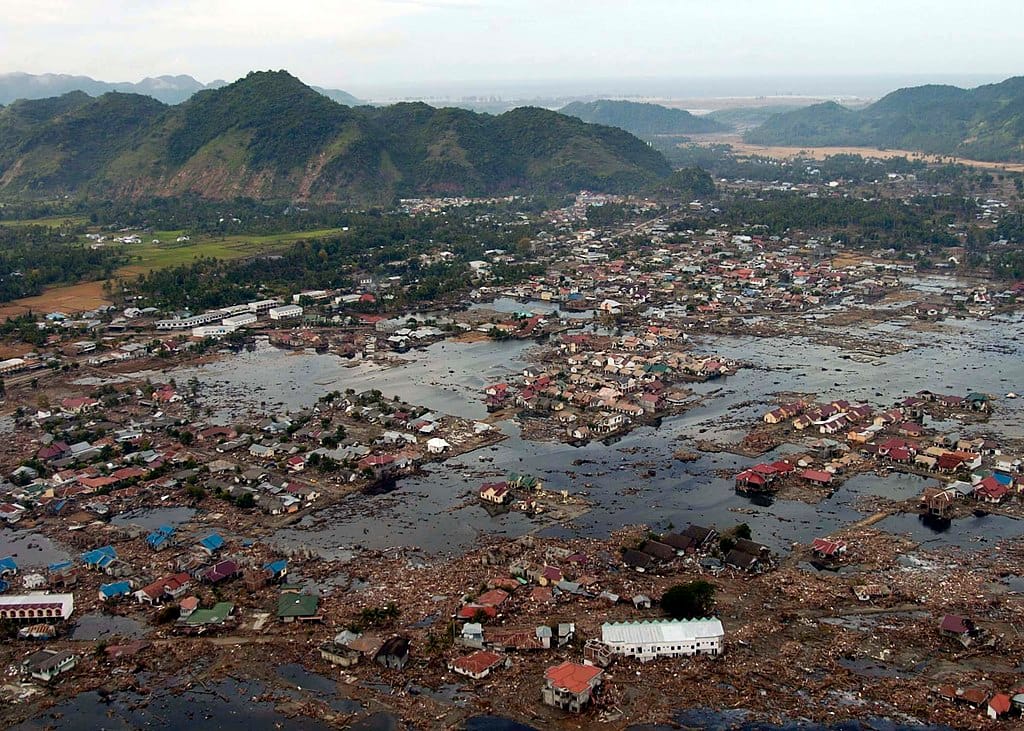
Aceh province on Sumatra’s northern tip was the ground zero for human tragedy. Official reports eventually placed Aceh’s death toll at more than 130,000 people, with entire towns erased from maps.
The city of Banda Aceh was ravaged; markets, mosques, schools obliterated within moments. Survivors spoke of days and nights without food, shelter, and water. The tsunami also struck amidst Aceh’s protracted civil conflict, complicating relief efforts and international access.
This convergence of natural and human turmoil left scars still being healed today.
9. Rippling Tragedy: Sri Lanka, Thailand, and India’s Coastal Catastrophe
Farther west, island and peninsular nations faced their own nightmare. Sri Lanka lost over 30,000 souls—not only fishermen but whole families. The southern coast’s beautiful but vulnerable beaches were reduced to twisted wreckage.
Thailand’s tourist hotspots like Phuket transformed overnight from paradise to disaster zone. Thousands of tourists and locals died or were injured, hospitals overwhelmed.
In India, the tsunami’s fury receded along Tamil Nadu, Andhra Pradesh, and Kerala, killing over 10,000 people and displacing hundreds of thousands. Fishermen’s villages were swept away; livelihoods vanished in minutes.
10. Unexpected Sorrow: East African Shores Underwater
Amazingly, the tsunami’s waves traveled across the Indian Ocean to impact the coasts of Somalia, Kenya, Tanzania, and even the Seychelles. While waves diminished in height, they still caused destruction in ports and low-lying areas unfamiliar with such violence.
East Africa’s death toll was smaller, estimated at around 300, but the psychological impact was profound. These were lands where tsunamis had never been recorded, underscoring the event’s unprecedented scope.
11. Global Scale of Loss: Death Toll and Destruction
By the time the waves settled, the human toll was staggering. Official counts estimate approximately 230,000 to 280,000 deaths, with over 1.7 million displaced. Among them were children orphaned, communities erased, economies shattered.
Millions of homes were destroyed, infrastructure obliterated, fishing fleets lost forever. The economic impact reached billions of dollars, with tourism-dependent economies particularly hard hit.
But numbers cannot capture the full weight of loss—the grief transcended borders and demographics.
12. Stories of Survival and Loss: Human Faces Amidst Ruin
In the face of such overwhelming tragedy, mosaic stories of resilience emerged. A fisherman who pushed his children onto higher ground minutes before the wave saved them; a tourist who documented chaos with a camera, later providing vital evidence for emergency teams; villages reopening schools from the rubble.
Yet there were also tales of profound loss: parents searching for unknown children, entire families swallowed by the sea, survivors haunted by memories locked in silence.
This human element is the heartbeat of the disaster’s narrative.
13. Emergency Response: Local, National, and International Efforts
In the days that followed, a massive humanitarian operation kicked into gear. Local governments struggled to coordinate survivors, distribute aid, and rebuild basic services. Neighboring countries dispatched immediate help despite their own challenges.
Internationally, one of the largest coordinated relief efforts in history unfolded. Countries, NGOs, and agencies mobilized funds, supplies, rescue teams, and expertise at an unprecedented scale.
But logistical challenges, political tensions, and underdeveloped infrastructure impaired efforts.
14. Lessons in Disaster Preparedness: The Birth of an Early Warning System
The tragedy revealed the critical absence of an Indian Ocean tsunami early warning system. In response, scientists and governments collaborated to build a network of seismic sensors, tide gauges, and communication systems designed to provide timely alerts.
By 2006, the Indian Ocean Tsunami Warning System was launched, a testament to concerted international cooperation and commitment to preventing similar future catastrophes.
This legacy turned disaster into a catalyst for progress.
15. Political and Social Repercussions: Governments and Communities Rebuild
Many affected nations faced political pressure to improve disaster management, infrastructure, and community education. In Aceh, the tsunami unexpectedly opened new avenues for peace talks after decades of conflict, providing a fragile foundation for reconciliation.
Socially, reconstruction efforts sparked debates about development priorities, displacement, and local empowerment. The disaster also exposed inequalities—aid reaching some communities faster than others.
Politics and humanity intertwined amid the cleanup.
16. Environmental Impact: Altered Landscapes and Ecosystems
Beyond human tragedy, the tsunami reshaped coastal geographies. Massive saltwater intrusion damaged farmland; coral reefs and mangroves were destroyed or altered; beaches eroded or built up by sediment shifts.
These environmental changes affected biodiversity and fishing stocks, crucial to local economies and food security.
Scientists continue to study these impacts, recognizing nature’s complex interplay between destruction and renewal.
17. Memory and Memorials: Honoring the Dead and Healing Communities
In towns from Sumatra to Sri Lanka, memorials rose as silent witnesses to lives lost. Annual commemorations and community rituals became forums for collective mourning and remembrance.
Survivors, local leaders, and global observers alike emphasize that memory is part of healing, a way to honor the past while rebuilding hope for the future.
18. Media and the Tsunami: How the World Watched and Reacted
The 2004 tsunami unfolded in the era of rapid global communication. Television crews, journalists, and early internet coverage brought the disaster live into homes worldwide.
This media exposure spurred unprecedented fundraising but also raised ethical questions about disaster representation and aid effectiveness.
The tsunami became a shared global narrative, inviting solidarity and scrutiny.
19. Scientific Breakthroughs: Understanding Tsunamis Better
The 2004 event galvanized scientific research into earthquake-tsunami mechanisms, wave modeling, and risk assessment. Advances included better mapping of fault zones, improved GPS-based monitoring of tectonic movement, and new simulation technologies.
Scientists now collaborate across disciplines and borders, aiming to transform knowledge into life-saving tools.
20. The Indian Ocean Aftermath: Economic and Cultural Recovery
Sectors like fishing, agriculture, and tourism had to be revived amid widespread destruction. Governments initiated rebuilding plans, often encouraging sustainable practices and disaster resilience.
Culturally, the tsunami influenced art, literature, and public discourse, shaping identity and collective memory in the affected regions.
Recovery became not only about restoring what was lost but reimagining futures.
21. The Long Shadow: Mental Health and Trauma in Survivors
Psychological consequences of the trauma persisted long after physical rebuilding. Survivors dealt with post-traumatic stress disorder (PTSD), grief, and displacement challenges.
Mental health services expanded, yet many faced barriers to accessing support, especially in remote or impoverished areas.
Understanding and addressing these invisible wounds remains a critical part of the tsunami’s legacy.
22. Legacy of 2004: How the Catastrophe Shaped International Aid
The tsunami marked a turning point in international disaster response. It prompted new models for aid delivery emphasizing coordination, transparency, and local involvement.
Organizations learned hard lessons about cultural sensitivity, logistics, and community engagement.
The disaster underscored the need for preparedness, rapid response, and sustainable recovery strategies globally.
23. Reflections on Nature’s Power and Human Vulnerability
The Indian Ocean tsunami reminded humanity of nature’s immense power—often sudden, devastating, beyond human control. Yet it also highlighted human resilience, ingenuity, and compassion.
This wave of destruction remains a sobering lesson on our relationship with the environment, technology, and each other.
It challenges us to respect natural forces and prepare wisely.
Conclusion
The Indian Ocean tsunami of December 26, 2004, was more than a geological event—it was a profound human tragedy and a watershed moment in global disaster history. It tore through lives, landscapes, and boundaries with relentless force, leaving scars that remain visible in communities and memories worldwide.
Yet, from this catastrophe rose stories of courage, resilience, and hope. Nations toughened their defenses, science advanced, and humanitarian aid capacities expanded. The tsunami demonstrated both our vulnerability and our capacity for empathy, cooperation, and recovery.
As we look back, we are reminded that natural disasters are not merely statistics or headlines—they are human stories woven into the fabric of history, demanding that we listen, learn, and prepare for whatever the planet next unveils.
FAQs
Q1: What caused the 2004 Indian Ocean tsunami?
A1: A massive undersea earthquake along the Sunda subduction zone off Sumatra, Indonesia caused the seafloor to suddenly rise, displacing ocean water and creating a devastating tsunami.
Q2: Why was the Indian Ocean tsunami so deadly?
A2: The Indian Ocean lacked a tsunami warning system, many coastal areas were densely populated and poorly prepared, and the earthquake’s magnitude created massive waves that struck multiple countries with little warning.
Q3: Which countries were most affected by the tsunami?
A3: Indonesia (especially Aceh province), Sri Lanka, Thailand, India, and to a lesser extent coastal areas in East Africa, including Somalia, Kenya, and Tanzania.
Q4: How many people died in the disaster?
A4: Estimates range from 230,000 to 280,000 deaths across all affected countries, making it one of the deadliest natural disasters in recorded history.
Q5: What changes resulted from the tsunami in disaster management?
A5: The disaster led to the creation of the Indian Ocean Tsunami Warning System, improved international cooperation, and raised awareness about the need for disaster preparedness in vulnerable regions.
Q6: How did the tsunami impact ecosystems?
A6: It caused destruction of coral reefs and mangroves, saltwater intrusion that damaged agriculture, and altered coastal landscapes, affecting biodiversity and local livelihoods.
Q7: Are there still risks of tsunamis in the Indian Ocean?
A7: Yes, the region remains seismically active, but with improved warning systems and preparedness, future risks can be mitigated, though not eliminated.
Q8: How is the Indian Ocean tsunami remembered today?
A8: Through memorials, annual commemorations, survivor testimonies, scientific studies, and ongoing efforts to improve disaster resilience globally.