Table of Contents
- The Dawn of January 11, 1693: A Calm Shattered
- Sicily on the Eve: A Land of Culture, Conflict, and Fragility
- The Geological Heartbeat: Understanding the Seismic Forces Beneath Sicily
- The Earthquake Strikes: A Tremor That Changed History
- From Ruin to Horror: The Immediate Aftermath of the Catastrophe
- The Silent Terror Below the Sea: The Tsunami Emerges
- Coastal Devastation: When Water Swallowed the Shores
- Human Stories in Cataclysm: Survivors, Loss, and Legend
- The Scale of Destruction: Cities Flattened and Lives Forever Altered
- Rebuilding from Rubble: Sicily’s Long Road to Recovery
- The Role of the Catholic Church and Social Order Amidst Disaster
- Shaping the Baroque: How Tragedy Redefined Sicilian Architecture
- Scientific Awakening: Early Insights into Earthquakes and Tsunamis
- Memory and Myth: The 1693 Disaster in Sicilian Culture and Lore
- Lessons for the Future: The Legacy of the 1693 Sicily Tsunami
- Conclusion: Remembering a Day When Nature Roared
- FAQs: Understanding the 1693 Sicily Tsunami
- External Resource: Further Reading on the 1693 Sicily Tsunami
- Internal Link: More Historical Narratives on History Sphere
The Dawn of January 11, 1693: A Calm Shattered
The frozen breath of a mid-January morning hung over Sicily, cloaking its ancient cities and quiet villages in a deceptive stillness. The sun, barely risen over the horizon, played tender games of light with the snow-capped slopes of Mount Etna, the island’s sleeping giant. Merchants prepared their markets; children hurried toward their classrooms; families gathered for breakfast in stone houses centuries old. Nothing in the picturesque serenity whispered of the impending calamity.
Then, as if the earth itself had taken a colossal, shuddering breath, the ground beneath Sicily split and roared. Walls trembled, rooftops buckled, and centuries-old cathedrals folded like cards. The deafening crack pierced the morning air, turning the serene dawn into a theater of chaos and terror. This was no ordinary quake; it was a violent awakening that would reshape the island’s destiny, demolish entire cities, drown shorelines, and cast a shadow over the Mediterranean world for generations.
This is the story of the Sicily Tsunami, an event far beyond natural disaster—a violent rebirth amid ruin, a testament to human resilience, and an unsettling encounter with nature’s profound power.
Sicily on the Eve: A Land of Culture, Conflict, and Fragility
To understand the significance of the 1693 quake and tsunami, one must first paint the picture of Sicily as it stood at the close of the 17th century. The island was a jewel of the Mediterranean, positioned strategically between Europe and Africa, richly cultivated but politically fractured. Under Spanish dominion, Sicily bore the heavy imprint of centuries of foreign rule—the Arabs, Normans, and Byzantines had left theirs, shaping a complex mosaic of cultures, traditions, and religious fervor.
The economy leaned heavily on agriculture, with bustling trade ports along the coasts, especially Catania and Syracuse. Towns were tightly knit communities, often clustered around baroque churches or fortified castles, which bore silent witness to regional tensions and pirate threats from North Africa.
Beneath this vibrant human tapestry, however, lay a fragile geological foundation. Sicily’s identity was bound to Etna, Europe’s most active volcano, whose periodic eruptions mixed creation and destruction in equal parts. The earth had long murmured warnings, but to most inhabitants, the island’s natural forces were distant specters or divine acts—nothing they could control or predict with certainty.
The Geological Heartbeat: Understanding the Seismic Forces Beneath Sicily
Sicily’s location along the convergent boundary between the African and Eurasian tectonic plates makes it a hotspot for seismic activity. The African plate pushes northward against the European plate, generating immense pressure that is released in trembling shocks and occasional cataclysms.
The 1693 event stemmed from this restless collision zone, where faults hidden beneath the Ionian Sea and the geological complexity of the Hyblean Plateau set the stage for destruction. Though science would only centuries later unravel the mechanics behind earthquakes and tsunamis, the geophysical truth was already forcing itself upon the island.
This tectonic tension had always been part of Sicily’s story—sporadic tremors rattling houses, Etna’s incandescent breath occasionally reminding all of nature’s dominion. Yet January 11 would surpass all previous reckonings.
The Earthquake Strikes: A Tremor That Changed History
At approximately 9:30 AM, the earth began to quake with a ferocity previously unmatched in recorded history. For nearly two minutes, Sicily trembled violently; the ground convulsed under towns and countryside alike. The initial shock was soon followed by numerous powerful aftershocks that continued to terrorize the population for weeks.
The epicenter was believed near the southeastern coast, close to the Val di Noto region. The degree of devastation was staggering. Towering cathedrals collapsed in clouds of dust, stone houses crumbled like sandcastles, and streets cracked open beneath fleeing feet. The population found themselves trapped under rubble or exposed to the merciless open skies.
In Catania alone, roughly 60,000 people lived—more than half perished within those frantic moments. Yet, this earthquake was but the first act demanding the island’s attention.
From Ruin to Horror: The Immediate Aftermath of the Catastrophe
As dust settled over a shattered landscape, survivors faced chaos on every side—loss of shelter, scarcity of food, broken infrastructure, and the psychological weight of unthinkable trauma. Screams and prayers mingled amid the ruins, as families sought loved ones buried beneath debris.
The social fabric unspooled rapidly. Hospitals and churches, many of which had been leveled, could no longer tend the injured or provide shelter. Fires broke out in the aftermath, consuming what remained of the wooden beams and homes.
Humanitarian aid was hampered not just by the scale of destruction but by a fractured political chain of command. Communication with Palermo and Madrid was slow and fraught with difficulties that would delay assistance.
The Silent Terror Below the Sea: The Tsunami Emerges
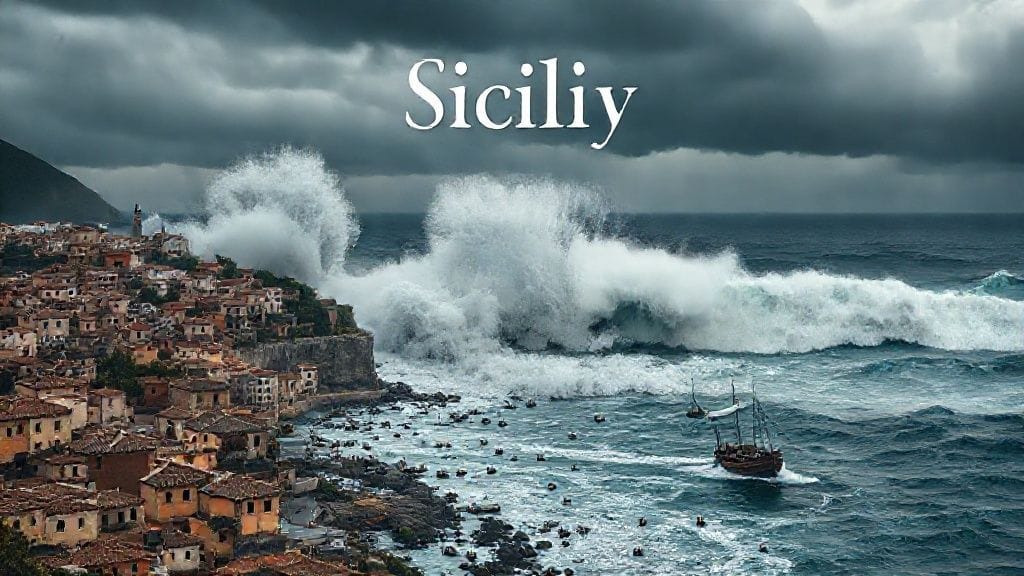
If the earthquake’s ground-shakings were horrific, it was the sea’s vengeance that compounded the disaster. Within minutes, the powerful seismic disturbances beneath the Ionian Sea displaced enormous volumes of water, triggering a colossal tsunami that surged with terrifying force.
Eyewitnesses described an unnatural retreat of the sea—water pulled back miles from the shore as if sucked into the ground—laying bare the seabed and leaving fish gasping in stranded puddles. This haunting calm was followed by an almighty roar as towering waves rushed inland, obliterating everything in their path.
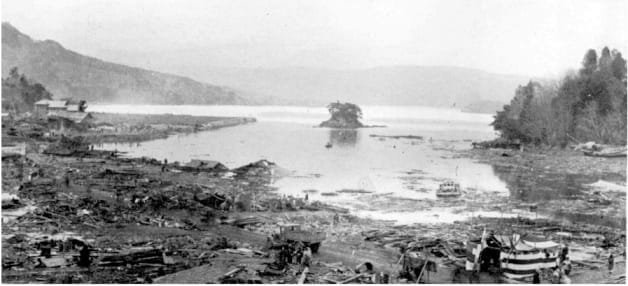
Villages along the eastern coast, especially those near Augusta and Siracusa, were inundated. Entire harbors were flooded, boats smashed against cliffs, and the shoreline was irreversibly altered. This was a sea unleashed, a natural force that no mortal could hope to master.
Coastal Devastation: When Water Swallowed the Shores
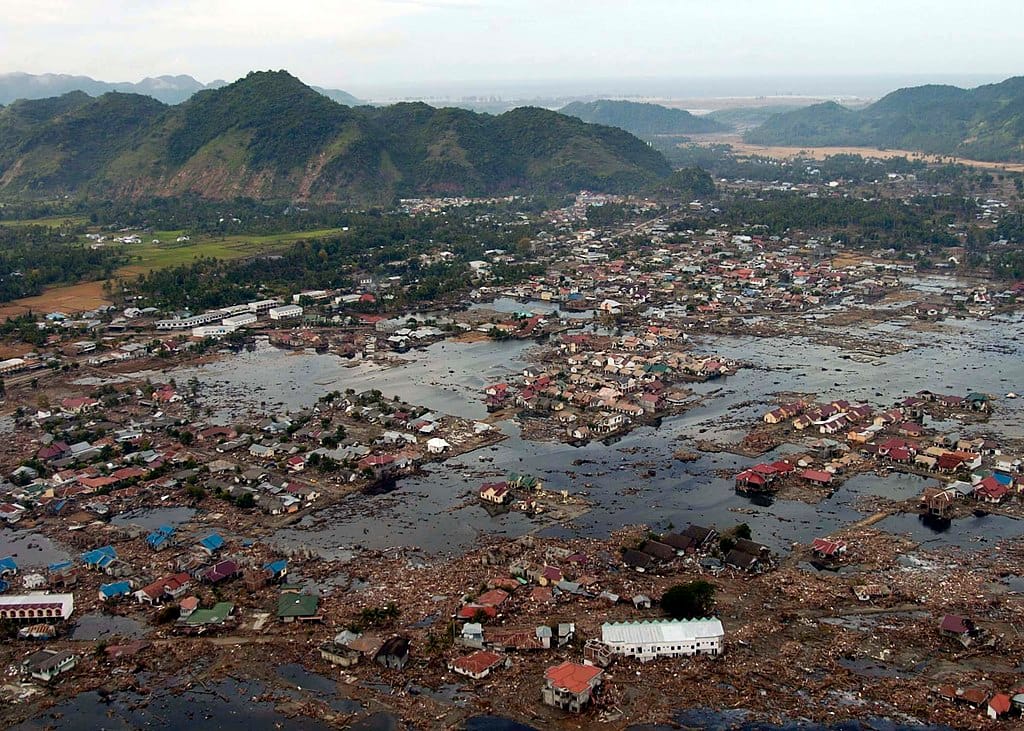
The towns hugging Sicily’s eastern edge paid a terrible price. The tsunami wiped out fishing villages, drowned agricultural lands with saltwater, and swept away people, livestock, and homes with brutal efficiency.
The once-thriving ports, arteries of trade and communication, became graveyards of ships and livelihoods. The inundation created fresh scars on the island—floodplains where vineyards and olive groves once flourished, altered coastlines complementing the already fractured inland landscape.
With communications severed and land routes impassable, many coastal communities experienced isolation during their darkest hours.
Human Stories in Cataclysm: Survivors, Loss, and Legend
Amid the ruin were stories that passed into the annals of Sicilian memory—miraculous escapes from collapsed churches, families sheltering under fallen stones, heroes who braved collapsing buildings to rescue others.
One such tale speaks of a young girl, Maria, pulled from the rubble after days, her survival attributed by locals to the intervention of Saint Agatha, the patron saint of Catania. Her story became emblematic of the will to endure and the role of faith in times of cataclysm.
Yet, for every miraculous rescue, countless tales speak of loss—parents searching in vain for children, towns erased from the map, communities forever fragmented. The scale of human suffering is almost impossible to fully comprehend.
The Scale of Destruction: Cities Flattened and Lives Forever Altered
The most devastated cities were those of the Val di Noto region—Catania, Ragusa, Modica, and Noto among them. Buildings of incomparable historical and artistic value were reduced to rubble, including churches, palaces, and public buildings that chronicled centuries of cultural heritage.
Estimates of the death toll vary but generally converge around 60,000 to 70,000 lives lost, making the 1693 earthquake and tsunami one of the deadliest in European history. Entire villages disappeared, and population displacement reshaped demographic patterns on the island.
Economically, Sicily suffered colossal losses. Agricultural production plummeted, trade soured, and reconstruction costs drained the resources of an already taxed kingdom.
Rebuilding from Rubble: Sicily’s Long Road to Recovery
But Sicily’s story is not merely one of tragedy. It is a story of resilience, renewal, and transformation. In the aftermath, a monumental rebuilding effort began, led by regional authorities, the Spanish crown, and the Roman Catholic Church.
Entire cities were redesigned and reconstructed—most notably, the “New Baroque” style flourished as architects like Giovanni Battista Vaccarini and Rosario Gagliardi brought innovative ideas to life. Cities such as Noto became UNESCO World Heritage sites centuries later due to their unique harmonious urban planning and baroque elegance, born from the ashes of disaster.
This era was marked by both sorrow and hope—communities united in reconstruction, artisans reimagining their crafts, and political leaders seizing opportunity amid calamity.
The Role of the Catholic Church and Social Order Amidst Disaster
In the tempest’s wake, the Church played a pivotal role, simultaneously a source of solace and social control. Clergy organized relief efforts, provided spiritual guidance, and helped legitimize reconstruction projects.
Religious interpretations framed the disaster as divine punishment or a call to greater faith and piety. Processions and rituals to appease or honor saints became widespread, intertwining disaster memory with spiritual culture.
The event reinforced the social hierarchies that governed Sicily, as nobility directed rebuilding, while peasants and commoners bore much of the labor.
Shaping the Baroque: How Tragedy Redefined Sicilian Architecture
One of the most enduring legacies of the 1693 disaster is architectural. The obliteration of medieval and renaissance structures gave birth to the distinctive Sicilian Baroque style.
Characteristics include curved façades, elaborate balconies draped with wrought iron, intricate stone carvings of mythological and religious figures, and a theatrical sense of movement and light. This style wasn’t merely ornamental—it symbolized rebirth and resilience, making buildings narrators of a collective trauma turned triumph.
The towns rebuilt became living museums, testaments to how beauty can emerge from devastation.
Scientific Awakening: Early Insights into Earthquakes and Tsunamis
Though scientific understanding of earthquakes and tsunamis was embryonic in 1693, the disaster sparked curiosity and fledgling inquiries.
Scholars began to compile observations; natural philosophers speculated on causes beyond divine retribution, considering geological underpinnings and sea behavior. While full comprehension would take centuries to arrive, this event occupied an important place in the slow march toward modern seismology and tsunami science.
Local records, combined with oral testimonies, became crucial source material for later researchers mapping Mediterranean seismic history.
Memory and Myth: The 1693 Disaster in Sicilian Culture and Lore
Over centuries, the 1693 earthquake and tsunami have woven themselves into Sicily’s cultural fabric as a shared trauma and identity marker. Folk songs, religious festivals, and local legends keep memory alive.
The disaster became a metaphor for human vulnerability and faith, frequently invoked in literature and art. Annual commemorations preserve the solemn remembrance, often blending historical facts with devotional ritual.
Artists and writers have retraced these events to explore broader themes of fate, nature, and resilience.
Lessons for the Future: The Legacy of the 1693 Sicily Tsunami
The Sicily Tsunami of 1693 stands not only as history but as a sobering lesson on nature’s unpredictable wrath. Modern seismic monitoring and tsunami warning systems owe much to the cumulative knowledge prompted by such past catastrophes.
The event also offers a timeless caution on urban planning, disaster preparedness, and cultural preservation after natural disasters.
Sicily’s experience underscores the necessity to balance respect for historical legacies with resilient infrastructure capable of withstanding nature’s next outburst.
Conclusion: Remembering a Day When Nature Roared
January 11, 1693, remains etched in Italian and world history as a day where earth and sea voiced their destructive power with unyielding clarity. But beyond the ruin and despair lies a powerful story of human endurance, faith, and rebirth.
From the shattered stones rose new cities; from collective grief emerged art, science, and societal transformation. The Sicily Tsunami was a moment when history and nature collided—a poignant reminder of our fragile place in the world and the indomitable spirit that pushes humanity forward.
This singular day reminds us to remember, to learn, and ultimately, to hope.
FAQs: Understanding the 1693 Sicily Tsunami
Q1: What caused the 1693 Sicily earthquake and tsunami?
The disaster was caused by seismic activity along the convergent boundary between the African and Eurasian tectonic plates. The sudden release of tectonic pressure beneath the Ionian Sea triggered both the earthquake and the subsequent tsunami.
Q2: How many people died in the 1693 Sicily disaster?
Estimates suggest that between 60,000 and 70,000 people perished, making it one of the deadliest earthquakes in Europe’s history.
Q3: Which cities were most affected by the earthquake and tsunami?
The southeastern Sicilian cities of Catania, Noto, Ragusa, and Modica experienced the most severe damage.
Q4: How did the disaster influence Sicilian architecture?
The reconstruction led to the flourishing of the Sicilian Baroque style, characterized by ornate decorations, grand facades, and an emphasis on light and movement.
Q5: What role did the Catholic Church play after the disaster?
The Church organized relief efforts, provided spiritual consolation, and framed the event as a test or punishment from God, helping mold cultural responses and social order.
Q6: How is the 1693 disaster remembered today?
The event is commemorated in local religious festivals, folk tales, and remains a significant part of Sicilian cultural identity and historical memory.
Q7: Did the disaster influence scientific understanding of earthquakes?
Yes, it prompted early inquiries into seismic phenomena, ultimately contributing to the development of seismology and tsunami science centuries later.
Q8: Are there geological remnants visible today from the 1693 tsunami?
Some altered coastlines and sediment deposits along the eastern Sicilian shores are attributed to the tsunami’s impact, studied by geologists for historical reconstruction.