Table of Contents
- The Day the Black Sea Roared: A September Morning in 1927
- Crimea and Yalta Before the Wave: A Portrait of Tranquility
- Geological Theater: Understanding the Black Sea’s Volcanic Heart
- The Sudden Fury: Unfolding of the 1927 Black Sea Tsunami
- Witnesses to Disaster: Voices from Crimea and Yalta
- The Wave’s Deadly March: Devastation along the Coastline
- Rescue and Response: Communities in Shock and Recovery
- Scientific Inquiry: Early Efforts to Decode the Tsunami
- The Political Backdrop: Soviet Crimea in the 1920s
- The Impact on Yalta’s Economy and Society
- The Anatomy of the Wave: What Caused the Tsunami?
- Comparative Calamities: How the Black Sea Tsunami Fits Global History
- Memorializing the Tragedy: Remembering the Lost and the Survivors
- Lessons from 1927: Advances in Tsunami Science and Warning Systems
- The Unseen Scars: Environmental Changes After the Tsunami
- Black Sea’s Volcanic Legacy: Tracing the Seismic Footprints
- The Survivors’ Stories: Human Resilience Amidst Ruins
- Revisiting the Event: Modern Scientific Perspectives
- Crimea in the Collective Memory: The Tsunami’s Place in Local Identity
- From Destruction to Renewal: The Long-Term Transformation of Coastal Crimea
- The Black Sea Today: Living With a History of Waves and Quakes
- Global Significance: How the 1927 Tsunami Influenced Oceanographic Studies
- The Future of Black Sea Disaster Preparedness
- Conclusion: Echoes of a Forgotten Seaquake
The Day the Black Sea Roared: A September Morning in 1927
The early morning of September 11, 1927, dawned with the usual serene beauty that bathed the Crimean coastline. The Black Sea, a matched companion to the coastal city of Yalta, mirrored the pastel sky, calm and inviting. Fishermen set out on their modest boats, children laughed near the shore, and townsfolk prepared for another day under the sun. Yet, beneath this quiet surface, ancient tectonic forces stirred, poised to unleash a sudden, violent fury few could imagine.
At approximately 4:30 a.m., the earth trembled beneath the waves. A violent underwater earthquake, centered in the submerged volcanic landscape near the Kerch Strait, ruptured the seafloor. Waters surged violently, birthing a tsunami that roared toward Crimea’s shores like an uncontrollable tempest. For many, the warning came too late. The wave crashed upon Yalta and surrounding areas, uprooting lives and altering coastal geographies forever. This was the Black Sea’s moment of terrifying reminder—of its power, its unpredictability, and its capacity for destruction.
Crimea and Yalta Before the Wave: A Portrait of Tranquility
In the years leading up to 1927, Yalta was known as a jewel of the Black Sea coast. Nestled within Crimea’s sun-kissed embrace, it drew visitors for its balmy climate, verdant hills, and historic charm. The coastline fostered a way of life shaped by maritime traditions, agriculture, and growing tourism. Russian aristocrats and Soviet officials alike sought respite in Yalta’s spas and villas.
The region’s geological complexity was little known to the general population. Most locals viewed the sea as a steady provider, not a potential harbinger of destruction. The volcanic geology beneath the Black Sea was a mysterious undercurrent in the minds of scientists, but rarely did it cross the threshold of popular consciousness. This sense of security was shattered on that fateful September day, as the natural world exacted a sudden and catastrophic price.
Geological Theater: Understanding the Black Sea’s Volcanic Heart
The Black Sea is not just an enclosed sea; it is a geological cauldron shaped by tectonic plates and ancient volcanic activity. Beneath its waves lies a complex landscape of underwater ridges, fault lines, and volcanic formations. The Crimean Peninsula itself sits on a tectonic boundary where the Eurasian and African plates interact.
The earthquake on September 11, 1927, was the result of a significant seismic slip along a fault near the Kerch Strait and the southern coast of Crimea. This subsection of the underwater topography has a history of shifting plates and volcanic eruptions dating back millions of years. The massive displacement of earth under the sea floor displaced volumes of water, triggering the tsunami.
But unlike the Pacific or Indian Oceans, where tsunami risks are well known, the Black Sea has long been considered relatively quiet. This seismic event challenged that assumption, illustrating that even smaller, enclosed seas could harbor deadly geologic forces.
The Sudden Fury: Unfolding of the 1927 Black Sea Tsunami
The earthquake itself struck with a violent jolt. Seismographs in surrounding regions registered tremors estimated at a magnitude between 6.0 and 7.0—strong enough to impact the underwater landscape but, fortunately, localized enough to spare a wider catastrophe. However, the resultant tsunami was disproportionate.
Eyewitnesses later described how the sea first receded unusually far from the shore—a classic harbinger for a pulling back of water before the wave. Fishermen on small boats found themselves suddenly navigating a vacuum of water, a chilling omen. Then, the wall of water rose quickly and thundered toward the land, smashing into Yalta and smaller coastal settlements.
Reports from 1927 speak of waves reaching heights between 4 and 6 meters, powerful enough to sweep away piers, houses, and boats. The devastation impacted both urban and rural areas—industrial docks, fishermen’s cottages, and the bustling promenades of Yalta.
Witnesses to Disaster: Voices from Crimea and Yalta
Personal testimonies from survivors form a haunting tapestry of the tsunami’s impact. Anna Pavlovna, a schoolteacher from Yalta, recalled the moment:
“I was awakened by a roaring like a thousand storms; the earth shook and the sea pulled away as if in farewell. When the water returned, it came not as a friend but a furious stranger, tearing gates off hinges, dragging homes like toys.”
A fisherman named Sergei, aboard a small vessel near Cape Aya, described the eerie calm before the wave:
“The ocean was strange that morning—silent and deep as if holding a secret. Then suddenly, without warning, the waves rose like walls, and I prayed to survive.”
These voices paint not just the destruction but the raw human emotion—a mixture of terror, confusion, and resilience.
The Wave’s Deadly March: Devastation along the Coastline
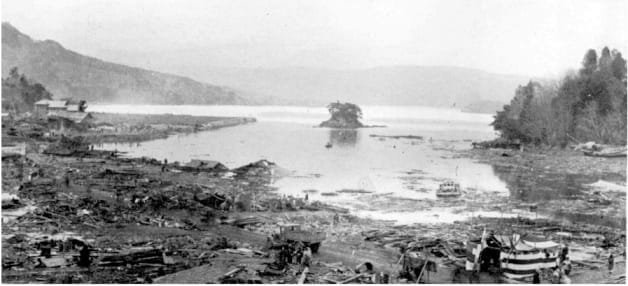
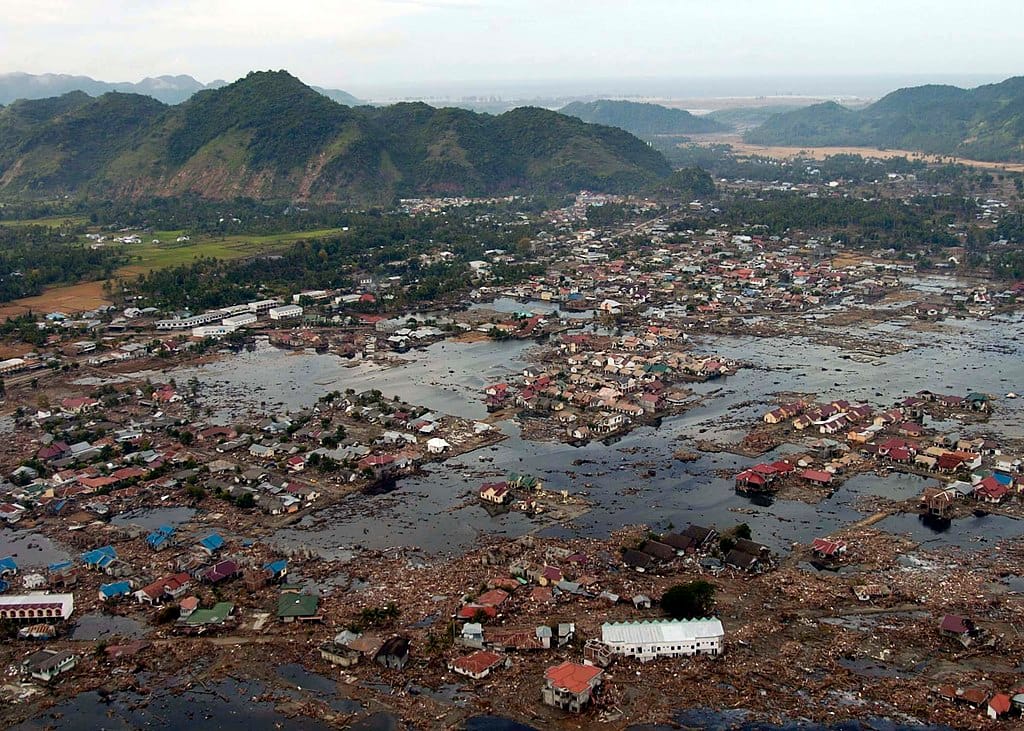
The tsunami’s physical impact was brutal and swift. Entire fishing fleets disappeared, coastal buildings collapsed or were severely damaged, and stretches of shoreline were reshaped. In Yalta, key infrastructure including the port facilities was impaired, significantly disrupting trade and economic life.
Villages south of Yalta along the Crimean coast bore the brunt of the loss. Many homes built close to the waterfront were swept away entirely, leaving families homeless. Casualty estimates remain uncertain, but archival documents suggest that dozens perished, with many more injured or displaced.
Moreover, the tsunami inflicted significant damage to the coastal ecosystems—salty seawater flooded farmlands, and the force of the wave eroded critical habitats, altering the natural equilibrium.
Rescue and Response: Communities in Shock and Recovery
The tsunami struck an era when disaster response in the Soviet Union was still primitive. Emergency services were caught unprepared. Local communities had to rely heavily on self-organization, neighbors helping neighbors amid chaos.
Soviet authorities quickly mobilized military and medical detachments to aid victims and begin clearing operations. Field hospitals were set up, and temporary shelters housed hundreds made homeless by the flood.
Reports indicate a remarkable spirit of solidarity. Despite limited resources, local people pooled efforts to rebuild destroyed infrastructure. This social resilience became a defining feature of the region’s recovery, although the scars of loss lingered for years.
Scientific Inquiry: Early Efforts to Decode the Tsunami
Following the disaster, geologists and oceanographers turned their attention to the Black Sea with renewed urgency. The 1927 event became an impetus for deeper investigation into seismic activity in enclosed seas, a subject previously overlooked.
Initial studies traced the link between the earthquake and tsunami, using rudimentary seismic readings and first-hand reports. Soviet scholars published pioneering work on underwater volcanoes near Crimea and the geological risks posed by faults in the region.
This research formed one of the earliest systematic inquiries into Black Sea seismicity, laying groundwork for future hazard assessment and risk mitigation strategies.
The Political Backdrop: Soviet Crimea in the 1920s
To comprehend the scale of response and the memory of the 1927 tsunami, one must consider the political climate. Crimea in the 1920s was transitioning within the nascent Soviet state. The peninsula had recently experienced upheaval through the Russian Civil War, and newly imposed Soviet structures were still taking hold.
Governance was focused on reconstruction and collectivization, with limited capacity for disaster management. The event’s documentation reflects the Soviet consensus ideology—public tragedy was framed as a collective challenge to be overcome through socialist solidarity.
This political context shaped both immediate responses and the long-term framing of the tsunami in historical narratives.
The Impact on Yalta’s Economy and Society
The tsunami’s disruption rippled through local economies. Yalta’s fishing industry, a mainstay for employment and sustenance, was shattered. Many boats and nets were lost, forcing fishermen to look for alternative livelihoods.
Tourism also suffered; with damaged infrastructure and the psychological shock among visitors, the economic downturn was tangible. Hotels and resorts undertook expensive repairs just as Soviet controls on commerce tightened.
Yet over time, Yalta’s economy adapted. New construction followed Soviet architectural styles, and state investments aimed to integrate the region more firmly into the USSR’s broader economic plans.
The Anatomy of the Wave: What Caused the Tsunami?
Modern research, aided by bathymetric mapping and seismic modeling, has shed light on the specific mechanics of the 1927 tsunami. The undersea earthquake caused a sudden shift along a steep fault, possibly triggering a submarine landslide—a massive underwater debris flow that displaced ocean waters.
Such landslides are known to exacerbate or even generate tsunami waves, especially in confined basins like the Black Sea. The combination of tectonic displacement and sediment collapse produced the wave that overwhelmed Crimea’s shores.
These insights illustrate the complexity of tsunami genesis, emphasizing that not only earthquakes but associated geological phenomena contribute to disaster formation.
Comparative Calamities: How the Black Sea Tsunami Fits Global History
Though smaller in scale than the Pacific’s giant tsunamis—such as the 2004 Indian Ocean or the 2011 Tōhoku events—the Black Sea tragedy was significant. It is one of the few recorded European tsunamis of modern history.
Its occurrence challenges the common perception that tsunamis are primarily an Asia-Pacific hazard. Europe and enclosed seas possess their own natural risks, sometimes underestimated in historical discourse.
Thus, the event enriches global understanding of tsunami diversity—how varying geography, geology, and human settlement patterns interact to produce unique disaster stories.
Memorializing the Tragedy: Remembering the Lost and the Survivors
For decades, the 1927 tsunami lived largely in the memories of Crimean locals and scattered archives. Monuments were sparse, and Soviet historiography did not always emphasize natural disasters, often focusing instead on human triumphs.
However, survivor accounts and local tradition kept the story alive. Oral histories passed down generations preserved the emotional context of loss and recovery.
In recent years, renewed interest in Black Sea history has sparked commemorative projects. Memorial plaques and exhibitions in Yalta honor those affected, linking the past tragedy to present-day awareness efforts.
Lessons from 1927: Advances in Tsunami Science and Warning Systems
Though early in the 20th century, the Black Sea tsunami was pivotal in fostering scientific progress. Lessons learned influenced the development of regional monitoring networks.
Today, seismic stations and ocean buoys monitor potential underwater disturbances, integrating into broader European warning systems. Although no tsunami can be predicted with absolute certainty, early detection and communication mechanisms aim to save lives.
The legacy of 1927 thus resonates beyond history books, in technologies that protect communities from repeating nature’s violent impulses.
The Unseen Scars: Environmental Changes After the Tsunami
Beyond human casualties, the tsunami altered Crimea’s coastal ecosystems. Saltwater intrusion damaged agricultural land, reducing soil fertility for years after.
Shifts in beach profiles and erosion changed habitats for marine and bird species. Some coral and underwater formations were destroyed or buried.
Ecologists study these changes today to understand natural recovery processes and the interaction of geophysical events with biological systems.
Black Sea’s Volcanic Legacy: Tracing the Seismic Footprints
The 1927 event underscores the volcanic and seismic heritage embedded in the Black Sea’s geology. Volcanic cones and submerged calderas, remnants of ancient eruptions, remain latent but active hazards.
Geologists track microearthquakes and gas emissions as warning signs. Understanding this dynamic environment informs broader discussions on regional geohazards and sustainable habitation.
The Survivors’ Stories: Human Resilience Amidst Ruins
Survival after the tsunami was as much about human spirit as material aid. Stories emerge of families rebuilding homes, fisherfolk risking the waters anew, and communities forging bonds of mutual support.
These narratives testify to resilience in the face of sudden trauma, transforming tragedy into a source of collective strength and identity.
Revisiting the Event: Modern Scientific Perspectives
Modern technology—from satellite imaging to underwater drones—allows scientists to revisit and refine knowledge about the 1927 tsunami. Revised simulations help quantify wave heights, energy, and inundation patterns.
Such research also informs risk assessments for today’s populations living in increasingly urbanized and climate-affected coastal zones.
Crimea in the Collective Memory: The Tsunami’s Place in Local Identity
The tsunami, though overshadowed by political upheavals and wars, persists in Crimean cultural memory. Folk songs, local legends, and educational curricula sometimes reference the sea’s fury.
Acknowledging this history strengthens community awareness and nurtures respect for natural forces shaping the region.
From Destruction to Renewal: The Long-Term Transformation of Coastal Crimea
The tsunami triggered renewal as much as destruction. Reconstruction efforts in infrastructure and urban planning incorporated lessons in building resilience, albeit modestly for the era.
The event also accelerated scientific interest and environmental stewardship that continue shaping Crimea’s development.
The Black Sea Today: Living With a History of Waves and Quakes
While the Black Sea remains less volatile than other seas, its capacity for sudden natural disasters endures. Populations along its shores maintain a cautious respect, balancing economic use with disaster risk reduction.
Ongoing research and community preparedness campaigns draw inspiration from the 1927 tsunami’s legacy, advocating vigilance amid beauty.
Global Significance: How the 1927 Tsunami Influenced Oceanographic Studies
The Black Sea tsunami’s documentation contributed to early 20th-century oceanographic studies by showing the wide geographical context of tsunami genesis.
It linked seismic research with marine science and demonstrated the necessity of cross-disciplinary collaboration in understanding ocean hazards.
The Future of Black Sea Disaster Preparedness
Looking forward, the Black Sea region invests in advanced monitoring technology and international cooperation. Climate change and urban expansion raise stakes in preparedness.
The story of 1927 reminds authorities and citizens alike that nature’s beneath-the-surface rumblings demand respect, readiness, and science-backed solutions.
Conclusion
The Black Sea tsunami of September 11, 1927, remains a profound chapter in the history of Crimea and Yalta—a powerful reminder of nature’s unpredictable might and human resilience. In that quiet morning, unsuspecting villages faced a sudden wave that reshaped their landscapes and lives forever. More than a natural disaster, the event is a story of communities bound by tragedy and shared recovery, of pioneering scientific curiosity born from calamity, and of a sea that, despite its familiarity, held secrets yet to be fully unraveled.
The tsunami’s echoes reverberate beyond time and place, compelling us to recognize that even tranquil waters can harbor hidden dangers. It is a call for vigilance and empathy—toward the earth’s dynamic forces and the people who inhabit its shores. As history memorializes the 1927 disaster, so must modern science and society honor its lessons by fostering preparedness, resilience, and respect for the Black Sea’s enduring legacy.
FAQs
Q1: What caused the 1927 Black Sea tsunami near Crimea and Yalta?
A1: The tsunami was triggered by an underwater earthquake near the Kerch Strait, combined with a likely submarine landslide that displaced huge volumes of water, producing a powerful wave that struck the Crimean coast.
Q2: How devastating was the tsunami in terms of casualties and damage?
A2: While exact numbers are uncertain, dozens of people died, many more were injured or displaced, and significant property, infrastructure, and environmental damage were reported along the coastline, particularly in Yalta.
Q3: Why was this tsunami unusual for the Black Sea region?
A3: The Black Sea is generally considered an enclosed and relatively quiet basin with low tsunami risk. The 1927 event was a rare and significant example demonstrating that even smaller seas can experience destructive tsunamis.
Q4: What was the political and social context in Crimea during the 1927 tsunami?
A4: Crimea was part of the Soviet Union, still recovering from civil war and in the early stages of Soviet governance, which influenced the disaster response and the manner in which the event was recorded and remembered.
Q5: How did the 1927 tsunami influence scientific research?
A5: It spurred early seismic and oceanographic studies in the Black Sea, leading to a better understanding of regional geohazards and contributing to the development of monitoring and warning systems.
Q6: Is the Black Sea still at risk for tsunamis today?
A6: Yes, while rare, the Black Sea’s tectonic and volcanic features mean that future seismic events and tsunamis remain possible, necessitating ongoing risk assessment and preparedness.
Q7: How is the tsunami commemorated in Crimea today?
A7: The tsunami is remembered through local memorials, survivor stories, educational programs, and increasing public awareness, though for many years it was largely overshadowed by political history.
Q8: What lessons does the 1927 tsunami teach us about natural disaster preparedness?
A8: It highlights the need for vigilance in all maritime regions, the importance of early warning systems, community resilience, and scientific research to mitigate the impact of sudden natural disasters.