Table of Contents
- A Silent Sea Awakens: The Black Sea Tsunami of September 11, 1927
- The Calm Before the Storm: Crimea and Yalta in the Roaring Twenties
- Geological Secrets Beneath the Black Sea
- The Day the Waves Turned Violent: Early Morning of September 11
- The First Surge: Sudden Fury on Crimea’s Shores
- Panic in Yalta: The Human Drama Unfolds
- Communication Breakdowns and Emergency Responses in 1927
- Scientific Investigation: Understanding the Black Sea Tsunami
- The Role of Seismic Activity and Underwater Landslides
- Eyewitness Accounts: Voices from the Storm
- The Toll: Human, Material, and Economic Losses
- Political Ramifications in Soviet Crimea
- How the Black Sea Tsunami Altered Coastal Geographies
- Global Awareness of Tsunami Risk in Inland Seas
- Memorialization and Collective Memory in Crimea
- Tsunami Risk Today: The Black Sea’s Hidden Power
- Lessons Learned and Disaster Preparedness Evolution
- The 1927 Tsunami and Modern Geological Research
- The Hidden Link: Climate Patterns and Seismic Activity
- Cultural Reflections: Art, Literature, and the Tsunami
- Rebuilding Hope: Yalta’s Recovery and Renewal
- Conclusion: When Nature Reminds Us of Its Strength
- FAQs: The Black Sea Tsunami of 1927 Explained
- External Resource: Wikipedia on Black Sea Tsunamis
- Internal Link: Visit History Sphere
A Silent Sea Awakens: The Black Sea Tsunami of September 11, 1927
The early morning mist still clung to the rugged Crimean cliffs, the scent of salt and pine mingling softly in the crisp autumn air. Fishermen had already begun their daily routines along the shores of the Black Sea near Yalta, unaware that the calm would not last. It was shortly before dawn on September 11, 1927, when the tranquil waters convulsed with the fury of nature — an unexpected tsunami rippled through the Black Sea, devastating the coastlines and shaking communities to their core. This event, largely forgotten in popular memory, revealed the latent volatility lurking beneath one of Earth’s most enigmatic inland seas.
For many living in Crimea, the tsunami was a sudden nightmare, a violent rupture in their everyday lives. Waves surged seemingly from nowhere, swallowing boats, homes, and lives. The shock would ripple far beyond the physical damage — fracturing political narratives, scientific understanding, and the delicate thread that connects human communities to the natural world.
But this was more than just a disaster; it was an event that challenged assumptions, prompted inquiry, and left an imprint on the cultural and scientific history of the Black Sea region.
The Calm Before the Storm: Crimea and Yalta in the Roaring Twenties
The 1920s were a time of rebuilding and transformation for Crimea and Yalta. Following the turmoil of the Russian Revolution and the devastating civil conflicts, this peninsula nestled on the Black Sea coast was seeking equilibrium under Soviet rule. Yalta, with its picturesque landscapes and subtropical climate, had gained renown as a spa town, drawing visitors seeking refuge and healing.
The population itself was a patchwork — ethnic Russians, Tatars, Ukrainians, and a mix of aristocrats and common folk all coexisted. Infrastructure was fragile but improving. Yet beneath this serene facade lay the scars of conflict and political upheaval. Trust was tentative; daily life was held together with a blend of resilience and caution.
Geographically, Crimea was surrounded by the vast Black Sea, a body of water often perceived as placid and benign. Unlike the open, mammoth oceans notorious for colossal waves, the Black Sea seemed tranquil, an inland sea where nature’s extreme tantrums were thought unlikely.
This illusion of safety, however, was about to be forever shattered.
Geological Secrets Beneath the Black Sea
The Black Sea is a geological wonder — a large inland basin formed millions of years ago by complex tectonic movements. Sitting at the crossroads of the Eurasian and African tectonic plates, the region is prone to seismic activity, though often overshadowed by the more violent earthquakes of neighbouring regions like the Caucasus or Anatolia.
Beneath its depths lie steep underwater slopes, broken fault lines, and sediment deposits prone to instability. These features create the perfect conditions for underwater landslides, a known trigger for tsunamis in enclosed seas.
Yet, in 1927, the understanding of these undersea processes was limited. The tools and methods for monitoring seismic or underwater events were in infancy. For the residents of Crimea, the sea was a source of livelihood and backdrop to everyday life—not a threat waiting to erupt.
The Day the Waves Turned Violent: Early Morning of September 11
At approximately 6:25 AM local time on September 11, a powerful underwater earthquake registering around 6.0 on the Richter scale struck near the southwestern coast of Crimea. The epicenter was close to the Cape Meganom area, beneath the waters known for their steep continental shelf drop-offs.
Within minutes, the seismic shock shattered the underwater sediment layers, setting off massive landslides on the seabed. These landslides displaced immense amounts of water, unleashing an unexpected tsunami that raced toward the shoreline.
For the people in towns like Yalta, the first sign was subtle — a sudden retreat of the sea for several hundred meters, exposing the seabed in a wide arc. Curious fishermen ventured farther out, intrigued by the receding water. But soon, that curiosity turned to terror as the sea surged back with growing power and engulfed the coast.
The First Surge: Sudden Fury on Crimea’s Shores
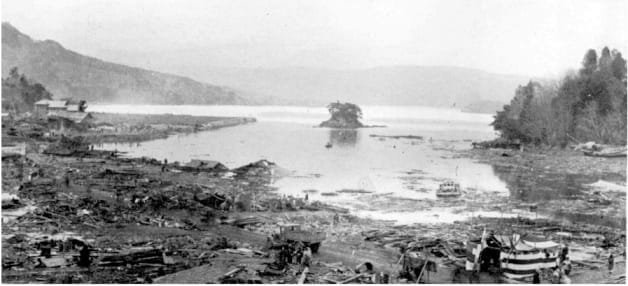
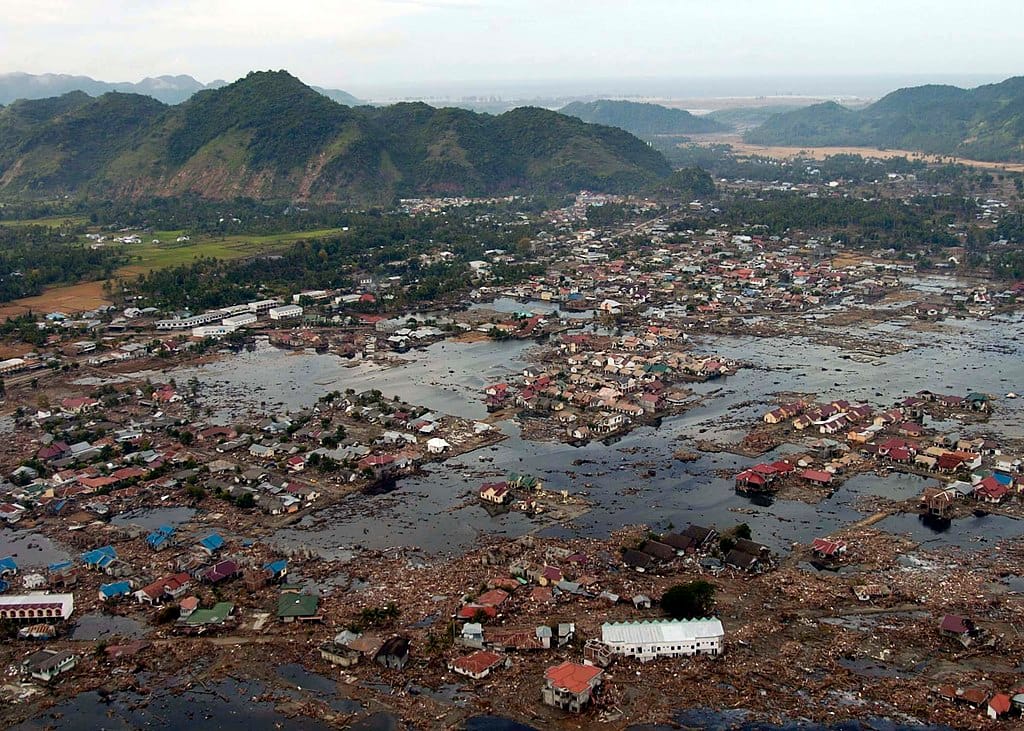
The tsunami waves arrived in multiple surges, with the highest reaching up to 4 meters (13 feet) above normal sea level. Buildings situated close to the shore crumbled, boats were tossed like toys, and coastal infrastructure was demolished within minutes.
Local ports, unprepared and lacking advanced warning systems, were caught off guard. Emergency responses were delayed, and confusion reigned as residents scrambled for higher ground.
The energy of the waves carved new shorelines, uprooted trees, and reshaped beaches with a suddenness that no one had imagined possible from the temperate waters of the Black Sea.
Panic in Yalta: The Human Drama Unfolds
In Yalta, the tsunami struck with brutal surprise. Along its promenades and quiet bayfronts, people scrambled to escape rising water that breached docks and streets.
Maria Ivanovna, a seamstress living on the coast, recalled with trembling voice decades later, “The sea pulled back like it was begging for something, but then it returned — roaring like a beast. I grabbed my children and ran, but the water was swift and cold…”
The human cost was heavy: estimates suggest between 200 and 700 lives lost across the Crimean coastline, with thousands left homeless.
Hospitals struggled to cope with injuries and shock victims. Food and fresh water scarcity threatened the survivors further. The collective trauma etched itself into families and communities, altering personal histories forever.
Communication Breakdowns and Emergency Responses in 1927
In the pre-television era, with limited radio coverage and no satellite monitoring, information flow was slow and fragmented.
Emergency responses were hampered by damaged infrastructure — roads washed out, communication lines severed. Aid from central authorities in Moscow arrived days later, arriving in the form of military and medical assistance.
The Soviet government faced the dual challenge of providing relief while maintaining the propaganda narrative of control and progress. Official reports downplayed the scale to avoid panic and dissent, though the local reality was starkly different.
Scientific Investigation: Understanding the Black Sea Tsunami
In the months following the disaster, Soviet geologists and oceanographers rushed to investigate. The phenomenon was a wake-up call — tsunamis were thought mostly confined to the Pacific “Ring of Fire,” yet here was a demonstrable example in a semi-enclosed, temperate sea.
Research focused on the combination of earthquake tremors and submarine landslides. Equipment was primitive, and methods traditional, but data from eyewitnesses, shoreline damage, and seafloor surveys began to form a clearer picture.
The event driven scientific discourse toward recognizing the Black Sea as a zone requiring seismic and tsunami monitoring, a debate that persists into modern research.
The Role of Seismic Activity and Underwater Landslides
Modern science now confirms that the 1927 tsunami resulted primarily from a tectonic earthquake in the Crimean Basin coupled with massive underwater slope failures where sediments slid off the continental shelf.
This dual mechanism is less common but devastating when it occurs. Without the vast oceanic expanse, waves in enclosed seas like the Black Sea can still gather force and produce significant coastal damage.
It’s a vivid reminder that tsunamis are not solely a Pacific concern but a global maritime hazard.
Eyewitness Accounts: Voices from the Storm
Survivors shared haunting memories that reveal the raw human dimension of the disaster. Old man Nikolai, a fisherman, described, “The water—they say it disappeared first… my net was dry, the sand cracked below. Then, like a giant hand, the sea slammed back.”
These stories circulated orally for decades, some recorded only in recent years by historians piecing together the past. They provide insight into the scale of confusion, fear, and resilience.
The emotional imprint left on individuals also underscored the fragile relationship between humans and nature’s unexpected fury.
The Toll: Human, Material, and Economic Losses
While exact figures are murky, the tsunami claimed several hundred lives and destroyed countless homes and boats along the steep Crimean coast.
Fisheries, a vital economic sector, suffered massive equipment and fleet losses, crippling livelihoods. Coastal agriculture faced saltwater intrusion, lowering land fertility for years.
Reconstruction strained local resources already taxed by political collectivization policies and economic disruption in the 1920s Soviet Union.
Beyond numbers, the psychological scars and disrupted social fabric affected generations.
Political Ramifications in Soviet Crimea
The tsunami struck a politically charged environment. Soviet authorities had to manage disaster relief amid ideological campaigns promoting mastery over nature and progress.
Information was tightly controlled; some locals perceived official silence as neglect. Conversely, the regime used rebuilding efforts as proof of socialist efficiency.
Crimea’s importance as a strategic and symbolic area meant rapid mobilization of resources, but political tensions persisted beneath the surface.
How the Black Sea Tsunami Altered Coastal Geographies
Aside from human tragedy, the tsunami altered the physical landscape profoundly. Beaches disappeared, cliffs faced new erosion patterns, and underwater topographies shifted.
Geologists noted how such events could permanently change littoral zones and affect future sea behaviors — essential knowledge for coastal planning.
The reconfiguration demanded new maps, assessments, and long-term study to adapt to this natural disruption.
Global Awareness of Tsunami Risk in Inland Seas
Worldwide, the 1927 tsunami broadened perspectives on tsunami risk beyond traditional hotspots. It became a case study illustrating how enclosed seas with tectonic activity are vulnerable.
It fueled debates in scientific and maritime communities about extending monitoring networks and public education in less obvious tsunami-prone regions.
This challenge remains relevant today, as populations in inland sea regions increase.
Memorialization and Collective Memory in Crimea
Despite its magnitude, the tsunami has faded from widespread memory, known mainly within Crimea and specialist circles.
Memorial plaques and local oral traditions preserve its legacy. Its story appears sporadically in regional histories but lacks comprehensive commemoration.
This selective memory reveals how disasters can be overshadowed by broader political and social narratives.
Tsunami Risk Today: The Black Sea’s Hidden Power
Modern technology and monitoring now reveal the Black Sea's ongoing seismic potential. Satellite imagery, seismographs, and underwater sensors provide early warnings, yet preparedness remains uneven.
Communities along the Crimean coast continue to balance tourism, fisheries, and hazard awareness, grappling with lessons from 1927.
Understanding this balance is critical as climate change and population pressures grow.
Lessons Learned and Disaster Preparedness Evolution
Post-1927, Soviet and later Ukrainian disaster management slowly incorporated tsunami risk into emergency plans, improving evacuation routes, and public messaging.
International collaborations strengthened regional resilience frameworks.
Yet, the 1927 event remains a stark lesson in humility before nature and the necessity for vigilance.
The 1927 Tsunami and Modern Geological Research
Contemporary research on the Black Sea tsunami integrates seismology, sedimentology, and historical data to build comprehensive risk models.
The event has become a reference point — a reminder that even less obvious regions harbor geohazards demanding continuous scientific scrutiny.
The Hidden Link: Climate Patterns and Seismic Activity
Some studies explore whether climatic factors like heavy rainfall or temperature shifts modulate sediment stability underwater, influencing landslide triggers.
While controversial, this opens new interdisciplinary research frontiers relating climate change to geological hazards.
Cultural Reflections: Art, Literature, and the Tsunami
Though subtle, the tsunami inspired local poets, painters, and writers who grappled with themes of uncontrollable natural force and human fragility.
These works, often understated, enrich the cultural tapestry and collective mourning of the region.
Rebuilding Hope: Yalta’s Recovery and Renewal
The resilience of the people of Yalta and Crimea shines in the reconstruction efforts. Infrastructure slowly replaced, communities rebuilt homes, and fisheries restarted.
This recovery was a testament to human endurance — a chapter of hope amid tragedy.
Conclusion: When Nature Reminds Us of Its Strength
The Black Sea Tsunami of September 11, 1927, stands as a stark reminder that even apparently tranquil seas conceal profound forces. It was not only a disaster but a lesson etched in water and memory — how human life meshes with the ancient rhythms and ruptures of Earth.
Flooded homes, lost lives, the silent reshaping of coastlines — these are not just facts but stories of vulnerability and resilience. Remembering this event is an act of respect for those who lived it and a call to heed nature’s warnings, no matter where they choose to rise.
FAQs: The Black Sea Tsunami of 1927 Explained
Q1: What caused the 1927 Black Sea Tsunami?
It was triggered by a magnitude 6.0 earthquake under the southwestern Crimean coast, provoking underwater landslides that displaced water and formed tsunami waves.
Q2: How many people were affected by the tsunami?
Thousands experienced the disaster, with estimated fatalities ranging from 200 to 700 along Crimea’s coast, and significant property and economic damage.
Q3: Why is the Black Sea tsunami unusual compared to others?
Because tsunamis typically occur in large oceans, the Black Sea tsunami demonstrated that enclosed, temperate seas with tectonic activity also face tsunami risk.
Q4: How did the Soviet government respond to the tsunami?
Relief was provided but delayed; official communications minimized the scale for political reasons, though local recovery efforts were substantial.
Q5: What geological features make the Black Sea tsunami-prone?
Submarine fault lines, steep continental slopes, and sediment deposits susceptible to landslides under seismic shock contribute to tsunami generation.
Q6: Has this event influenced modern tsunami preparedness in the region?
Yes, it spurred research and monitoring improvements, although preparedness still lags compared to more famous tsunami zones worldwide.
Q7: Are there memorials for the 1927 tsunami victims in Crimea?
Memorialization is limited and mostly local, with plaques and oral traditions keeping memory alive rather than large-scale commemorations.
Q8: Could a similar tsunami happen again in the Black Sea today?
Yes, the risk persists due to ongoing geological activity, making continued monitoring and preparedness essential.