Table of Contents
- A Night of Unseen Fury: The Black Sea’s Silent Roar
- Setting the Stage: Crimea’s Interwar Turmoil
- Natural Anatomy: Understanding the Black Sea and Its Volcanic Heart
- The Tremor That Shook Yalta: Prelude to Disaster
- The Black Sea Tsunami Unleashed: September 11, 1927
- Waves of Destruction: The Impact on Crimea’s Southern Coast
- Eyewitness Accounts: Voices from the Edge of the Tsunami
- The Geophysical Origins: Earthquake or Submarine Landslide?
- The Human Toll: Lives Lost and Communities Shattered
- Rescue and Relief: The Response in Yalta and Surrounding Towns
- Scientific Investigations: How the Disaster Shaped Marine Seismology
- Crimea in the Eye of a Storm: Political and Social Aftershocks
- Nature’s Fury Meets Human Fragility: Lessons from 1927
- The Forgotten Catastrophe: Why the Black Sea Tsunami Faded from Memory
- Revisiting the 1927 Tsunami: Modern Perspectives and Coastal Risks
- Conclusion: Echoes of the Black Sea’s Quiet Fury
- FAQs: Understanding the 1927 Crimean Tsunami
- External Resource
- Internal Link
A Night of Unseen Fury: The Black Sea’s Silent Roar
On the evening of September 11, 1927, the tranquil Mediterranean-like calm along the Crimean coastline was shattered in moments. The moon cast a silver glow on Yalta’s bustling promenade, where visitors and locals alike wandered beneath the night sky, unaware that deep beneath the Black Sea’s dark surface, a violent upheaval was brewing. Suddenly, the earth trembled, and then the sea recoiled before surging forward in a terrifying tidal wave. This was not just any storm or earthquake—it was the Black Sea tsunami, an event so rare and powerful that its shockwaves were felt across the region, altering lives and reshaping the collective memory of Crimea forever.
The tsunami came almost without warning, a silent force emerging from the depths—a monstrous crest advancing with devastating speed and consuming everything in its path. By dawn, the damage was apparent: homes razed, lives lost, and a haunting silence where laughter and song once filled the air. But few today remember the night the Black Sea roared, eclipsed in history by more famous disasters. Yet, this event remains a compelling testament to nature’s hidden power and the fragile line humans tread along coastal edges.
Setting the Stage: Crimea’s Interwar Turmoil
To comprehend the gravity of the 1927 Black Sea tsunami, it’s vital to appreciate the complex backdrop of Crimea in the interwar years. The peninsula was a land caught in the crossfires of political upheaval and social transformation. After the upheavals of the Russian Civil War (1917–1923), Crimea shifted hands multiple times between opposing factions. By 1921, it was solidly under Soviet control, yet remnants of anti-Bolshevik sentiment and instability lingered.
Yalta and its neighboring resorts had blossomed into jewels of the Black Sea coast, drawing aristocrats, intellectuals, and holidaymakers under the shadows of looming political tensions. The architecture of grand villas and the calls of seaside vendors masked an undercurrent of anxiety. Crimean society was in flux: Russian émigrés mingled cautiously with Soviet officials, while war-torn scars and economic hardship were daily realities for many. In this fragile milieu, nature’s fury struck not just a physical wound but a psychological one.
The interwar climate—marked by ideological struggles, economic recovery efforts, and demographic shifts—rendered the region vulnerable. Infrastructure was only just being rebuilt, warning systems were rudimentary at best, and emergency responses were largely uncoordinated. All these factors intensified the tsunami’s tragic human cost.
Natural Anatomy: Understanding the Black Sea and Its Volcanic Heart
The Black Sea is often regarded as a tranquil inland sea, shielded from vast oceanic tempests by mountain ranges and landmasses. Yet, beneath its placid surface lies a tectonic puzzle. The region sits at the juncture of the Eurasian and Anatolian plates, with intricate fault lines threading the seabed near Crimea’s southern coast.
Adding to this volatile mix is the underwater geomorphology: steep continental slopes, submerged volcanic calderas, and sediment-laden abyssal plains. Such features make the Black Sea an infrequent but genuine candidate for seismic tremors and, crucially, submarine landslides that can displace enormous volumes of water—ingredients essential for tsunami generation.
By 1927, the exact mechanics of tsunamis, especially in enclosed or semi-enclosed bodies of water, remained poorly understood even by leading geologists. The Black Sea’s geological underbelly was little studied, rendering it an invisible time bomb waiting to detonate. This makes the events of September 11, 1927, not only a natural disaster but a vital case study in early 20th-century geoscience.
The Tremor That Shook Yalta: Prelude to Disaster
On the afternoon of September 11, locals along Crimea’s southern coastline noted an unusual rumble—an earth-shaking tremor that was felt even inland, sending waves of unease through towns and villages. Although small earthquakes were not unheard of in this tectonically active zone, the tremor’s intensity signaled something more ominous. Farmers observed the ground shudder beneath their feet, windows rattled, and some elderly residents hurried to higher ground, recalling vague folk stories about “sea fury.”
But for many, daily life pressed on. Children played by the shore, fishermen cast their nets, and street musicians strummed guitars. Nature seemed only mildly perturbed. The tremor lasted mere seconds, but beneath the waves, it had triggered an invisible chain reaction.
The Black Sea Tsunami Unleashed: September 11, 1927
At approximately 20:45 local time, witnesses along the coast of Yalta noticed the sea retreating unnaturally, exposing seabeds and rocks that had always been submerged. The waterline moved back hundreds of meters in moments, an eerie herald of the impending horror. Suddenly, as if freed from a dark cage, a towering wall of water began racing toward shore.
The tsunami’s speed was staggering: tens of kilometers per hour, gaining height as it approached shallow shoreline zones. The first surge swallowed boats, tore into oyster beds, and destroyed dockside structures. Then came the second, often higher and more ferocious, pounding the city’s narrow streets and breaking through seaside defenses.
Buildings not built to handle such forces collapsed, wooden piers splintered, and roads were washed away. The compounded damage overwhelmed the people of Yalta, who had nowhere to retreat in such darkness and confusion.
Waves of Destruction: The Impact on Crimea’s Southern Coast
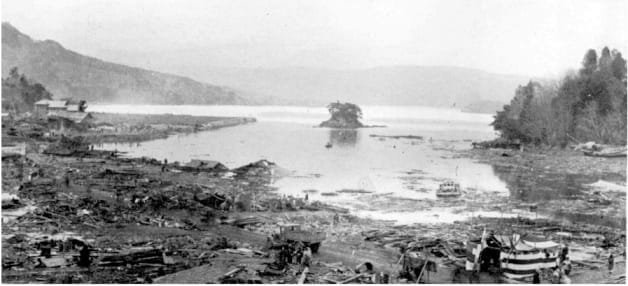
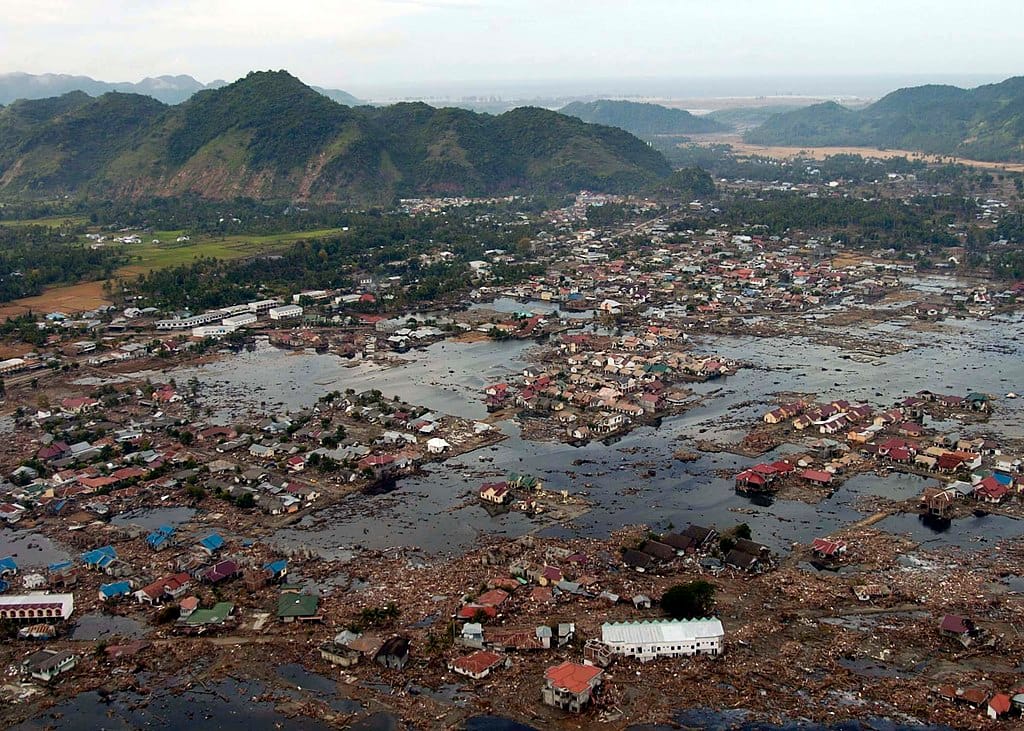
The tsunami’s waves tore a path along the coastline stretching beyond Yalta to neighboring settlements like Alupka and Gurzuf. Entire fishing fleets were destroyed, large swaths of arable land were inundated by saltwater, and fresh water supplies were contaminated. Key infrastructure—rail tracks, ports, and roads—suffered extensive damage that would take years to repair.
Coastal defenses, almost nonexistent or rudimentary at best, failed to mitigate the wave’s power. The natural landscape too was forever changed: cliffs showed new scars, beaches disappeared under layers of driftwood and mud, and small coves were reshaped.
Damage estimates, though sparse in 1927, suggest thousands of buildings were damaged to some degree, with hundreds rendered uninhabitable. The local economy, already fragile due to political instability and recovery from war, was pushed into an acute crisis. Tourism halted for months, and the markets for fish and agricultural produce were severely disrupted.
Eyewitness Accounts: Voices from the Edge of the Tsunami
Among the most poignant records of the event are the personal narratives collected from survivors. One elderly fisherman named Ivan recalled through trembling words, “The sea… it was like it was breathing—taking a deep breath back, then exhaling all at once. I have never seen such a thing. Boats were thrown like toys. We ran to the hills, but many were caught.”
Maria Petrovna, a Yalta resident, described the chaos: “People screamed and ran in all directions, the water was everywhere, turning the streets into rivers. I held my child tight and prayed as the walls shook. When dawn came, our home was gone, but we were alive.”
Such testimonies breathe life into the cold facts, illuminating the human fears, resilience, and heartbreak that statistics alone cannot convey.
The Geophysical Origins: Earthquake or Submarine Landslide?
Initial investigations into the tsunami’s cause leaned heavily on reports of the afternoon seismic tremor, supporting an earthquake-triggered tsunami theory. However, subsequent geological studies pointed toward the possibility of a massive underwater landslide spurred by the quake's shaking. Such slides can displace colossal volumes of sediment, producing sudden waves.
Modern research combining historical seismic data, bathymetric surveys, and sediment analysis tends to favor a hybrid explanation: a moderate earthquake weakened submarine slopes, triggering landslides that in turn generated the tsunami. This mechanism would explain the relatively localized but intense impact along Crimea’s coast, contrasting with the more widespread devastation associated with oceanic tsunamis.
The Human Toll: Lives Lost and Communities Shattered
Official death toll figures from 1927 remain inconclusive, with estimates ranging from several dozens to over two hundred fatalities. Many bodies were lost at sea or swept downstream and never recovered. More telling, perhaps, were the hundreds injured and thousands displaced, their homes either destroyed or rendered uninhabitable.
Communities reliant on fishing and agriculture saw their means of survival devastated, forcing migrations inland. Some families were split apart, and the psychological scars ran deep. Oral histories recount the trauma carried by survivors for decades, the anxiety renewed with each storm or seismic warning.
Insurance systems were rudimentary or non-existent, leaving many destitute. The Soviet state, still consolidating power, offered limited aid but was constrained by bureaucracy and resource shortages.
Rescue and Relief: The Response in Yalta and Surrounding Towns
In the tsunami’s immediate aftermath, local authorities and community members mobilized whatever resources they could muster. Makeshift shelters sprang up in schools, churches, and public buildings, while food and water were distributed through impromptu networks.
Volunteer rescue teams combed debris, searching for survivors and retrieving the dead. Medical personnel faced the dual challenges of treating injuries and preventing outbreaks of disease in the damp, unsanitary conditions.
Despite these efforts, the response was hampered by communication difficulties and insufficient infrastructure. The Soviet government dispatched relief supplies and personnel from major urban centers, though much of the aid was slow to arrive.
Throughout this crisis, acts of courage and solidarity emerged. Stories of strangers opening their homes to displaced families, fishermen braving rough seas to salvage boats, and doctors working long hours capture a human spirit refusing to be overwhelmed.
Scientific Investigations: How the Disaster Shaped Marine Seismology
The 1927 Black Sea tsunami attracted the attention of Soviet and European scientists eager to understand this rare phenomenon in a semi-enclosed sea. Preliminary field studies were conducted in the following months to document the geomorphological changes and gather eyewitness testimonies.
These efforts contributed to the nascent field of marine seismology and tsunami science, highlighting the risks of underwater landslides as tsunami triggers—a subject still gaining traction at the time. Seismographs installed in the region afterward aimed to improve early warning capabilities, albeit with the technological limitations of the era.
Moreover, the disaster emphasized the need for integrated geological and oceanographic monitoring of inland seas, shaping research agendas well into the Soviet period.
Crimea in the Eye of a Storm: Political and Social Aftershocks
The tsunami’s social disruption unfolded against the backdrop of the Soviet Union’s efforts to solidify Communist rule. The disaster exposed the limits of Soviet governance, particularly in crisis management and rural welfare programs. Authorities used the event to promote collectivization efforts, representing them as a means to rebuild and modernize devastated communities.
Yet, this period also saw increased repression and forced resettlements, compounding local hardships. The tsunami therefore became a backdrop against which broader political transformations played out—a natural catastrophe intertwined with human strife.
In the cultural realm, the disaster entered local folklore and artistic representations, sometimes cloaked in symbolism praising Soviet resilience, sometimes hauntingly recalling loss and vulnerability.
Nature’s Fury Meets Human Fragility: Lessons from 1927
The Black Sea tsunami of 1927 is a stark reminder that no region, however sheltered, is immune to nature’s fury. It challenged assumptions about the Black Sea’s calmness and underscored the necessity for scientific vigilance.
The event’s relative obscurity in comparison to Pacific or Atlantic tsunamis belies its importance as an early 20th-century warning about coastal vulnerability, especially in political contexts where emergency preparedness was nascent.
More than that, it revealed humanity’s fragile place within geology’s larger narrative—a lesson etched in the stone cliffs, scattered ruins, and survivor stories of Crimea.
The Forgotten Catastrophe: Why the Black Sea Tsunami Faded from Memory
Despite its severity, the 1927 tsunami gradually slipped into historical obscurity. Reasons abound: overshadowing natural disasters such as the 1908 Messina earthquake and tsunami in Italy, the geopolitical turmoil of the 1930s and ‘40s, and deliberate political narratives that minimized vulnerabilities.
Archival gaps, lost eyewitnesses, and limited contemporary media coverage also contributed. Only specialist circles remembered the disaster as a curiosity or cautionary tale.
Today, renewed interest sparked by climate change fears and advanced geoscience seeks to resurrect this memory—not as mere curiosity but as an urgent lesson in hazard preparedness.
Revisiting the 1927 Tsunami: Modern Perspectives and Coastal Risks
In the 21st century, Crimea remains a key region of geopolitical tension and environmental concern. Scientific advances enable detailed seafloor mapping and seismic monitoring, revealing that similar submarine landslide risks persist.
Climate change-induced sea-level rise and human development on vulnerable coasts compound tsunami risks. The 1927 event serves as a benchmark for assessing hazard models and emergency plans.
International collaborations now focus on early warning systems for the Black Sea basin, reflecting a collective will to never again be caught unawares beneath the night's silent roar.
Conclusion
The Black Sea tsunami of September 11, 1927, stands as a haunting testament to nature’s latent power, lying dormant beneath the tranquil waters of Crimea’s coast. It was a catastrophe that struck with ruthless unpredictability, forever altering landscapes and lives in a region balancing on the edge of history’s great upheavals.
Yet, beneath the destruction, stories of survival and solidarity endured—echoes of humanity’s resilience in the face of the overwhelming forces of the Earth. The tsunami’s lessons continue to reverberate through modern science and policy, urging vigilance where complacency once reigned.
In remembering this forgotten fury, we confront the eternal dance between the world’s geophysical fury and our fragile existence, a story as vital today as it was nearly a century ago.
FAQs
Q1: What caused the 1927 Black Sea tsunami near Crimea?
A1: The tsunami was likely triggered by a moderate earthquake along underwater faults near Crimea, which destabilized submarine slopes and caused massive landslides, displacing large volumes of water and generating the destructive waves.
Q2: How severe was the impact of the tsunami?
A2: The tsunami devastated Crimea’s southern coastal communities, particularly Yalta. It destroyed buildings, fishing fleets, and infrastructure, killed an estimated 100–200 people, and displaced thousands, pushing local economies into crisis.
Q3: Was there any warning prior to the tsunami?
A3: There were brief seismic tremors earlier on the day of the event, but no formal warning system existed. The sudden retreat of the sea—a classic tsunami precursor—was observed only moments before the waves struck.
Q4: How did the Soviet authorities respond to the disaster?
A4: Local and regional Soviet authorities mobilized relief efforts, setting up shelters and distributing aid, but logistical and political limitations hampered response effectiveness. The disaster was later incorporated into Soviet narratives of rebuilding and modernization.
Q5: Why is the 1927 Black Sea tsunami not widely known?
A5: Several factors contributed to its obscurity: limited contemporary media coverage, overshadowing global events, political suppression, and sparse scientific documentation, leading it to fade from popular memory until recent decades.
Q6: What scientific advances were spurred by studying this tsunami?
A6: The event prompted early investigations into submarine landslides as tsunami sources and enhanced seismic monitoring in the Black Sea region, contributing to the development of marine seismology and coastal hazard assessment.
Q7: Could a similar tsunami happen again in the Black Sea?
A7: Yes. The Black Sea remains tectonically active with underwater slopes susceptible to sliding. Modern monitoring and emergency systems now aim to mitigate risks but the threat persists, especially amid environmental changes.
Q8: How has the local population preserved the memory of the tsunami?
A8: Memories survive in local oral histories, folklore, and some artistic expressions, although there has been little formal commemoration. Renewed academic interest and public awareness have begun to revive the event’s place in regional history.