Table of Contents
- The Sudden Surge: A Morning Shattered on September 11, 1927
- A Calm Before the Wave: Geographical and Geological Context of the Black Sea
- Early Warnings Ignored: Signs and Local Folklore Before the Tsunami
- The Earth Trembles: The Seismic Origins of the Black Sea Tsunami
- The Wave Unleashed: Eyewitness Accounts from Crimea and Yalta
- The Ripple Effect: The Destruction Across Coastal Villages and Towns
- Human Stories Amid the Devastation: Survival, Loss, and Heroism
- Emergency Response in the 1920s: What Was Possible and What Was Not
- Scientific Understanding in 1927: The Limits of Tsunami Research
- Political and Social Consequences in the Soviet Union’s Crimea
- Rebuilding Lives and Landscapes: Reconstruction Efforts Post-Tsunami
- The Forgotten Catastrophe: Why the Black Sea Tsunami Lingers in Obscurity
- Modern Geological Insights: Reassessing the 1927 Event
- The Impacts on Coastal Urban Development and Future Disaster Preparedness
- Lessons Learned: How the Black Sea Tsunami Influenced Regional Policies
- Memory and Myth: How Crimea’s Communities Remember the Wave
- The Black Sea Today: Monitoring and Mitigation in a Risky Area
- Comparing the Black Sea Tsunami to Global Tsunami Events
- The Role of International Cooperation in Coastal Disaster Management
- Conclusion: The Enduring Legacy of the 1927 Black Sea Tsunami
- FAQs: Unraveling Mysteries and Facts about the Black Sea Tsunami
- External Resource
- Internal Link
The Sudden Surge: A Morning Shattered on September 11, 1927
It was a September morning in Crimea, the sun casting a golden haze over the coastal city of Yalta, when the sea suddenly fell back, as if retreating in terror. Fishermen glanced nervously at the exposed seabed, their instincts warning of something unnatural. Then, with terrifying speed, an enormous wave came crashing onto the shore—devouring boats, sweeping away homes, and ripping through lives. The 1927 Black Sea tsunami had arrived, an invisible hand rewriting the destiny of the Crimean coast in moments.
Though unassuming from a distance, this catastrophe left a searing mark on the communities hugging the shores of the Black Sea. The overwhelming surge, born from deep within the Earth’s crust, recalled the fury of the ocean’s might and the fragile humanity perched along it. This article journeys through that fateful day, untangling its geological genesis, human cost, and enduring legacy, a somber reminder that even serene waters can unleash cataclysmic force.
A Calm Before the Wave: Geographical and Geological Context of the Black Sea
The Black Sea, a crescent of water cradled between Eastern Europe and Western Asia, has long been a cradle of ancient civilizations and maritime trade. Its surface often mirrored placid skies, but beneath lay a complex tapestry of tectonic plates and submarine fault lines. Crimea, the peninsula jutting assertively into the sea, was a mosaic of cliffs, fertile valleys, and bustling harbor towns like Yalta.
Unlike the vast and well-studied Pacific Ocean, the Black Sea was—and remains—a relatively enclosed basin. Its geological profile is a curious interlacing of sediment layers and seismic rifts shaped by the collision of the Eurasian and Anatolian plates. While not typically associated with mega-tsunamis on a global scale, historical records and geological evidence hinted at hidden volatility. The 1927 event was perhaps nature’s œil noire—its dark eye—revealed in full force.
Early Warnings Ignored: Signs and Local Folklore Before the Tsunami
Long before the day of disaster, locals had their own ways of reading the sea’s temper. Tales of the "Sea's Breath," a sudden draining of water preceding storms and strange tremors in the earth, permeated coastal lore. Peasants and fishermen recounted subtle signs—birds flying inland in panic, fish flinging themselves onto rocks—as ominous portents.
In the weeks leading up to September 11, minor tremors were reportedly felt across the Crimean Peninsula, yet these small shakes were shrugged off as common “earth sighs.” In rural pockets, however, some elders recalled ancestral warnings about the sea’s “anger,” a poetic but cryptic caution that, tragically, went unheeded. This mixture of superstition and fragmented observation underscored a gap between human intuition and scientific preparedness.
The Earth Trembles: The Seismic Origins of the Black Sea Tsunami
Underneath the Black Sea's placid surface, the Earth groaned from tectonic tensions culminating in a violent seismic rupture on the morning of September 11. The earthquake, estimated around magnitude 6.0 to 6.5 on modern scales, originated along an underwater fault near the southwestern Crimea shelf. As the earth’s crust jolted and fractured, massive volumes of displaced water surged upward and outward, forcing the sea to retreat violently before the monstrous tsunami wave.
This event challenged contemporary understanding: tsunamis were typically associated with oceanic subduction zones far from this enclosed inland sea. Yet, the complex interplay of faults beneath the Black Sea’s basin proved capable of unleashing such destructive potential. The earthquake’s suddenness and relative depth amplified the wave’s reach along the Crimean coast, particularly affecting low-lying bays where water got funnelled and intensified.
The Wave Unleashed: Eyewitness Accounts from Crimea and Yalta
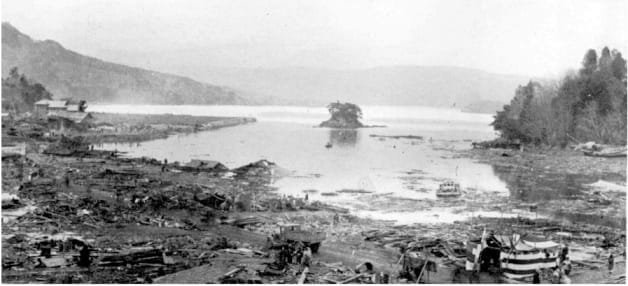
Survivors of that day rendered vivid, haunting testimonies. One Yalta fisherman recalled how “the sea seemed to vanish, as if it were being sucked into a black hole,” before a “wall of water taller than the tallest masts” slammed ashore. Mothers clutching children shouted warnings, while the cliffs echoed with the roar of breaking timber. Eyewitnesses described boats skewered on rocks and streets transformed into torrents.
The wave's height varied—some estimates put it between 4 and 7 meters—enough to strip buildings from their foundations and flood the entire waterfront district. Panic was widespread; many had no time to escape the onslaught. Along the smaller villages nestled in coves, destruction was even more severe as the geography focused the wave's force with ruthless precision.
The Ripple Effect: The Destruction Across Coastal Villages and Towns
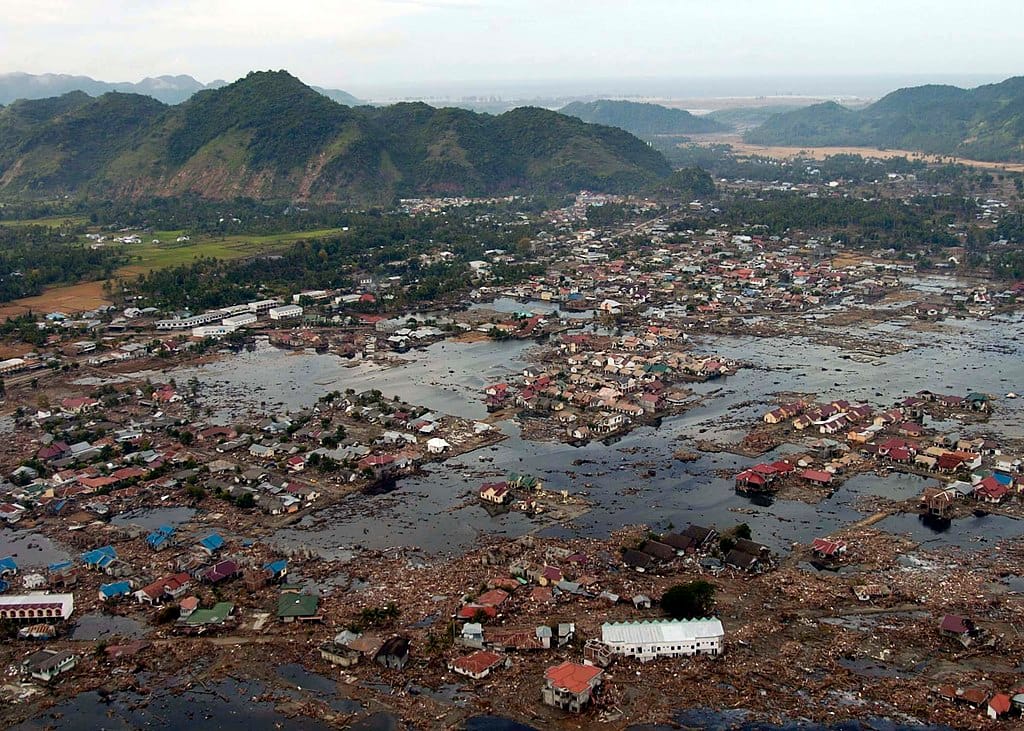
The tsunami’s reach was not confined to Yalta alone. Coastal settlements from Alupka to Simeiz bore the brunt of the wave’s path. Entire piers were swept away, narrow streets turned into churning channels of debris, and orchards were submerged under sudden saltwater floods. The fishing economy, backbone of local livelihoods, was decimated overnight; nets, boats, and catch alike went lost beneath the surge.
Infrastructure—roads, telegraph lines, and docks—lay in ruin, isolating communities at the worst possible moment. The psychological impact rippled just as powerfully as the physical: the sea, once a source of sustenance and pride, had transformed into a merciless force. Yet, amidst rubble and despair, acts of spontaneous solidarity emerged, with neighbors risking their lives to rescue the trapped and injured.
Human Stories Amid the Devastation: Survival, Loss, and Heroism
Behind every statistic, a life was irrevocably changed. A young woman named Elena, caught near the shoreline, managed to cling to a half-sunken boat until rescuers arrived hours later. An elderly fisherman lost all twelve members of his extended family to the flood, his grief echoing in the stillness of the aftermath. Yet stories of bravery shone through: a schoolteacher organizing children to higher ground, fishermen rowing repeatedly into swells to save stranded neighbors.
The communal trauma forged deep bonds but also left scars invisible to the world. In makeshift shelters, survivors shared grief and hope, embodying resilience even as the shadow of loss loomed large. These human dimensions imbue the 1927 tsunami with a poignant legacy—a reminder of the fragile threshold between life and death on the edge of nature’s fury.
Emergency Response in the 1920s: What Was Possible and What Was Not
The natural disaster struck a world unwitting and ill-equipped for coastal catastrophe response. The Soviet authorities in Crimea mobilized local militias and volunteers to manage rescue and cleanup, but communication was hampered by destroyed infrastructure. Medical services, limited in scope and overwhelmed by injuries, faced daunting challenges.
International aid was minimal; the Black Sea region was politically and economically turbulent, caught between Soviet governance and residual imperial influences. Technology for early warnings or rapid evacuation simply did not exist. The disaster revealed stark gaps in preparedness, spurring albeit slow reforms focused on understanding seismic risks in the region.
Scientific Understanding in 1927: The Limits of Tsunami Research
In the early 20th century, tsunamis remained poorly understood phenomena, often reduced to folklore or puzzle pieces scattered across isolated reports. The Black Sea tsunami was one of the first substantial events studied within the Soviet scientific apparatus, yet interpretations were nascent and speculative. Geologists recognized earthquakes as triggers but lacked detailed oceanographic data to model wave behavior.
The rarity of recorded tsunamis in the Black Sea further complicated analysis. Consequently, the event was often overshadowed by larger global seismic disasters, its lessons confined to regional academic circles. Only decades later, with advances in geophysics and underwater mapping, did the 1927 tsunami receive a fuller reevaluation.
Political and Social Consequences in the Soviet Union’s Crimea
The tsunami’s timing was fraught—Crimea was under the early Soviet regime, a period marked by political upheaval and societal restructuring. The disaster revealed vulnerabilities not only in nature but in governance and social organization. The authorities faced the dual challenge of managing relief efforts while maintaining political stability.
Displacement and loss fostered mistrust and hardship; at the same time, Soviet propaganda framed the catastrophe as a test of collective will, emphasizing communal rebuilding. Land reforms and urban planning shifted in the tsunami’s wake, with an eye toward “defense against nature’s wrath.” Yet, the human cost often got lost amid ideological narratives.
Rebuilding Lives and Landscapes: Reconstruction Efforts Post-Tsunami
The post-tsunami rebuilding was a monumental undertaking. Yalta and surrounding towns saw reconstruction of docks, seawalls, and homes, adjusted to better withstand future floods. Agricultural lands required desalination and restoration, a slow process vital for local food economies.
Reconstruction was more than physical: the trauma demanded cultural regeneration as well. Memorial events, local literature, and artworks began to surface, commemorating those lost and honoring resilience. However, scarce resources and political priorities meant some communities languished in neglect for years, underscoring inequalities in disaster recovery.
The Forgotten Catastrophe: Why the Black Sea Tsunami Lingers in Obscurity
Despite its devastation, the 1927 Black Sea tsunami is almost absent from global natural disaster narratives. Partly due to its regional containment and the political opacity of the Soviet Union, reports were limited and fragmented. Global media paid little attention at the time, overshadowed by concurrent political upheavals and other natural disasters.
This obscurity deprives history of a crucial case study in inland sea tsunamis and coastal vulnerabilities. Local histories keep it alive, yet without broader recognition or integration into global tsunami research, this event remains a ghost in the annals of 20th-century catastrophes.
Modern Geological Insights: Reassessing the 1927 Event
Recent scientific expeditions and advanced seismic monitoring have cast new light on the 1927 Black Sea tsunami. Submarine fault mapping revealed previously underestimated seismic zones capable of generating tsunamis. Models of wave propagation underscored how the shape of Crimea’s coastlines could magnify wave heights within certain bays.
This reevaluation not only confirms the event’s severity but also alerts contemporary hazard preparedness strategies. Understanding ancient events is vital for predicting future threats, especially as climate change and human development increase coastal vulnerabilities.
The Impacts on Coastal Urban Development and Future Disaster Preparedness
One direct legacy has been the influence on coastal urban planning in Crimea. Building codes now incorporate lessons from the tsunami, emphasizing elevation and structural resilience. Emergency protocols, though improved dramatically in the modern era, trace origins partly to this early disaster.
The 1927 tsunami underscored the necessity for early warning systems—now monitored by regional seismic networks complemented by international collaborations. Public education and evacuation planning have become pillars in coastal safety, although challenges remain given the area's complex geopolitics.
Lessons Learned: How the Black Sea Tsunami Influenced Regional Policies
In the decades following the tsunami, the Soviet and later Ukrainian authorities slowly built frameworks for seismic risk assessment. Incorporating undersea fault studies into policy, governments acknowledged that the Black Sea was not merely a tranquil waterscape but a potential hazard zone.
Early-warning initiatives were modest at first, but over time, multidisciplinary cooperation between geologists, oceanographers, and civil defense entities became standard. This methodical layering of preparedness is a legacy of 1927’s harsh lesson, urging vigilance against complacency.
Memory and Myth: How Crimea’s Communities Remember the Wave
In local collective memory, the tsunami remains etched as a pivotal and tragic moment. Oral histories preserve detailed recollections, blending fact with metaphor. Festivals and commemorative plaques pay homage to those lost, ensuring intergenerational transmission of experience.
Yet, folklore also shapes memory—some narratives recast the tsunami as a supernatural punishment or an act of divine will. This rich mixture of history and myth reflects humanity’s intrinsic need to find meaning amid disaster.
The Black Sea Today: Monitoring and Mitigation in a Risky Area
Today, the Black Sea is closely monitored by seismic stations and oceanographic sensors capable of detecting underwater earthquakes and potential tsunami generation. Cooperation across bordering nations—Russia, Ukraine, Turkey, Bulgaria, Romania, and Georgia—helps share data and coordinate emergency responses.
Despite technological advances, challenges like political tension and infrastructural limitations complicate comprehensive disaster management. Nonetheless, continuous investment in early-warning systems shows a commitment to preventing a repeat of 1927’s tragedy.
Comparing the Black Sea Tsunami to Global Tsunami Events
When juxtaposed with colossal tsunamis such as the 2004 Indian Ocean or the 2011 Tohoku disasters, the Black Sea tsunami might seem modest in scale. However, its significance lies in its unexpectedness in a semi-enclosed, relatively low-seismic zone, challenging assumptions about tsunami distribution.
Its study enriches the global understanding that no coastal region, however seemingly sheltered, is immune to the sudden and dramatic wrath of these waves. Each event adds to a mosaic of knowledge vital for worldwide preparedness.
The Role of International Cooperation in Coastal Disaster Management
The aftermath of the 1927 tsunami and similar disasters underscored the importance of cross-border alliances. Today, regional frameworks like the Black Sea Tsunami Warning and Mitigation System symbolize this spirit, fostering shared safety.
Global institutions, including UNESCO's Intergovernmental Oceanographic Commission, advocate integrated early warning infrastructure and knowledge exchange. Cooperative vigilance is not just an ideal but a necessity for protecting millions living along vulnerable seas.
Conclusion: The Enduring Legacy of the 1927 Black Sea Tsunami
The Black Sea tsunami of September 11, 1927 was a profound rupture—of Earth, of communities, of histories. It remains a testament to the unpredictable power beneath serene waters and the indomitable courage of those caught in its path. As we reflect on its story, we grasp the intertwined fragility and resilience intrinsic to coastal life.
More than an isolated catastrophe, it is a call to awareness—of nature’s latent forces, of human vulnerabilities, and the continuing quest to coexist with the ocean’s mysteries. While the Black Sea’s dark wave once swept away so much, it also seeded lessons, inspiring vigilance and respect for the restless sea that defines Crimea’s shores.
FAQs
Q1: What caused the Black Sea tsunami of 1927?
A: The tsunami was triggered by an underwater earthquake along a fault near the southwestern Crimean shelf, causing a sudden displacement of sea water that generated destructive waves along the coast.
Q2: How high were the tsunami waves in Crimea?
A: Estimates suggest wave heights ranged between 4 and 7 meters, sufficient to flood towns, destroy boats, and devastate coastal infrastructure.
Q3: Why is the 1927 Black Sea tsunami not well known internationally?
A: Due to its regional scale, the geopolitical context of the Soviet Union, limited media coverage at the time, and overshadowing by larger global events, it has remained relatively obscure outside local histories.
Q4: What were the immediate responses following the tsunami?
A: Local authorities organized rescue and relief efforts under difficult conditions, but medical and communication infrastructures were overwhelmed, limiting the effectiveness of the response.
Q5: How did the tsunami affect Soviet political and social dynamics in Crimea?
A: The disaster exposed vulnerabilities in governance, became a symbolic test of Soviet solidarity, and influenced urban planning and disaster management policies.
Q6: What advances in science have been made in understanding this event?
A: Modern seismic mapping and oceanographic modeling have clarified the underwater faults responsible and the mechanisms of tsunami generation in a semi-enclosed basin like the Black Sea.
Q7: How do Crimean communities remember the tsunami today?
A: Through oral histories, commemorations, and cultural narratives that blend factual recollection with mythological elements, preserving the event’s memory across generations.
Q8: What measures are in place today to prevent future tsunami disasters in the Black Sea region?
A: Regional seismic monitoring networks, early warning systems, emergency preparedness protocols, and international cooperation aim to mitigate risks and improve response capabilities.