Table of Contents
- The Morning the Black Sea Roared: September 11, 1927
- Setting the Stage: Crimea and Yalta in the Roaring Twenties
- Geological Secrets Beneath the Black Sea
- The Shattering Wave: The Tsunami Unfolds
- Eyewitness Voices: Stories from the Shores of Yalta
- The Immediate Aftermath: Chaos and Courage by the Sea
- Rescue and Relief: How a Region Responded to Disaster
- Political Underpinnings: Soviet Crimea under the Spotlight
- Scientific Curiosity and Mysteries Around the 1927 Black Sea Tsunami
- Comparing the Black Sea Tragedy: Global Tsunamis in the Early 20th Century
- The Economic Toll: Devastation Beyond the Waves
- The Cultural Trauma: Memory and Myth in Crimean Communities
- Geological Insights Unearthed Post-1927
- Revisiting Records: Why the Black Sea Tsunami Stayed in the Shadows
- Modern-Day Implications: Tsunami Risks in the Black Sea Region
- Environment and Urban Development: Lessons from Yalta’s Reconstruction
- The Role of Media and Propaganda during the Early Soviet Era
- Reflections in Literature and Art: The Tsunami's Echo in Cultural Memory
- When History Meets Nature: Understanding Human Vulnerability
- Preservation and Commemoration: Monuments and Memorial Efforts
- The Black Sea Today: Between Tranquility and Geological Threat
- Conclusion: The Enduring Legacy of the 1927 Black Sea Tsunami
- FAQs: Understanding the Black Sea Tsunami of 1927
- External Resource
- Internal Link
1. The Morning the Black Sea Roared: September 11, 1927
Before dawn broke on September 11, 1927, the tranquil shores of Crimea and the famed resort town of Yalta bore the quiet blessing of a calm sea and clear skies. Fishermen prepared their boats as the sun began to cast golden hues over the water. Families stirred awake, children ready for a day under the late-summer sun. But beneath these pastoral scenes, deadly forces stirred silently.
Suddenly, the sea pulled back with an unnatural intensity: a violent foreshadowing of chaos to come. Then, as the horizon cracked with the roar of a colossal wave, the Black Sea unleashed a tsunami — an event so rare in this region that it shattered every expectation of nature’s limits. This was not just a natural disaster; it was a stark reminder of the latent power beneath a seemingly peaceful body of water.
The world rarely associates the Black Sea with tsunamis, overshadowed by more famous oceanic catastrophes. Yet, on that fateful September day nearly a century ago, the sea’s fury claimed lives, reshaped coastlines, and carved an indelible mark on the cultural and historical memory of Crimea. To trace this event is to unravel a tapestry woven of human resilience and geological mystery—a story too profound to be forgotten.
2. Setting the Stage: Crimea and Yalta in the Roaring Twenties
The year 1927 was a period of tremendous transformation, both globally and within Soviet territories. Crimea, nestled on the northern shores of the Black Sea, was a region steeped in a complex history of empires, wars, and cultural crossroads. Yalta, its crown jewel, attracted aristocrats and artists, bathed in a Mediterranean light that contrasted sharply with the political upheaval stirring across the Soviet Union.
The recent Russian Civil War had left scars, but life moved cautiously forward. The political landscape under Soviet control sought to balance restoration with ideological rigor. For local Crimean Tartars, Russians, Ukrainians, and others, everyday life was marked by a fragile hope amid shifting power structures.
Economically, Yalta was still developing its identity as a seaside resort. Fishing and small-scale tourism fueled modest prosperity. Yet the undercurrents of natural danger were invisible to most, camouflaged by the beauty of limestone cliffs and sprawling forests.
3. Geological Secrets Beneath the Black Sea
Long before human eyes scanned its shores, the Black Sea was a geological enigma. Lying atop a complex fault system, the basin had witnessed millennia of volcanic activity, tectonic shifts, and sedimentary accumulation. Seismic forces had shaped its depths, making it prone—though infrequently—to unusual seismic events including undersea landslides and earthquakes.
Until then, this vast inland sea was thought relatively stable compared to oceanic zones known for tsunami activity. However, underground movements occasionally unleashed sudden risks. The combination of underwater faults and steep offshores created potential for powerful, if rare, tsunamis—mere whispers until September 1927 transformed theory into grim reality.
4. The Shattering Wave: The Tsunami Unfolds
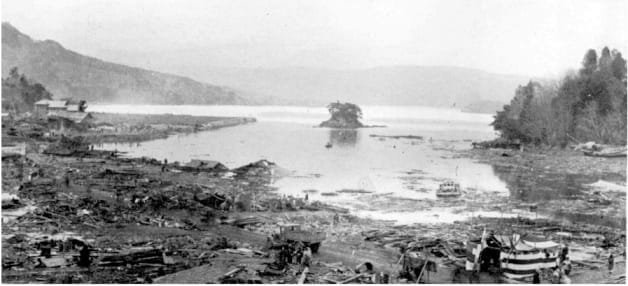
The day began like any other, but around midday, a strong earthquake rattled Crimea, centers of Yalta shaking violently. The tremors rippled through the land and marine bed alike—an ominous prelude. Witnesses recall the sea receding dramatically, exposing the seabed and stranded boats, a macabre spectacle playing out in real time.
Then came the wall of water. Twelve meters high in some places, this gigantic wave thundered onto the coast, sweeping away everything in its path. Wooden piers splintered, seaside houses collapsed, and the usual chatter of market days was drowned in screams and destruction. Ships moored in the harbor were capsized, sent crashing into the rocks or dragged into the sea’s deep.
For many, it was an apocalyptic moment—the sea overturning the fragile order of daily life in a booming yet vulnerable resort town.
5. Eyewitness Voices: Stories from the Shores of Yalta
"I saw the water pulling back like it was fleeing from something terrible," recalled Ivan Petrov, a local fisherman who barely escaped with his life. His memories, recorded decades later, provide piercing detail and human immediacy: "Then the wave came—a giant, furious beast that tore through the village. I held my young daughter tight and prayed."
Miriam Kuznetsova, a nurse who tended the injured, described the chaos: "People arrived with broken bones and shock, some unconscious from being swept into debris. No one expected such devastation here… It felt like the world was ending."
These personal testimonies capture the instant when ordinary existence met extraordinary calamity—a collision of natural forces and human frailty.
6. The Immediate Aftermath: Chaos and Courage by the Sea
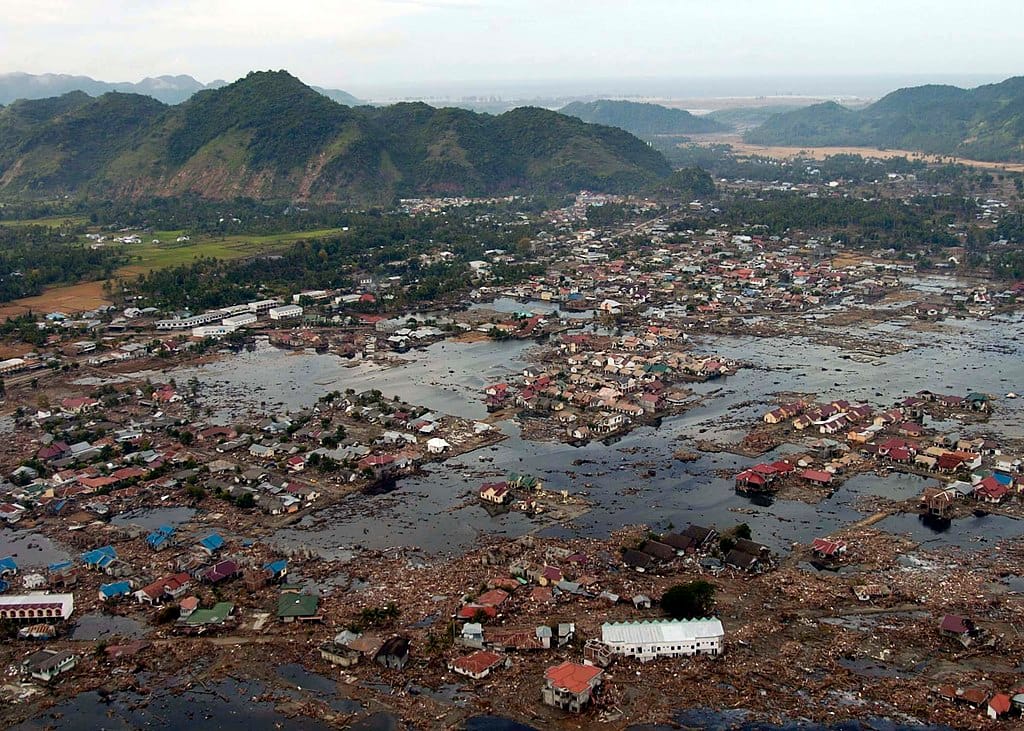
As the waters receded, the scale of destruction became apparent: over 200 confirmed dead, hundreds injured, and thousands left homeless. Entire neighborhoods were flattened; telephone and rail links severed; wells polluted by seawater.
Amid the devastation, stories of courage emerged. Citizens and Soviet officials organized rescue brigades, confronted by the daunting task of searching for survivors amid ruins. Despite scarce resources, food and medical supplies began flowing from Simferopol and other Crimean centers. The joint efforts of locals and government workers created the first lines of defense against starvation and disease.
Yet the emotional toll was immense. The sea’s unexpected wrath shattered not only property but also communal confidence in the region’s safety and stability—a psychological wound that would take years to heal.
7. Rescue and Relief: How a Region Responded to Disaster
The Soviet government, aware of the propaganda potential and humanitarian necessity, responded quickly albeit imperfectly. Emergency command centers were established in Simferopol to coordinate relief. Engineers and builders arrived to assess structural damage, while doctors treated the injured.
Yet, despite efforts, supply lines were strained, and harsh early autumn rains worsened conditions. The Soviet press initially downplayed the tragedy, wary of exposing vulnerabilities during a tense political era. However, international observers noted the resilience of local populations, who adapted with remarkable speed.
The disaster revealed both the strengths and weaknesses of Soviet emergency response mechanisms in peripheral regions far from Moscow’s direct oversight.
8. Political Underpinnings: Soviet Crimea under the Spotlight
Crimea’s status in the Soviet Union was complex. It served as a testing ground for Soviet nationality policies and collective farming initiatives. The tsunami unfolded amid an era when Stalinism was tightening its grip.
In this environment, natural disasters were often politically framed. Some officials interpreted the tsunami as a symbolic test of Soviet strength and ideological vigilance. Relief efforts were politicized to reinforce narratives of socialist solidarity and resilience, even if bureaucratic inertia and logistical challenges hampered outcomes.
Beyond numbers, the tragedy became entangled with power struggles and propaganda, laying bare the intersection of nature and politics in an authoritarian state.
9. Scientific Curiosity and Mysteries Around the 1927 Black Sea Tsunami
For geologists and oceanographers, the 1927 tsunami was a rare event demanding explanation. Its origins were traced to a submarine earthquake likely triggered by fault movement along the southern Black Sea shelf.
However, scientific data was limited due to the era’s technological constraints. Seismographs were sparse, and no underwater monitoring existed. Researchers pieced together clues through reports about seismic shocks and wave heights.
This mystery spurred Soviet and international scholars toward greater study of seismology in enclosed seas. The event was an early motivation for modern efforts to monitor geological risks in atypical tsunami zones.
10. Comparing the Black Sea Tragedy: Global Tsunamis in the Early 20th Century
Although overshadowed by catastrophic tsunamis like the 1923 Kamchatka event or the 1929 Grand Banks tsunami in Canada, the Black Sea tsunami held unique significance. It challenged prevailing assumptions that tsunamis were primarily oceanic phenomena, reminding scientists and policymakers alike that enclosed seas were not immune.
This broader context highlights how regional disasters are connected in the global web of geological threats. It also underscores the delicate balance between human habitation and nature’s unpredictable fury.
11. The Economic Toll: Devastation Beyond the Waves
The tsunami’s damage was not confined to physical structures. Yalta’s fledgling tourist economy suffered major setbacks as visitors dwindled, fearing further disaster. Fishing fleets were decimated, affecting livelihoods and food supply chains.
Reconstruction expenditures strained local budgets. The regional economy, still recuperating from post-revolutionary disruption, faced a new challenge: rebuilding in the face of persistent geological uncertainty.
This economic impact catalyzed longer-term planning in urban infrastructure and risk mitigation, though much progress was hindered by broader Soviet economic constraints.
12. The Cultural Trauma: Memory and Myth in Crimean Communities
In the years following, the 1927 tsunami entered Crimean collective memory as both tragedy and cautionary tale. Folklore grew around the event, blending eyewitness stories with local legends of the sea’s wrath.
Annual commemorations, oral histories, and artworks kept alive the memory of lives lost and the resilience of survivors. Yet, state censorship and political narratives often muted open discourse, weaving the event into a tapestry of Soviet heroism rather than purely natural disaster.
This cultural layering illustrates how history, memory, and identity interweave in post-disaster societies.
13. Geological Insights Unearthed Post-1927
Subsequent geological surveys validated the likely causes: a magnitude 6-7 earthquake along an undersea fault triggered a powerful underwater landslide, displacing millions of tons of sediment. This sudden mass movement forced water upward, generating the tsunami.
Further investigations revealed the Black Sea’s vulnerability to such tectonic disruptions, highlighting submerged canyon collapses and steep continental shelves as risk amplifiers.
This knowledge helped shift regional safety paradigms and placed new scientific emphasis on monitoring underwater geological processes.
14. Revisiting Records: Why the Black Sea Tsunami Stayed in the Shadows
Despite its severity, the 1927 Black Sea tsunami remained relatively unknown in global disaster chronicles. Several factors contributed: the Soviet Union’s isolation, limited international media coverage, constrained scientific communication, and the tendency to suppress information that might appear politically inconvenient.
Moreover, other global disasters overshadowed it in public consciousness. Only in recent decades have historians and scientists revisited archives and testimonies to piece together a fuller understanding of this rare catastrophe.
15. Modern-Day Implications: Tsunami Risks in the Black Sea Region
Today, seismic monitoring and disaster preparedness around the Black Sea have improved dramatically. Tsunami warning systems, though less advanced than oceanic counterparts, incorporate lessons from 1927 and other incidents.
Urban planners and governments maintain vigilance over potential fault activity, while awareness campaigns help communities prepare for the improbable but not impossible.
The 1927 event serves as a persistent reminder that even enclosed seas can hide deadly surprises beneath calm surfaces.
16. Environment and Urban Development: Lessons from Yalta’s Reconstruction
Yalta’s post-tsunami rebuilding reshaped its urban landscape. New construction incorporated stronger foundations, elevated buildings, and flood defenses. Green spaces were rethought to buffer storm surges, while infrastructure adapted to changing environmental awareness.
This era planted seeds for modern coastal management practices, integrating disaster resilience with sustainable development—a legacy still relevant in the face of climate change and urban expansion.
17. The Role of Media and Propaganda during the Early Soviet Era
The event unfolded in an age where media was tightly controlled by the Soviet state. Official reports carefully framed the tsunami to reinforce notions of socialist progress and triumph over nature.
International news remained scarce and often speculative. Domestic narratives highlighted collectivist efforts and downplayed failures or vulnerabilities.
Understanding this media landscape reveals how natural disasters were politicized and managed to serve ideological goals.
18. Reflections in Literature and Art: The Tsunami's Echo in Cultural Memory
Artists and writers touched by the 1927 tsunami tragedy expressed its emotional impact through poems, paintings, and stories. Themes of loss, survival, and nature’s ambivalence permeated Crimean culture, offering catharsis and reflection.
These cultural artifacts deepen our appreciation of how societies process trauma beyond statistics—through creativity and remembrance.
19. When History Meets Nature: Understanding Human Vulnerability
The Black Sea tsunami illustrates a timeless truth: human civilizations are fragile in the face of natural forces. Despite technological progress, the boundaries of nature’s power occasionally remind us of humility and respect.
This event encourages ongoing dialogue about risk, preparation, and the ethical dimensions of living near volatile environments.
20. Preservation and Commemoration: Monuments and Memorial Efforts
Across Crimea, small memorials honor those lost in the tsunami. Museums and historical societies strive to preserve testimonies and artifacts, educating new generations about the event.
Such efforts affirm the importance of historical memory, transforming tragedy into collective resilience.
21. The Black Sea Today: Between Tranquility and Geological Threat
As the 21st century advances, the Black Sea remains a hub of beauty and geopolitical importance. Yet, the lessons of 1927 resonate as coastal cities balance tourism, industry, and ecological protection.
Ongoing research and regional cooperation seek to mitigate future risks, ensuring that the peaceful sea’s roar will be heard only as a memory.
Conclusion
The Black Sea tsunami of September 11, 1927, is a powerful testament to nature’s unpredictable fury, a singular moment when ancient geological forces collided with human lives in a small corner of the Soviet world. Beyond statistics, this event embodies the fragility and resilience of coastal communities, caught in the ebb and flow of history and nature.
Remembering the catastrophe is not merely an exercise in recalling loss, but an invitation to reflect on how geography, politics, culture, and human spirit intertwine. It challenges us to respect the earth beneath our feet, to strengthen our preparedness, and to honor the stories of those who lived through this extraordinary trial.
Nearly a century later, the sea that once consumed so much still laps gently on Crimean shores—quiet on the surface, yet forever marked by its turbulent past.
FAQs
Q1: What caused the 1927 Black Sea tsunami near Crimea?
A1: The tsunami was triggered by an underwater earthquake, likely accompanied by a massive submarine landslide along a fault on the Black Sea’s southern shelf, which displaced huge volumes of water.
Q2: How many people died as a result of the tsunami?
A2: Estimates suggest over 200 people lost their lives, with hundreds more injured and thousands rendered homeless, primarily in the Yalta region.
Q3: Were tsunamis common in the Black Sea before 1927?
A3: No, tsunamis in the Black Sea are extremely rare due to its enclosed nature, making the 1927 event particularly significant and unexpected.
Q4: How did the Soviet government respond to the disaster?
A4: The Soviet authorities coordinated rescue and relief efforts, but media coverage was controlled and the event was framed within Soviet ideological narratives emphasizing resilience.
Q5: Has Crimea experienced similar natural disasters since then?
A5: While earthquakes occur in the region, no tsunami of comparable scale has been recorded since 1927, though the area remains vulnerable due to its geology.
Q6: What scientific advances arose from studying the 1927 tsunami?
A6: The event spurred increased focus on undersea fault mapping, the mechanics of submarine landslides, and tsunami risk assessment in enclosed seas, influencing modern monitoring systems.
Q7: How is the 1927 tsunami commemorated today?
A7: Through local memorials, museum exhibits, and oral histories, Crimean communities preserve the memory of the event and honor those lost.
Q8: What lessons does the Black Sea tsunami offer for modern disaster preparedness?
A8: It highlights the importance of seismic monitoring, public education on natural hazards, resilient infrastructure, and regional cooperation to mitigate risks—even in areas considered low-risk.