Table of Contents
- The Morning the Sea Rebelled: A Vivid Prelude to the Black Sea Tsunami
- Setting the Stage: Crimea and Yalta in the Roaring 1920s
- Geological Whispers Beneath the Black Sea
- The Tremor Before the Wave: Earthquake Precursors on September 11, 1927
- The Unseen Power: The Tsunami Unfolds Along the Crimean Coast
- Panic and Peril: The Human Experience on the Shores of Yalta
- The Wave Strikes: Physical Devastation and Its Immediate Toll
- Stories of Survival: Personal Accounts Amidst the Chaos
- The Scientific Endeavor: Early 20th-Century Understanding of Tsunamis
- The Soviet Response: Government and Community Reactions
- International Attention: How the World Perceived the Black Sea Disaster
- Rebuilding by the Shore: Yalta’s Recovery and Urban Transformation
- The Black Sea's Hidden Dangers: A Geological and Historical Perspective
- Comparing Natural Catastrophes: The 1927 Tsunami Within a Global Context
- Legacy Beneath the Waves: The Tsunami’s Lasting Impact on Crimean Society
- Memory and Myth: How the Tsunami Entered Local Lore
- Modern Science Revisits the 1927 Black Sea Tsunami
- Lessons Learned: Disaster Preparedness and Awareness in the Black Sea Region
- The Black Sea Today: Echoes of a Forgotten Wave
- Conclusion
- FAQs
- External Resource
- Internal Link
1. The Morning the Sea Rebelled: A Vivid Prelude to the Black Sea Tsunami
September 11, 1927 began like any other golden day on the Crimean coast—sunlight warming the ancient hills, fishing boats bobbing gently on the sapphire waves, and the hustle of Yalta’s bustling port town winding into its usual rhythm. Locals and visitors alike had come to savor the tranquil beauty of the Black Sea, unaware that beneath their feet, the Earth was starting to stir with a menacing agenda.
As the morning shadows shortened under the rising sun, a deep rumble echoed silently beneath the azure waters—too faint for many to notice but unmistakable for those attuned to nature’s subtle warnings. Without warning, the sea, once a mirror of calm, began to rise with an unnatural fervor. A towering wall of water tore through the coastline, demolishing the serenity in an instant, washing away lives, dreams, and the very fabric of coastal existence. This was the Black Sea tsunami, a catastrophic event etched in the memory of Crimea’s shores and woven into the annals of maritime disaster history.
This is the story of that day: of trembling earth, furious waters, terrified people, and the indelible scars left behind by a wave that still commands respect nearly a century later.
2. Setting the Stage: Crimea and Yalta in the Roaring 1920s
The 1920s were an era of transformation for Crimea and especially for Yalta—a coastal jewel famed across Europe for its mild climate, breathtaking landscapes, and as a retreat for poets, revolutionaries, and exiles alike. Yet, this era was also shadowed by political upheaval. The Russian Civil War had recently concluded, and the Soviet Union was asserting its grip, while Crimea’s population still bore deep scars of decades of turmoil.
Yalta was a meeting point of cultures and ideologies, serving as a nexus between East and West. It was a microcosm of tensions—between tradition and modernity, nature and industry, safety and risk. Small fishing villages dotted the coastline, reliant on the Black Sea’s bounty while simultaneously vulnerable to its unpredictable moods.
Beneath the surface—both literally and figuratively—nature had been recording its own story. The Black Sea, though less infamous worldwide than its oceanic cousins for tsunamis, had its own geological history of seismic unrest, quietly collecting data beneath the churning waves, waiting for an eruption of power that the people of Yalta would soon feel in a visceral, unforgettable way.
3. Geological Whispers Beneath the Black Sea
Long before the human drama of September 1927, the Black Sea basin was a cauldron of geophysical strain. Nestled between the Eurasian and Anatolian tectonic plates, Crimea lies near active fault lines capable of producing significant seismic events.
Scientists have since reconstructed that on that fateful day, a powerful submarine earthquake shook the sea floor near the southern coast of Crimea. This seismic upheaval displaced staggering volumes of water, triggering waves that raced at speeds reaching hundreds of kilometers per hour.
Unlike the Pacific’s sprawling oceanic tsunamis, the Black Sea’s more enclosed shape funneled these waves intensely toward its relatively narrow shorelines—making the impact acute and swift, with little time for warning or escape.
4. The Tremor Before the Wave: Earthquake Precursors on September 11, 1927
Eyewitnesses reported feeling the Earth tremble in the minutes leading up to the tsunami. The initial quake was described as sudden and violent—a deep growl shaking houses and rattling glass.
Seafarers in the harbor felt their vessels shudder and sway unnaturally, while some claimed to observe the water receding rapidly from the coastal line, a classic harbinger of the tsunami's arrival. Yet, with limited scientific understanding and communication tools of the era, warnings failed to spread, and many were caught unprepared.
The quake registered an estimated magnitude of 6.0 to 7.0 — enough to unsettle both people and geology, but it was the underwater displacement of sediment and rock that truly disturbed the sea.
5. The Unseen Power: The Tsunami Unfolds Along the Crimean Coast
Almost imperceptibly at first, the Black Sea’s surface rolled strangely. Then, building its force beneath a deceptive calm, it surged forward in a towering wave that swept inland with destructive speed.
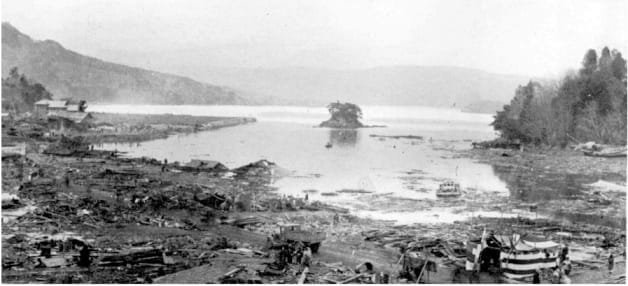
The tsunami, now fully unleashed, crashed onto Yalta’s shore, sweeping fishing boats, small homes, and anything else in its path back into the sea. The waterfront, a hub of daily life and commerce, rapidly transformed into a chaotic landscape of debris and wreckage.
The wave was merciless and sudden. In the minutes that followed, it reached heights between three to five meters along the most vulnerable parts of the Crimean coastline — a monstrous surge for a sea usually known for its quiet lapping shores.
6. Panic and Peril: The Human Experience on the Shores of Yalta
Imagine the terror of those who stood watching as the sea abruptly seemed to vanish, exposing the seabed and stranded fish—only to be swept off their feet seconds later by a wall of raging water. Families had moments, if any, to scramble to higher ground, children’s cries echoing, the elderly disoriented.
Local fishermen who had ventured into the sea were caught helplessly at the mercy of nature’s wrath. Streets normally filled with laughter and trade were instead scenes of confusion, broken structures, and desperate rescue attempts.
Yet, amid chaos emerged acts of courage: neighbors pulling others from drowning, strangers offering shelter, and leaders trying to calm a community pushed to the brink.
7. The Wave Strikes: Physical Devastation and Its Immediate Toll
The aftermath was grim. Entire sections of the waterfront were flattened. Fishing infrastructure—boats, docks, nets—lay in ruin. Many homes, built close to the shore to maximize limited space, were lost to the unforgiving tide.
Casualties numbered in the dozens, with some estimates suggesting over 50 fatalities and hundreds injured, though the constraints of Soviet-era record-keeping may have led to underreporting.
The environmental impact was no less severe; the violent displacement of seabed sediments altered the marine ecosystem, while saltwater intrusion damaged agricultural land close to shore.
8. Stories of Survival: Personal Accounts Amidst the Chaos
Among the scattered narratives passed down, one stands out—a fisherman named Ivan Petrovich, who survived by clinging to a broken piece of hull amid the terrifying wave. “The sea roared like a beast,” he recalled decades later. “I thought I would die, yet somehow, I found the strength to hold on.”
Another poignant testimony came from Anna Vasilieva, a mother who managed to carry her two children to safety by running uphill, even as her home was swallowed. These stories, though fragments, humanize the overwhelming scale of the disaster.
9. The Scientific Endeavor: Early 20th-Century Understanding of Tsunamis
In 1927, the scientific community was only beginning to piece together the mechanics of tsunamis. The Black Sea, relatively enclosed and calmer than the world’s great oceans, was not traditionally considered a hotspot for such catastrophes.
Research following the event contributed to a growing appreciation of submarine earthquakes’ impact in enclosed seas, prompting scientists to revisit geological maps and historical records with renewed interest.
10. The Soviet Response: Government and Community Reactions
The newly established Soviet authorities viewed the tsunami through a pragmatic lens—mobilizing limited resources toward relief and reconstruction. Reports circulated emphasizing collective resilience rather than dwelling on loss, fitting with the broader governmental narrative of building a socialist utopia in the aftermath of nature’s trials.
Local communities banded together, sharing food, shelter, and labor to rebuild what had been washed away. The disaster became a test of Soviet society’s ability to confront adversity in solidarity.
11. International Attention: How the World Perceived the Black Sea Disaster
Though significant locally, the Black Sea tsunami barely made ripples on the international stage, overshadowed by other global headlines in a turbulent interwar period.
Still, select scientific circles noted the event, filing it as a reminder that tsunamis were not the sole domain of the Pacific "Ring of Fire," challenging preconceptions and pushing for broader seismic monitoring.
12. Rebuilding by the Shore: Yalta’s Recovery and Urban Transformation
Recovery was arduous but purposeful. Yalta’s reconstruction blended urgent practical needs with aspirational visions—wider streets, sturdier construction, and a modest early warning scaffold.
The disaster influenced urban planning; rebuilding away from the most vulnerable shorelines was discussed, though economic and geographic constraints limited complete relocation.
13. The Black Sea's Hidden Dangers: A Geological and Historical Perspective
Far from a placid sea, the Black Sea’s geological history is riddled with evidence of undersea landslides, fault ruptures, and recurring seismic tremors. The 1927 tsunami fits into a larger pattern of intermittent but potent natural upheavals.
Historical accounts from Byzantine to Ottoman eras hint at previous, undocumented waves, suggesting that nature’s quiet facade belies a restless past.
14. Comparing Natural Catastrophes: The 1927 Tsunami Within a Global Context
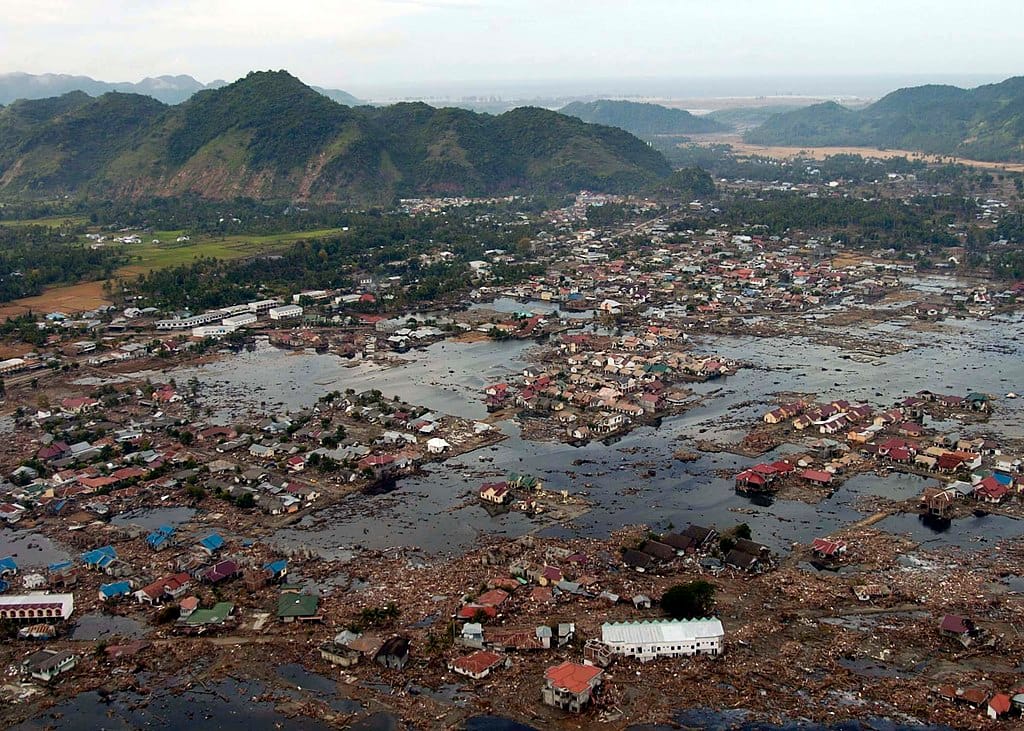
While dwarfed by the human toll of tsunamis like the 2004 Indian Ocean disaster or the 2011 Tōhoku event, the Black Sea tsunami reveals how even smaller bodies of water can spawn deadly waves.
Its suddenness, limited warning time, and local devastation echo universal issues still relevant in tsunami preparedness worldwide.
15. Legacy Beneath the Waves: The Tsunami’s Lasting Impact on Crimean Society
Beyond physical scars, the tsunami left a psychological imprint on Crimeans, fostering a cautious respect for the sea and its moods.
Local fishing practices and community structures were adapted, integrating the memory of sudden loss into a culture of vigilance.
16. Memory and Myth: How the Tsunami Entered Local Lore
Over decades, the tsunami passed from documented history into the realm of legend—told as cautionary tales passed down in folk songs and stories, warning generations of the sea’s unpredictable power.
17. Modern Science Revisits the 1927 Black Sea Tsunami
Recent advances in marine geology and seismology, augmented by satellite and sonar mapping, have allowed scientists to re-examine the 1927 event, refining estimates of wave height, speed, and causes.
This resurgence of interest has rekindled public awareness and spurred discussions of regional disaster preparedness.
18. Lessons Learned: Disaster Preparedness and Awareness in the Black Sea Region
The 1927 tsunami, though nearly forgotten for decades, provided foundational lessons for understanding regional seismic hazards.
Modern emergency response strategies now incorporate tsunami scenarios into civil protection planning, community education, and cross-border cooperation.
19. The Black Sea Today: Echoes of a Forgotten Wave
Today, Yalta thrives as a resort city, its sunlit beaches a testament to resilience. Yet beneath the inviting calm of the Black Sea, the memory of 1927 lingers—a reminder that nature’s latent power awaits beneath the surface, ever ready to reclaim its ancient authority.
Conclusion
The Black Sea tsunami of September 11, 1927 was a sudden, violent, and sobering reminder that even in places perceived as tranquil, nature’s forces can awaken with devastating might. It was a moment when the sea turned against the very people who depended on it—fishermen, families, and towns dependent on a delicate balance between land and water.
But beyond the destruction, this tragedy highlights humanity’s enduring spirit of resilience and remembrance. It challenges us to listen closely to the Earth’s subtle murmurs, to prepare for what lies beneath, and to honor those who lived through the unimaginable.
Nearly a century later, the waves of 1927 ripple through history, science, and culture—an enduring testament to the interplay between human vulnerability and the awe-inspiring forces of nature.
FAQs
Q1: What caused the Black Sea tsunami of 1927?
The tsunami was triggered by a submarine earthquake near the Crimean coast, which displaced large volumes of water on the sea bed, creating powerful waves that surged toward the shoreline.
Q2: How many people were affected by the tsunami?
While exact records are sparse, it is estimated that over 50 people died and hundreds suffered injuries, with thousands impacted by loss of property and livelihoods.
Q3: Was the 1927 Black Sea tsunami unique?
While not as widely known as Pacific tsunamis, the Black Sea tsunami was significant due to its local intensity and the rarity of such events in enclosed seas. Geological evidence suggests similar events have happened historically.
Q4: How did the Soviet government respond to the disaster?
The Soviet authorities coordinated relief efforts, emphasizing community rebuilding and resilience without extensive international attention or publicity, focusing on recovery and organizing coastal defenses.
Q5: How has this event influenced tsunami research?
The 1927 tsunami expanded scientific understanding of tsunami risks in enclosed seas, prompting further study of seismic activity in the Black Sea and refinement of early warning concepts.
Q6: Is the Black Sea still at risk of tsunamis?
Yes, seismic activity continues beneath the Black Sea, and while tsunamis remain rare, the region maintains awareness and monitoring as part of broader disaster preparedness efforts.
Q7: Are there memorials commemorating the tsunami?
Local memorials and oral histories preserve the memory, though physical monuments are limited; the disaster lives mostly in cultural narratives and scientific studies.
Q8: What lessons can modern societies learn from the 1927 tsunami?
Preparedness, early warning, community education, and geological monitoring are key takeaways, emphasizing that even less expected regions can face sudden natural disasters.