Table of Contents
- The Black Sea’s Quiet Before the Storm: September 11, 1927
- An Unseen Fury: Nature’s Sudden Assertion
- The Geopolitical Canvas of Crimea in the 1920s
- The Trembling Grounds: Prelude to the Tsunami
- The Earthquake that Shook the Black Sea
- Waves of Terror: The Tsunami Sweeps the Crimean Coast
- Yalta in Ruins: Eyewitness Accounts from the Resort City
- The Human Toll: Lives Lost and Families Shattered
- Rescue and Relief: The Immediate Aftermath
- Scientific Understanding: Early Theories and Responses
- The Silent Sea: How the Black Sea’s Enclosed Nature Affected the Tsunami
- Political Ripples: Impact on Soviet Governance and Local Authorities
- Economic Consequences: Damage to Crimean Infrastructure and Tourism
- Cultural Shock: Collective Memory and Trauma Among Crimean Communities
- The Black Sea Tsunami in Soviet Archives and Historical Silence
- Lessons Learned: Advances in Seismic and Tsunami Research Post-1927
- Comparative Perspectives: Black Sea vs. Pacific Tsunamis
- An Uncommon Catastrophe: Why the 1927 Tsunami Still Fascinates
- Modern Crimean Preparedness and Tsunami Awareness
- Conclusion: The Enduring Legacy of a Forgotten Wave
- FAQs: Understanding the Black Sea Tsunami of 1927
- External Resource
- Internal Link
The Black Sea’s Quiet Before the Storm: September 11, 1927
The morning of September 11, 1927, dawned with an unremarkable calm over the Crimean Peninsula. Nestled along the turquoise embrace of the Black Sea, towns like Yalta—famed for their balmy climate and lush landscapes—bustled quietly with fishermen preparing their nets and holidaymakers wandering the beaches. The sun arced lazily across a sapphire sky, masking the ominous geophysical forces about to awaken beneath the sea floor.
This ordinary day was about to be shattered. In a stunning burst of natural fury, the Black Sea unleashed a tsunami—a massive, towering wave—that raced toward the Crimean coastline, bringing destruction where none had anticipated. The disaster, rare and enigmatic, badly shook a region already navigating the turbulent aftermath of revolutionary upheaval.
Imagine the terror of villagers and holidaymakers alike, their lives erased or irrevocably altered by a disaster that seemed to come from nowhere. For many, that morning transformed from leisure to nightmare in minutes, an elemental reminder of how humankind’s dominion over nature can be so easily and suddenly threatened.
An Unseen Fury: Nature’s Sudden Assertion
Tsunamis are a phenomenon commonly associated with the deep, restless Pacific Ocean—a force conjured by mighty tectonic plates and volcanic explosions. Yet, here was the Black Sea, a semi-enclosed inland sea, thought to be relatively placid, laying bare its potential for devastation.
Beneath the waves, tectonic plates shifted vigorously, sending shockwaves into the shallow coastal waters of Crimea. In an instant, the Black Sea surged upward, forming waves that smashed into the coast, swallowing wharfs, homes, and lives. The rarity of such an event in this region intensified its shock: no one was prepared, and no warning system existed.
The Geopolitical Canvas of Crimea in the 1920s
To grasp the full weight of the 1927 tsunami’s impact, one must situate it within the chaotic political landscape surrounding Crimea at the time. The Russian Civil War had ended less than a decade earlier, and the Soviet Union was still consolidating power across its vast territories.
Crimea, prized for its strategic position and rich resources, had become a focal point of revolutionary control and counter-revolutionary attempts. By 1927, the peninsula was firmly under Soviet control, its population a patchwork of ethnic Russians, Tatars, Ukrainians, and other minorities—each grappling with shifting national identities and the economic hardships of post-war reconstruction.
Tourism, especially in cities like Yalta, had slowly rebounded, positioning the peninsula as a resort destination for the Soviet elite and foreign visitors. But this fragile peace was about to be shattered by forces far beyond human conflict.
The Trembling Grounds: Prelude to the Tsunami
On the early morning of September 11, subtle warnings went unnoticed. A tremor shivered beneath the feet of Crimeans—an earthquake, moderate but powerful enough to presage something much larger. Scientists today estimate the earthquake’s magnitude at around 6.0 to 6.5 on the Richter scale, centered in the southern Black Sea near the Crimean shore.
Local inhabitants described unusual vibrations and the distant roar of shifting earth, yet these signs were dismissed by many, accustomed to minor tremors in the region’s complex tectonic framework. Few suspected that beneath the sea, a massive underwater landslide or fault slip was about to transmute that seismic energy into a merciless tsunami.
The Earthquake that Shook the Black Sea
Around mid-morning, the earth convulsed more strongly. Coastal buildings trembled, windows shattered, and landscapes cracked. This seismic event destabilized underwater slopes and dislodged enormous masses of sediment into the depths, setting in motion a chain reaction that would rapidly build devastating waves.
The physics of this catastrophe rest on the sudden displacement of large volumes of water caused by the seismic shift—a process not well understood in 1927. The quake was felt not only in Crimea but in surrounding regions around the Black Sea basin, sending shockwaves that confirmed the power of the event.
Waves of Terror: The Tsunami Sweeps the Crimean Coast
Minutes after the tremors, witnesses on shore saw the water retreat strangely from the coastline—a classical precursor to a tsunami. The sea floor was exposed briefly before a tremendous surge of water roared back with devastating energy.
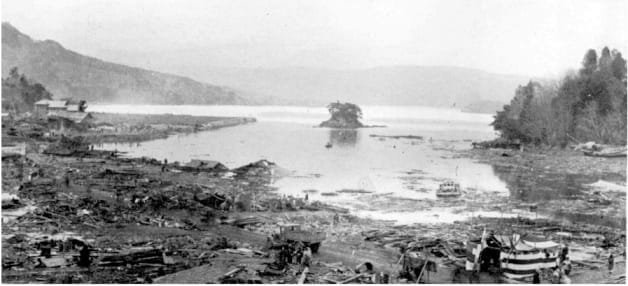
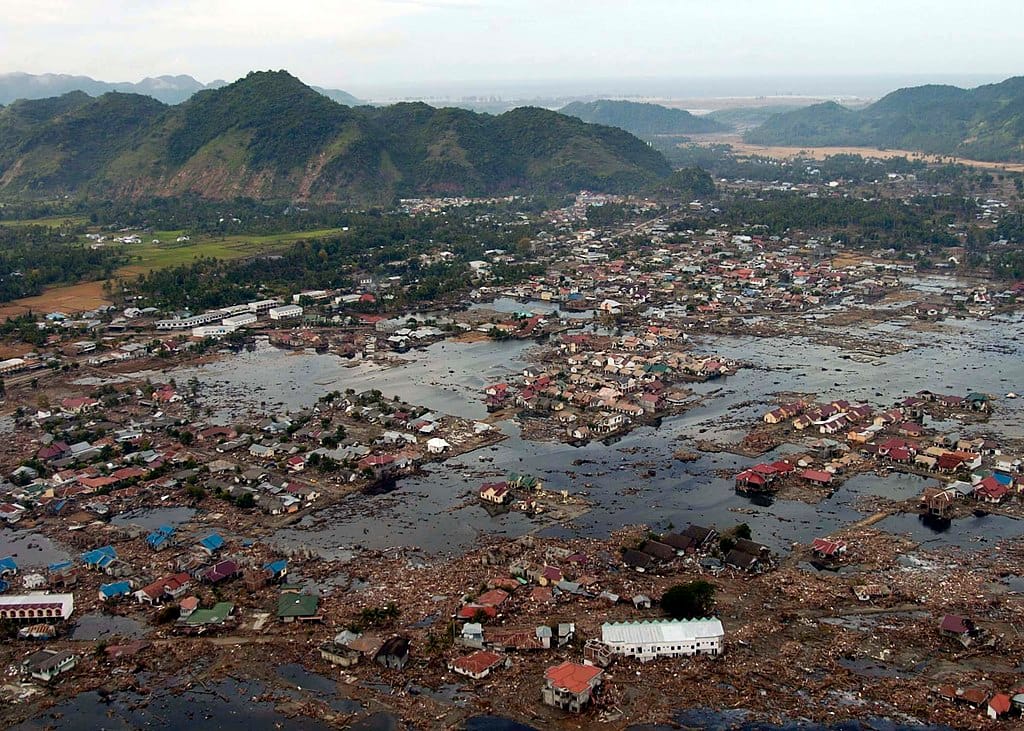
This wave crested high above manmade structures, sweeping across ports, fishing villages, and tourist resorts with equal impunity. Entire docks crumbled, boats were tossed like toys, and streets became rivers of chaos. The suddenness of the tsunami allowed no time for evacuation or defense; people were caught completely unprepared.
In some places, the wave reached heights of between 5 and 7 meters (16 to 23 feet), an extraordinary figure for the Black Sea, which’s relatively limited depth usually restricts such events.
Yalta in Ruins: Eyewitness Accounts from the Resort City
Yalta, the jewel of Crimea’s southern coast, bore the brunt of the tsunami’s force. Once known for its picturesque promenades and elegant sanatoriums, the city turned into a theatre of destruction.
Survivors recalled the nightmare with vivid clarity: families escaping rushing water in a desperate scramble, the cries of children lost in the flood, and the agonizing silence afterward. One eyewitness, Ivan Petrov, a fisherman at the time, described how his entire fleet was "swallowed in a single gulp of the sea," leaving the harbor desolate and helpless.
Hotel infrastructures were heavily damaged, historical gardens uprooted, and communications severed. The psychological impact was immense: a place of tranquility had become a spectacle of loss.
The Human Toll: Lives Lost and Families Shattered
Precise figures for casualties remain elusive due to the chaos of the era and limited reporting capacity. However, estimated fatalities numbered in the hundreds, possibly more, spread across multiple settlements along the Crimean coast.
The tsunami struck often at midday, when many were near the water’s edge, either working or enjoying leisure, contributing to the high death toll. Beyond deaths, thousands were displaced, homes destroyed, and livelihoods—especially for fishermen—decimated.
Communities struggled to bury the dead and console the living, many of whom faced harsh Soviet policies that complicated relief efforts. The human story of 1927 is one of sudden tragedy mingled with resilience under duress.
Rescue and Relief: The Immediate Aftermath
In the immediate wake, local authorities scrambled to provide assistance. Hospitals, ill-equipped, faced a deluge—both of injured and the fear-stricken. Volunteers formed rescue parties to salvage survivors from collapsed buildings and submerged homes.
The Soviet government, grappling with other national priorities, dispatched aid but limited resources slowed recovery. Psychological trauma lingered; many victims and their families received scant official recognition for their pain.
Survivor memoirs speak of neighborly solidarity as a vital means of survival, community cookfires and shared shelter softening the brutal reality of displacement.
Scientific Understanding: Early Theories and Responses
At the time, scientific knowledge of tsunamis was limited, especially in enclosed seas like the Black Sea. Specialists debated the causes—a rare earthquake, an underwater landslide, or even volcanic activity.
The event spurred Soviet and European scientists to investigate the geophysical dynamics of the region more deeply. However, the secretive nature of the USSR slowed dissemination of research to the international community.
This disaster laid foundational understanding for future geological and oceanographic studies, revealing that even smaller seas carried risks underestimated by contemporaries.
The Silent Sea: How the Black Sea’s Enclosed Nature Affected the Tsunami
Unlike open oceans, the Black Sea is bounded by land on all sides, affecting how waves behave within it. The tsunami waves reflected and refracted along shores differently from those in Pacific oceanic tsunamis.
The sea’s depth gradients, underwater topography, and enclosed basin meant that the tsunami’s energy concentrated and dispersed uniquely, causing complex patterns of destruction.
This helped scientists realize that enclosed or semi-enclosed bodies of water are capable of generating potentially lethal tsunamis, challenging earlier assumptions that confined seas posed limited risk.
Political Ripples: Impact on Soviet Governance and Local Authorities
The 1927 tsunami had political reverberations. Soviet authorities worried that natural disasters could undermine their consolidation efforts in border regions like Crimea.
Relief and reconstruction became tools of propaganda: showcasing Soviet power to restore order and safety. Yet, the regime’s tight control over information meant that public communication about the disaster was often shaped to emphasize heroism and downplay vulnerabilities.
Local officials had to balance the demand for rapid rebuilding with scarce resources, navigating a fraught political environment increasingly suspicious of local autonomy or dissent.
Economic Consequences: Damage to Crimean Infrastructure and Tourism
Economically, the tsunami was a significant blow to Crimea’s fledgling tourism industry. Resorts like Yalta saw dramatic drops in visitors in the months following, as the infrastructure for hosting guests—from rail links to bathhouses—was damaged or destroyed.
Fishing, a traditional local livelihood, was decimated with the loss of boats, gear, and fish populations disrupted by seabed upheaval. Agricultural zones along the coast also suffered from saltwater intrusion.
Rebuilding took years, with economic recovery uneven and slow, adding to the region’s fragile post-war economic foundation.
Cultural Shock: Collective Memory and Trauma Among Crimean Communities
Though officially muted in Soviet narratives, the tsunami became etched in the local cultural memory. Oral histories keep alive stories of sudden devastation, heroic rescues, and enduring loss. Folk songs and regional poetry occasionally recall the day, casting the sea as both nurturer and destroyer.
Some Crimean Tatars integrated these memories into their oral traditions, a poignant reminder of how nature’s violence intersects with human identity and history.
Yet, the trauma also left scars—emigration, altered family histories, and hesitancy around the sea remained part of the community psyche for decades.
The Black Sea Tsunami in Soviet Archives and Historical Silence
Searching Soviet archives reveals a complicated relationship with the 1927 tsunami. The event is documented but often overshadowed by political priorities and censored from broader public discourse.
This silence speaks volumes about how regimes manage collective trauma: preserving control over narratives and focusing public attention elsewhere.
Only more recently, with declassification and international scholarship, has a fuller picture emerged, restoring the tsunami to its rightful place in Crimean and Black Sea history.
Lessons Learned: Advances in Seismic and Tsunami Research Post-1927
The catastrophe galvanized both Soviet and international scientists to better monitor seismic activity in the Black Sea and develop early warning systems.
By mid-20th century, advances in seismology and oceanography included studies of underwater landslides, tectonic faults in enclosed seas, and tsunami wave patterns—crucial for disaster preparedness.
These scientific strides trace their lineage back to the stark lessons of 1927, informing modern policies in Crimean coastal management and beyond.
Comparative Perspectives: Black Sea vs. Pacific Tsunamis
When comparing the Black Sea tsunami of 1927 to the infamous Pacific tsunamis—the 1946 Aleutian event or the 2004 Indian Ocean disaster—differences in scale, causes, and impacts emerge clearly.
While smaller in magnitude, the Crimean tsunami shared the same ruthless suddenness and deadly force, reminding us that such disasters are not exclusive to vast oceanic expanses.
This challenges any geographic complacency, emphasizing global vulnerability to nature’s unpredictable wrath.
An Uncommon Catastrophe: Why the 1927 Tsunami Still Fascinates
Historians and scientists remain fascinated by this event’s rarity and complex repercussions. It represents an intersection of natural catastrophe and geopolitical upheaval, illustrating how even forgotten disasters shape communities and challenge human assumptions.
This tsunami, largely overshadowed in popular memory, underscores the importance of studying local and regional histories alongside global narratives.
Modern Crimean Preparedness and Tsunami Awareness
Today, Crimea benefits from seismic monitoring stations and improved emergency protocols, but risk awareness remains imperfect.
The 1927 event features in regional disaster preparedness plans as a warning from history—an unsettling reminder that nature’s fury can strike even in seemingly benign settings.
Continued research, education, and infrastructure investment aim to prevent such human devastation from ever repeating.
Conclusion: The Enduring Legacy of a Forgotten Wave
The Black Sea tsunami of September 11, 1927, was a cataclysm cloaked in obscurity for decades, yet its ripples echo strongly in Crimean history and the collective consciousness of its people. Beyond mere statistics and destroyed buildings, it is a human story of unexpected loss, resilience, and the fragile dance between humans and nature.
This event shatters the illusion of security in familiar environs and calls us to respect the unpredictable forces that shape our world. In remembering the tsunami, we honor those swept away and strengthen our resolve to understand nature’s voice, even when it speaks from the depths of less-known seas.
FAQs
Q1: What caused the 1927 Black Sea tsunami near Crimea?
A1: The tsunami was triggered by a moderate-to-strong earthquake (estimated magnitude 6.0-6.5) in the southern Black Sea, which likely caused underwater landslides or seabed displacement, displacing water and generating the tsunami waves.
Q2: How many people died in the tsunami?
A2: Exact numbers are uncertain due to limited records, but estimates suggest hundreds died along the Crimean coast, with many more injured and displaced.
Q3: Why was the tsunami so unexpected in the Black Sea region?
A3: Unlike the Pacific Ocean, the Black Sea is an enclosed sea with historically low seismic tsunami activity, leading to a general unpreparedness and underestimation of such risks.
Q4: What were the immediate responses to the disaster?
A4: Local authorities and communities launched rescue and relief efforts despite scarce resources. The Soviet government provided aid, though the focus remained on propaganda and controlling public narratives.
Q5: How did the tsunami affect Crimean society and economy?
A5: It devastated fishing fleets, tourism infrastructure, and coastal settlements, causing prolonged economic hardship and shifting population dynamics due to displacement.
Q6: Has the 1927 tsunami influenced modern disaster preparedness in Crimea?
A6: Yes, the event prompted increased seismic monitoring and awareness, informing emergency response planning and coastal hazard assessment in the region.
Q7: Why was the event muted in Soviet accounts?
A7: The Soviet regime prioritized ideological narratives and control over information, often downplaying disasters that could be seen as signs of weakness or instability.
Q8: What makes the 1927 Black Sea tsunami historically significant today?
A8: It serves as a reminder of nature’s power even in less-expected places, contributes to scientific understanding of tsunamis in enclosed seas, and marks an important chapter in Crimean history.