Table of Contents
- The Calm Before the Wave: Rabaul’s Tranquil Morning
- Papua New Guinea’s Volcanic Heart: Geography and Vulnerabilities
- The Growing Menace: Tectonic and Volcanic Tensions in 1994
- September 19, 1994: The Silent Dawn of Disaster
- The Eruption Begins: Mount Tavurvur Roars to Life
- The Collapse and the Wave: Birth of the Rabaul Tsunami
- Panic and Flight: The Human Response Amid Chaos
- Surge and Devastation: The Tsunami’s Assault on Rabaul
- The Toll of Destruction: Lives Lost, Homes Wrecked
- Emergency Actions and the Role of International Aid
- Scientific Efforts: Understanding the Cataclysm
- The Intertwined Fate of Volcano and Tsunami
- Resilience in Ruins: The People’s Journey After Disaster
- Environmental and Economic Impact on Papua New Guinea
- Lessons Learned: Tsunami Warning Systems and Preparedness
- Memory and Myth: How the Rabaul Tsunami Lives On
- The Broader Pacific Context: Tsunami Threats Across Island Nations
- Voices from the Time: Eyewitness Accounts and Survivor Stories
- Scientific Advances Stemming from Rabaul’s Catastrophe
- Reflecting on Nature’s Dual Fury: Volcano and Wave
- Conclusion: The Enduring Spirit of Rabaul and Its People
- FAQs
- External Resource
- Internal Link
The Calm Before the Wave: Rabaul’s Tranquil Morning
On that fateful morning of September 19, 1994, Rabaul awoke under a sky painted with shades of soft coral and pale blue. Nestled on the northeastern tip of New Britain Island, in Papua New Guinea’s volatile volcanic arc, the town appeared serene — a vibrant port community ringed by the restless bulges of volcanic cones. Children greeted the day with laughter along dusty streets; fishermen prepared their boats; markets slowly filled with the scent of fresh produce and ocean breeze. The pulse of daily life beat steadily, unaware that nature’s wrath was quietly gathering, biding time to unleash a tragedy that would ripple far beyond this peaceful harbor.
Just hours later, that calm would shatter. The sky darkened, the earth trembled, and the ocean surged with deadly intent. The twin disasters of volcanic eruption and tsunami converged in a terrifying dance, transforming Rabaul’s idyll into a scene marked by chaos, destruction, and profound human loss. This is their story.
Papua New Guinea’s Volcanic Heart: Geography and Vulnerabilities
Rabaul sits precariously within the Pacific’s notorious “Ring of Fire,” a horseshoe of intense seismic and volcanic activity encircling the ocean basin. This region is shaped by the restless motion of tectonic plates — in this case, the convergence of the Pacific Plate and the Indo-Australian Plate. New Britain Island, part of the Bismarck Archipelago, was born from volcanic fire and is dotted with several active volcanoes, including the twin-peaked Tavurvur and Vulcan, looming over Rabaul’s harbor like ancient sentinels of fire.
The townspeople have long coexisted uneasily with this volatile environment. Generations learned to read the subtle warnings: trembling earth, changes in hot springs, unusual animal behavior. Yet the region’s geological tumult comes paired with a geographical fragility — steep coastlines, narrow bays, and a sea that can turn from tranquil to treacherous in moments. These factors, combined with dense human settlement near the shoreline, have historically exposed Rabaul to both volcanic hazards and the deadly potential of tsunamis.
The Growing Menace: Tectonic and Volcanic Tensions in 1994
By 1994, after a period of relative quiet, signs of restlessness began to stir beneath Rabaul. Small tremors had subtly increased in frequency, and volcanic gases emanated more strongly from the vents on Mount Tavurvur. Local scientists, though aware, struggled with the unpredictable timing of volcanic eruptions and the added threat of landslides that might upset the surrounding bay.
The tectonic plates grinding beneath New Britain were accumulating stress. The nearby subduction zone where one plate dives beneath another is a classic generator of both earthquakes and volcanic activity. While communities focused largely on the volcanic threats, no one fully grasped how this restless earth could trigger a deadly tsunami — a wave born not just of distant seismic events but from the very structure of the volcano itself.
September 19, 1994: The Silent Dawn of Disaster
The morning began like any other, but under the surface, the earth’s deep rumblings grew increasingly urgent. At approximately 8:41 AM local time, Mount Tavurvur unleashed a violent eruption. A plume of ash and smoke exploded upward, blotting out the rising sun and soon enveloping the harbor in a shroud of darkness. The air, tinged with sulfur and ash, grew thick and acrid.
Yet, the most deadly threat was still unseen. Not long after the blast, a part of the volcano’s eastern flank — a massive wedge of rock and earth — gave way, collapsing catastrophically into the harbor’s waters. This geological landslide sent an enormous displacement of seawater racing outward, triggering the tsunami that surged toward Rabaul’s coast.
The Eruption Begins: Mount Tavurvur Roars to Life
The sheer spectacle of Tavurvur’s eruption captivated scientists and residents alike. A cauldron of molten rock, ash, and gas exploded from the crater, casting glowing bombs and streams of lava. The vibrations shook buildings and shattered windows. People who had lived their entire lives under the air of dormant volcanoes now faced an indelible display of nature’s fury.
Volcanologists monitoring Tavurvur tried to gauge the eruption’s magnitude, but the scale of what followed overwhelmed all expectations. As the mountain vented its fury, the structural integrity of the volcano’s slopes faltered.
The Collapse and the Wave: Birth of the Rabaul Tsunami
At approximately 9:15 AM, the volcano’s eastern apron fractured and slid into Simpson Harbour, the heart of Rabaul’s settlement. This massive landslide plunged millions of cubic meters of rock and soil into the shallow bay, forcing the water upwards and outwards in a rapidly swelling wave.
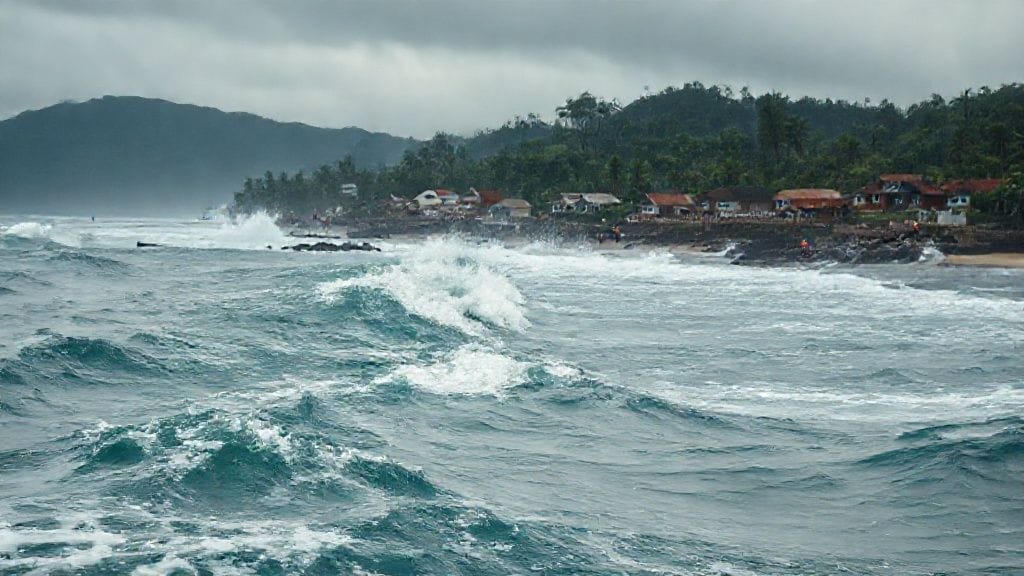
Witnesses described an unnatural rolling of the sea — a first surge that just barely allowed time for frantic warnings. The tsunami waves, measuring between 6 and 10 meters high, slammed onto shorelines, obliterating wharves, homes, and fishing boats in their path.
Panic and Flight: The Human Response Amid Chaos
The population, though familiar with periodic volcanic unrest, had little preparation for a tsunami arriving from the very volcano they feared. Shouts pierced the ashen air as residents scrambled to higher ground, clutching children and possessions.
The roads rapidly clogged with fleeing residents. Many found refuge on hills surrounding the harbor, while others were trapped by the swiftly rising waters. The eruption’s ashfall combined with tsunami flooding to choke escape routes and impede emergency responses.
Surge and Devastation: The Tsunami’s Assault on Rabaul
The waves battered coastlines relentlessly. In the low-lying coastal communities close to the harbor, structures were smashed or swept away. Electricity and communications faltered almost immediately, isolating Rabaul from external help.
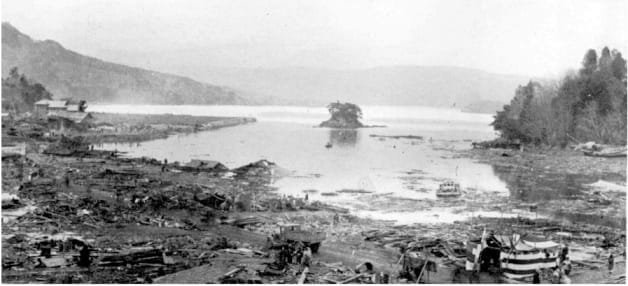
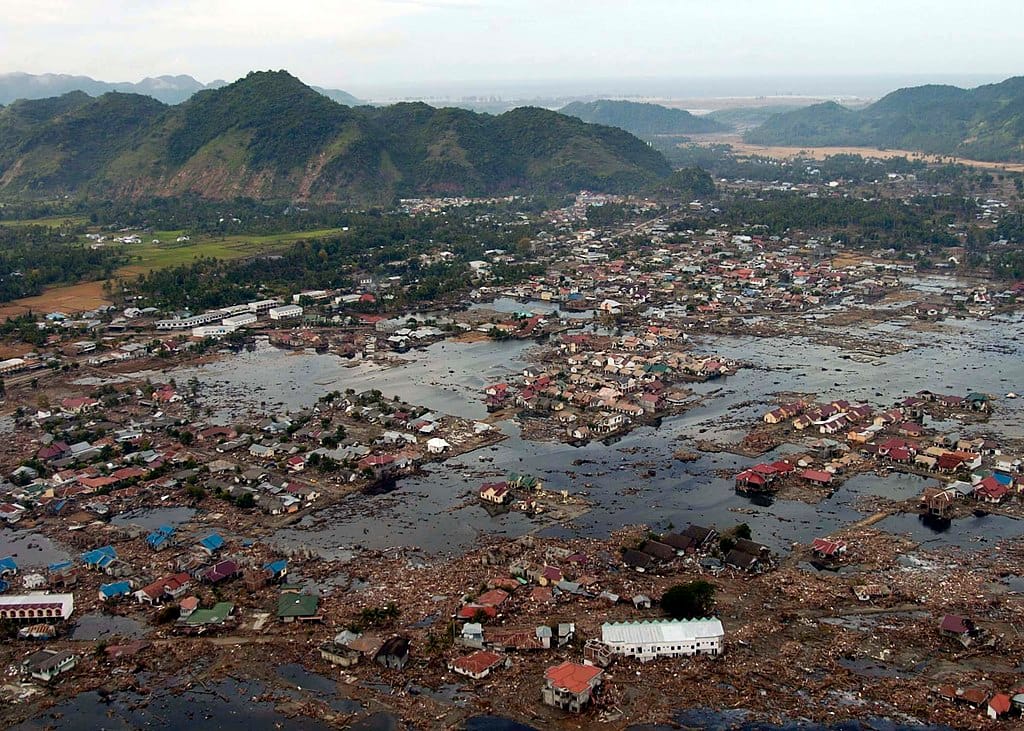
Harbor facilities, including docks critical to local fishing and transportation, lay in ruins. Boats were tossed inland or shattered against rocky outcrops. The tsunami’s sweeping force turned everyday streets into raging torrents, uprooting trees and vehicles.
The Toll of Destruction: Lives Lost, Homes Wrecked
The human cost was heartbreaking. Official reports tallied approximately 16 fatalities, though some estimates from the time suggested higher, accounting for missing persons in the chaotic aftermath. Hundreds were injured, many requiring treatments for burns, cuts, and broken bones sustained during the dual catastrophes of eruption and flood.
Over 300 houses were destroyed or severely damaged, displacing thousands. Entire communities faced homelessness and loss of livelihood, as fisheries and markets were decimated. The cultural heart of Rabaul, interwoven with the natural landscape, was scarred.
Emergency Actions and the Role of International Aid
In the immediate aftermath, Papua New Guinea’s government mobilized emergency units, though infrastructure damage hampered efforts. International agencies arrived swiftly, bringing medical aid, relief supplies, and expertise in disaster response.
Australian and New Zealand teams played pivotal roles, offering airlifted aid and supporting evacuation operations. Local and indigenous organizations emphasized culturally appropriate assistance, recognizing the trauma and logistical challenges intensified by Rabaul’s remoteness and rugged terrain.
Scientific Efforts: Understanding the Cataclysm
The 1994 Rabaul disaster galvanized volcanologists, seismologists, and tsunami researchers worldwide. Data collected from the eruption and subsequent tsunami provided valuable insight into the mechanisms linking volcanic landslides and tsunami genesis.
Analyses of seismic records, satellite imagery, and eyewitness accounts contributed to improved hazard modeling, stressing the critical need to account for local and secondary tsunami sources in volcanic regions. The event highlighted gaps in early-warning capabilities for combined geophysical threats.
The Intertwined Fate of Volcano and Tsunami
Unlike distant tsunamis triggered by undersea earthquakes thousands of kilometers away, the Rabaul tsunami was born of the volcano itself — a brutal reminder of the interconnectedness of Earth’s dynamic forces.
Mount Tavurvur’s eruption and flank collapse illustrated how a single natural event could cascade into multiple hazards. This dual nature challenged emergency planners and underscored the complexity of disaster mitigation in volcanic island settings.
Resilience in Ruins: The People’s Journey After Disaster
In the weeks and months following the catastrophe, Rabaul’s residents displayed remarkable resilience. Community solidarity flourished as families rebuilt homes and lives amid the ash and rubble. Traditional knowledge merged with modern aid strategies, fostering locally driven recovery.
Businesses gradually re-opened, schools resumed, and the rhythms of daily life returned, albeit permanently altered. The trauma was deep, but so too was the will to endure.
Environmental and Economic Impact on Papua New Guinea
Beyond immediate destruction, the tsunami and eruption significantly impacted Rabaul’s economy, heavily reliant on fishing, agriculture, and port activities. The marine ecosystem suffered from sediment influx, ash contamination, and destruction of coral reefs.
The disaster also prompted national dialogue on disaster preparedness, resource allocation, and sustainable development in hazard-prone regions. New challenges arose in balancing economic growth with environmental vulnerabilities.
Lessons Learned: Tsunami Warning Systems and Preparedness
The Rabaul tsunami, though localized, became a case study in the vital importance of integrated early-warning systems. In the years after, regional Pacific initiatives expanded monitoring networks to detect volcanic activity, landslides, and ensuing tsunamis more rapidly.
Education campaigns aimed at coastal communities emphasized evacuation plans and hazard mapping. Rabaul’s tragedy stood as a stark lesson: preparedness must encompass the full spectrum of geophysical risks.
Memory and Myth: How the Rabaul Tsunami Lives On
In Rabaul and across Papua New Guinea, the 1994 tsunami remains etched in collective memory. Oral histories, songs, and commemorations preserve the stories of loss and survival.
The event sparked cultural reflections on humanity’s relationship with the natural world — a dialogue between reverence and respect, fear and understanding. For many, the disaster transcended mere calamity, becoming a potent symbol of nature’s unpredictable power.
The Broader Pacific Context: Tsunami Threats Across Island Nations
The Rabaul tsunami fits into a broader mosaic of Pacific challenges. Island nations dotting the Pacific Ocean face constant risks from earthquakes, volcanic eruptions, cyclones, and tsunamis.
This event heightened regional cooperation, inspiring Pacific-wide networks for hazard assessment and resilience building. It reminded the world that islands, while stunningly beautiful, endure profound natural dangers that demand vigilance and collective action.
Voices from the Time: Eyewitness Accounts and Survivor Stories
Testimonies from survivors reveal the human dimension behind the headlines. One fisherman recalled watching the mountain “erupt like the wrath of the gods” and the sea “rise like a monstrous wall.” Another mother spoke quietly of clutching her children as the wave swept inland, the ash obscuring their vision.
Such personal stories lend depth and urgency to historical record, transforming statistics and scientific reports into living memory.
Scientific Advances Stemming from Rabaul’s Catastrophe
The integrative study of volcanic landslides and tsunami generation born from the Rabaul disaster advanced geoscience considerably. New models of slope stability, eruption precursors, and wave propagation emerged under the scrutiny of international research collaborations.
Instrumentation improvements — stronger seismographs, precise GPS monitoring, and real-time warning technologies — were propelled by the imperative to prevent future loss.
Reflecting on Nature’s Dual Fury: Volcano and Wave
The Rabaul event is a profound narrative of Earth’s might manifesting in intertwined forms: the mountain’s fiery outburst and the sea’s devastating surge. It stands as both a warning and a testament — that fragility and endurance coexist on these islands, and that human lives are inseparable from the forces shaping the planet.
Conclusion
The Rabaul tsunami of September 19, 1994, remains a haunting, powerful chapter in the story of nature’s unpredictable might. It revealed the fragility of human outposts at the mercy of geological forces beyond full control, yet it also illuminated resilience, courage, and the spectrum of human responses to catastrophe.
From the ashes and waves rose lessons, innovations, and stories that continue to resonate in Papua New Guinea, the Pacific region, and beyond. The event challenges us to listen more deeply to the whispers of the Earth and to build futures that honor both the power and beauty of the world we inhabit. In Rabaul’s tragedy lives a universal tale — warning, mourning, and hope intertwined in the eternal dance between humanity and nature.
FAQs
Q1: What caused the Rabaul tsunami in 1994?
The tsunami was triggered by a volcanic eruption of Mount Tavurvur, which caused a massive landslide of the volcano’s eastern flank into Simpson Harbour, displacing water and generating the waves that struck Rabaul.
Q2: How severe was the damage caused by the 1994 tsunami?
The tsunami waves reached heights of up to 10 meters in some areas, destroying hundreds of homes, damaging infrastructure, and leading to the deaths of roughly 16 people, with many more injured and displaced.
Q3: How did the eruption contribute to the tsunami?
The eruption destabilized the volcano's slope, causing the landslide that displaced large volumes of water, directly creating the tsunami.
Q4: What has Papua New Guinea done since to improve disaster preparedness?
Efforts have included enhanced seismic and volcanic monitoring, development of tsunami early-warning systems, community education programs, and regional cooperation on disaster response.
Q5: How do volcanic tsunamis like Rabaul’s differ from earthquake-generated tsunamis?
Volcanic tsunamis often result from landslides, flank collapses, or explosions associated with eruptions, and they can be more localized, whereas earthquake tsunamis typically stem from seafloor displacement over a broader area.
Q6: Are tsunamis common in Papua New Guinea?
While the region is tectonically active and faces tsunami risks, destructive tsunamis are relatively rare but pose an ongoing hazard, especially in volcanic coastal regions like Rabaul.
Q7: What scientific knowledge has advanced due to the Rabaul disaster?
The event improved understanding of volcanic flank stability, tsunami generation, and the importance of integrating geological hazards into comprehensive warning systems.
Q8: How is the 1994 disaster remembered locally?
Through oral histories, memorial events, and cultural expressions, the memory endures as both a warning and a source of communal identity and resilience.