Table of Contents
- A Deadly Morning on the Japanese Coast: The Tonankai Tsunami of 1944
- The Historical Context: Japan in the Midst of War and Disaster
- The Seismological Origins: Understanding the Tonankai Earthquake
- The First Tremors: December 7, 1944, Before the Wave
- The Earthquake’s Fury: The Ground Shakes in Honshū
- The Sea Withdrawns: The Ominous Sign of a Tsunami
- The Wave Strikes: A Wall of Water Devastates the Coastline
- Human Stories Amidst the Horror: Eyewitness Accounts and Survival
- The Immediate Aftermath: Fires, Floods, and Confusion
- The Toll of Devastation: Casualties, Damage, and Displacement
- The Government’s Response During Wartime Constraints
- Comparing Tonankai: Tsunami History in Japan and Worldwide
- The Scientific Breakthroughs Sparked by the Disaster
- Tsunami Preparedness: How 1944 Shaped Future Japanese Policies
- The Cultural Memory: Tonankai Tsunami in Literature and Art
- Lessons Learned: From Tragedy to Resilience
- The Tonankai Event in Modern Seismology
- Revisiting the Coast Today: Remnants and Memorials
- Conclusion: The Enduring Legacy of the Tonankai Tsunami
- FAQs: Understanding the Disaster and Its Impact
- External Resource
- Internal Link
From the shimmering horizon to the rugged cliffs along Japan’s southeastern coast, December 7, 1944, dawned like any other day — calm, cold, unassuming. But beneath the silent waves of the Pacific, immense geological forces had been quietly gathering their strength for years. As morning light spilled over the tranquil waters and the towns along the coast prepared for another day shadowed by war, the Earth was about to reveal its devastating power in a way few living could have imagined.
The ground beneath the Tonankai region convulsed, first with subtle shakes evolving into violent roars. People who lived their entire lives along these shores had always respected the ocean's capricious moods, but no memory or folklore was ready for the monstrous wall of water hurtling toward them moments later. The Tonankai tsunami wasn’t just a natural disaster; it was a brutal reminder of humanity's fragility amid nature’s relentless forces.
That fateful morning, as the seafront villages turned from shaking earth to surging water, history was etched into the stones and sands of Honshū’s coastline. It is a story layered with human courage, scientific inquiry, and profound loss — a narrative that still holds lessons for our present age.
The Historical Context: Japan in the Midst of War and Disaster
To understand the full gravity of the Tonankai tsunami, one must first grasp the unusual circumstances surrounding Japan in late 1944. The Second World War was unequivocally the defining feature of this period. The country was deeply embroiled in the Pacific War, facing not only military challenges from the advancing Allied forces but also severe economic and social strain. Resources were scarce, urban centers were battered by air raids, and civilian morale was fragile.
Natural disasters, however, struck indifferent to human conflict. Japan’s placement along the Pacific Ring of Fire meant its islands were perennially vulnerable to earthquakes and tsunamis. By December 7, 1944, many communities were already weakened by war’s disruptions, making the impact of the tsunami all the more catastrophic.
The Tonankai region, encompassing parts of Shizuoka, Aichi, and Mie prefectures, was historically prone to seismic activity along the Nankai Trough — an underwater trough and subduction zone notorious for producing powerful earthquakes. But the 1944 event still came with a surprise force and breadth. Japan’s focus on war preparedness meant civil defense mechanisms for natural disasters were often neglected or insufficient, compounding the vulnerability of coastal populations.
Yet beneath this harrowing backdrop, geologists and seismologists had begun piecing together the dangers lurking within the earth’s crust. The Nankai Trough was understood to be a ticking time bomb, but the exact timing of such a massive release of energy remained an enigma—one that would be brutally unraveled that winter morning.
The Seismological Origins: Understanding the Tonankai Earthquake
The Tonankai tsunami was triggered by a colossal undersea megathrust earthquake that struck along the Nankai Trough. This tectonic boundary is where the Philippine Sea Plate dives beneath the Eurasian Plate — a process called subduction — generating immense strain in the earth’s lithosphere over centuries.
Seismically, the 1944 earthquake measured an estimated magnitude of 8.1 — a category that situates it among the strongest shocks globally in recorded history. Occurring at approximately 13:35 local time, the quake ruptured a segment of the plate interface extending several hundred kilometers. This sudden displacement of the sea floor caused a massive displacement of water, which radiated outward as tsunami waves.
The Nankai Trough is infamous for producing episodic earthquakes roughly every 100 to 150 years, often in segments that can rupture independently or in tandem. The 1944 Tonankai event was linked historically and physically to the previous 1854 Ansei-Tōkai earthquake. Scientists now see these events as part of a repeating seismic cycle capable of generating devastating tsunamis capable of reshaping entire coastal regions.
The First Tremors: December 7, 1944, Before the Wave
Residents of towns like Shimizu, Omaezaki, and Tsu first felt the ground’s warning signs that December afternoon. Initial tremors began mildly but crescendoed rapidly into violent shakes. Unease turned into panic as buildings convulsed, and the very earth beneath feet buckled unpredictably.
Eyewitness accounts tell of families grasping for stability, of children thrown into confusion, and of an almost primal recognition that the land would no longer safely hold them. The sound was not just a rumble but a deep, menacing roar with a rumbling that seemed to pierce the silence of wartime austerity.
Still, as fear took hold, many focused on securing their homes or seeking shelter, unaware that the worst danger was yet to come from the sea.
The Earthquake’s Fury: The Ground Shakes in Honshū
The Tonankai earthquake’s ground motions lasted several minutes — a seemingly endless duration of terror that caused widespread destruction. Infrastructure from roads to railways suffered heavy damage, isolating many communities amidst the chaos.
Buildings, homes, and factories — some already weakened by years of wartime neglect — crumbled or were rendered uninhabitable. The landscape itself transformed: cliffs fractured, landslides occurred, and fields cracked open.
For a moment, it seemed nature had exacted its retribution on the local population. But paradoxically, this was only the precursor to the more lethal onslaught looming beyond the shaking soil.
The Sea Withdrawns: The Ominous Sign of a Tsunami
One of the most haunting premonitions described by survivors is the strange behavior of the ocean immediately after the earthquake. Along the Tonankai coast, the sea receded dramatically — a phenomenon called a drawback.
Hundreds of meters of seabed were exposed as the water drew back, revealing coral reefs, shipwrecks, and the usually submerged coastline. This unnatural retreat was not a gift but a dire warning. Locals with experience knew that a sudden sea withdrawal meant the arrival of a tsunami was imminent.
Yet communication barriers and the moment’s confusion meant that few were able to evacuate to higher ground in time, making the next stage of the disaster especially deadly.
The Wave Strikes: A Wall of Water Devastates the Coastline
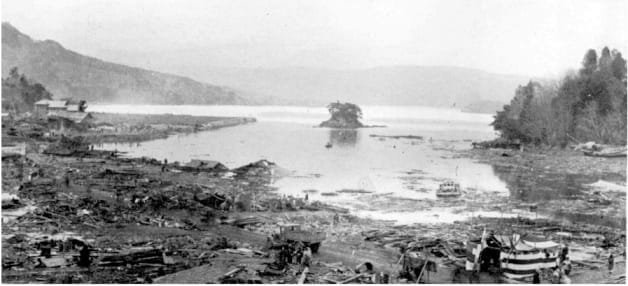
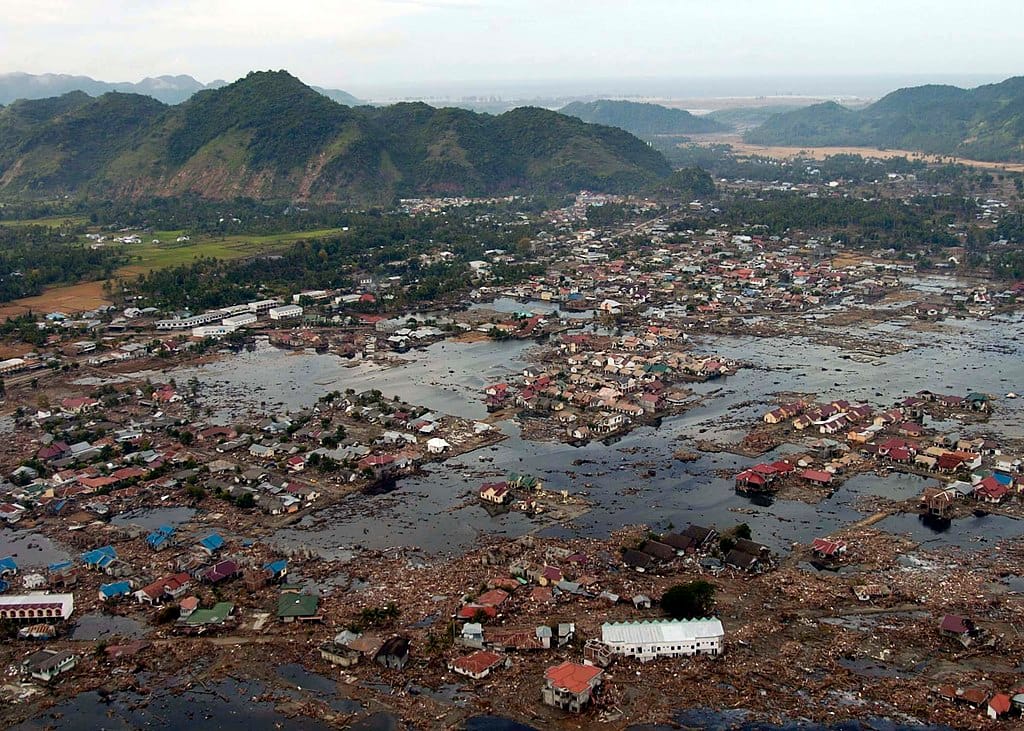
In a matter of minutes after the sea receded, the first monstrous tsunami waves crashed ashore. Some eyewitnesses describe towering walls of water reaching heights of 10 meters or more, bulldozing through fishing villages, homes, and farmland with brute force.
The waves traveled at jetliner speeds far inland, drowning everything in their path. Entire communities were submerged in seconds, with few able to evade the sudden inundation. Boats were thrust onto land, while others were swallowed by the surging waters.
The tsunami’s energy carried debris, trees, and wreckage far inland, compounding the destruction. Fire broke out in some areas due to ruptured gas lines or overturned stoves, turning the devastation into a multidimensional catastrophe of fire and flood.
Human Stories Amidst the Horror: Eyewitness Accounts and Survival
Despite the overwhelming carnage, stories of resilience and survival weave through the narrative of the Tonankai tsunami. One fisherman in Omaezaki recalled sensing the sea’s withdrawal and racing his family to a nearby hill where they watched the wave swallow their village.
Another survivor, a schoolteacher, described the petrifying moment when the water surged into her school — yet how she managed to shepherd her class onto upper floors, saving many children from the watery grave.
Such personal testimonies reveal not only the magnitude of loss but also the human spirit’s determination amidst chaos. Heroism emerged in rescues and self-sacrifice, despite the shortages of resources imposed by the ongoing war.
The Immediate Aftermath: Fires, Floods, and Confusion
In the hours following the tsunami, the Tonankai region was shrouded in smoke, water, and despair. With roads severed and communications down, coordinating rescue efforts was near impossible.
Relief organizations and the Imperial Japanese military prioritized wartime activities, limiting civilian rescue capabilities. Survivors faced cold winter nights exposed to the elements, scarcity of food, and fear of disease outbreaks.
Hospitals and medical facilities were overwhelmed or destroyed, complicating care for the injured. The compounded effects of war, earthquake, and tsunami painted a grim picture of suffering that would take months if not years to fully address.
The Toll of Devastation: Casualties, Damage, and Displacement
Estimates suggest that the Tonankai tsunami and earthquake claimed the lives of around 1,200 to 1,500 people, with thousands more injured. Houses and infrastructure worth millions in 1944 yen were swept away.
The very means of livelihood for many — fishing boats, coastal farmland, and trade routes — were decimated. Thousands were displaced, forced into temporary shelters and relying on scarce government relief which was hampered by wartime priorities.
The human cost was far-reaching: grief, economic hardship, and the irrevocable change of entire towns and families.
The Government’s Response During Wartime Constraints
The Japanese government, stretched thin by the war effort, struggled to mount an effective disaster response. Censorship and limited press freedom minimized public knowledge outside affected regions.
Emergency funds were slow to mobilize, and military logistics remained focused on battlefronts rather than civilian disaster zones. Still, there were heroic local responders, medics, and volunteers who acted despite these obstacles.
Lessons from Tonankai influenced postwar Japanese policy on disaster management and awareness, especially as the nation rebuilt itself from the ashes of war and nature’s fury.
Comparing Tonankai: Tsunami History in Japan and Worldwide
Japan’s tragic history with tsunamis is not limited to 1944. The Tonankai event shares a lineage with earlier disasters, such as the 1707 Hoei earthquake and tsunami and the 1896 Meiji-Sanriku tsunami.
Compared globally, Tonankai ranks among some of the deadliest 20th-century tsunamis, joining events like the 1933 Sanriku and the later 2011 Tōhoku tsunami. Each offers insights into how such disasters unfold and affect societies differently depending on preparedness and geography.
The Scientific Breakthroughs Sparked by the Disaster
The Tonankai tsunami, tragic as it was, also catalyzed scientific advances. It spurred more detailed seismic monitoring along the Nankai Trough and accelerated research into tsunamigenic earthquakes.
Seismologists developed better models for earthquake prediction and tsunami wave propagation, eventually contributing to early warning systems that would save countless lives in future decades.
The event underscored the crucial link between geology and human safety, forever changing how Japan considered its coastal vulnerabilities.
Tsunami Preparedness: How 1944 Shaped Future Japanese Policies
In the decades after the war, Japan emerged as a global leader in disaster preparedness — in no small part due to the lessons learned from events like Tonankai. Early warning centers, coastal evacuation routes, tsunami barriers, and public education campaigns became pillars of national policy.
Communities along Japan’s Pacific coast participate regularly in drills, understanding the warning signs that victims in 1944 sometimes missed. The Tonankai tsunami became a grim benchmark for preparedness standards.
The Cultural Memory: Tonankai Tsunami in Literature and Art
The trauma and heroism of the Tonankai tsunami have echoed in Japanese culture. Poems preserve the sorrow and reverence for nature’s forces; paintings memorialize scenes of both destruction and survival.
Documentaries and survivor memoirs ensure that the event remains vivid in collective memory, prompting reflection not only on tragedy but also the enduring resilience of the human spirit.
Lessons Learned: From Tragedy to Resilience
Tonankai reminds us that nature’s violence respects neither peace nor wartime. The disaster highlighted vulnerabilities that modern societies must address proactively.
Yet, it also demonstrates the capacity of communities to rebuild, adapt, and honor traditions while embracing modern science and preparedness. The legacy is a testament to courage amid calamity.
The Tonankai Event in Modern Seismology
Today, seismologists continue to study the Nankai Trough as a source of potential megathrust earthquakes and tsunamis. The 1944 Tonankai event serves as a critical case study for understanding rupture patterns and tsunami generation.
Modern monitoring systems, including ocean-bottom sensors and satellite observation, build upon lessons from Tonankai to anticipate and mitigate future disasters.
Revisiting the Coast Today: Remnants and Memorials
Present-day towns along Japan’s Tonankai coast show both scars and strength. Memorials honor those lost, often marked by stone monuments and annual ceremonies.
Urban planning has integrated tsunami risk zones, with elevated shelters and historical markers educating residents and visitors alike. The physical landscape testifies to both destruction and rebirth.
Conclusion
The Tonankai tsunami of December 7, 1944, remains a poignant chapter in Japan’s intertwined history of geological upheaval and human endurance. It struck at a time of national crisis, compounding the trials of war with the raw devastation of natural disaster. Yet amid the shaking earth and fleeing waves rose stories of heroism, community resilience, and scientific awakening.
To revisit Tonankai is to confront the profound relationship humanity shares with the natural world — a relationship marked by fragile balance, unpredictable violence, and, ultimately, hope. Our knowledge, preparedness, and compassion continue to evolve because of sacrifices made that winter day over seven decades ago. In remembering Tonankai, we honor all who were lost and pledge vigilance against nature’s uncertain might.
FAQs
Q1: What caused the Tonankai tsunami of 1944?
A1: The tsunami was triggered by a megathrust earthquake measuring about magnitude 8.1 along the Nankai Trough, where two tectonic plates collide and slip, causing sudden seafloor displacement that generated powerful tsunami waves.
Q2: How many people died as a result of the Tonankai tsunami?
A2: Death toll estimates range from 1,200 to 1,500, with many more injured and displaced, compounded by the challenges posed by World War II at the time.
Q3: Why was the tsunami so devastating despite warnings?
A3: The rapid onset after the earthquake, combined with a lack of an early warning system and wartime communication difficulties, meant many people could not evacuate after noticing the sea’s withdrawal.
Q4: How did the Japanese government respond to this disaster during wartime?
A4: The military and government prioritized war efforts, limiting disaster response capabilities. However, local volunteers and emergency services attempted to provide aid despite resource shortages.
Q5: What scientific advances resulted from studying the Tonankai tsunami?
A5: The event spurred detailed seismic research, modeling of megathrust earthquakes and tsunami formation, and laid groundwork for future early warning systems and preparedness plans.
Q6: How did the Tonankai tsunami influence Japan’s modern disaster preparedness?
A6: It emphasized the need for coastal evacuation plans, public education, and infrastructure such as tsunami barriers, greatly influencing postwar safety measures still in use today.
Q7: Are there memorials commemorating the victims of the Tonankai tsunami?
A7: Yes, several coastal towns have monuments and hold annual remembrance ceremonies to honor those lost and keep public awareness alive.
Q8: Is the Nankai Trough still a threat for future tsunamis?
A8: Absolutely. The Nankai Trough remains an active seismic zone and scientists closely monitor it due to the potential for future devastating megathrust earthquakes and tsunamis.