Table of Contents
- The Dark Horizon: Dawn of the Hoei Nankai Tsunami
- Japan in the Early 18th Century: A Nation on Edge
- The Seismic Lights: Prelude to Disaster
- The Great Eruption of Mount Fuji: Fire Heralds Flood
- The Hoei Earthquake Unfolds: Nature’s Fury Awakens
- The Tsunami's First Roar: Waves of Destruction
- Coastal Carnage: Towns Swallowed by the Sea
- The Human Toll: Stories of Survival and Loss
- Crisis in the Edo Shogunate: Governance in Turmoil
- Rebuilding Amidst Ruins: The Struggle to Recover
- Cultural Reflections: Art and Poetry Born from Tragedy
- Scientific Enlightenment: Early Understandings of Earthquakes and Tsunamis
- The Legacy of the Hoei Tsunami: Memory Engraved in History
- Comparing the Hoei Event to Modern Natural Disasters
- Japan’s Evolving Relationship with the Sea and the Earth
- Lessons from 1707: Disaster Preparedness Through the Centuries
- The Modern Echoes: How This Event Shapes Today's Disaster Protocols
- The Hoei Tsunami in Popular Culture and Education
- The Intersection of Myth and Reality in Japan’s Disaster Narratives
- Closing Reflections: Nature’s Unyielding Power and Human Resilience
1. The Dark Horizon: Dawn of the Hoei Nankai Tsunami
October 28, 1707, began like any other autumn day along Japan’s southern coast, but beneath the serene surface, the earth was readying a catastrophic fury. Fishermen cast their nets, farmers tended their rice paddies, and children played along the shores — unaware that the land’s shaking would soon turn to a wrathful engulfment by the sea. As the sun rose, a colossal earthquake gripped the region, followed by monstrous waves that swept away villages, dreams, and countless lives. This was the beginning of one of the deadliest tsunamis in Japanese history — the Hoei Nankai Tsunami.
2. Japan in the Early 18th Century: A Nation on Edge
Japan in the early 1700s was a land under the Tokugawa shogunate's strict, often fragile, rule. The nation was isolated from much of the world due to the sakoku policy, but internally vibrant through a rich culture, agrarian economy, and occasionally fragile social order. Coastal communities had always lived with the imaginary sword of natural disasters hanging above them—earthquakes and typhoons were known foes, yet the raw scope of the 1707 tragedy would rewrite their understanding of nature’s wrath.
The region known as Nankai lay along a volatile tectonic boundary, where the Philippine Sea Plate dives beneath the Eurasian Plate. This “subduction” zone was a ticking seismic time bomb, invisible and unpredictable in the pre-modern world.
3. The Seismic Lights: Prelude to Disaster
Though seismic science would only develop centuries later, folklore and observation told communities that earthquakes sometimes foreshadowed dangers from deep below. Days before the earthquake, numerous small tremors — foreshocks — murmured warnings. Some villagers reported unsettling changes: strange animal behavior, unusual cloud formations, and a subtle yet pervasive tension in the air.
Yet, there was no way to grasp the scale of the impending catastrophes. The great quake and tsunami would come with a suddenness that shattered lives and expectations.
4. The Great Eruption of Mount Fuji: Fire Heralds Flood
Remarkably, the Hoei Earthquake is historically linked in time with the last eruption of Mount Fuji, Japan’s iconic volcano. On December 16, 1707 — just seven weeks after the earthquake — Mount Fuji erupted violently, a spectacle unseen for centuries. Scientists now believe the massive tectonic shift from the earthquake destabilized the magma chambers under Fuji, igniting this fiery finale.
This rare geological concurrence underscored the chaotic might roiling beneath Japan’s surface, as mountain, sea, and earth moved in an ominous, deadly dance.
5. The Hoei Earthquake Unfolds: Nature’s Fury Awakens
At precisely 2:00 p.m. local time, the earth ruptured along the Nankai Trough, an underwater fault running parallel to Japan’s southern coast. The earthquake, a monstrous 8.6 magnitude estimated by modern measures, shook the archipelago from Kyushu to Shikoku and parts of Honshu with violent intensity.
Buildings crumbled, roads cracked, and countless lives were thrown into terror. The seismic waves traveled swiftly, yet it was the ocean itself that would become the deadliest agent of destruction.
6. The Tsunami's First Roar: Waves of Destruction
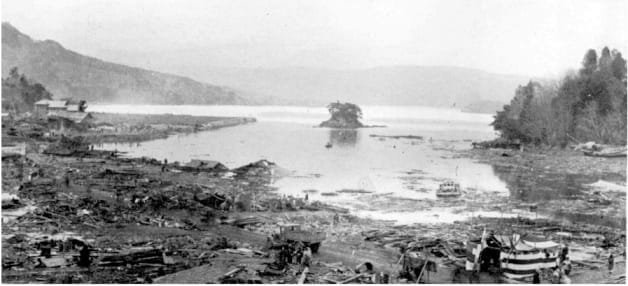
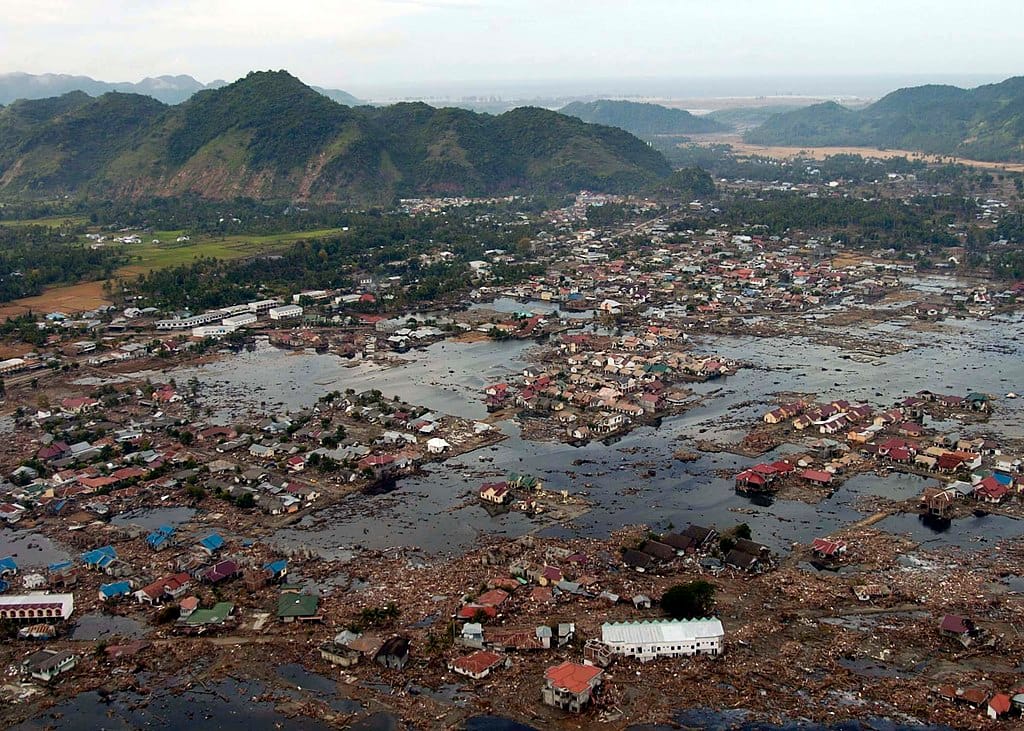
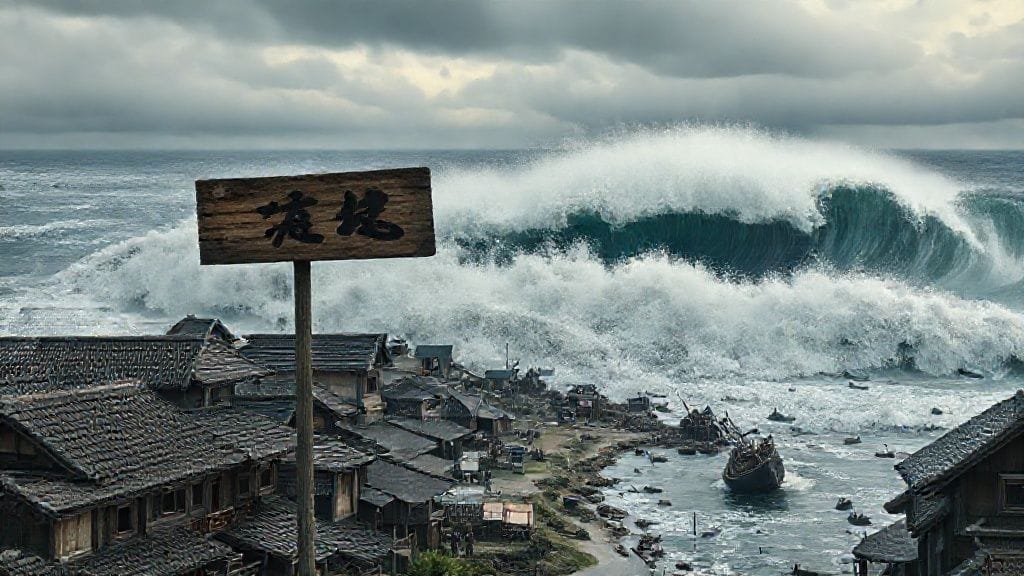
Within minutes, the violent quake's undersea displacement triggered a powerful tsunami. Massive waves, some over ten meters high, thundered toward the shores with lethal speed. Entire coastal villages were inundated, their wooden structures disintegrated or swept into the churning sea.
Eyewitness accounts speak of the “great black wall” of water advancing relentlessly, swallowing fishing boats and homes as if they were toys. Panic and desperation swept across the coast, as the scale of the disaster became clear.
7. Coastal Carnage: Towns Swallowed by the Sea
The hardest-hit areas were those along Tosa (modern Kochi Prefecture), Iyo, and Awa provinces. These regions faced the tsunami’s brutal assault with little warning or means of escape. Ancient ports, thriving fishing communities, and farming villages all succumbed to the deluge.
Ships moored in harbors were smashed against the rocky cliffs; cultivated fields turned to mud, and survivors faced starvation, disease, and despair in the disaster's aftermath. Historical records estimate that more than 5,000 people perished due to the tsunami alone, though the full toll may have been even higher.
8. The Human Toll: Stories of Survival and Loss
The devastation transcended statistics. Families were torn apart, survivors recounted harrowing escapes by clinging to debris or scaling hills just in time. Some elderly villagers whispered prayers desperately, others cursed the heavens.
One poignant story tells of a fisherman who noticed the sea recede unnaturally and ordered his family to higher ground moments before the tsunami’s arrival — his quick instincts saved lives. Yet many were less fortunate; entire lineages vanished in minutes.
9. Crisis in the Edo Shogunate: Governance in Turmoil
The shogunate government in Edo (present-day Tokyo) faced a crisis on multiple fronts. Besides managing the immediate human suffering, they had to contend with interrupted trade and terrified populations in distant domains. The scale of the catastrophe exposed weaknesses in disaster preparedness and communication within the vast Tokugawa polity.
Officials attempted to organize relief efforts, but infrastructure was inadequate; roads and ports were crippled, hampering aid. The disaster tested the resilience of the political order and revealed the vulnerability of human institutions against nature's forces.
10. Rebuilding Amidst Ruins: The Struggle to Recover
In the months and years following the tsunami, recovery was slow and painful. Villagers labored to reconstruct homes, restore farmland, and rebuild fishing fleets. Communities adapted by relocating higher inland or modifying building techniques to better withstand future shocks.
Yet the scars remained, in landscape and memory alike. The trauma also fostered communal bonds, a shared determination to endure and honor those lost.
11. Cultural Reflections: Art and Poetry Born from Tragedy
Japan’s traditional arts absorbed the emotional weight of the Hoei tsunami. Poets composed mournful haikus evoking the sea’s wrath, while painters captured floodwaters engulfing cherished landscapes.
These cultural expressions offered both a means to process grief and a reminder of human humility before nature. The epic disaster entered folklore and religious narratives, becoming a cautionary tale passed down generations.
12. Scientific Enlightenment: Early Understandings of Earthquakes and Tsunamis
Although modern seismology would not exist for centuries, proto-scientific observations following the event laid groundwork for Japanese understanding of seismic phenomena. Scholars began to link earthquakes, tsunamis, and volcanic eruptions more clearly, contributing to an evolving cultural sense of natural hazards.
Local chronicles carefully documented wave heights, timings, and damage patterns — data that astonishes contemporary historians and geologists alike.
13. The Legacy of the Hoei Tsunami: Memory Engraved in History
The event did not fade into oblivion; instead, it became a fundamental reference point in Japan’s collective memory. Memorial stones, shrines, and oral traditions preserved the memory of the lives lost and lessons learned.
Disaster myths often merge with reality here, reflecting the deep existential engagement of Japan’s people with their volatile environment.
14. Comparing the Hoei Event to Modern Natural Disasters
The scale and impact of the Hoei tsunami resonates with later catastrophes, such as the 1946 Nankai tsunami and the 2011 Tōhoku disaster. Each event reveals not only nature’s unyielding force but also the evolving resilience of human societies, science, and policy.
Judging by historical records, the 1707 tsunami ranks among the most devastating in Japan’s history in terms of wave height, affected area, and death toll.
15. Japan’s Evolving Relationship with the Sea and the Earth
Facing an environment shaped by earthquakes, volcanoes, and tsunamis, Japan developed unique religious, architectural, and social traditions to confront these dangers. Coastal communities learned to adapt fishing seasons, build warning systems, and embed respect for natural forces into cultural ethos.
The Hoei Tsunami stands as a brutal but pivotal moment in this ongoing dialogue between land, sea, and people.
16. Lessons from 1707: Disaster Preparedness Through the Centuries
The horror of 1707 underscored the vital importance of early warning signs and community response. Over centuries, Japanese society developed increasingly sophisticated methods, from mountain shrines dedicated to protective kami to Edo-period manuals for earthquake response.
Modern disaster preparedness in Japan — among the world’s most advanced — owes much to these cumulative lessons of history.
17. The Modern Echoes: How This Event Shapes Today's Disaster Protocols
Today, the 1707 Hoei tsunami informs scientific models and hazard maps used by Japan’s meteorological and disaster agencies. Studies of its timing, wave height, and damage are critical benchmarks in predicting future Nankai events, considered “the big one” waiting to strike again.
Communities remain vigilant, infrastructure is strengthened, and public education emphasizes readiness — living proof that the past continually shapes the present.
18. The Hoei Tsunami in Popular Culture and Education
From school textbooks to dramatic novels and documentaries, the Hoei tsunami persists in Japan’s storytelling. It stands as a stark reminder of human frailty but also the spirit of perseverance and solidarity.
Museums and local festivals commemorate the event, ensuring younger generations respect the power that lies beneath the earth and sea.
19. The Intersection of Myth and Reality in Japan’s Disaster Narratives
In blending history with myth, the Hoei Tsunami reflects Japan’s broader worldview, where worldly events are interwoven with divine will and spiritual forces. Stories of kami angered or appeased by human actions imbue the disaster with moral and existential significance.
This blend helps communities make sense of inexplicable suffering and find meaning beyond the material losses.
20. Closing Reflections: Nature’s Unyielding Power and Human Resilience
The Hoei Nankai Tsunami of 1707 remains a monumental chapter in Japan’s story — a vivid testament to nature’s audacity and humanity’s indomitable will to endure. From the trembling earth to the roaring wave, and in the voices of survivors and descendants, the event echoes through time as a call to humility, preparedness, and communal strength.
In the embrace of tragedy lies the seed of hope; through remembering, rebuilding, and respecting, each generation reaffirms life’s fragile beauty amid the earth’s relentless pulse.
Conclusion
The tragic tableau of the Hoei Nankai Tsunami is more than a mere historical episode; it is a mirror reflecting both the might of the natural world and the spirit of human survival. The reverberations of October 28, 1707, reached far beyond the shattered villages and submerged coastlines. They shaped cultural identities, scientific inquiry, political responses, and a collective consciousness tuned to the rhythms of the earth and sea.
As modern Japan stands fortified with technology and knowledge, the haunting shadow of Hoei serves as a timeless teacher. It beckons us to both confront our vulnerabilities and cherish the resilience born of shared suffering. Through the tides of memory and history, this event continues to guide and inspire, reminding us of our place within the vast struggle between man and nature.
FAQs
Q1: What caused the Hoei Nankai Tsunami of 1707?
A1: The tsunami was triggered by a massive undersea earthquake along the Nankai Trough, a subduction zone off Japan’s southern coast. The quake displaced large volumes of ocean water, unleashing devastating waves on coastal communities.
Q2: How powerful was the earthquake associated with the tsunami?
A2: Modern estimations indicate a magnitude of approximately 8.6, making it one of the largest recorded earthquakes in Japanese history, with intense shaking over a vast region.
Q3: What was the relationship between the Hoei earthquake and Mount Fuji’s eruption?
A3: The tectonic shifts caused by the earthquake likely destabilized the magma chambers beneath Mount Fuji, triggering its last recorded eruption about seven weeks later.
Q4: How many people died in the tsunami?
A4: Estimates suggest over 5,000 deaths directly caused by the tsunami, though exact numbers are uncertain due to limited record-keeping at the time.
Q5: How did the Hoei tsunami affect Japanese society and governance?
A5: The disaster exposed weaknesses in disaster response and communication within the Tokugawa shogunate, prompting efforts to improve relief coordination and infrastructural resilience.
Q6: In what ways does the Hoei tsunami influence modern Japan?
A6: It remains a critical reference in seismic and tsunami research, informing hazard assessments and disaster preparedness policies to reduce impacts of future events.
Q7: Are there memorials or cultural commemorations of the Hoei tsunami today?
A7: Yes, several coastal communities maintain memorial stones, shrines, and annual ceremonies honoring victims and promoting awareness of natural hazards.
Q8: What lessons can contemporary societies learn from the Hoei Nankai tsunami?
A8: The event highlights the importance of early warning systems, community preparedness, resilient infrastructure, and the cultural integration of disaster memory for effective responses to natural catastrophes.