Table of Contents
- A Roar from the Depths: The Meiō Nankai Tsunami of 1498
- Setting the Stage: Japan’s Turbulent Sengoku Era
- The Pacific’s Hidden Fury: Understanding the Nankai Trough
- September 20, 1498: Prelude to Catastrophe
- The Earthquake That Shook the Archipelago
- The Arrival of the Tsunami: Waves of Devastation
- Coastal Villages Swept Away: Eyewitness Terrains of Destruction
- The Human Toll: Lives Lost and Communities Shattered
- Religious Interpretations and Societal Trauma
- Early Responses and Reconstruction Efforts
- The Meiō Nankai Tsunami in Japanese Historical Records
- Comparing the 1498 Disaster to Later Nankai Tsunamis
- Geological Insights from the Ancient Calamity
- Lessons Learned: Shaping Japan’s Approach to Natural Disasters
- Echoes Across Time: The Tsunami’s Place in Collective Memory
1. A Roar from the Depths: The Meiō Nankai Tsunami of 1498
On the morning of September 20, 1498, the earth beneath Japan’s southern coastline convulsed with a fury unparalleled in living memory. The air, usually filled with the gentle hum of fishing villages, was ripped apart by a booming roar—an ominous prelude to a natural disaster of staggering magnitude. Moments later, the ocean betrayed its placid surface, rising in monstrous swells that tore through towns, engulfed fields, and shattered lives with merciless abandon.
This cataclysm, known to history as the Meiō Nankai tsunami, washed over the southern shores of Japan’s islands with uncanny force. Triggered by one of the most powerful earthquakes felt in the region, it wreaked havoc upon coastal communities, laying bare the fragile relationship between humans and the restless Pacific Ocean. It was a calamity at once ancient and timeless, a reminder of nature’s overwhelming power at the edge of a maritime nation’s destiny.
Yet, the story of the Meiō Nankai tsunami is not only about destruction. It is a narrative woven into the fabric of Japan's sociopolitical upheaval during the Sengoku period, a time rife with warlords and shifting alliances. It is a tale of resilience, cultural interpretations of disaster, and early understandings of seismic phenomena that would shape generations to come. Let us embark on a journey to unearth the full story behind this somber chapter of Japan’s history.
2. Setting the Stage: Japan’s Turbulent Sengoku Era
To grasp the significance of the Meiō Nankai tsunami, one must first understand the era in which it struck. The late 15th century was no tranquil period in Japanese history. The Ashikaga shogunate—once a symbol of centralized military government—was rapidly losing control over its fragmented domains. The Sengoku period, aptly named the “Warring States Era,” had begun in earnest, a half-century-long struggle marked by incessant warfare, political intrigue, and the rise of incalculable ambition among daimyos—feudal lords vying for power.
The social fabric was frayed; villages and towns often found themselves caught between the ambitions of competing warlords. The economic base, heavily reliant on agriculture and coastal fisheries, was vulnerable to the slightest disruption. Coastal regions, such as those along the Nankai seaboard, were lifelines of commerce yet dangerously exposed to the might of the Pacific. This fragile equilibrium rendered the population all the more susceptible when nature’s forces unleashed their fury.
Among these forces loomed the enigmatic Nankai Trough—a vast trench off Japan’s southern coast, a geological fault line that repeatedly manifested into earthquakes and tsunamis throughout history. Understanding this natural setting is essential to painting the full portrait of what transpired on that fateful day in 1498.
3. The Pacific’s Hidden Fury: Understanding the Nankai Trough
Beneath the waves off the southern coast of Honshu, Japan’s main island, the Nankai Trough lies like a sleeping giant—an area where the Philippine Sea Plate slides beneath the Eurasian Plate. This subduction zone has been the birthplace of some of Japan’s most destructive seismic events, generating massive earthquakes and the tsunamis that follow.
Throughout centuries, the Nankai Trough has produced a cycle of megaquakes approximately every 100 to 200 years. These quakes often rupture large sections of the fault, triggering huge tsunamis that surge onto nearby coastlines. The 1498 Meiō Nankai event was one such rupture, and studying its effects helps scientists today understand the mechanisms behind these recurring disasters.
Despite this knowledge, the people of 15th-century Japan had no scientific instruments to predict or measure earthquakes. Their understanding was rooted deeply in spiritual and cultural frameworks, interpreting such calamities as expressions of divine wrath or ominous portents. This duality of geological force and human interpretation colored every response to disasters like the Meiō tsunami.
4. September 20, 1498: Prelude to Catastrophe
The early morning of September 20, 1498, began under an unassuming sky. Fishermen prepared nets, farmers tended crops along the southern shores, and the air was filled with the usual sounds of rural life. Yet, beneath the tranquil surface of human activity, immense tectonic stress was ready to break free.
As the sun climbed higher, a sudden, unparalleled earthquake rocked the region. The ground undulated violently, buildings creaked and collapsed, and the natural order of the day fractured. Villagers, disoriented and terrified, stumbled into the streets, unsure whether the shaking would cease or disintegrate their lives utterly.
But the earthquake was but the opening act. The rupture along the Nankai Trough did not simply shake the land; it displaced an enormous mass of seawater. In the minutes following the quake, the sea withdrew unnaturally from its shorelines—a silence before a better-known terror: the tsunami.
5. The Earthquake That Shook the Archipelago
Estimations by modern seismologists suggest that the earthquake that caused the Meiō tsunami was among the strongest to ever strike Japan, perhaps reaching magnitude 8.6 or higher. The shaking was felt from the Kii Peninsula down to Shikoku and Kyushu, enveloping a wide area along the Pacific coast.
Historical documents from temple and clan records describe the tremors lasting an unusually long time, shaking the earth in grinding waves rather than abrupt jolts. The roads cracked, hillsides gave way to landslides, and the architectural heritage of towns was devastated. This disaster came at a time when many communities were already beleaguered by civil strife and famine, amplifying the psychological impact.
Amidst the chaos, survivors bore witness not only to the devastation around them but to the eerie sea retreat—the ocean pulling back to expose the sea floor. Unknowing of what this phenomenon signaled, many wandered dangerously close, lured by the exposed fishing grounds. This fatal curiosity would cost many their lives moments later.
6. The Arrival of the Tsunami: Waves of Devastation
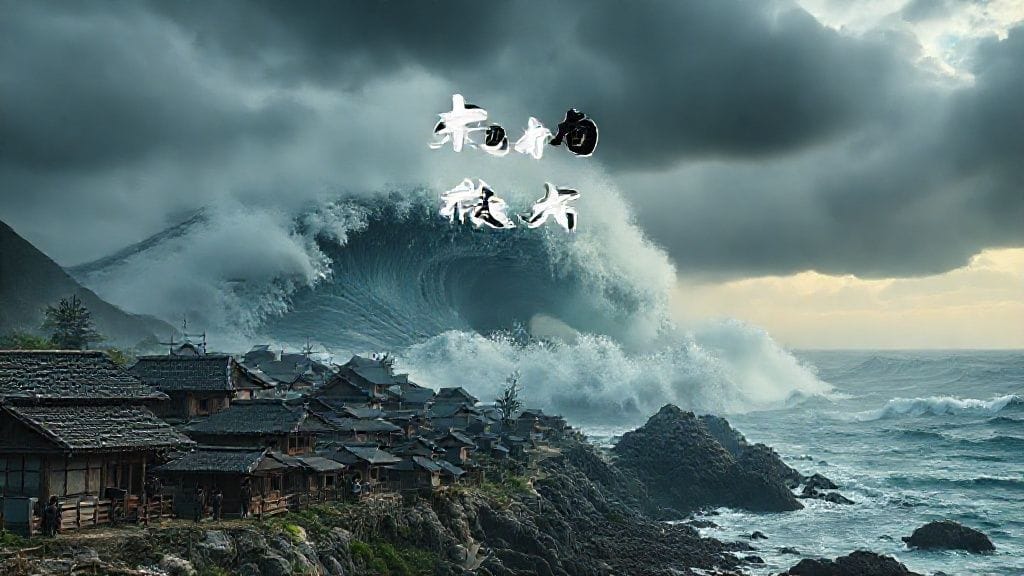
From the horizon, monstrous waves rose, some accounts describe them as being higher than the tallest buildings, though historical sources vary in exact measurements. Japanese chronicles refer to a “great flood of the sea,” a sudden surge that crashed ashore with relentless violence.
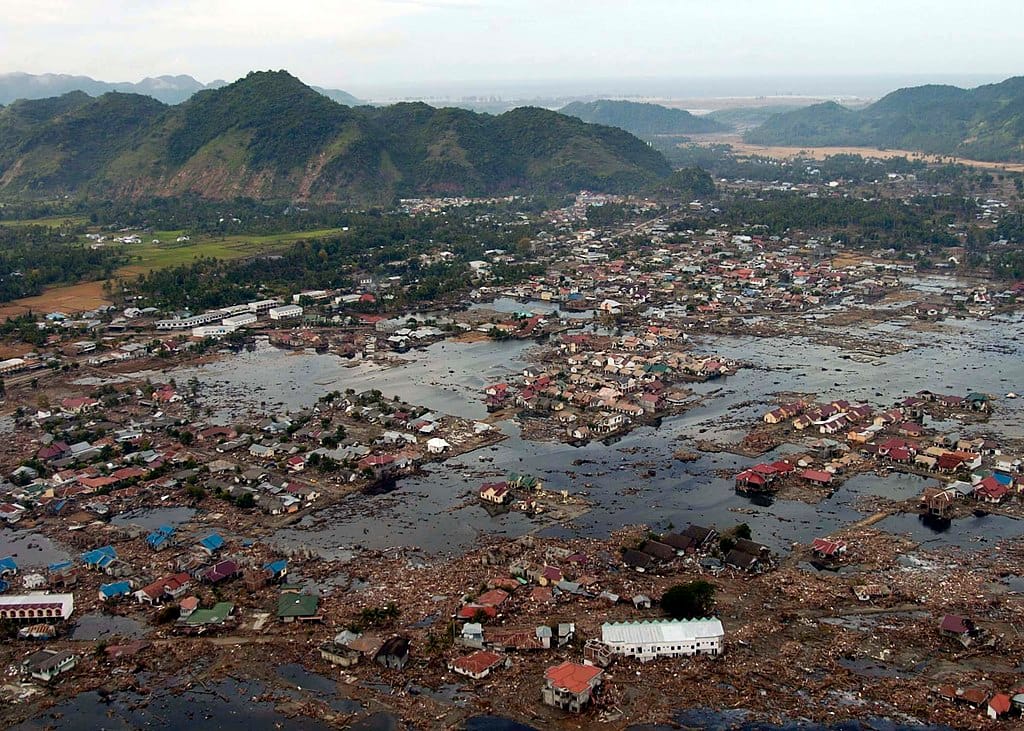
The tsunami swept across the coastal plains of the Kii Peninsula and the Shikoku coast, drowning villages, destroying crops, and overturning boats that once provided sustenance and livelihood. The speed of arrival left little room for escape, and the sheer volume of water overwhelmed both natural and man-made barriers.
Witnesses would recall tales of entire fleets torn from their moorings, shrines and temples washed into the sea, and large swaths of coastline rendered unrecognizable. The saltwater inundation contaminated fields, threatening the food supply for years. The landscape itself was subtly altered, with beaches altered and river mouths reshaped by the force of the tsunami.
7. Coastal Villages Swept Away: Eyewitness Terrains of Destruction
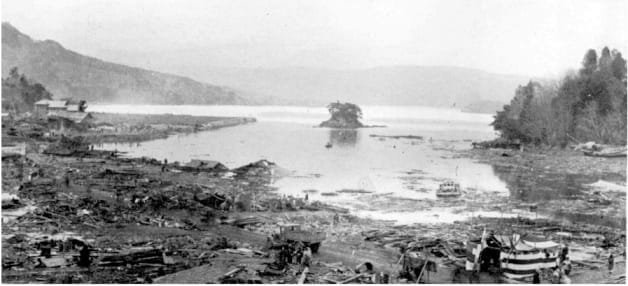
The human landscape bore the brunt of the tsunami’s fury. Fishing villages—centers of community and livelihood—were the hardest hit. Wooden homes, built close to the shore and simply constructed, buckled under the assault. Entire families perished beneath rubble and water.
One temple chronicle from the region mournfully records the destruction of a small village near present-day Wakayama. The account tells of mothers clutching children who were swept away, of the elderly drowning beneath swollen waves, and of survivors wandering amidst the ruins, their cries swallowed by the indifferent sea.
Such personal losses etched deep scars in communal memory. Yet, the disaster also revealed the resilience of these people. Stories recount how survivors, despite hunger and exposure, banded together to rebuild. It was a grueling recovery, but seeds of renewal were sown even in the mire.
8. The Human Toll: Lives Lost and Communities Shattered
Estimations of the death toll from the Meiō Nankai tsunami vary widely, but scholars agree that tens of thousands perished, potentially up to 31,000 individuals. This staggering loss placed the event among the deadliest tsunamis in Japanese history.
Beyond the immediate loss of life, the psychological trauma was immeasurable. Entire genealogies vanished, and communities faced the dual challenge of mourning and survival. The destruction of arable land and fishing infrastructure foreshadowed famine and poverty, compounding human suffering.
Moreover, the event disrupted social orders. The feudal lords in the region saw their power threatened not only by human rivals but by nature itself. Resources that could have been used for warfare or governance were redirected toward relief and rebuilding efforts.
9. Religious Interpretations and Societal Trauma
In a Japan deeply intertwined with Shinto and Buddhist thought, the Meiō Nankai tsunami was widely seen through spiritual lenses. Many contemporaries interpreted earthquake and flood as expressions of divine displeasure or cosmic imbalance.
Some chroniclers suggested that the calamity was a warning from the gods, perhaps an admonition against human hubris or moral decay amid the ongoing wars. Temples noted occurrences of miraculous survival or divine intervention, reinforcing faith as a means of coping.
This religious framing influenced rebuilding priorities. Temples and shrines were often among the first structures to be restored, functioning not only as spiritual centers but as beacons of hope and stability. Rituals were performed to appease sea deities and pacify restless spirits believed to be unleashed by the disaster.
10. Early Responses and Reconstruction Efforts
Though the 15th century lacked the centralized disaster response mechanisms of the modern state, local communities and feudal lords organized what relief they could muster. Reconstruction entailed not only physical rebuilding but reshaping social frameworks to address vulnerabilities exposed by the tsunami.
Agricultural lands soaked in saltwater required months, sometimes years, to regain productivity. Wells contaminated by floods had to be replaced. Efforts to rebuild homes incorporated practical adjustments, such as relocating some settlements further inland—a nascent example of disaster adaptation.
Moreover, the event likely influenced coastal fortifications and early warning customs. Oral traditions passed down advice to recognize seawater recession as a danger sign, a primitive but vital cultural response to tsunami risk.
11. The Meiō Nankai Tsunami in Japanese Historical Records
The Meiō tsunami is documented in a variety of historical sources, including temple records, provincial chronicles, and official government annals. Its mention is often coupled with other disasters of the era, weaving it into a tapestry of a time fraught with turmoil.
One particularly important source is the Nihon Sandai Jitsuroku, which gives accounts of natural disasters affecting the court and provinces. Local chronicles from Kii and Shikoku preserve observations of the earthquake’s timing, scale, and aftermath, providing invaluable evidence for modern research.
These records serve as both historical testimony and spiritual reflection, offering insight into how the event was lived, remembered, and rationalized by the people of the time.
12. Comparing the 1498 Disaster to Later Nankai Tsunamis
Japan’s history is marked by recurring Nankai Trough earthquakes and tsunamis, each event reinforcing and expanding collective memory. The 1498 tsunami is often compared to the 1707 Hoei earthquake and tsunami, as well as the more recent 1946 Nankai quake.
While the 1707 and 1946 events were better documented and studied, the 1498 Meiō tsunami provides critical data on the cyclical nature of these disasters. It underscores the persistent geological risks facing southern Japan and the importance of historical knowledge in modern disaster preparedness.
Notably, the scale of destruction and death in 1498 marks it as one of the most devastating, shaping long-term cultural attitudes toward earthquakes and tsunamis.
13. Geological Insights from the Ancient Calamity
Modern geology and seismology have turned to the Meiō tsunami to understand fault behavior and tsunami propagation in the Nankai Trough region. Analysis of sediment deposits, coastal uplift patterns, and historical descriptions helps reconstruct the earthquake’s magnitude and impact area.
Scientists identify the 1498 event as a megaquake causing significant crustal deformation, consistent with the subduction mechanisms at play offshore. The tsunami’s inundation distance, as inferred from sediment layers found inland, confirms the immense reach of its waves.
This knowledge contributes to hazard models predicting future Nankai events, vital for a country where preparedness saves lives.
14. Lessons Learned: Shaping Japan’s Approach to Natural Disasters
Though centuries have passed since 1498, the Meiō Nankai tsunami leaves an enduring legacy in Japan’s cultural and governmental approaches to disaster. The cycle of earthquakes and tsunamis emanating from the Nankai Trough impels a society keenly aware of its geological vulnerability.
Precautionary measures—ranging from architectural design, early warning systems, evacuation protocols, to educational programs—echo lessons from these ancient catastrophes. The event also immortalizes a principle deeply ingrained in Japanese culture: respect and humility before nature’s might.
Communities continue to honor the memory of those lost and use history as a guidebook for resilience.
15. Echoes Across Time: The Tsunami’s Place in Collective Memory
The Meiō Nankai tsunami is etched into Japan’s historical consciousness, passed down through oral histories, religious rites, and scholarly study. It reminds descendants of the delicate balance between human endeavor and natural forces.
In an archipelago frequently tested by tremors and floods, such memories serve as anchors, connecting generations who lived through upheaval with those seeking to prevent future tragedies. The tsunami is not only a story of loss but of perseverance, adaptation, and respect.
As Japan continues to face seismic threats, the echoes of 1498 ripple through time, urging vigilance and humility at the edge of the ever-restless Pacific.
Conclusion
The Meiō Nankai tsunami of September 20, 1498 is a profoundly human story told at the crossroads of nature’s overwhelming power and a society strained by political unrest. It encapsulates not just the raw violence of the waves and the shaking earth, but the courage of survivors, the faith of those who sought meaning amid chaos, and the enduring spirit that propelled rebuilding.
This event, etched into Japan’s layered history, teaches us the profound lesson that disasters are not only moments of destruction but also catalysts for reflection, adaptation, and hope. From the shattered villages of the 15th century arose communities wiser and more prepared, bound by shared memory and a reverence for the forces beyond their control.
In remembering the Meiō tsunami, we honor those lost, understand the natural world more deeply, and recognize our place within its vast and unpredictable rhythms. It is an enduring testament to resilience and humankind’s relentless will to live and rebuild, wave after wave.
FAQs
Q1: What caused the Meiō Nankai tsunami of 1498?
A1: The tsunami was triggered by a massive earthquake along the Nankai Trough, a subduction zone where the Philippine Sea Plate slides beneath the Eurasian Plate, causing large-scale tectonic displacement and ocean waves.
Q2: How many people died during the disaster?
A2: Estimates vary, but it is believed that up to 31,000 people may have perished due to the combined effects of the earthquake and resulting tsunami.
Q3: How did people at the time interpret the tsunami spiritually?
A3: Many viewed the disaster as a divine punishment or warning, reflecting a worldview where natural calamities were spiritual messages requiring religious response and rituals.
Q4: Did the tsunami affect Japan’s political stability during the Sengoku period?
A4: Indirectly, yes. The disaster strained local resources and leadership, complicating political rivalries and shifting priorities toward recovery rather than warfare.
Q5: How does the Meiō tsunami compare with other major tsunamis in Japan?
A5: It is one of the deadliest and most destructive, comparable to the 1707 Hoei earthquake and tsunami event, and provides significant data to understand the recurring nature of Nankai Trough disasters.
Q6: What lessons does the 1498 tsunami offer modern society?
A6: It underscores the importance of disaster preparedness, early warning systems, and cultural memory in managing natural risk, especially in seismically active regions.
Q7: Are there geological records confirming the 1498 event?
A7: Yes, sediment and uplift analyses support historical accounts, allowing scientists to reconstruct the earthquake’s magnitude and tsunami’s reach.
Q8: How is the Meiō tsunami remembered today in Japan?
A8: Through scholarly research, cultural traditions, and disaster education programs, it remains a poignant historical example informing present-day resilience.