Table of Contents
- Dawn Shattered: The Early Hours of May 16, 1968
- The Seismic Prelude: Understanding the Undersea Tremor
- Hachinohe and Aomori: Communities on the Edge of the Pacific
- The Arrival of the Giant Wall: The Tsunami Hits Land
- Chaos and Courage: Eyewitness Accounts Amidst the Flood
- The Scale of Devastation: Lives Lost and Homes Destroyed
- Emergency Response: Struggles and Heroism in the Aftermath
- Scientific Insights: What Made the 1968 Tsunami Particularly Deadly?
- Tsunami Preparedness Before 1968: A System Under Strain
- Japan’s Coastal Geography and Tsunami Vulnerability
- The Socioeconomic Impact on Northern Japan: Industry and Fishing Decimated
- National Mourning and Media Coverage: Voices from Across the Country
- Community Resilience: Rebuilding Hachinohe and Aomori
- Lessons Learned: Tsunami Warning Systems and Policy Reforms Post-1968
- Cultural Memory: How the 1968 Tsunami Shaped Regional Identity
- Comparing 1968 to Past and Future Tsunamis in Japan
- The Role of International Aid and Cooperation
- Oral Histories: Preserving Stories for Future Generations
- Scientific Legacy: Advances in Tsunami Research Sparked by the Disaster
- Reflection: The Enduring Spirit of a People Confronted by Nature’s Fury
Dawn Shattered: The Early Hours of May 16, 1968
May 16, 1968, broke over the northeastern shores of Japan’s Honshu Island with an eerie calm that belied the catastrophe to come. The gentle, salty air carried whispers of an ordinary spring morning: fisherfolk prepping their boats, children laughing near the docks, and townspeople trading their morning greetings amidst the bustling streets of Hachinohe and Aomori. Yet, beneath this veneer of everyday life, the earth was stirring—a distant, violent rumble would soon fracture both land and hope in a sudden, unforgiving instant.
As the clock struck 9 a.m., a powerful undersea earthquake rattled the floor beneath the Pacific, sending shockwaves through Japan’s seismic fault lines. In the span of minutes, ordinary life was eclipsed by an apocalyptic tidal force: a towering tsunami barreled towards the northern coast, leaving behind unimaginable destruction and irrevocable loss. This was no isolated tremor; it was a defining moment in Japan’s history, one etched into collective memory and scientific discourse alike.
The Seismic Prelude: Understanding the Undersea Tremor
The genesis of the tsunami lay far beneath the ocean’s restless depths. At 8:42 a.m., a magnitude 7.9 undersea earthquake rocked the offshore region to the east of the Tohoku area. The tectonic plates along Japan’s Pacific "Ring of Fire" had once again collided, releasing pent-up energy through a sudden, violent slip along the fault line. This subterranean upheaval displaced colossal volumes of seawater, generating waves that raced outward at jetliner speeds.
Japan, eternally poised on these restless seismic borders, had long experienced such tremors, yet the unpredictability of the tsunami’s arrival and magnitude caught many by surprise. Although the presence of early warning systems had begun to emerge post-World War II, the 1968 event exposed significant gaps in preparedness and understanding, especially for smaller yet fiercely destructive undersea quakes such as this one.
Hachinohe and Aomori: Communities on the Edge of the Pacific
Nestled along the northeastern coast were the cities of Hachinohe and Aomori, vibrant hubs of fishing, commerce, and daily life. Hachinohe, with its sprawling port and rich marine industries, was an essential artery for northern Japan, while Aomori, famed for its cultural festivals and deep connection to the sea, balanced tradition with modernity.
The people here were intimately familiar with the ocean’s dual nature—both a giver of life and a silent harbinger of death. Generations had built their economies and identities along these shores, but living so close to such power came with constant risk. Tsunami warnings, sirens, and evacuation routes dotted these towns, yet on that day, the sheer scale of the impending disaster rendered much of the community’s defenses tragically insufficient.
The Arrival of the Giant Wall: The Tsunami Hits Land
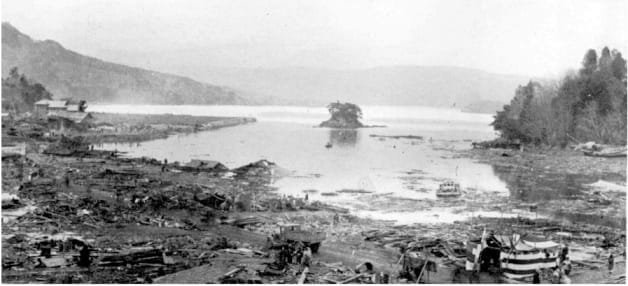
The first wave crashed ashore barely twenty minutes after the earthquake's occurrence, though the most devastating culminated waves surged with terrifying magnitude and force closer to 10 a.m. What survivors would later describe as a “mountain of water” roared inland, swallowing docks, homes, and ships alike. Street by street, neighborhoods were submerged beneath a chaotic torrent that swept everything in its path.
The wave’s height reached up to 10 meters (33 feet) in some locations, an unstoppable wall of churning water mixed with debris. Farmers’ fields were inundated, fishermen’s boats capsized or washed far inland, and countless buildings crumbled under the relentless pressure. Despite widespread efforts to evacuate, the speed and ferocity of the tsunami rendered many escape attempts futile.
Chaos and Courage: Eyewitness Accounts Amidst the Flood
Among the blackened wreckage and swirling debris, human stories of panic, bravery, and survival emerged. An elderly fisherman recounted how he had barely reached higher ground, watching helplessly as his livelihood vanished beneath the waves. A mother clutched her children, guiding them through the torrential ruins toward a small hilltop refuge.
Emergency responders faced impossible odds, navigating muddy waters and collapsed infrastructure, trying tirelessly to locate survivors. Local volunteers rallied in the face of despair, often risking their own lives to pull neighbors from the engulfing floodwaters. These narratives reveal the resilience and spirit that defines communities confronted with nature’s worst.
The Scale of Devastation: Lives Lost and Homes Destroyed
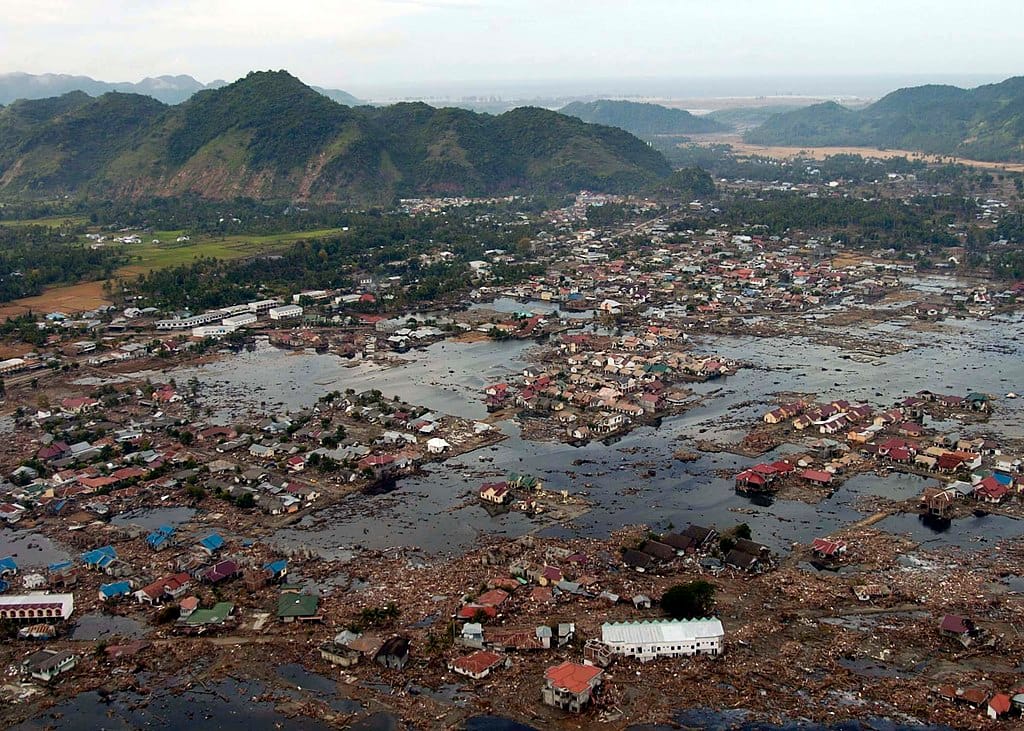
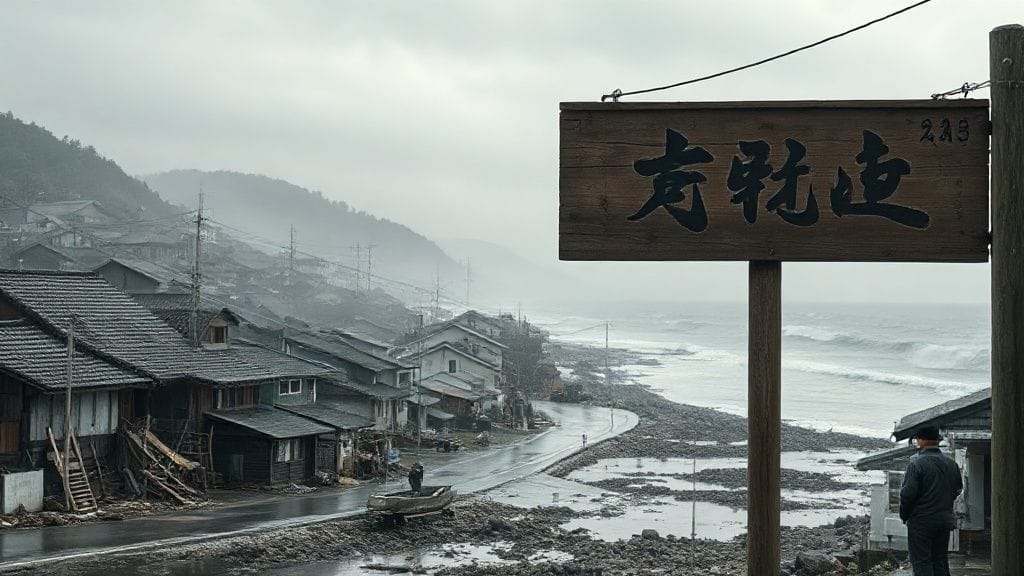
In the wake of the tsunami, the toll was harrowing. Official records indicate that over 180 people lost their lives, and thousands of homes in the Hachinohe and Aomori prefectures were destroyed or severely damaged. Entire fishing fleets, the economic backbone of these regions, were decimated, sinking under tons of seawater and debris.
The human cost was immense: families shattered, communities uprooted, and a profound psychological trauma that would haunt survivors for decades. Material losses were staggering, but the emotional vacuum left by relatives lost at sea presented a deeper, invisible scar on the social fabric.
Emergency Response: Struggles and Heroism in the Aftermath
The immediate hours following the tsunami were marked by frantic rescue efforts, improvised medical responses, and the mobilization of military and civic agencies. Communication lines had been severed, roads obliterated, and many survivors were isolated amidst the ruins.
Yet, amid the chaos, stories of extraordinary bravery surfaced. Firefighters and soldiers waded through hazardous waters, sometimes ignoring personal safety to deliver aid and recover the trapped. Hospitals struggled to accommodate the injured, while emergency shelters struggled with limited resources. These efforts were crucial in limiting further loss and catalyzed later reforms in disaster response protocols.
Scientific Insights: What Made the 1968 Tsunami Particularly Deadly?
Why was the tsunami of May 16, 1968, particularly devastating? Partly, it was due to the nature of the earthquake–a shallow, sudden slip along the subduction zone creating a pronounced vertical displacement of the seafloor. Moreover, the geomorphology of the coastal areas, with bays and inlets funneling the wave, amplified the height and force of the water as it neared land.
Scientists analyzing post-disaster data identified the phenomenon of wave "shoaling," where tsunami waves gain intensity as they approach shallower waters, as a key factor. The event also underscored the need for more precise seismic monitoring and real-time data transmission to coastal communities—a challenge still paramount today.
Tsunami Preparedness Before 1968: A System Under Strain
Prior to 1968, Japan had begun developing tsunami warning systems, influenced heavily by the deadly 1946 Nankai earthquake and tsunami. However, these systems were still rudimentary by modern standards—communication technology was slower, community awareness uneven, and infrastructure often lacking.
In northern Japan, despite previous seismic activity, the scale and rapid onset of tsunami waves outpaced warning dissemination. Public drills and evacuation plans existed but rarely accounted for the suddenness and localized intensity witnessed in 1968. This tragic event would prove pivotal in revealing these vulnerabilities.
Japan’s Coastal Geography and Tsunami Vulnerability
Japan’s very existence is shaped by its place atop the Pacific "Ring of Fire," a circlet of volcanic and seismic activity that poses constant threat. Its jagged coastline, punctuated by deep bays, estuaries, and river mouths, serves not only as a haven for marine life and commerce but also as concentrators of tsunami energy.
Regions like Aomori and Hachinohe sit perilously where tectonic plates converge, creating frequent earthquakes that can spawn tsunamis. The pattern of repeated geological warnings coupled with human development along these shores paints a complex picture of risk, resilience, and adaptation.
The Socioeconomic Impact on Northern Japan: Industry and Fishing Decimated
The destruction wrought by the tsunami extended beyond human casualties to economic paralysis. Fishing fleets, warehouses stocked with goods, seafood processing plants, and transportation networks found themselves submerged or obliterated. This not only jeopardized local livelihoods but also sent ripples through Japan’s broader supply chains.
Rebuilding meant significant financial investment, government aid, and time. Moreover, the psychological devastation affected labor productivity and community drive. The disaster forced government and industry leaders to rethink coastal economic infrastructure with disaster mitigation in mind.
National Mourning and Media Coverage: Voices from Across the Country
News of the tsunami’s destruction rippled across Japan, commanding attention and grief from urban centers distant from the site. Newspapers ran front-page stories with haunting images of destruction; radio broadcasts delivered up-to-the-minute reports, and national leaders issued statements of condolence and commitment.
The tragedy united a country long familiar with natural disasters in a collective mourning, while also igniting debates about disaster preparedness, infrastructure investment, and the responsibilities of the state toward vulnerable populations.
Community Resilience: Rebuilding Hachinohe and Aomori
Despite the scale of devastation, the spirit of the communities along the Tohoku coast was unbroken. Reconstruction efforts began swiftly, fueled by local initiative, government programs, and philanthropic support. New homes were built with higher foundations, evacuation routes were re-examined, and public awareness campaigns swept the region.
Residents adapted traditional knowledge with modern technologies to better predict and withstand future disasters. Memorials sprung up, bearing the names of the lost, and annual ceremonies fostered remembrance and unity.
Lessons Learned: Tsunami Warning Systems and Policy Reforms Post-1968
The catastrophe of May 16, 1968, sparked a significant re-evaluation of Japan’s approach to disaster defense. Scientific committees were formed to enhance seismic monitoring networks, communication lines were revamped for faster alerts, and community education programs were intensified.
Japan’s gradual evolution toward one of the world’s most sophisticated tsunami warning systems owes much to the bitter lessons of disasters like Hachinohe–Aomori. The policies enacted post-1968 laid foundational frameworks still in use and continuously refined today.
Cultural Memory: How the 1968 Tsunami Shaped Regional Identity
In the collective consciousness of northern Japan, the 1968 tsunami became a symbol of loss but also endurance. Folk songs, literature, and artworks emerged commemorating the event, encapsulating themes of nature’s power and human frailty.
Local schools incorporate tsunami education into their curricula, and community rituals address both the trauma and the hope kindled in its aftermath. This cultural memory serves as both a warning and a testament to survival for future generations.
Comparing 1968 to Past and Future Tsunamis in Japan
Japan’s history is rife with tsunami catastrophes—from the 1896 Meiji Sanriku tsunami to the 2011 Tohoku disaster—each differing in scale, cause, and impact. The 1968 event fits into this pattern as a crucial middle chapter, bridging older, less understood disasters and the modern era of scientific response.
Comparing these events reveals advancements in early warning, changes in urban planning, and shifts in societal resilience, underscoring an ongoing dialogue between humanity and nature’s caprices.
The Role of International Aid and Cooperation
Though primarily a domestic tragedy, the 1968 tsunami drew international attention and fostered cooperative exchanges between Japan and global scientific communities. Shared research, disaster response tactics, and technological innovation crossed borders, enhancing global understanding of tsunami phenomena.
This international collaboration laid groundwork for future partnerships, exemplifying how disasters can transcend nationalism to inspire human solidarity.
Oral Histories: Preserving Stories for Future Generations
As survivors aged, efforts intensified to record their testimonies, preserving vivid personal accounts alongside scientific data. These narratives provide invaluable insights into human experience during disaster—into fear, hope, loss, and courage.
Archiving these stories ensures that the human dimension of the 1968 tsunami endures beyond statistics, resonating emotionally with those who never lived through the waves but seek to understand their legacy.
Scientific Legacy: Advances in Tsunami Research Sparked by the Disaster
The 1968 event galvanized tsunami science in Japan. Greater focus was placed on underwater topography mapping, seismic wave modeling, and early warning technologies, significantly improving predictive capabilities.
Research stemming from this disaster directly contributed to development of Japan’s nationwide tsunami warning system inaugurated in subsequent decades, both saving lives and informing global best practices.
Reflection: The Enduring Spirit of a People Confronted by Nature’s Fury
The tale of the Hachinohe–Aomori tsunami is more than a chronicle of destruction; it is a narrative of endurance—a testament to human resilience in the face of overwhelming natural force. The shattered dawn of May 16, 1968, left scars both physical and emotional, yet the communities that rose from the wreckage embody a spirit of hope and renewal.
Their story reminds us that while nature is unpredictable and sometimes merciless, the human response can be marked by courage, solidarity, and an unyielding will to rebuild.
Conclusion
The 1968 Hachinohe–Aomori tsunami remains a defining chapter in Japan’s history of natural disasters, one that underscored the fragile interface between humanity and an often violent earth. It revealed painful gaps in preparedness but also sparked vital reforms, scientific innovation, and a renewed commitment to resilience.
Beyond statistics and policy, this event is foremost a human story—of lives interrupted, homes lost, and communities transformed. As waves reshaped the coastline, so too did they reshape society’s relationship with nature, imprinting lessons that continue to echo in Japan’s collective memory.
In remembering this disaster, we honor not only those who perished but also those who rose from the waters to rebuild, reminding us how deeply intertwined are tragedy and triumph in the human experience.
FAQs
Q1: What caused the Hachinohe–Aomori tsunami in 1968?
A1: The tsunami was triggered by a magnitude 7.9 undersea earthquake off the northeastern coast of Japan, which displaced large volumes of seawater and generated powerful waves.
Q2: How many people were killed in the 1968 tsunami?
A2: Over 180 people lost their lives due to the tsunami, with thousands more injured and displaced.
Q3: What were the main weaknesses in Japan’s tsunami preparedness at the time?
A3: Warning systems were slower and less widespread, communication infrastructures were vulnerable, and community evacuation plans were not sufficiently robust for the event’s rapid onset and size.
Q4: How did the tsunami affect local economies?
A4: The disaster decimated fishing fleets, port facilities, and local industry in Hachinohe and Aomori, leading to severe economic disruption in the region.
Q5: What changes were made in Japan’s disaster management after the 1968 tsunami?
A5: Japan enhanced its seismic monitoring, improved communication for early warnings, revised evacuation procedures, and invested in public education about tsunami risks.
Q6: How is the 1968 tsunami remembered culturally in northern Japan?
A6: Through memorial ceremonies, educational programs, folk art, and literature that preserve the memory of the event and honor the resilience of affected communities.
Q7: How did the 1968 tsunami influence global tsunami research?
A7: It contributed to greater international cooperation in seismic research, refinement of tsunami models, and development of more accurate early warning systems worldwide.
Q8: Are there preserved eyewitness accounts from the tsunami?
A8: Yes, many oral histories and personal testimonies have been collected, offering invaluable perspectives on human experience during the disaster.