Table of Contents
- The Night the Sea Turned Against Keelung
- A City on the Brink: Keelung in 1867
- Unseen Dangers Beneath the Waters: The Geology of Taiwan’s Coast
- The Earthquake That Shook the Island: Prelude to Disaster
- The Tsunami Strikes: Waves of Fury on December 18, 1867
- Panic and Desperation: Eyewitness Accounts from Survivors
- The Scale of Devastation: Lives Lost and Cities Broken
- Rescue and Relief: Community and Colonial Responses
- Navigating a World of Limited Communication and Aid
- Comparing Catastrophes: The 1867 Tsunami in Global Context
- The Role of Foreign Powers in Taiwan’s Disaster Management
- The Aftermath on Keelung’s Economy and Social Fabric
- How Nature Shaped History: Environmental Impacts of the Tsunami
- Tsunami Preparedness: Lessons (Un)Learned in 19th Century Taiwan
- Remembering the 1867 Keelung Tsunami: Collective Memory and Historical Records
- Scientific Understandings Then and Now: Earthquake and Tsunami Studies
- The Legacy of Disaster: Taiwan’s Path Toward Modern Seismic Awareness
- The Human Face of Tragedy: Stories of Loss, Survival, and Resilience
- Natural Fury and Human Endurance: Reflections on Disaster and Identity
- Conclusion: Echoes from the Past, Lights for the Future
- FAQs: Understanding the 1867 Keelung Tsunami
- External Resource: Wikipedia Link to Taiwan Tsunamis
- Internal Link: Visit History Sphere
The Night the Sea Turned Against Keelung
December 18, 1867, began like any other chilly winter day along Taiwan's northern coast, but as twilight deepened into night, an unfathomable horror erupted from the restless sea. In the bustling port town of Keelung, the winds howled ominously, the earth trembled faintly beneath feet, and a deadly, silent warning approached. Suddenly, massive waves—each a towering wall of water—rushed ashore with merciless force, swallowing homes, ships, and lives in a monstrous embrace. The tsunami that shattered Keelung's tranquility would become a grim chapter etched in the collective memory of Taiwan, a testament to nature’s unpredictable wrath and humanity’s fragility.
The night was cloaked in fear and chaos. People screamed, scrambled for higher ground, or froze in disbelief as the ocean — a source of life and livelihood — mutated into a ruthless executioner. The devastation was profound but shrouded in the haze of 19th-century isolation and limited historical documentation. Yet, the story of the 1867 Keelung tsunami is not just about destruction. It reveals resilience, the interplay of natural and human forces, and a vivid narrative that demands to be remembered.
A City on the Brink: Keelung in 1867
To understand the tsunami’s devastating impact, one must first see Keelung as it was before disaster struck. Nestled on the rugged northern coastline of Taiwan, Keelung served as a vital maritime node and fishing harbor. Its rocky inlets framed a port alive with trade—Chinese junks, foreign merchant ships, and the occasional colonial vessel threading access to the broader seas.
Keelung in 1867 was part of the Qing dynasty’s Taiwan province, an island of strategic and economic importance, caught between traditional Chinese governance and growing foreign interest in the Pacific. The population was diverse: indigenous peoples, Han Chinese settlers, merchants, fishermen, and increasing numbers of foreign traders, including Europeans and Americans. The town was modest yet vibrant, a melting pot shaped by the sea and its rhythms.
Yet, Keelung inhabited a precarious space — geographically blessed but geologically fragile. The area had known tremors and minor coastal flooding before, but nothing threatening enough to imprint deeply on the collective psyche. As winter winds chilled the air that December, few could anticipate that Keelung's relationship with the ocean was about to turn catastrophic.
Unseen Dangers Beneath the Waters: The Geology of Taiwan’s Coast
Taiwan is perched on the volatile boundary between the Philippine Sea Plate and the Eurasian Plate—a geotectonic cocktail prone to earthquakes, volcanic activity, and tsunamis. The island’s mountainous backbone rises dramatically, but it is the underwater faults that tell a story of lurking danger.
The narrow straits and deep basins around Keelung are part of a complex undersea landscape dotted with fault lines. These faults, when ruptured, can unleash enormous seismic energy, displacing massive volumes of seawater. In the 19th century, understanding of such geologic mechanics was embryonic at best; for local inhabitants, the earth’s tremors were omens or unexplained disasters.
Yet today, with the clarity of modern science, we recognize such undersea earthquakes—like possibly the one preceding the tsunami—as prime triggers. On December 18, 1867, an unseen rupture beneath the Taiwan Strait or nearby underwater faults jolted the ocean floor, setting the stage for the deadly waves.
The Earthquake That Shook the Island: Prelude to Disaster
Shortly before the tsunami’s arrival, residents of Keelung and neighboring areas reported tremors—an ominous harbinger. Witnesses recounted the ground shaking unsettlingly, doors rattling and windows clattering. The quake was not as devastating in itself as the waves that followed, but it was intense enough to unsettle the populace.
In many coastal regions worldwide, earthquakes sometimes presage tsunamis, their violent energy transient on land but catastrophic beneath water. For Keelung, this tremor was the invisible hand lifting the water’s wrath.
Historical records from nearby towns, ship logs, and oral histories hint at a moderate seismic event that day, though no centralized seismological data existed to precisely measure its magnitude. The quake was a grim signal, but the real disaster—the tsunami—arrived with little warning.
The Tsunami Strikes: Waves of Fury on December 18, 1867
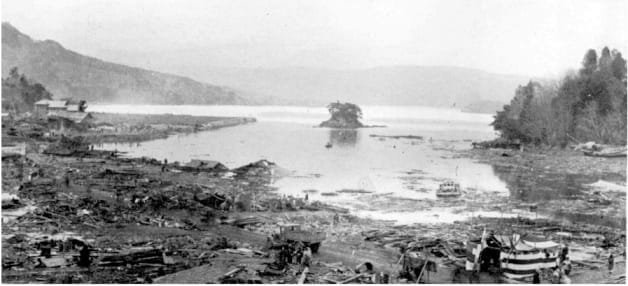
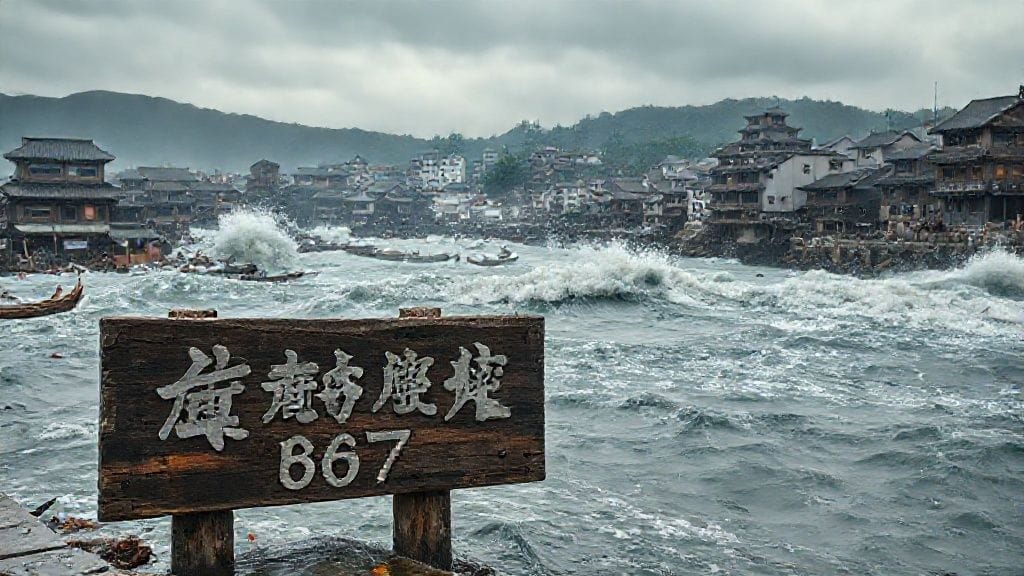
Suddenly, the ocean withdrew—a phenomenon now well recognized as a classic tsunami precursor, pulling away from the shoreline before the monstrous waves surge inland. Then, from the darkness, the sea roared back with a deafening cacophony: water walls several meters high crashed upon the coast, sweeping through the streets and docks with terrifying speed and force.
Eyewitnesses describe a succession of waves, some arriving minutes apart, each flooding further inland. Wooden houses and fishing boats were tossed about like toys, people were caught beneath the rushing flood, and the landscape transformed instantaneously into a watery grave.
The tsunami’s timing in the cold December night compounded the tragedy; many were at home, unprepared and vulnerable. The event obliterated infrastructure – the busy piers, warehouses, and homes – and stunned a community that had never confronted such relentless nature.
Panic and Desperation: Eyewitness Accounts from Survivors
We glimpse fragments of human experience through survivor testimonies, ship captain logs, and compilers of local folklore. A fisherman named Li described how he was thrown from his boat yet survived by clinging to driftwood. Others recalled the sea’s eerie retreat followed by waves taller than the tallest mast—an apocalyptic sight.
Many survivors spoke of the dreadful cries in the night—shouts for help, children weeping, elderly not able to flee fast enough. In the confusion and darkness, navigational landmarks disappeared under water. Some villagers took refuge on rocky outcrops or climbed hills, bearing silent witness to their homes drowning behind them.
The shock, trauma, and helplessness were universal. But in these testimonies lie threads of human courage—neighbors rescuing neighbors, strangers sharing shelter, acts of solidarity amidst despair.
The Scale of Devastation: Lives Lost and Cities Broken
Estimations of casualties vary, but contemporary sources suggest that hundreds perished in the tsunami’s wake. With no comprehensive census or disaster recording apparatus, exact numbers remain elusive, but the scale was catastrophic for the modest population of Keelung and surrounding villages.
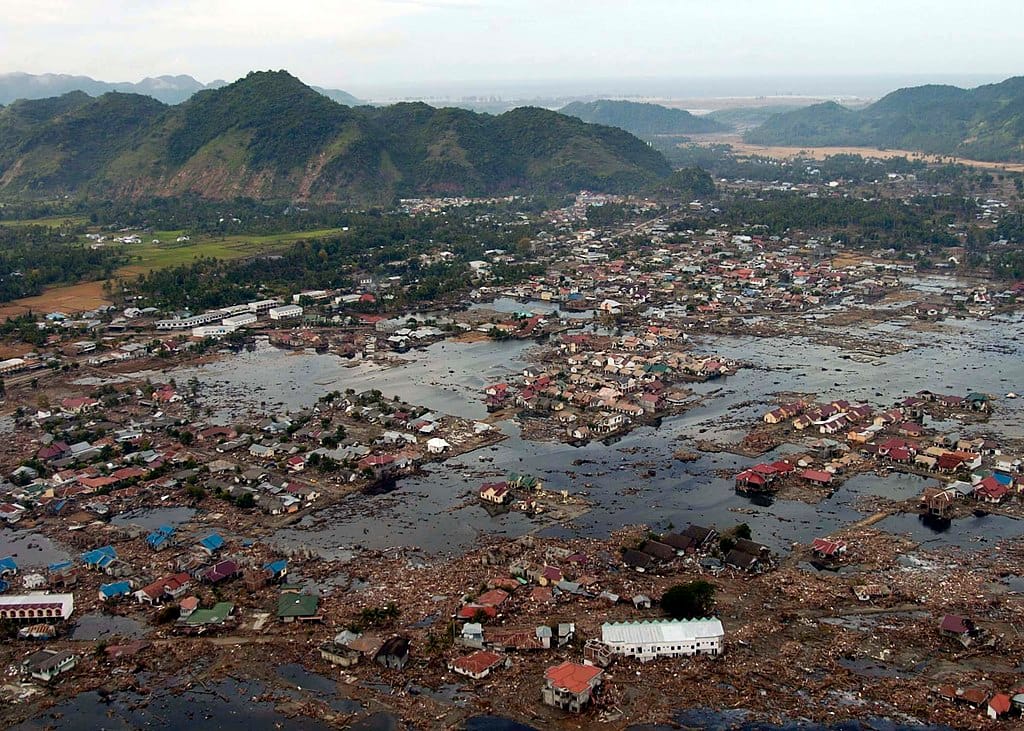
The physical destruction extended beyond lives. The port, lifeline to commerce and provisioning, was wrecked. Fishing fleets—souls’ bread and community backbone—were decimated. Public buildings, temples, and homes lay in splinters amid mud and debris.
The surrounding environment suffered as well — farmland inundated by saltwater, coastal forests uprooted, and fresh water contaminated. The ecological damage threatened food supplies and health, ushering in a secondary crisis.
Rescue and Relief: Community and Colonial Responses
In 1867, Taiwan was under Qing rule, but foreign presence, particularly commercial and missionary, was significant. Disaster response relied heavily on the local community, supplemented by aid from city officials and foreign consuls in nearby port cities.
Efforts to rescue survivors were hampered by the scale of destruction and limited resources. Temporary shelters were set up in higher ground or undamaged structures. Basic medical assistance came from missionaries and local healers, attempting to stem outbreaks of disease following flooding.
Aid shipments arrived sporadically, reflecting 19th-century logistical challenges. Yet the disaster galvanized a renewed attention from authorities toward disaster preparedness—a slow and arduous process shaped by political inertia and cultural perspectives on nature’s forces.
Navigating a World of Limited Communication and Aid
Unlike today’s interconnected world, 1867 Taiwan was isolated by technology and geopolitics. News of the tsunami took days or weeks to reach foreign ports and government centers. This communication lag hindered coordinated responses and external assistance.
Information traveled by ship and word of mouth; local officials struggled to assess and report needs accurately. The tragedy was, in effect, a private nightmare for Keelung’s inhabitants—a disaster witnessed on a remote stage, while the rest of the world remained unaware for some time.
Nevertheless, merchant ships from nearby regions eventually relayed accounts, contributing to a slowly spreading international recognition of Taiwan’s geophysical vulnerabilities.
Comparing Catastrophes: The 1867 Tsunami in Global Context
While the 1867 Keelung tsunami might seem isolated, it fits into a larger pattern of 19th-century natural disasters that shocked coastal communities worldwide—from the 1868 Arica earthquake and tsunami off South America to the 1854 Nankai tsunami in Japan.
These events highlight the limitations of pre-modern societies confronting the power of the earth and sea. Knowledge was scattered, scientific understanding incomplete, and early warning systems non-existent.
Comparing the Keelung tsunami to contemporaneous tragedies shows shared human experiences: initial disbelief, overwhelming loss, and eventually, perseverance.
The Role of Foreign Powers in Taiwan’s Disaster Management
In the 1860s, Taiwan was a geopolitical hotspot, with Europeans and Americans vying for influence in East Asia. Foreign missionary societies, traders, and naval forces were present, sometimes aiding local communities during disasters.
After the tsunami, foreign consuls liaised with Qing officials to provide aid and document the event. The catastrophe underscored the need for better understanding of natural hazards, indirectly influencing naval strategies and colonial policies.
However, the disaster also exposed tensions—local Chinese suspicion of foreigners, limitations of Qing governance, and competing interests shaping relief efforts. The tsunami was not merely a natural event but a moment intersecting with imperial politics.
The Aftermath on Keelung’s Economy and Social Fabric
Keelung’s economy, reliant heavily on maritime trade and fisheries, was crippled in the tsunami’s aftermath. Rebuilding docks, boats, and homes demanded resources scarce after such losses. Many families were plunged into poverty, and food shortages added to strife.
Socially, the disaster exposed class and ethnic divides—those with means could flee or rebuild faster; marginalized groups suffered disproportionately. Yet, the crisis also fostered renewed solidarity and communal cooperation, necessary for survival.
In the long term, the tsunami shaped migration patterns, influencing how residents rebuilt their lives and the town’s regional significance.
How Nature Shaped History: Environmental Impacts of the Tsunami
Beyond immediate destruction, the tsunami altered the physical landscape. Coastal reshaping, salination of land, and disruption of marine ecosystems affected agriculture and fisheries in ways that lasted years.
Floodwaters carried sediments, depositing debris inland but also changing soil composition. Some coastal wetlands were destroyed or transformed, with cascading effects on biodiversity.
These environmental disturbances factor into understanding how human societies adapt after such cataclysms, especially in an island setting closely intertwined with natural systems.
Tsunami Preparedness: Lessons (Un)Learned in 19th Century Taiwan
Despite the trauma, the 1867 tsunami did not immediately translate into systematic disaster preparedness. Traditional beliefs, limited technological means, and governance challenges delayed the development of early warning or evacuation protocols.
However, over time, anecdotal knowledge passed through communities—stories of sea withdrawal and tremors became wary signals. Western scientific approaches, introduced gradually through missionaries and traders, began to influence local understandings.
In retrospect, the event highlights the difficulty pre-modern societies faced in balancing fatalism and practical adaptation in the face of overwhelming natural forces.
Remembering the 1867 Keelung Tsunami: Collective Memory and Historical Records
Documentation of the tsunami is fragmentary but deeply poignant. Colonial reports, local gazettes, family oral histories, and missionary journals piece together a mosaic of remembrance.
The event entered folklore as a cautionary tale and a symbol of human vulnerability. However, unlike more recent disasters, it received little formal commemoration, its memory overshadowed by political upheavals and Taiwan’s transformation in the 20th century.
Today, the 1867 Keelung tsunami is recognized among scholars as a seminal event, a historic warning embedded in Taiwan’s cultural and geological narrative.
Scientific Understandings Then and Now: Earthquake and Tsunami Studies
In 1867, seismology was nascent, and tsunamis were poorly understood outside limited regional experiences. The Keelung tsunami was among many events slowly building a pattern recognized by early geologists and oceanographers.
Modern science has confirmed Taiwan’s seismic hazards through instrumentation, geological surveys, and historical reconstructions. Tsunamis are now studied using satellite data, seafloor sensors, and comprehensive hazard mapping.
The 1867 event reminds us how far science has come, and how much our ancestors had to rely on intuition and oral wisdom to survive.
The Legacy of Disaster: Taiwan’s Path Toward Modern Seismic Awareness
The tsunami was a tragic catalyst in Taiwan’s long journey toward seismic awareness and preparedness. Over time, the island developed stronger warning systems, building codes, and emergency protocols—especially after more recent 20th-century disasters.
The memory of 1867, while obscure, helped form a layered understanding that natural disaster risk is intrinsic to Taiwan’s identity. Government agencies, academic institutions, and communities now work vigilantly to mitigate similar tragedies.
This legacy underscores human resilience and the evolving relationship between society and the forces of nature.
The Human Face of Tragedy: Stories of Loss, Survival, and Resilience
Beyond statistics and geological analysis lie human lives forever changed. Families lost to the waves, survivors carrying invisible scars, and communities rebuilding from shared suffering illuminate the tsunami’s true impact.
Personal stories—of a mother holding her child aloft above the rising water, fishermen returning after days adrift, local leaders coordinating relief—imbue the historical event with depth.
These narratives inspire empathy and a reminder that history is, at its core, a tapestry of human experience.
Natural Fury and Human Endurance: Reflections on Disaster and Identity
The 1867 Keelung tsunami stands as a metaphor for the fragility and strength of humanity. Nature’s fury is indiscriminate, yet it also reveals human courage, adaptability, and the quest for meaning amid catastrophe.
For Taiwan, an island historically buffeted by earthquakes, typhoons, and waves, the tsunami embodies a defining moment. It forces reflection on coexistence with nature—sometimes tender, sometimes brutal.
As we commemorate such events, we reconnect with our shared vulnerabilities but also our profound capacity for endurance.
Conclusion
The December night of 1867 was a turning point—a harrowing encounter between the human world and primordial forces beyond control. The Keelung tsunami swept away lives, shattered homes, yet also cast a long shadow that would echo through Taiwan's history. It was more than a disaster; it was a profound lesson in humility, resilience, and adaptation.
Understanding this event challenges us to remember that the past is alive in the layers beneath our feet and the waves that kiss distant shores. It impels societies to respect nature’s power and to weave preparedness and compassion into the fabric of community life.
This narrative, rich with human voices, geological truth, and historical nuance, is a testament to survival amid chaos—a story not just of a moment, but of enduring spirit.
FAQs
Q1: What caused the 1867 Keelung tsunami?
A: The tsunami was triggered by an undersea earthquake linked to Taiwan’s position on tectonic plate boundaries. The seismic activity displaced large amounts of ocean water, generating destructive waves.
Q2: How many people died in the tsunami?
A: Exact numbers are unknown due to limited records, but estimates suggest hundreds of fatalities in Keelung and surrounding areas.
Q3: Were there any early warnings before the tsunami hit?
A: No formal warning systems existed, but residents noticed earthquake tremors and the sea’s unusual retreat. However, these signs were largely misunderstood or ignored.
Q4: How did authorities respond to the disaster?
A: Local Qing officials, foreign consuls, and communities organized relief efforts, but resources and communication were limited, hampering effective response.
Q5: Did the tsunami impact Taiwan’s development?
A: Yes, it damaged crucial infrastructure, affected economies, and highlighted the need for better disaster preparedness, influencing later policies.
Q6: How is the event remembered today?
A: The tsunami is recognized in historical and scientific circles, scattered through oral histories and archival documents, but public memory remains limited.
Q7: What lessons did Taiwan learn from this disaster?
A: The event underscored the importance of understanding seismic risks, developing warning protocols, and fostering community resilience.
Q8: Are there other notable tsunamis in Taiwan's history?
A: Yes, Taiwan has experienced multiple tsunamis due to its tectonic setting, with varying impacts over centuries.