Table of Contents
- The Deadly Dawn: Morning of the Moro Gulf Tsunami
- The Archipelago’s Restless Heart: Geology of the Philippines
- Historical Seismicity and the Shadow of Past Disasters
- August 17, 1976: The Earth Shakes Beneath Mindanao
- The First Wave: Earthquake’s Immediate Impact on Communities
- Ignorance and Desperation: The Arrival of the Tsunami
- A Wall of Water: The Destructive Force of the Moro Gulf Tsunami
- Villages Swept Away: The Human Cost
- Communication Breakdown and Rescue Efforts Amid Chaos
- The Role of Government and Military Response
- International Aid and the Philippines’ Struggle to Rebuild
- Eyewitness Accounts: Voices from the Ruins
- Seismology Advances Triggered by the Disaster
- The Moro Gulf Tsunami in Philippine Collective Memory
- Environmental Consequences: Flora, Fauna, and Coastlines Transformed
- Lessons Learned: Early Warning Systems and Preparedness
- The Moro Gulf Tsunami and Its Place in Global Tsunami History
- Commemorations and Memorials: Honoring the Lost
- The Resilience of a People: Recovery and Renewal
- Conclusion: Humanity in the Wake of Nature’s Fury
- FAQs: Unearthing the Moro Gulf Tsunami
- External Resource
- Internal Link
1. The Deadly Dawn: Morning of the Moro Gulf Tsunami
In the quiet hours of August 17, 1976, the sun rose over the southern Philippine islands with an eerie calm. Fishermen pushed their boats into the shimmering waters of the Moro Gulf, children laughed along sandy shores, and entire villages began their daily routines, unaware that within mere hours, nature would unleash a terror unlike any they had known. Without warning, the earth groaned, the seas rose, and a wall of water surged inland, drowning life and livelihoods in a matter of minutes. The Moro Gulf tsunami of 1976 remains one of the deadliest natural disasters ever to strike the Philippines — a tragic tableau of human fragility and indomitable spirit.
2. The Archipelago’s Restless Heart: Geology of the Philippines
To understand the magnitude of this catastrophe, one must first grasp the complex geology beneath the Philippine archipelago. Situated at the convergence of several tectonic plates — notably the Philippine Sea Plate, the Eurasian Plate, and the Indo-Australian Plate — the region is a hotbed of seismic activity. Subduction zones, fault lines, and volcanic arcs intertwine beneath the surface like a restless serpent. This volatile geological cocktail has shaped the nation’s landscape, history, and fate for millennia.
The Moro Gulf itself sits atop the Cotabato Trench, a deep underwater fault line notorious for producing powerful earthquakes. It is here, under the turbulent sea, where the colossal forces of plate tectonics collide, releasing pent-up energy in catastrophic jolts. The 1976 earthquake was one such release — a violent rupture beneath the Gulf’s deceptively calm waters.
3. Historical Seismicity and the Shadow of Past Disasters
Before 1976, the Philippines had already wrestled with numerous seismic tragedies — from the 1645 Luzon earthquake to the devastating 1942 Mindoro quake. Yet, in Mindanao’s Moro Gulf, the memory of prior tsunamis was less vivid. Generations had not witnessed a comparable wave sweeping ashore, and the oral traditions that might have preserved such knowledge were fragmented by social and political turmoil.
Nevertheless, international seismological data pointed to the region’s volatility. The absence of an early warning system, however, left the archipelago exposed. Scientists warned quietly of dangers, but for communities nestled along the shore, disaster remained an unseen specter — until that fateful August morning.
4. August 17, 1976: The Earth Shakes Beneath Mindanao
The catastrophe truly began at 7:40 PM local time, when a magnitude 7.9 earthquake violently ruptured the seafloor beneath the Moro Gulf. The tremor reverberated through southern Mindanao, rattling homes and toppling structures in its wake. The epicenter was located about 40 kilometers off the coast of Mindanao, yet the shaking was felt hundreds of kilometers away.
“This was no ordinary quake,” recalled Dr. Jose Maria Reyes, a local geologist who later studied the event. “The rupture was shallow, and the energy released was enormous.” The sea floor uplifted dramatically, displacing billions of tons of seawater. But in those critical moments, most of the population could do little more than brace for the impending danger, unaware that the deadliest threat was yet to come.
5. The First Wave: Earthquake’s Immediate Impact on Communities
As the ground trembled, coastal villages like Lebak, Kalamansig, and Tulunan collapsed around startled residents. Buildings cracked, windows shattered, and the earth split in places. Power outages plunged many towns into darkness, communication lines severed. Yet amid the chaos, survivors tried to make sense of what had just occurred.
Despite the violent shaking, local communities remained intact enough to sense that the greater peril was the ocean itself, now unsettled and ominously receding. Stories emerged of fishermen who noticed the sudden retreat of the shoreline — a haunting sign of an oncoming tsunami. Unfortunately, few grasped the danger or had the time to respond.
6. Ignorance and Desperation: The Arrival of the Tsunami
Within fifteen minutes of the earthquake, a massive tsunami wave raced inland at speeds exceeding 500 kilometers per hour. Entire villages lacked any form of alarm system or evacuation protocol. Waves towered between 6 and 10 meters in height, smashing into the coast with indiscriminate ferocity.
“It was like a mountain moving toward us,” one survivor recounted decades later. “The sea withdrew, then returned with fury. We ran, but the water was faster.” Houses made of wood and nipa palms stood no chance against the powerful onslaught. The tsunami’s arrival was sudden and merciless, consigning thousands to the ocean’s hungry depths.
7. A Wall of Water: The Destructive Force of the Moro Gulf Tsunami
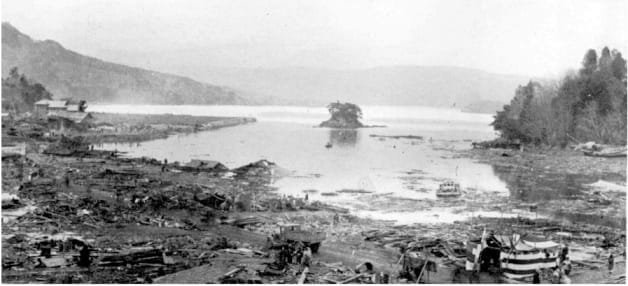
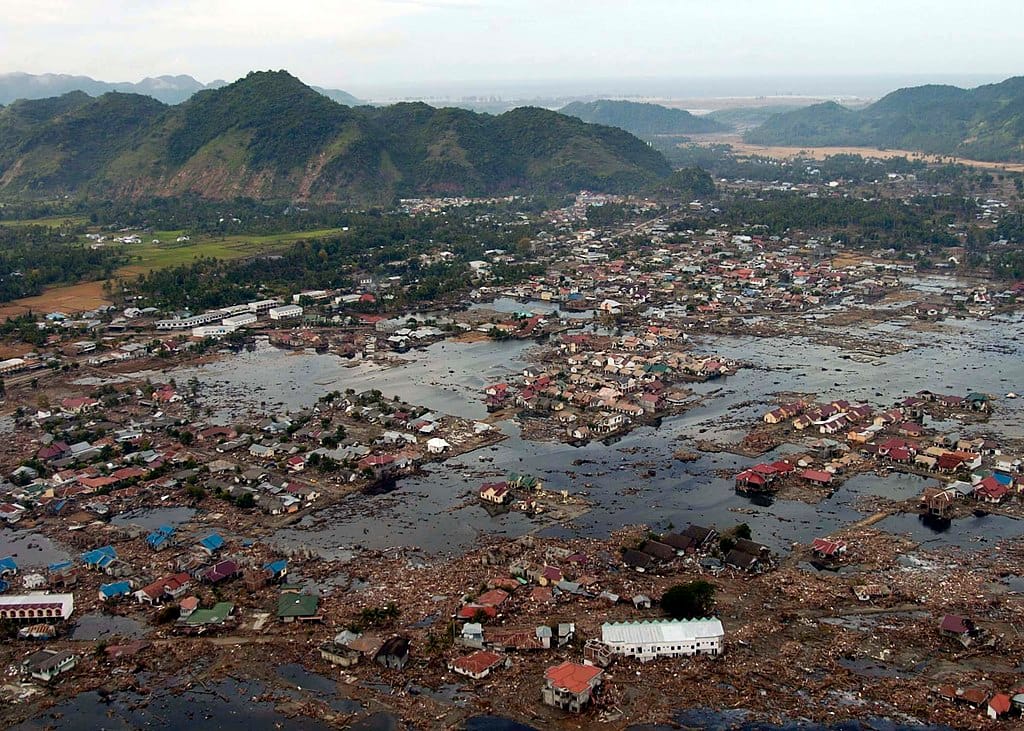
The tsunami’s destructive force was relentless. In some areas, the wave’s momentum carved a path five kilometers inland, uprooting trees, washing away farmland, and reducing buildings to splinters. Some survivors described the water as a “moving hell,” sweeping away everything without discrimination.
The low-lying coastal plains and river deltas amplified the wave’s reach, turning once-thriving communities into burial grounds. The lack of coastal defenses, such as mangrove buffers, exacerbated flooding and erosion. The Moro Gulf tsunami was not only a hydrodynamic disaster but also a tragic indictment of environmental vulnerability conditions prevailing at the time.
8. Villages Swept Away: The Human Cost
The human toll was staggering. Official estimates place the death count at approximately 8,000 to 10,000 people, though some reports suggest even higher numbers. Entire villages vanished overnight, leaving only memories and debris behind.
Families were torn apart, survivors haunted by the sudden loss of parents, children, and neighbors. The psychological scars left a lasting legacy, compounded by the difficulty of recovering bodies in the chaotic aftermath. Communities grieved publicly and privately, clinging to remnants of normalcy amid the wreckage.
Children orphaned and displaced filled makeshift shelters, while local healthcare systems struggled to contain injuries and illness.
9. Communication Breakdown and Rescue Efforts Amid Chaos
In the immediate hours after the tsunami, communication infrastructure was shattered. The terrain’s ruggedness, combined with damaged roads and bridges, delayed rescue teams and aid delivery.
Military units and local volunteers undertook heroic efforts to locate survivors, distribute food, and provide medical assistance. Makeshift hospitals were established, and the Philippine Navy dispatched vessels to aid affected communities. Yet, the scale of devastation overwhelmed the initial response.
International news coverage lagged behind the crisis, limiting timely global support. However, the disaster prompted a renewed emphasis on crisis coordination in the archipelago.
10. The Role of Government and Military Response
President Ferdinand Marcos’s administration faced intense pressure to mobilize relief quickly. Military forces were deployed not only for rescue but also to maintain order in the disaster zones.
Despite bureaucratic challenges and logistical constraints, the government committed resources to rebuilding infrastructure and resettling displaced populations. However, critics would later argue that the response exposed significant gaps in disaster preparedness and governance.
Nevertheless, this tragedy became a catalyst for reform in the Philippines’ approach to natural disasters.
11. International Aid and the Philippines’ Struggle to Rebuild
Foreign governments and humanitarian organizations soon pledged aid, sending medical supplies, food, and financial assistance. Countries such as the United States, Japan, and Australia contributed to relief efforts.
The rebuilding process spanned years, as coastal communities sought not only to reconstruct homes and infrastructure but to regain a sense of security. Public works such as seawalls, warning systems, and improved communication networks began to emerge, though unevenly.
Economic disruption persisted, especially in fishing and agriculture sectors, underscoring the long-term impacts of natural disasters on vulnerable populations.
12. Eyewitness Accounts: Voices from the Ruins
Personal stories provide the human dimension that statistics cannot capture. Like Maria, a fisherwoman from Kalamansig, who narrowly escaped by climbing a coconut tree as the wave swept her village:
“I held on for dear life. I could hear the screams behind me. When the water receded, I was alone on the tree, afraid to come down.”
Or Ernesto, a local teacher who witnessed the destruction:
“The earth that night was crying, and so were we. But even after the worst, people helped each other. The spirit of the community never died.”
These testimonies form the living memory of the Moro Gulf tsunami — a mosaic of suffering and resilience.
13. Seismology Advances Triggered by the Disaster
The 1976 Moro Gulf tsunami became a pivotal case study for seismologists and disaster experts. It highlighted the urgent need for improved tsunami detection and warning systems in southeast Asia.
In subsequent years, the Philippine Institute of Volcanology and Seismology (PHIVOLCS) invested in seismic monitoring technologies, community education, and emergency protocols. Regional cooperation efforts also gained momentum, fostering data sharing and hazard awareness across neighboring countries.
These scientific and diplomatic strides owe much to the hard lessons learned in 1976.
14. The Moro Gulf Tsunami in Philippine Collective Memory
While overshadowed internationally by other disasters, the Moro Gulf tsunami remains etched in the collective consciousness of Mindanao and the Philippines at large. Annual memorials and local narratives preserve its memory.
Yet these commemorative efforts face challenges in a rapidly modernizing society where younger generations are increasingly detached from historical tragedies. Maintaining this connection is vital to fostering preparedness and honoring those lost.
15. Environmental Consequences: Flora, Fauna, and Coastlines Transformed
Beyond immediate human loss, the tsunami forever altered ecosystems along the Moro Gulf. Saltwater intrusion damaged agricultural fields, while many mangroves and coral reefs—natural buffers against storms and waves—were destroyed.
Wildlife habitats suffered upheaval, changing biodiversity patterns. Reconstruction efforts began to integrate environmental considerations, albeit nascently, recognizing the intricate balance between human life and nature in the Philippines’ coastal zones.
16. Lessons Learned: Early Warning Systems and Preparedness
One of the most significant outcomes was the Philippines' determination to build a more resilient future. The disaster exposed the catastrophic consequences of unpreparedness.
Community-based warning systems were trialed, evacuation plans drafted, and educational campaigns began targeting at-risk populations. These initiatives, although imperfect, laid the groundwork for modern disaster risk reduction measures in the country.
Internationally, the Moro Gulf tsunami became a cautionary tale underscoring the necessity of early detection and public awareness to mitigate tsunamis' devastating effects.
17. The Moro Gulf Tsunami and Its Place in Global Tsunami History
Globally, the 1976 Moro Gulf tsunami ranks among the deadliest hydrological disasters of the 20th century. Though overshadowed by eruptions like Krakatoa and later tsunamis such as the 2004 Indian Ocean event, it remains a stark reminder of the Pacific’s “Ring of Fire” dangers.
The Moro Gulf tragedy informs current scientific models and humanitarian strategies worldwide, linking local catastrophe to global knowledge and solidarity.
18. Commemorations and Memorials: Honoring the Lost
Memorials in affected towns such as Lebak serve as solemn places of reflection. Plaques bearing hundreds of names bear testimony to lives cut short by the merciless sea.
Annual remembrance ceremonies involve religious observances, moments of silence, and community gatherings. These acts of memory are vital to ensuring that the tragedy does not fade into obscurity and that lessons persist through generations.
19. The Resilience of a People: Recovery and Renewal
Despite overwhelming loss, the people of southern Mindanao displayed remarkable resilience. Villages rebuilt from rubble, survivors forged new livelihoods, and cultural traditions endured.
The Moro Gulf tsunami became a crucible in which the human spirit was tested and reaffirmed. Today, these communities continue to confront geological risks while drawing strength from a profound shared history of endurance.
20. Conclusion: Humanity in the Wake of Nature’s Fury
The Moro Gulf tsunami of 1976 stands as a profound human story writ large against the backdrop of natural forces beyond control. It is a reminder of our vulnerability but also our capacity for courage, empathy, and renewal.
Natural disasters transcend statistics; they are the narratives of lives interrupted and reshaped. In remembering the Moro Gulf tragedy, we honor the past and illuminate the paths toward a safer, more conscious future. The sea may rise, the earth may quake — but the indomitable will of humanity endures.
FAQs: Unearthing the Moro Gulf Tsunami
Q1: What caused the Moro Gulf tsunami of 1976?
A massive underwater earthquake of magnitude 7.9 along the Cotabato Trench triggered a sudden seafloor displacement, generating the tsunami waves that devastated coastal communities.
Q2: How many people were affected by the tsunami?
Approximately 8,000 to 10,000 people lost their lives, with thousands more injured or displaced. Several villages were completely destroyed.
Q3: Why was the tsunami so devastating in the Moro Gulf?
The combination of a shallow earthquake, lack of early warning systems, geographic vulnerability of low-lying coastal areas, and limited community preparedness all contributed to the catastrophe’s intensity.
Q4: How did the government respond to the disaster?
The government deployed military and civilian agencies for rescue and relief, but logistical challenges and infrastructure damage hindered an immediate response. It eventually led to enhanced disaster management policies.
Q5: What were the long-term impacts on local communities?
Aside from loss of life, communities faced economic disruption, environmental damage, psychological trauma, and a prolonged rebuilding process. Cultural practices and social bonds played key roles in recovery.
Q6: Did the Moro Gulf tsunami influence disaster preparedness in the Philippines?
Yes, it catalyzed investments in seismic monitoring and public education, paving the way for modern warning systems and emergency protocols still evolving today.
Q7: How is the event remembered today?
Through local memorials, storytelling, and annual commemorations, the Moro Gulf tsunami remains a poignant chapter in the Philippines’ history and collective consciousness.
Q8: What lessons can global communities learn from this event?
The Moro Gulf tsunami underscores the critical importance of early warning, community awareness, environmental stewardship, and international cooperation in disaster risk reduction.