Table of Contents
- The Deadly Roar from the Depths: October 4, 1897
- A Land Of Islands And Legends: Samar And Leyte Before The Disaster
- The Foreshadowing Tremors: Early Signs From The Earth
- The Mighty Earthquake: Shaking Foundations Of The Philippine Archipelago
- The Birth Of The Tsunami: How Waves Of Death Were Set In Motion
- The Inescapable Fury: Tsunami Strikes Samar And Leyte’s Shores
- Voices Lost To The Waves: Human Stories Amid The Disaster
- The Immediate Aftermath: Chaos, Rescue, And Despair
- Colonial Shadows In The Crisis: Spanish Rule And Its Role In The Response
- The Geography Of Tragedy: How Nature And Topography Amplified The Impact
- Early Scientific Understandings: Seismology And Tsunamis In The 19th Century
- Local Myths And Memories: Folklore Shaped By The Waters’ Wrath
- International Attention And The Philippine Archipelago’s Vulnerability
- The Legacy Of The 1897 Tsunami: Lessons For Future Generations
- Remembering The Forgotten: Historical Neglect And Rediscovery
- The 1897 Samar–Leyte Tsunami In The Modern Context
- Conclusion: The Enduring Echoes Of The Waters From 1897
- FAQs: Answers To The Most Asked Questions About The 1897 Philippines Tsunami
- External Resource: Wikipedia Entry On The Samar–Leyte Tsunami
- Internal Link: Visit History Sphere
1. The Deadly Roar from the Depths: October 4, 1897
The dawn of October 4, 1897, broke with the usual hum of life along the eastern coasts of Samar and Leyte—two of the largest islands in the Philippine archipelago. Fishermen prepared their boats, children played along the shorelines, and the markets bustled with whispers of daily survival. But far beneath the gentle waves, an ancient fury was gathering strength. Suddenly, the earth shuddered violently—a horrific prelude that no one on the islands could ignore. Then came the sea roars, monstrous waves towering over villages, swallowing everything in their path. This was no ordinary storm or seasonal typhoon. This was the terror of the Samar–Leyte tsunami of 1897, a tragedy whose echoes would ripple through history, nature, and human memory alike.
2. A Land Of Islands And Legends: Samar And Leyte Before The Disaster
The islands of Samar and Leyte, positioned in the heart of the Philippine Sea, are places steeped in natural beauty and cultural depth. By the late 19th century, these lands were home to coastal fishing communities, small settlements, and a patchwork of indigenous groups long acquainted with the ocean’s moods. The people lived intertwined with the waters—some revered the seas as bountiful and sacred, others viewed them with wary respect. The islands' geography, characterized by dense forests, rugged coastlines, and fertile plains, carved out a unique existence.
Spanish colonial authorities governed the archipelago in 1897, but their presence in such remote areas was sporadic and often minimal. The inland communities maintained many of their traditional customs, and folklore thrived. These islands carried legends of angry sea spirits and gods—tales that would soon find grim confirmation in the terrifying reality of the tsunami.
3. The Foreshadowing Tremors: Early Signs From The Earth
Natural disasters rarely arrive unannounced. A few hours before the monstrous wave, tremors rippled through the ground—shaking trees, rattling wooden huts, and unsettling residents. These initial earthquakes, relatively moderate yet growing in intensity, were the earth’s ominous warning. Some villagers recalled unusual animal behavior: birds fleeing inland and livestock showing agitation. Nonetheless, the true scale of what was to come remained unfathomable.
At that time, scientific understanding of seismic activity in the Philippines was nascent. The archipelago’s complex sunken collisions of tectonic plates made it one of the world’s most seismically active regions, yet the mechanisms of earthquake-induced tsunamis were barely grasped.
4. The Mighty Earthquake: Shaking Foundations Of The Philippine Archipelago
At approximately mid-morning, a colossal earthquake—the strongest recorded in the region’s colonial period—struck the eastern part of Samar and Leyte. Eyewitnesses later described the violent rolling of the ground as buildings trembled and cliffs crumbled. The quake lasted long enough to seed fear deep into the populace’s hearts.
Estimates put the magnitude around 7.4 to 7.8 on the Richter scale, based on historical records and geological surveys made decades afterward. The epicenter lay in the submarine zone east of the islands, where the Philippine Sea Plate pushes beneath the Eurasian Plate—resulting in unpredictable yet powerful tectonic movements.
5. The Birth Of The Tsunami: How Waves Of Death Were Set In Motion
The massive shaking displaced enormous amounts of oceanic crust underwater, triggering a series of catastrophic water movements. The immense energy unleashed sent a series of waves racing toward the coast, invisible first but growing into towering walls of water.
Unlike typical storms, these waves were not driven by wind but by the sudden displacement of water from the seafloor—capable of traveling across hundreds of kilometers at jet speeds before crashing onto shorelines with devastating force.
6. The Inescapable Fury: Tsunami Strikes Samar And Leyte’s Shores
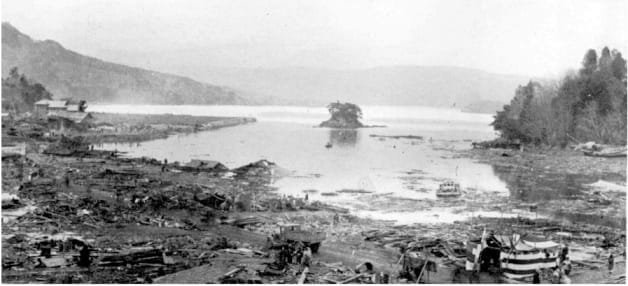
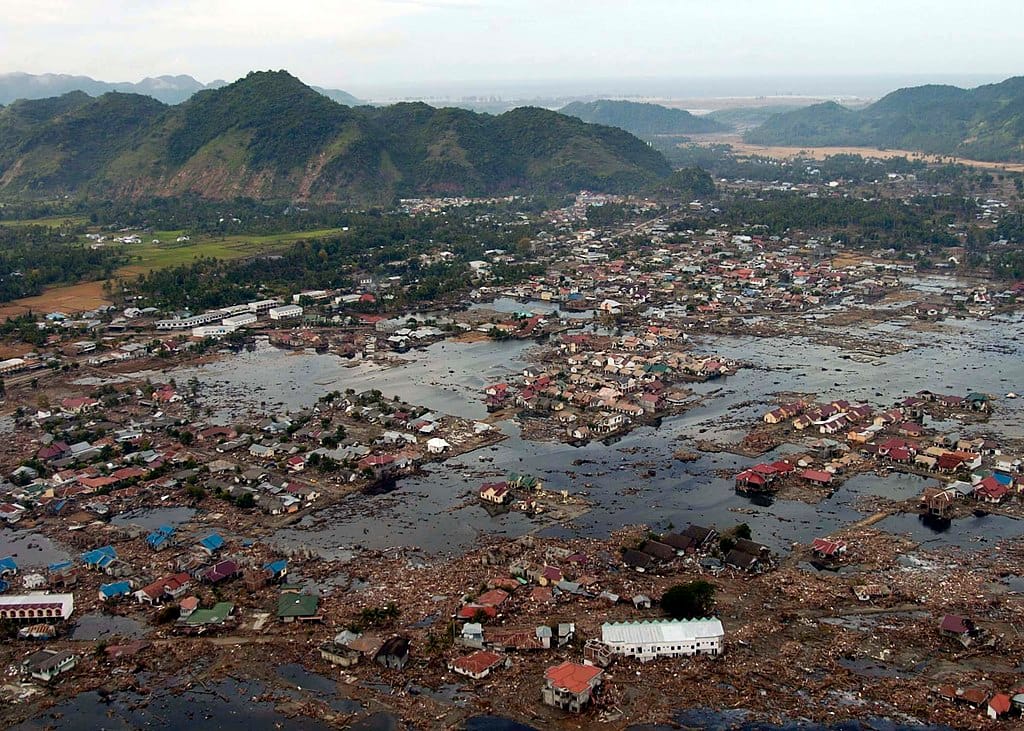
One by one, the coastal villages of Samar and Leyte fell prey to nature’s merciless hand. The water surged inland, engulfing homes, farmlands, churches, and markets. In many places, the floodwaters reached several kilometers beyond the usual tidal range, swallowing fields and forests.
Eyewitness accounts tell of frantic attempts to outrun the waves, children screaming, families lost in separation, and boats torn from their moorings with their crews vanished. Some survivors spoke of an eerie, unnatural silence after the wave’s initial impact, only to be replaced by the chaos of destruction and sobbing winds.
In the town of Guiuan in Eastern Samar, damage was extraordinary—the coastal settlement was almost entirely submerged, with death tolls estimated in the thousands. In Leyte, towns like Tacloban saw the ravages first hand, with entire communities devastated and the fabric of society tested to its limits.
7. Voices Lost To The Waves: Human Stories Amid The Disaster
Amid the engulfed landscapes were countless human tragedies—mothers clutching children, fishermen swept far from shore, the elderly left behind in hurried escapes. Oral histories preserved by descendants recall moments of heartbreak but also resilience.
One story, passed down in Tacloban, speaks of a young woman who, despite facing the monstrous floodwaters, saved not only her siblings but helped villagers find refuge in the island’s hills. Another account from Samar tells of an elder who interpreted the quake and sea’s rage as a warning from ancestral spirits—imploring a return to traditions and respect for nature.
This tsunami was not merely a geological event; it was a profound human catastrophe, reshaping lives, families, and communities forever.
8. The Immediate Aftermath: Chaos, Rescue, And Despair
When the waters receded, the true scale of devastation was unveiled. Vast swaths of coastline lay ruined, crops washed away, and survivors faced the immediate challenge of finding food, shelter, and safety. Disease outbreaks loomed with stagnant waters and decaying remains.
Spanish colonial authorities attempted to organize relief efforts, but communication difficulties and the rugged terrain slowed response. Neighboring communities who escaped the wave’s wrath mobilized to provide whatever aid they could—demonstrating solidarity in the face of despair.
9. Colonial Shadows In The Crisis: Spanish Rule And Its Role In The Response
In 1897, the Philippines was still under Spanish colonial rule, though revolution was simmering across the archipelago. The Spanish administration was stretched thin, with limited resources dedicated to such distant provinces as Samar and Leyte.
Reports indicate that the colonial government’s disaster response was constrained by bureaucracy and prioritization of military engagements. This neglect would fuel resentment among locals and add to the strains that ultimately contributed to the Philippine Revolution's momentum.
10. The Geography Of Tragedy: How Nature And Topography Amplified The Impact
Samar and Leyte’s rugged coastlines and shallow bays, while protective in times of peace, exacerbated the tsunami’s power. The concave shapes of inlets funneled the waves inward, increasing their height and destructive capability.
In addition, deforestation and land clearing for agriculture had altered natural buffers such as mangrove forests, reducing their ability to absorb and slow floodwaters. These environmental factors unintentionally heightened the disaster’s toll.
11. Early Scientific Understandings: Seismology And Tsunamis In The 19th Century
Scientific awareness of tsunamis in the late 19th century was emerging but limited, particularly in colonial regions. Most explanations remained rooted in local folklore or rudimentary geological theories.
In Western scientific circles, studies on the causes and mechanisms of underwater earthquakes and related tsunamis were progressing thanks to events like the 1883 Krakatoa eruption. But these insights had yet to fully translate into warning systems or education in places like the Philippines.
12. Local Myths And Memories: Folklore Shaped By The Waters’ Wrath
In the years following the tragedy, the Samar–Leyte tsunami entered local lore as a cautionary tale. Stories of vengeful sea gods, restless ancestors, and nature’s wrath became interwoven with historical memory.
Villagers continued to pass down oral histories warning future generations about signs of impending disasters. These narratives blended cultural spirituality with the empirical experience of living in an earthquake-prone land.
13. International Attention And The Philippine Archipelago’s Vulnerability
Although overshadowed by other contemporary events, the 1897 tsunami highlighted the vulnerability of the Philippines to natural catastrophes. It attracted some scholarly interest from foreign scientists and naval officers who sought to understand seismic hazard zones.
This disaster fits into a broader pattern of geological peril affecting the Pacific "Ring of Fire," an area still studied today for earthquake and tsunami preparedness.
14. The Legacy Of The 1897 Tsunami: Lessons For Future Generations
While overshadowed by subsequent political upheavals and the devastating floods wrought by later typhoons, the Samar–Leyte tsunami of 1897 offers critical lessons. It underscores the necessity of community awareness, environmental stewardship, and scientific preparedness.
In the modern era, as the Philippines continues to develop warning networks and disaster response, remembrance of early tragedies fuels efforts to mitigate future losses.
15. Remembering The Forgotten: Historical Neglect And Rediscovery
For much of the 20th century, this tsunami faded from popular memory, drowned out by wars, independence struggles, and modernization. Only recently have historians and geologists revisited the event through archival research and sediment analysis.
Renewed attention helps restore dignity to those lost and acknowledges the long history of natural hazards shaping Filipino societies.
16. The 1897 Samar–Leyte Tsunami In The Modern Context
Today, Samar and Leyte remain vulnerable to earthquakes and tsunamis, but advances in technology and governance provide hope. Early warning systems, community drills, and international cooperation are increasingly robust.
Yet the 1897 disaster remains a stark reminder that the forces beneath our feet and seas are as potent as ever, demanding vigilance and respect.
Conclusion
The Samar–Leyte tsunami of October 4, 1897, was more than a natural disaster; it was an incandescent moment when land, sea, and humanity collided in tragedy. The waves receded, but the scars endured—not only etched into the landscape but entrenched in hearts and stories passed down through generations.
This catastrophe reveals the fragile balance between human lives and the larger forces of nature. It calls upon us to remember, to learn, and to prepare—not just as a historical case study, but as an enduring testament to resilience and humility in the face of the planet’s untamable power.
FAQs
Q1: What caused the Samar–Leyte tsunami in 1897?
A1: The tsunami was triggered by a powerful undersea earthquake resulting from tectonic plate movements near the Philippine Sea Plate’s subduction zone east of Samar and Leyte.
Q2: How severe was the 1897 earthquake that caused the tsunami?
A2: Historical estimates suggest the quake measured between 7.4 and 7.8 in magnitude, powerful enough to cause significant ground shaking and trigger the tsunami.
Q3: What were the immediate impacts of the tsunami on local communities?
A3: Thousands of people died or were displaced, entire villages were submerged, crops and food sources destroyed, and infrastructure severely damaged.
Q4: How did the Spanish colonial government respond to the disaster?
A4: Relief efforts were limited due to logistical challenges and political priorities, revealing weaknesses in colonial governance in addressing such crises.
Q5: Are there still threats of tsunamis in the Samar and Leyte regions today?
A5: Yes. The Philippines lies in a highly active seismic zone. Modern monitoring systems are in place, but risks persist due to ongoing tectonic activity.
Q6: Why is the 1897 Samar–Leyte tsunami relatively unknown compared to other disasters?
A6: It occurred during a period of colonial upheaval and limited communication, with less international attention and overshadowed by later historical events.
Q7: How have local communities preserved the memory of the tsunami?
A7: Through oral histories, folklore, and cultural practices that embed warnings about respecting nature and recognizing early signs of disaster.
Q8: What are the scientific lessons learned from this tsunami event?
A8: It contributed to understanding the link between undersea earthquakes and tsunamis and the importance of geological and oceanographic research in disaster risk reduction.