Table of Contents
- A Day Shattered: The Morning of September 10, 1509
- The Mysterious Origins of the Marmara–Istanbul Tsunami
- The Ottoman Empire on the Brink: Political and Social Backdrop
- Earth Below, Waves Above: The Earthquake’s Terrifying Prelude
- The Wave That Engulfed a City: An Eyewitness Journey Through Chaos
- Loss and Ruin: The Human Toll of the Cataclysm
- Geological Insights: How Nature Unleashed Its Fury
- The City's Infrastructure in Shambles: Mosques, Palaces, and Markets Submerged
- The Sultan’s Response: Authority Amid Disaster
- Stories of Survival and Heroism Amidst Destruction
- The Resonance of the Disaster in Ottoman Chronicles and Oral Traditions
- Rebuilding Istanbul: From Rubble to Renewal
- Economic Devastation and Recovery: Trade Halts and Revival
- Ripple Effects Across the Region: A Tsunami’s Reach Beyond the City
- Historical Documentation: Piecing Together the Past from Fragmented Sources
- Modern Scientific Re-evaluations: What the 1509 Disaster Teaches Us Today
- Cultural Memory: How the Marmara Tsunami Shaped Istanbul’s Identity
- Comparing 1509 to Other Mediterranean Disasters: Common Threads
- The Legacy of Vulnerability: Istanbul’s Enduring Relationship with the Sea and Earth
- Conclusion: Lessons Etched by Waves and Time
- FAQs: Answering Key Questions About the Marmara–Istanbul Tsunami
- External Resources
- Internal Link
A Day Shattered: The Morning of September 10, 1509
Imagine waking up to the familiar call of the muezzin, the soft hustle of early morning Istanbul, the waters of the Bosphorus shimmering under the rising sun. But on September 10, 1509, this serenity was irrevocably broken.
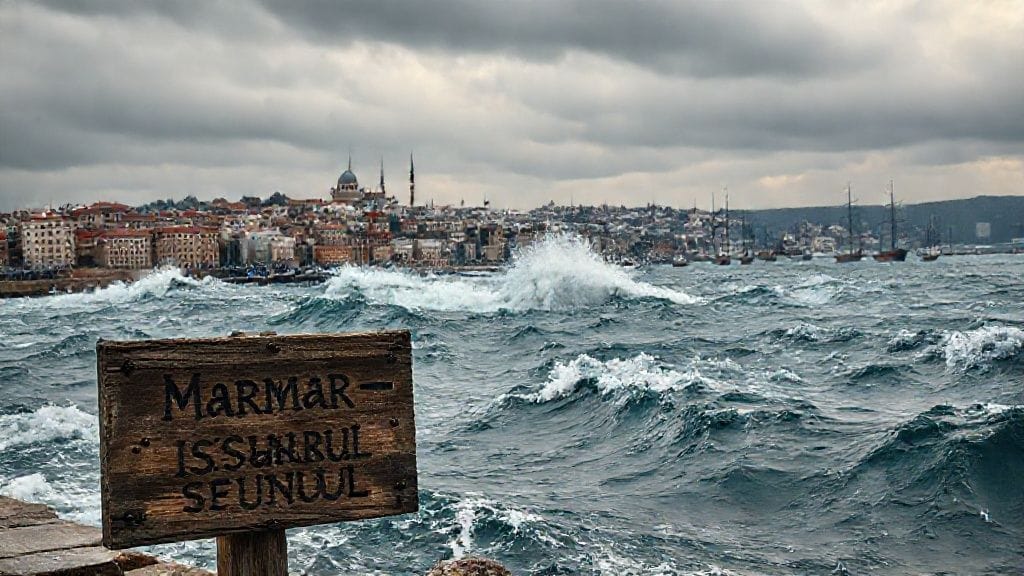
As the first tremors began shaking the solid earth beneath the city—a jewel of the Ottoman Empire—panic spread like wildfire. Minutes later, the sea itself seemed to rise up in wrath, rushing mercilessly through neighborhoods and marketplaces, swallowing streets and landmarks alike.
This was the day when the Marmara–Istanbul tsunami, a cataclysmic event often overshadowed by other seismic disasters, reshaped the physical and emotional landscape of one of the most vibrant cities of its era.
The Mysterious Origins of the Marmara–Istanbul Tsunami
The Marmara Sea, a small inland sea bridging the Aegean and Black Seas, sits precariously on active fault lines. Underneath its tranquil surface lies a complex tectonic setting shaped by the North Anatolian Fault—a massive geological scar that has birthed numerous earthquakes over centuries.
The tsunami of 1509 was triggered by an immense earthquake, sometimes called the “Little Apocalypse” by Ottoman chroniclers, whose initial rumblings shook the very foundations of Istanbul. Unlike the familiar narratives of great battles or political intrigue, this natural disaster was a reminder of humanity’s fragile coexistence with Earth’s restless violent forces.
The Ottoman Empire on the Brink: Political and Social Backdrop
In 1509, the Ottoman Empire was entering a period of consolidation and expansion under Sultan Bayezid II. Istanbul, freshly reclaimed from the Byzantines half a century earlier, was blossoming into a multicultural hub of trade, art, and religion.
Yet beneath the glory and bustling streets lay a population acutely vulnerable to disaster. Buildings, though magnificent, were not immune to earthquakes; the city's growing density worked against its resilience.
Additionally, cultural and religious interpretations of disasters often colored public perception. Many Ottomans saw the earthquake and subsequent tsunami as divine warnings or punishments, weaving the event into the spiritual tapestry of their world.
Earth Below, Waves Above: The Earthquake’s Terrifying Prelude
The earth's convulsions began in the early hours of the morning, shaking homes and minarets. The ground roared and cracked, windows shattered, and tiles rained down on frightened inhabitants pouring into the streets.
Research suggests the quake’s magnitude reached approximately 7.2 to 7.4—a force capable of leveling structures built in the pre-modern age without modern reinforcements.
But the earthquake was not the only terror. Following the tumult, waves born of the undersea rupture surged, inundating low-lying districts within minutes.
The Wave That Engulfed a City: An Eyewitness Journey Through Chaos
Ottoman chroniclers have left us vivid, haunting descriptions. One account describes how the sea, after violently receding, returned with a devastating force: “The water rushed like an army of horses, engulfing homes and halls; people cried and ran as the great wave swallowed everything in its path.”
Streets once lively with merchants and minstrels were transformed into canals filled with debris and desperate survivors. The water's roar was deafening, mixing screams and prayers.
Loss and Ruin: The Human Toll of the Cataclysm
Though precise casualty figures are lost to time, estimates suggest that thousands perished or were rendered homeless. Entire neighborhoods lay submerged.
Many families were uprooted, their livelihoods swept away alongside the physical damage. Fires broke out amidst the wreckage, further compounding suffering.
For the ordinary people of Istanbul, this was not just a momentary disaster but a rupture that would echo in their lives for generations.
Geological Insights: How Nature Unleashed Its Fury
Modern geology confirms the event’s origin: a massive slip along the North Anatolian Fault under the Marmara Sea triggered a seismic sea wave.
The inundation patterns today studied in coastal strata reflect the 1509 tsunami’s destructive reach. These natural archives provide clues not only about past disasters but also about potential future threats to this vulnerable region.
The City's Infrastructure in Shambles: Mosques, Palaces, and Markets Submerged
Istanbul was home to many important buildings—magnificent mosques with soaring domes, bustling bazaars brimming with the riches of the East and West, and the sprawling Topkapi Palace.
Many of these structures suffered devastating damage or were destroyed. The Great Mosque of Fatih, an architectural marvel, partially collapsed. Merchant districts, crucial for trade routes running through the city, were flooded, causing huge economic blows.
The Sultan’s Response: Authority Amid Disaster
Sultan Bayezid II reportedly took immediate action. Dispatching aid to the stricken areas, he mobilized craftsmen and laborers to start reconstruction.
The regime also sought to reinforce Istanbul’s defenses and public works to better withstand future calamities.
Drawing upon Islamic traditions, religious ceremonies were held to console the populace, while scholars debated the disaster’s spiritual significance, aiming to restore morale.
Stories of Survival and Heroism Amidst Destruction
Amongst the despair, stories of courage emerged. Accounts tell of fishermen steering boats to rescue those stranded amidst flooding, families sheltering neighbors, and officials coordinating relief efforts despite the chaos.
Such tales remind us that even in the darkest hours, humanity shines through resilience and compassion.
The Resonance of the Disaster in Ottoman Chronicles and Oral Traditions
Although Ottoman historians like Tursun Beg and others recorded the earthquake and tsunami, their narratives mingled fact with theological interpretation.
Over centuries, folk tales and oral traditions preserved the memory, imbuing it with symbolic messages about divine justice and the fragility of worldly power.
Rebuilding Istanbul: From Rubble to Renewal
The reconstruction effort transformed the city. New architectural techniques were explored; damaged districts were rebuilt often with enhanced foundations.
The disaster accelerated urban planning conversations and highlighted the need to blend aesthetics with durability.
Economic Devastation and Recovery: Trade Halts and Revival
Istanbul’s strategic position made it a critical node for trade between Europe and Asia. The tsunami’s disruption halted commerce, with port facilities damaged and ships lost.
Recovery took years, but the economic engine eventually roared back to life, fueled by renewed investments and expanded markets.
Ripple Effects Across the Region: A Tsunami’s Reach Beyond the City
Though centered on Istanbul, the tsunami’s waves reached surrounding coastlines of the Sea of Marmara, affecting towns and villages along the way.
Communication lines faltered, yet the testimonies from these locales confirm a shared experience of nature’s might.
Historical Documentation: Piecing Together the Past from Fragmented Sources
Primary sources come from Ottoman official chronicles, correspondence, and later European travelers’ reports.
Archaeological studies, sediment layers, and seismic data enable modern historians and scientists to reconstruct the timeline and impact of the event with greater accuracy.
Modern Scientific Re-evaluations: What the 1509 Disaster Teaches Us Today
Current studies of seismic hazards in the Marmara region use the 1509 event as a reference. Understanding this tsunami's dynamics informs risk assessments and disaster preparedness strategies for today’s Istanbul, now a city of millions.
Cultural Memory: How the Marmara Tsunami Shaped Istanbul’s Identity
The 1509 disaster left an invisible scar on Istanbul’s collective identity—a humbling reminder of impermanence juxtaposed with enduring human creativity and will.
Festivals, prayers, and cultural references occasionally echo this history, entwining city life with the memory of elemental forces.
Comparing 1509 to Other Mediterranean Disasters: Common Threads
In the history of the Mediterranean, tsunamis—though rarer than in the Pacific—have punctuated centuries. Comparing Marmara 1509 to events like the 365 AD Crete tsunami places Istanbul’s tragedy in a broader narrative about coastal vulnerability to seismic sea waves.
The Legacy of Vulnerability: Istanbul’s Enduring Relationship with the Sea and Earth
Even today, Istanbul straddles a fault line, and while modern engineering offers protection, the echoes of 1509 warn against complacency.
The city’s unique position between continents, atop volatile geology, demands constant vigilance and respect for natural cycles.
Conclusion
The Marmara–Istanbul tsunami of 1509 was more than a natural disaster; it was a crucible that tested a city’s spirit and resilience. Waves of destruction washed away homes but could not cleanse memory or hope.
Through human stories of loss and courage, Ottoman response and rebuilding, and scientific reinterpretation over centuries, this event serves as a powerful testament to the enduring dialogue between humanity and nature.
It reminds us that cities are not merely collections of bricks and mortar, but living organisms shaped by history, geology, and culture—always balancing precariously on the edge of fate.
FAQs
Q: What caused the Marmara–Istanbul tsunami in 1509?
A: A powerful earthquake along the North Anatolian Fault under the Sea of Marmara triggered a sudden displacement of the seabed, generating tsunami waves that inundated Istanbul’s shores.
Q: How devastating was the tsunami in terms of human casualties?
A: Exact numbers are unknown, but thousands likely perished, with many more injured and displaced, as recorded in Ottoman chronicles and inferred from damage patterns.
Q: Which parts of Istanbul were most affected by the tsunami?
A: Low-lying districts, including key commercial areas and notable buildings near the Bosphorus shores, were severely flooded and damaged.
Q: How did Sultan Bayezid II and the Ottoman administration respond?
A: The Sultan organized emergency relief, mobilized reconstruction efforts, and reinforced disaster preparedness, also integrating religious interpretations to help the populace cope.
Q: What sources do historians rely on to study this 1509 event?
A: Ottoman chronicles, European traveler accounts, archaeological evidence, and modern geological studies help reconstruct the event’s timeline and impact.
Q: Why is the 1509 tsunami significant for modern Istanbul?
A: It highlights the seismic risks the city faces, informing current disaster planning and public awareness to mitigate potential future catastrophes.
Q: How has cultural memory preserved the event?
A: Through oral traditions, folk narrations, and occasional historical commemorations that combine spiritual reflection with pragmatic lessons.
Q: How does the 1509 tsunami compare with other historical tsunamis in the Mediterranean?
A: While less well-known than major Pacific tsunamis, it shares features like tectonic origins and devastating coastal impact, underscoring the region’s geological volatility.