Table of Contents
- The Night the Sea Turned Deadly: Opening the Story of the 1953 Cyprus (Paphos) Tsunami
- Cyprus in the Early 1950s: Setting the Stage for Disaster
- Geological Forces at Play: The Eastern Mediterranean’s Tectonic Tension
- The Seismic Prelude: September 9, 1953 and the Shaking Earth
- Dawn of September 10: The Unseen Threat Approaches
- The First Wave Hits Paphos: Chaos Along Cyprus’ Western Shores
- Eyewitness Accounts: Voices Caught in the Deluge
- Immediate Aftermath: Rescue, Relief, and Rising Death Tolls
- Scientific Investigations: Unraveling the Origins of the Tsunami
- Cyprus’ Political Climate and Disaster Response: A British Colony in Crisis
- The Human Cost: Loss, Displacement, and Community Resilience
- Broader Mediterranean Impact: Regional Reactions and Fears
- Media Coverage and Public Awareness: A Disaster Beyond Headlines
- Lessons Learned: Improvements in Tsunami Detection and Preparedness
- The 1953 Tsunami in Collective Memory: Forgetting and Remembering
- Modern Implications: Tsunami Risks in Cyprus and the Eastern Mediterranean Today
- Cultural Reflections: How the Event Shaped Local Art and Literature
- Comparative Tsunamis: Cyprus (1953) in the Global Context
- Revisiting the Geology: New Findings, Updated Theories
- Survivor Stories: Generations Touched by the Sea’s Wrath
- Long-Term Reconstruction: Rebuilding Paphos and Its Communities
- The Environmental Impact: Coastal Changes and Ecosystem Effects
- The Role of International Aid: Global Solidarity and Assistance
- The 1953 Cyprus Tsunami: A Silent Warning for the Future
- Epilogue: Remembering Nature’s Power Along Cyprus’ Shores
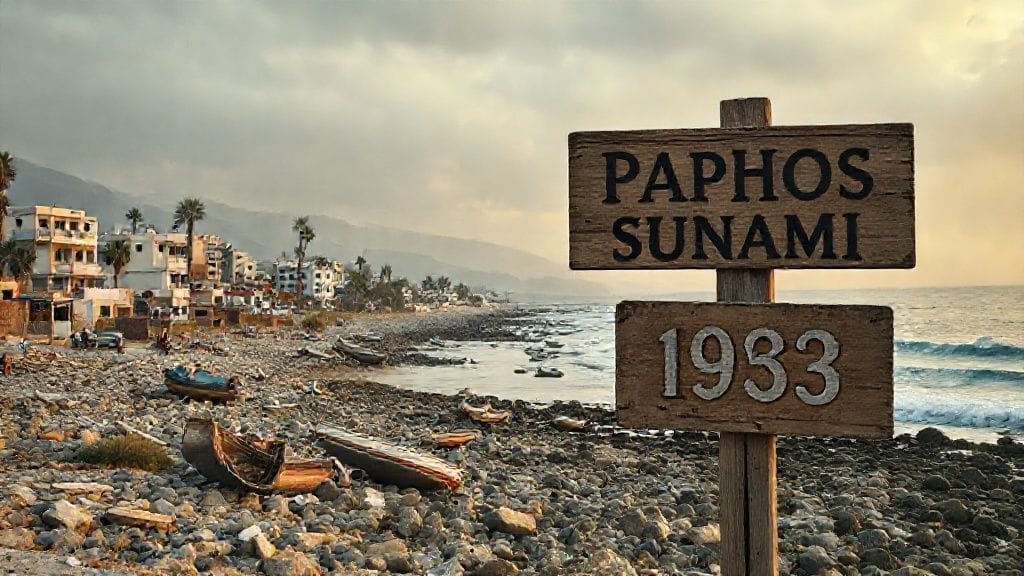
The sea did not roar that night. It hid its approach beneath a veil of ordinary darkness, lulling the coastal town of Paphos into calm. But beneath the Mediterranean’s tranquil surface, a hidden fury was building — a seismic pulse destined to reshape not only the coastline but the lives tethered to it forever. On September 10, 1953, as dawn spilled its fragile light across Cyprus, the island awoke to an event neither natural nor ordinary: a tsunami surged across Paphos, an abrupt and devastating reminder of the Earth's latent violence.
1. The Night the Sea Turned Deadly: Opening the Story of the 1953 Cyprus (Paphos) Tsunami
It was in the quiet prelude of dawn when the sea revealed its deadly secret. The 1953 Cyprus tsunami struck without warning, leaving a trail of destruction that shattered memories and landscapes alike. In the shadow of ancient ruins and olive groves, the waves punched inland, sweeping away homes, fishermen, and hope. Witnesses spoke later of a swelling, unnatural rise and a collapsing roar, a furious breath from the ocean that caught the islanders helpless.
This was no commonplace Mediterranean swell; it was born of tectonic violence far beneath the surface — a grim reminder that Cyprus, though often bathed in sunlight, was precariously perched at a tremulous crossroads of Earth’s restless plates.
2. Cyprus in the Early 1950s: Setting the Stage for Disaster
Cyprus, a jewel in the Eastern Mediterranean, had long been a land shaped by its geography and history. In 1953, the island was still under British colonial rule, grappling with economic difficulties, emerging nationalist sentiments, and the after-effects of World War II. Paphos, a coastal town rich in myth and history, remained relatively modest, with fishing as a staple industry and traditional village life prevailing.
The broader Mediterranean world was no stranger to seismic activity. Earthquakes and tsunamis, though rare, were part of its character. Yet, Cyprus’ inhabitants did not fully grasp the fragility beneath their feet, or the ocean’s potential for sudden wrath.
3. Geological Forces at Play: The Eastern Mediterranean’s Tectonic Tension
Beneath the crystalline waves of the Mediterranean lies a complex web of tectonic plates converging and colliding. Cyprus sits amid the collision zone where the African plate pushes northward against the Eurasian plate. This tectonic pressure created faults and subduction zones — invisible faults wired with potential energy capable of unleashing devastating earthquakes and seismic sea waves.
The Paphos tsunami was later linked to a powerful undersea earthquake rupturing along one of these faults. The tremor caused a sudden displacement of the seafloor, dragging a massive volume of water with it — the terrifying genesis of the tsunami.
4. The Seismic Prelude: September 9, 1953 and the Shaking Earth
Eyewitnesses recalled the earth trembling the night before the tsunami struck. In some coastal areas, the quake was strong and unsettling, sending residents scrambling outside. The seismic event registered as one of significant magnitude, but in the stillness of the hour, its true danger was not yet understood.
This earthquake marked more than a mere shake—it was the silent summons of an oceanic fury poised to engulf the shorelines hours later. For those who felt the ground quake, it was an ominous, visceral reminder that nature’s power was stirring.
5. Dawn of September 10: The Unseen Threat Approaches
As the first light of day seeped over Paphos, fishermen prepared their boats, traders opened their shops, and children chased each other through alleys bound by the sea and the sky. The waters, however, held an unnatural stillness.
Unbeknownst to the townsfolk, a vast undersea surge was racing toward them. The displaced ocean, compressed and forced upward by tectonic motion, was now spreading laterally, racing faster than any ship or human could hope to outrun.
6. The First Wave Hits Paphos: Chaos Along Cyprus’ Western Shores
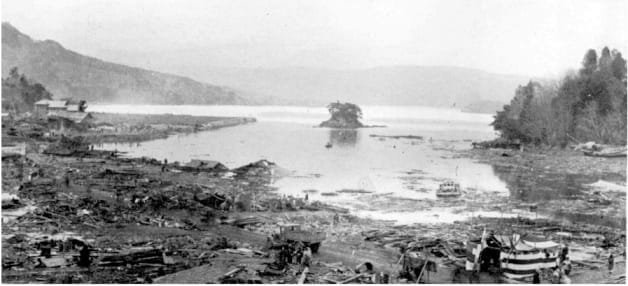
The initial wave caught the town unawares. Locals described a sudden retreat of the sea — a watery graveyard pulling back as if inhaling — exposing the seabed in eerie silence. Then, with catastrophic force, the water reversed, crashing ashore in a towering wall that swept everything before it.
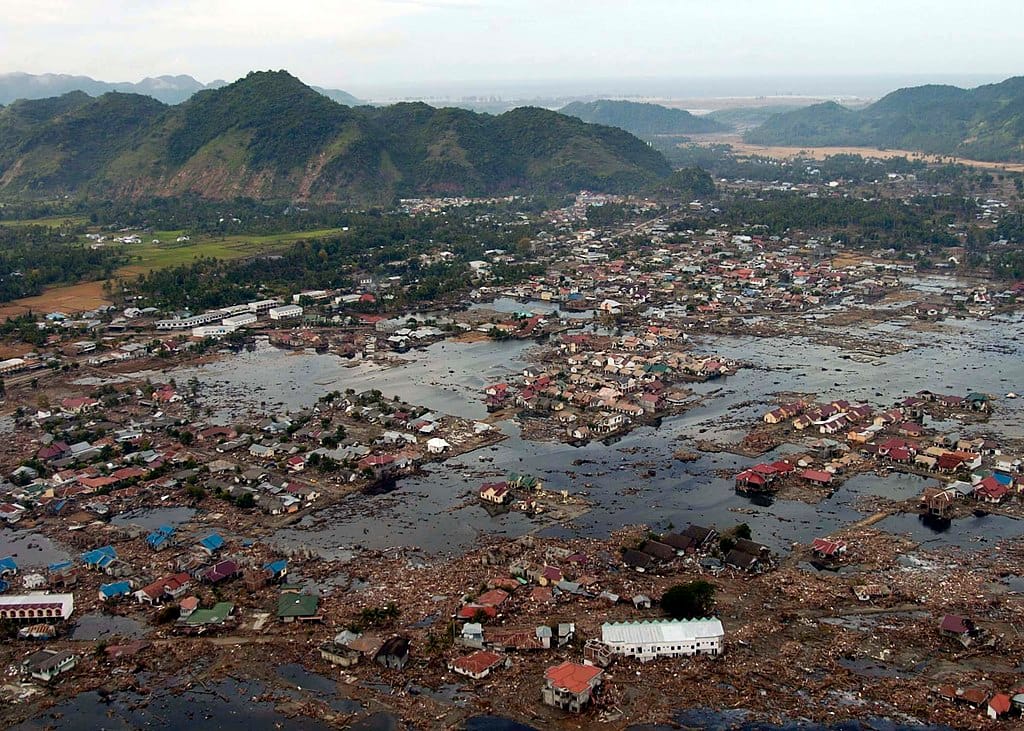
Boats were tossed like toys, homes crumbled under the pressure, and fishermen vanished beneath the waters they had once called their daily lifeblood. The tsunami’s violence was swift, merciless, turning thriving parts of the shoreline into scenes of desolation.
7. Eyewitness Accounts: Voices Caught in the Deluge
Among the harrowing personal stories, Maria Christoforou, then a young mother, recalled clutching her children as “the sea came as a mountain.” Another survivor, Yiannis Nikolaou, a fisherman, described the terrifying silence before the wave: “The water moved away, so strange, so quiet. Then the roar — it was like the earth had been torn open.”
These voices humanize the disaster. Not just statistics or geological facts, but lives interrupted, grief grown amid saltwater and splinters, a community reverberating with loss.
8. Immediate Aftermath: Rescue, Relief, and Rising Death Tolls
In the harrowing minutes and hours following the tsunami, Paphos descended into chaos. Emergency services, complicit in their lack of preparedness, scrambled to assist survivors. Neighbors became rescuers; prayers mingled with cries for help.
Official figures struggled to keep pace, but estimates placed the death toll in the dozens, with hundreds injured and countless displaced. Homes, businesses, and livelihoods were lost in a matter of moments.
9. Scientific Investigations: Unraveling the Origins of the Tsunami
In the weeks following the disaster, geologists and seismologists descended upon Cyprus. Their task was to understand the origin of the cataclysm. Seismic records confirmed a powerful offshore earthquake as the trigger, with its epicenter near the Paphos region.
These investigations provided a somber insight into the relationship between seismic events and tsunamis in the relatively understudied Eastern Mediterranean — an area previously considered moderately at risk but not immune.
10. Cyprus’ Political Climate and Disaster Response: A British Colony in Crisis
The tsunami struck at a politically sensitive moment. Cyprus was under British administration, but nationalist tensions simmered, foreshadowing the struggles of the later 1950s and 1960s. The disaster response was hampered by colonial bureaucracy and resource limitations.
Yet, this catastrophe briefly bridged divisions: Muslims and Christians, colonizers and locals worked side by side to pick up the pieces, a fleeting moment of unity amid political uncertainty.
11. The Human Cost: Loss, Displacement, and Community Resilience
Beyond the material devastation lay a deep human toll. Families mourned lost members; fisherman lost their vessels, economic survival became precarious. Entire neighborhoods faced displacement.
But the resilience of Paphos’ people emerged. Communities rebuilt, not simply reconstructing walls and roofs but weaving back the fragile fabric of social life disrupted by the sea's wrath.
12. Broader Mediterranean Impact: Regional Reactions and Fears
News of the tsunami rippled beyond Cyprus. Neighboring countries and islands took note—pondering their own vulnerability. The event refocused attention on Mediterranean seismic risks, previously overshadowed by the more notorious Pacific tsunami zones.
Mediterranean ports reviewed emergency procedures, and governments began cautiously to consider early warning systems for the region.
13. Media Coverage and Public Awareness: A Disaster Beyond Headlines
Although the Cyprus tsunami was significant, its coverage was limited. In 1953, news media infrastructure was less developed, and geopolitical events often overshadowed natural disasters.
Still, local newspapers carried heartfelt accounts, and foreign agencies sent dispatches, illuminating the fragile boundary between man and nature in a region of historic crossroads.
14. Lessons Learned: Improvements in Tsunami Detection and Preparedness
The tsunami exposed glaring gaps in detection and public awareness. It galvanized scientists and policymakers to advocate for better seismic monitoring.
Though an early Mediterranean tsunami warning system would take decades to materialize, the seeds of preparedness were sown in the grief of 1953, echoing in later regional safety protocols.
15. The 1953 Tsunami in Collective Memory: Forgetting and Remembering
Striking yet transient, the event gradually faded in public memory, overshadowed by more dramatic geopolitical conflicts in Cyprus.
Yet among Paphos’ older generations, the tsunami remains etched deeply—a threshold moment when the sea’s violence materialized from legend into lived tragedy.
16. Modern Implications: Tsunami Risks in Cyprus and the Eastern Mediterranean Today
The 1953 disaster remains a cautionary tale. Today, with advanced seismology and monitoring, Cyprus keeps vigil for similar threats. Contemporary studies highlight ongoing risks, reminding us the Mediterranean is no calm cradle but a restless sea of possibility.
17. Cultural Reflections: How the Event Shaped Local Art and Literature
Artists and writers in Cyprus have occasionally returned to the tsunami as metaphor and memory—capturing the tension between natural beauty and hidden danger.
Poems evoke the trembling sea; paintings portray vanished shorelines. This disaster became part of the cultural mosaic that defines Cyprus’ identity.
18. Comparative Tsunamis: Cyprus (1953) in the Global Context
Compared to Pacific tsunamis, Cyprus’ event was smaller in scale but no less poignant. It reaffirmed that seismic sea waves can strike unexpected shores, demanding global vigilance.
Within the Mediterranean basin, it ranks among the deadliest 20th-century tsunami events, adding a critical chapter to tsunami history.
19. Revisiting the Geology: New Findings, Updated Theories
Recent geological surveys using sonar mapping and seismic tomography have improved understanding of Cyprus' fault lines.
Researchers now appreciate that the 1953 earthquake and tsunami were symptoms of broader tectonic processes still shaping the island’s fate.
20. Survivor Stories: Generations Touched by the Sea’s Wrath
Interviews with descendants reveal enduring trauma and wisdom. Stories passed down contain warnings and remembrance—oral history preserving the human dimension alongside scientific facts.
21. Long-Term Reconstruction: Rebuilding Paphos and Its Communities
Reconstruction involved not only architecture but economic rehabilitation. Fisheries revived; ports repaired; new infrastructure designed with resilience in mind. The event was a pivotal moment in Paphos’ mid-century transformation.
22. The Environmental Impact: Coastal Changes and Ecosystem Effects
The tsunami altered sediment distribution, reshaped beaches, and damaged marine habitats. Ecologists today study these shifts to understand how coastal ecosystems respond to sudden shocks.
23. The Role of International Aid: Global Solidarity and Assistance
Limited but crucial aid came from Britain and neighboring countries. The disaster revealed the importance of international cooperation in responding to natural calamities.
24. The 1953 Cyprus Tsunami: A Silent Warning for the Future
More than a historical footnote, the Paphos tsunami is a stark reminder: nature’s patience is finite, and vigilance essential. It challenges complacency in a region long hailed for sun and sea.
25. Epilogue: Remembering Nature’s Power Along Cyprus’ Shores
As modern tourists stroll Paphos’ sun-drenched promenades, few imagine the power that surged once beneath the waves. Yet the sea still holds memory, waiting to remind us—as it did in 1953—that the Earth’s heart beats beneath even the most serene surfaces.
Conclusion
The 1953 Cyprus tsunami stands as a testament to nature’s unpredictable might and humanity’s fragile permanence. It arrived in a world transitioning from colonial shadows toward sovereignty, at the crossroads of geology and history. Yet beyond tectonic plates and waves, this tragedy is ultimately a story of people — of resilience amidst ruin, loss transformed into endurance.
Today, as Cyprus flourishes anew, the echoes of that September morning remind us that nature’s past is never static, and the future demands respect and preparedness. The waters that once rose to claim lives now instruct us — if we listen carefully — in humility, caution, and hope.
FAQs
Q1: What caused the 1953 Cyprus tsunami?
The tsunami was triggered by a powerful undersea earthquake off the coast of Paphos, where a sudden displacement of the seafloor created massive waves reaching the shore.
Q2: How many people were affected by the tsunami?
While precise numbers vary, the event caused dozens of confirmed deaths, hundreds of injuries, and significant displacement throughout the affected coastal areas.
Q3: Was Cyprus prepared for such a disaster in 1953?
No. There were no early warning systems and limited public awareness of tsunami risks at the time, leading to a largely unprepared population facing the wave.
Q4: How did the British colonial administration respond?
The British-administered government coordinated relief efforts, but logistical and political challenges limited the initial response effectiveness.
Q5: Has the 1953 tsunami influenced tsunami preparedness in the Mediterranean?
Yes. The event contributed to increased scientific interest and eventual development of regional tsunami monitoring and disaster protocols.
Q6: Are Mediterranean tsunamis common?
Tsunamis in the Mediterranean are rare but possible due to tectonic activity in the region. The 1953 Cyprus tsunami is one of the deadliest recorded.
Q7: How is the tsunami remembered in Cyprus today?
It remains etched in local memory, though overshadowed by political upheavals. Cultural works sometimes reference the event, keeping its memory alive.
Q8: Could a similar event happen in Cyprus now?
Yes. Geological studies confirm ongoing seismic risks, so emergency preparedness remains paramount for coastal communities.