Table of Contents
- A Deadly Awakening: The Morning the Earth Trembled
- The Geological Backdrop: Tectonic Tensions Beneath the Mediterranean
- Algeria’s Vulnerabilities: The Socioeconomic Profile Before 2003
- The Calm Before the Quake: Unfolding Events Leading to May 21st
- May 21, 2003: The Boumerdès Earthquake Strikes
- The Immediate Aftershocks: Waves of Fear and Panic
- The Unseen Killer: The Tsunami’s Silent Approach in the Balearic Sea
- Human Stories from the Ruins: Survival, Loss, and Resilience
- The Response: Local and International Rescue Efforts
- Infrastructure in Shambles: Damage Assessment and Challenges
- Government Reaction and Emergency Measures
- Scientific Insights: Seismologists on the Boumerdès Event
- The Tsunami’s Reach: Impact on the Balearic Islands and Beyond
- Long-term Economic Impacts on Algeria’s Coastal Regions
- Cultural Responses: Remembering the Quake Through Art and Memory
- Lessons Learned: Improving Disaster Preparedness in Algeria and the Mediterranean
- The Boumerdès Earthquake in Collective Memory: Commemoration and Awareness
- Regional Cooperation: Mediterranean States Unite on Seismic Monitoring
- Rebuilding Hope: Reconstruction Efforts and Urban Planning Reforms
- Conclusion: Nature’s Fury and Humanity’s Resolve
- FAQs about the 2003 Boumerdès Earthquake and Tsunami
- External Resource
- Internal Link
The sun rose weakly over Algeria’s coastal plains, a gentle breeze caressing the Mediterranean waves, on that fateful morning of May 21, 2003. For many, it was an ordinary day, a tranquil snapshot of everyday life in the city of Boumerdès and beyond—a rhythm soon to be shattered by one of the deadliest natural disasters to strike the region in decades. Beneath the azure calm, deep within the Earth’s crust, tectonic forces were tightening a deadly grip—a convulsion that would ripple through both land and sea, creating a drama etched into the collective memory of a nation and its neighbors.
A Deadly Awakening: The Morning the Earth Trembled
At precisely 00:44 local time, a violent jolt tore through Boumerdès Province and its surroundings in northern Algeria. The 6.8 magnitude earthquake, centered about 40 kilometers east of the capital Algiers, shattered the silence. Buildings swayed, walls cracked, and thousands of terrified residents awoke to the terrifying realization that they were in the throes of a catastrophe not of their making.
“We felt the earth roll like a giant wave beneath us, the ground trembling so fiercely it was as if the city were being torn apart,” recalled a survivor from Boumerdès. That terrifying moment was not just a sudden shake—it was the unleashing of millennia of geological tension.
The Geological Backdrop: Tectonic Tensions Beneath the Mediterranean
Algeria rests on a perilous seam forged by the collision of the African and Eurasian tectonic plates. This boundary, stretching beneath the Mediterranean Sea, is a crucible of restless energy. The Mediterranean basin itself is a geological cauldron, prone to seismic upheaval that echoes across the populous coastlines.
This region’s seismicity is a byproduct of the complex interactions between converging plates: the African Plate pushing northwards beneath the Eurasian Plate. Over centuries, this led to the rising of the Tell Atlas Mountains and a volatile tectonic environment. North Algeria, especially the area around Boumerdès, is thus a natural hotspot for quakes, with a history peppered by seismic events—some minor, others devastating.
Algeria’s Vulnerabilities: The Socioeconomic Profile Before 2003
In the early 2000s, Algeria was emerging cautiously from the shadow of a decade-long civil conflict that had left deep social, political, and economic scars. Boumerdès, a coastal province known for its industrial zones and vibrant fishing communities, was a bustling mosaic of urban and rural populations.
Yet, despite modernization, many buildings and infrastructures remained vulnerable to seismic forces. Construction quality varied widely, and disaster preparedness, especially in smaller towns, was limited. The tension stirred by economic disparities and a population eager for stability added layers of complexity to the challenge of confronting natural disasters.
The Calm Before the Quake: Unfolding Events Leading to May 21st
In the days preceding the earthquake, there had been no notable warning signs detectable to the public. Scientific monitoring stations recorded subtle tremors beneath the Mediterranean, but to the average citizen, life proceeded undisturbed. Markets were lively, families planned their days, unaware that the earth beneath them was gearing for a violent outburst.
Experts have often debated the limitations of earthquake prediction. The Boumerdès event underscored the unpredictable nature of seismic phenomena—unable to offer early warning or preventive evacuation, especially in a region without a widespread early alert system.
May 21, 2003: The Boumerdès Earthquake Strikes
When the main shock hit, its force was felt across northern Algeria and even parts of southern Spain and the Balearic Islands. Lasting nearly 40 seconds in certain locations, the quake wrought destruction primarily in Boumerdès city and surrounding towns such as Thénia and Zemmouri.
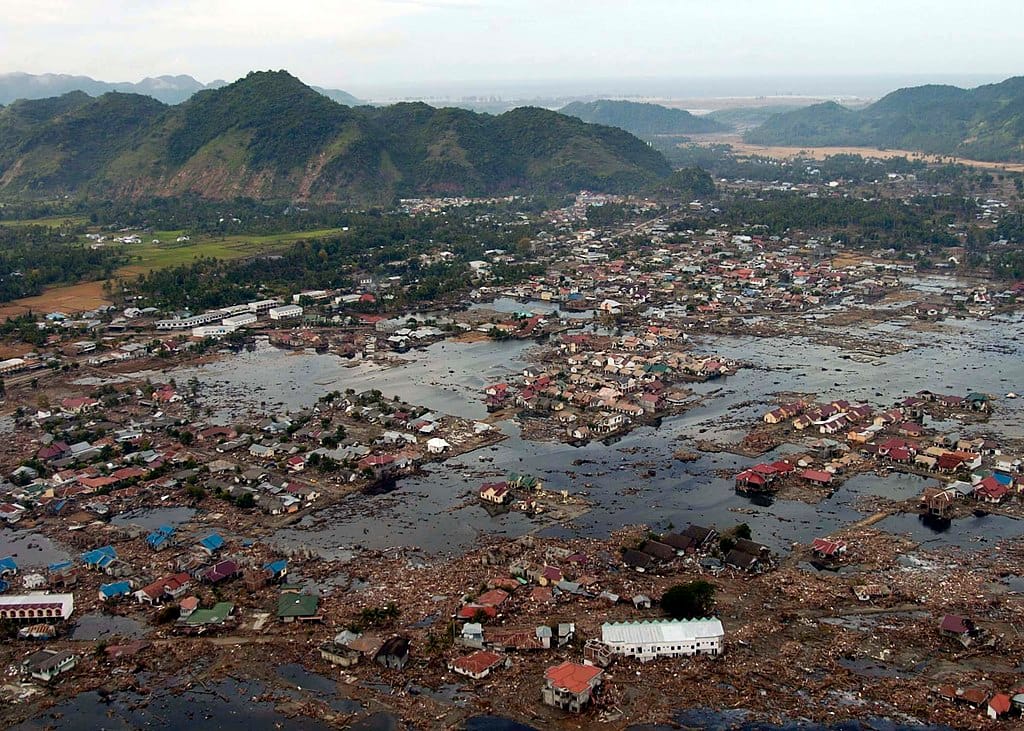
The violent shaking resulted in collapsed buildings, severed power lines, and ruptured water pipes. Tragically, over 2,200 lives were lost, and tens of thousands more injured or displaced. Thousands of homes were reduced to rubble.
“The ground shook so powerfully I lost my balance, and I held onto a table for dear life, praying the house wouldn’t fall on me,” reminisced Fatima, a resident who managed to escape with her children.
The Immediate Aftershocks: Waves of Fear and Panic
But the initial quake was only the beginning. Aftershocks, some nearly as strong as the original tremor, kept the population in a state of constant terror. Night and day, the earth reminded survivors that the crisis was far from over.
Each aftershock reopened old wounds, hampering rescue operations and making desperate people reluctant to return indoors, fearing collapse. Schools, hospitals, and emergency infrastructures were compromised, complicating aid distribution.
The Unseen Killer: The Tsunami’s Silent Approach in the Balearic Sea
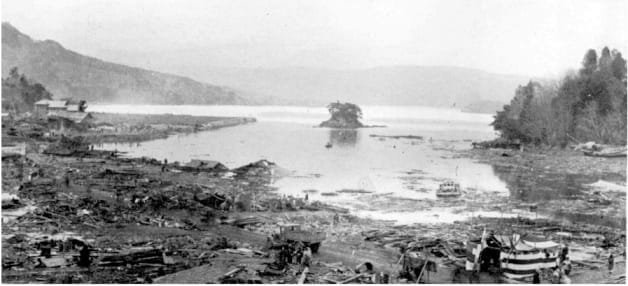
While the land was roiled, another menace was forming quietly offshore. The earthquake’s sudden rupture of the seafloor triggered a tsunami in the Balearic Sea, a basin stretching between the east coast of Spain and the Algerian coast.
Though the Mediterranean is not infamous for tsunamis like the Pacific, its enclosed nature can amplify wave heights with lethal efficiency. Coastal areas of the Balearic Islands—Ibiza, Mallorca, and Menorca—faced unexpected wave surges reaching several meters. Beaches and low-lying harbors were inundated, infrastructure damaged, and tourists caught in panic struggled to grasp the unfolding threat.
Thankfully, the death toll linked to the tsunami remained limited compared to the earthquake, but it served as a critical wake-up call about the Mediterranean’s underestimated tsunami risk.
Human Stories from the Ruins: Survival, Loss, and Resilience
Amid the rubble, countless narratives of courage and heartbreak unfolded. Families huddled together in the streets, strangers helped to pull survivors from collapsed buildings, and the collective trauma bound communities in grief and determination.
One heartbreaking account tells of a teacher who saved dozens of students by rushing them out moments before their school’s walls crumbled. Meanwhile, others were not so lucky.
“Every collapsed home held a story,” said a local journalist who documented the aftermath. “Children who lost parents, elders who lost all they knew—yet the spirit to rebuild never broke.”
The Response: Local and International Rescue Efforts
Emergency services in Algeria mobilized rapidly. The military and civil protection agencies coordinated search and rescue missions, medical aid, and shelter provisions under daunting conditions.
International help arrived soon after: France, Spain, Italy, and even UNESCO offered technical support, medical teams, and funding. Humanitarian organizations like the Red Crescent played vital roles in relief, addressing immediate needs while helping lay groundwork for long-term recovery.
Yet the scale of destruction outpaced available resources. Communication networks were damaged, roads cut off, and equipment scarce. Volunteer efforts became the backbone of survival operations.
Infrastructure in Shambles: Damage Assessment and Challenges
The earthquake destroyed an estimated 12,000 buildings in the Boumerdès region, including schools, hospitals, and government offices. Roads, bridges, and ports suffered significant damage, isolating entire villages.
Electrical grids faltered, water purification systems were compromised, and telecommunications, essential for emergency coordination, were largely severed. In an urban fabric already stressed by population growth, the quake exposed glaring weaknesses in construction standards and urban planning.
Government Reaction and Emergency Measures
The Algerian government declared a state of emergency and began massive reconstruction initiatives. Immediate priorities included restoring utilities, rebuilding homes, and reestablishing public services.
Prime Minister Ali Benflis visited the hardest-hit areas, promising accelerated recovery and increased investment in seismic safety. New regulations were drafted to enforce stricter building codes, with an eye toward better preparedness for future events.
However, bureaucratic delays, budget constraints, and political challenges complicated the implementation of reforms.
Scientific Insights: Seismologists on the Boumerdès Event
For seismologists, the Boumerdès earthquake was an invaluable yet tragic case study. The quake occurred along a fault segment near the tectonic plate boundary—a complicated zone of thrust and strike-slip faulting.
Dr. Leila Hafsi, a geologist involved in post-event studies, noted: “The Boumerdès earthquake highlighted the seismic hazard posed by previously underestimated faults offshore. Its magnitude and mechanism challenged existing models about Mediterranean seismicity.”
This event spurred advances in regional seismic monitoring networks and renewed efforts to develop comprehensive hazard maps for the Mediterranean basin.
The Tsunami’s Reach: Impact on the Balearic Islands and Beyond
Though smaller in scale than Pacific counterparts, the Mediterranean tsunami bore warning importance. Coastal infrastructures in Mallorca and Ibiza suffered damage to marinas, beachfront properties, and tourist facilities.
The event triggered a paradigm shift among Mediterranean countries toward collaborative tsunami warning systems, though much remains to be done in terms of public education and emergency design.
Long-term Economic Impacts on Algeria’s Coastal Regions
Boumerdès and surrounding areas faced years of economic hardship. Fisheries and agriculture, mainstays of local livelihoods, were disrupted by infrastructural damage. The tourism industry, critical on the Balearic coasts, reeled from shaken confidence.
Reconstruction costs soared, estimated at over $1.2 billion. Algeria’s national budget had to be redirected, slowing investments in other areas and exacerbating existing socioeconomic tensions.
Cultural Responses: Remembering the Quake Through Art and Memory
Pain and trauma found outlets in art, literature, and commemoration. Algerian poets and painters sought to capture the fragility of human existence in the face of nature’s wrath.
Annual memorial ceremonies in Boumerdès honor the victims, and survivors share stories as testimony to endurance. Schools include the disaster in curricula, building collective memory to fortify future generations.
Lessons Learned: Improving Disaster Preparedness in Algeria and the Mediterranean
The Boumerdès earthquake exposed glaring gaps in preparedness. In response, Algeria embarked on developing an integrated disaster management system, emphasizing early warning technologies, public education, and infrastructure resilience.
Mediterranean countries increased cooperation for seismic monitoring and tsunami response, creating shared protocols through organizations like the ICG/NEAMTWS (Northeast Atlantic and Mediterranean Tsunami Warning System).
The Boumerdès Earthquake in Collective Memory: Commemoration and Awareness
Two decades on, Boumerdès still bears physical and emotional scars, yet it stands as a symbol of survival and hope. Memorials in urban centers and museums dedicated to the disaster foster public awareness.
For Algerians and Mediterraneans alike, this tragedy remains a call to respect the volatile earth beneath their feet.
Regional Cooperation: Mediterranean States Unite on Seismic Monitoring
Recognizing shared risk, countries bordering the Mediterranean met to improve seismic data sharing and to harmonize emergency responses. This collaborative approach reflects a heightened awareness that natural disasters ignore borders—and that regional solidarity is key.
Rebuilding Hope: Reconstruction Efforts and Urban Planning Reforms
Post-disaster, Boumerdès saw reconstruction efforts aimed not just at restoring what was lost but building back better. New housing complexes adhere to modern seismic codes, and urban planners prioritized safer layouts.
International donors supported projects that empowered local communities to participate in rebuilding decisions. This approach aimed to prevent marginalization and address pre-existing social issues worsened by the quake.
Conclusion: Nature’s Fury and Humanity’s Resolve
The Boumerdès earthquake and ensuing tsunami of May 21, 2003, stand as stark reminders of nature’s unpredictable fury. They reveal the fragility of human settlements when faced with the colossal forces locked beneath the Earth's surface.
Yet, amid destruction, the event also revealed the resilience of communities, the compassion of rescuers, and the determination to rebuild. It awakened Algeria and the Mediterranean world to the necessity of respecting geological realities and the imperative of unity in the face of common threats.
The legacy of Boumerdès is therefore dual—an enduring sorrow and an inspiring testament to human endurance and cooperation.
FAQs about the 2003 Boumerdès Earthquake and Tsunami
Q1: What caused the 2003 Boumerdès earthquake?
A1: The earthquake was caused by the sudden release of stress along a fault resulting from the convergence of the African and Eurasian tectonic plates beneath the Mediterranean Sea.
Q2: How strong was the earthquake and how many lives were lost?
A2: The earthquake measured 6.8 in magnitude. It resulted in over 2,200 deaths and thousands of injuries, with widespread destruction of homes and infrastructure.
Q3: What areas were most affected by the earthquake?
A3: Boumerdès city and the surrounding coastal towns in northern Algeria were hardest hit, with damage reaching as far as Algiers and parts of southern Spain.
Q4: Did the earthquake trigger a tsunami?
A4: Yes, the earthquake caused a tsunami in the Balearic Sea, impacting the Balearic Islands with wave surges, though the tsunami’s impact was relatively modest compared to the quake’s devastation on land.
Q5: How did Algerian authorities respond to the disaster?
A5: Authorities declared a state of emergency, coordinated rescue and relief efforts, sought international aid, and later implemented stricter building codes and disaster preparedness plans.
Q6: What lessons did the Mediterranean region learn from the Boumerdès earthquake?
A6: The event highlighted the seismic and tsunami risks in the Mediterranean, leading to improved monitoring, early warning systems, regional cooperation, and greater public awareness campaigns.
Q7: How has Boumerdès changed since the earthquake?
A7: Reconstruction efforts rebuilt damaged infrastructure with modern seismic standards. Community involvement in urban planning increased, and memorials and education initiatives ensure the memory and lessons endure.
Q8: Is Algeria prepared for future earthquakes?
A8: Progress has been made in seismic monitoring and emergency preparedness, but challenges remain. Continuous efforts are underway to upgrade infrastructure and public education to mitigate future disaster impacts.