Table of Contents
- The Earth Trembles: Dawn of a Nightmare in Mexico City
- The Pulse of the Planet: Geological Prelude to Disaster
- Michoacán, 7:19 AM: The Earthquake Strikes
- An Urban Colossus Shaken: The Immediate Impact on Mexico City
- The Tsunami That Caught a Continent Off Guard
- Collapse of Concrete Giants: The Tale of Fallen Buildings
- Lives Suspended: Personal Stories from the Rubble
- Emergency Response: Heroism Amid Chaos
- Government and Society: Crisis Management in the Spotlight
- Media, Morale and Misinformation
- International Aid and Solidarity
- The Hidden Dangers Beneath the City: Infrastructure and Aftershocks
- The Psychological Earthquake: Trauma and Resilience
- The Political Earthquake: How Disaster Reshaped Mexico’s Leadership
- Urban Planning and Architecture Reimagined
- Scientific Revelations and New Understandings
- The Earthquake’s Role in Mexico’s Social Awakening
- Memorials, Memory, and the Culture of Remembrance
- The 1985 Earthquake Two Decades On: Lessons and Legacies
- Conclusion: From Rubble to Resolve
- FAQs
- External Resource
- Internal Link
1. The Earth Trembles: Dawn of a Nightmare in Mexico City
It was a seemingly ordinary morning in Mexico City on September 19, 1985, when the earth’s slumber was abruptly broken. A violent shudder coursed beneath the sprawling metropolis; a fierce roar filled the air as buildings swayed on their foundations. Streets once bustling with life turned into scenes from an apocalyptic vision. Nothing could have prepared its seven million inhabitants for the seismic terror that would unfold in mere minutes. The city, perched precariously on a former lakebed, was about to endure one of the most catastrophic natural disasters in modern history—the Michoacán earthquake, a colossal force that uprooted lives and shook the very identity of Mexico.
This was not just a disaster of bricks and mortar; it was a profound human tragedy, a test of resilience, and a moment that would forever change the way Mexicans viewed their land, their government, and each other. But how did this event come to be? What mysterious forces beneath the earth conspired to unleash such devastation? And, above all, how did Mexico City emerge from the darkness?
2. The Pulse of the Planet: Geological Prelude to Disaster
At 7:19 AM, September 19, 1985, the ground heaved with a depth and ferocity born far beneath the Mexican soil—approximately 350 kilometers offshore in the Michoacán region, where the Cocos plate grinds relentlessly beneath the North American plate in a process known as subduction. This tectonic ballet is fraught with tension, capable of releasing sudden bursts of energy known as megathrust earthquakes.
Mexico sits just atop this volatile boundary—the infamous Ring of Fire, known worldwide for its frequent and violent seismic activity. Yet the magnitude and specific impact site of this earthquake were unexpected: a deep-focus quake registering a magnitude of 8.0. But it was no mere number; it was the unleashment of pent-up energy accumulated over decades, an inexorable rupture that sent powerful shockwaves racing across hundreds of kilometers.
Mexico City’s unique geography turned the tremor’s effect from destructive to catastrophic. Built upon an ancient lakebed, rich in soft clay sediments, the ground beneath the city amplified the seismic waves—a tragic geological orchestra composing destructiveness with deadly precision.
3. Michoacán, 7:19 AM: The Earthquake Strikes
The time was frozen for many at 7:19:38 AM. The initial jolt was violent but brief. Then, an ominous rolling motion began. It lasted a grueling two minutes—an eternity under shifting earth and falling masonry.
Office workers fled their desks, street vendors abandoned their stalls, and families hastened toward safer ground. But the city’s infrastructure was vulnerable. The soil liquefied beneath tall buildings, turning their foundations unstable. Glass shattered like crystalline rain, and concrete skeletons folded like paper.
Tall towers close to the lakebed, such as the famed Multifamiliar Juárez and Nuevo León apartment buildings, crumbled with deafening crashes, transforming into tombs for hundreds. Less sturdy structures, including schools and hospitals, were obliterated. Fires broke out with piercing screams filling the air.
This was no ordinary rupture—this was a cataclysm.
4. An Urban Colossus Shaken: The Immediate Impact on Mexico City
Mexico City, capital and cultural heart of the nation, was caught unaware. The earthquake destroyed an estimated 30,000 buildings, leaving around 250,000 people homeless in the midst of a densely populated urban fabric. Over 10,000 lives were lost, though some estimates tilt this number higher, owing to the chaos and incomplete records.
The social and economic contrasts of the metropolis were suddenly stark: while many perished in working-class neighborhoods built swiftly and without regulation, some modern high-rises largely survived, yet the epicenters of devastation were deep-rooted communities. Whole districts were razed to rubble.
More terrifying still was the electrical blackout that plunged much of the city into darkness. Communication lines were severed, complicating rescue efforts and intensifying panic.
5. The Tsunami That Caught a Continent Off Guard
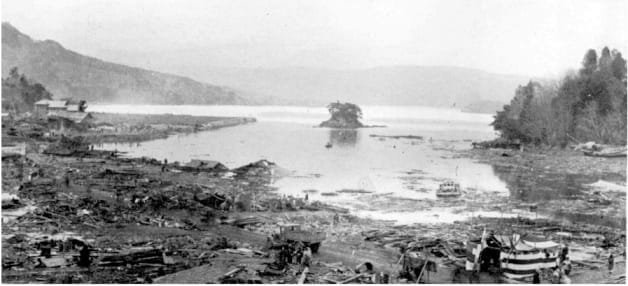
As if the shaking soil were not enough, the earthquake also triggered a tsunami in the Pacific coast along Michoacán—a reminder of the ocean's silent but lethal power. Though the waves were relatively small compared to other global tsunami disasters, their impact was felt acutely by coastal communities already vulnerable and poorly prepared.
Fishing villages, accessible only by narrow coastal roads, suffered destruction of boats and homes, disrupting livelihoods for months to come. The tsunami’s sudden arrival was a cruel counterpoint to the inland catastrophe that was unfolding far from the shore.
6. Collapse of Concrete Giants: The Tale of Fallen Buildings
Among the most haunting images of the disaster were the skeletal remnants of once proud buildings. The 15-story Nuevo León building, emblematic of post-modern architecture in Mexico City, was one of the most tragic casualties. Designed with aesthetic and functionality in mind, it collapsed within seconds under seismic pressure.
Similarly, the notoriously vulnerable Multifamiliar Juárez complex, built on similarly hazardous ground, collapsed, trapping hundreds.
The collapse was not just a physical failure but a symbol of systemic oversight. Corruption, poor enforcement of building codes, and rapid urban sprawl had created a tinderbox—one that the earthquake ignited mercilessly.
7. Lives Suspended: Personal Stories from the Rubble
The human stories that emerged from the catastrophe reveal both heartbreak and absurd miracle. Families torn apart in seconds, children separated from parents, strangers forming makeshift rescue teams using bare hands and rudimentary tools.
Maria Juárez, a schoolteacher trapped under rubble for over 53 hours, recounted later: “I could hear crying, and sometimes silence. It was as if the city had died but also whispered hope.” Survivors spoke of rationing water by drops, sharing warmth, and holding on to faith amid darkness.
8. Emergency Response: Heroism Amid Chaos
Despite the staggering scale of destruction, ordinary citizens became heroes overnight. Spontaneous brigades of “topos,” or moles, skilled in underground search and rescue, sprang into action. Neighbors coordinated rescues, often before official help could arrive.
The military and federal agencies mobilized, but the initial response was widely criticized for its tardiness and lack of coordination. The chaos exposed institutional weaknesses but was also a testament to Mexican civic spirit.
9. Government and Society: Crisis Management in the Spotlight
The ruling Institutional Revolutionary Party (PRI), then in power for over half a century, faced unprecedented scrutiny. President Miguel de la Madrid and his administration were initially distant, slow to acknowledge the extent of the disaster and the needs of citizens.
Public distrust swelled. The disaster galvanized civil society, giving rise to grassroots organizations demanding transparency, accountability, and reforms. The earthquake thus ignited not only physical rubble but the seeds of political change.
10. Media, Morale and Misinformation
Television and radio became lifelines—broadcasting news, instructions, and images from the ruins. Yet misinformation spread, from exaggerated casualty counts to rumors of aftershocks triggering secondary disasters.
Still, media coverage also served to unify the nation, illustrating the scope of destruction and resilience of its citizens. The public’s demand for information pressured officials for better communication and transparency.
11. International Aid and Solidarity
The earthquake drew global attention. Dozens of countries offered aid ranging from financial support to specialized rescue teams and medical supplies. From Japan to the United States, teams arrived, bringing advanced technology and expertise.
Yet, Mexico’s pride and nationalist spirit led to a complex dance: accepting help without appearing weak. The solidarity was real, and helped accelerate recovery, but underscored political sensitivities.
12. The Hidden Dangers Beneath the City: Infrastructure and Aftershocks
Months after the mainshock, Mexico City remained precarious. Aftershocks continued to rattle nerves and structures. The quake had compromised water, gas, and electric lines, increasing risk of fire and contamination.
Furthermore, the lacustrine soil retained moisture like a sponge, exacerbating liquefaction risks. Engineering studies after the fact revealed fundamental flaws in urban expansion strategies.
13. The Psychological Earthquake: Trauma and Resilience
Beyond material damage, the psychological scars were deep. Survivors grappled with lost homes, shattered families, and an invisible burden of trauma. Children were orphaned; adults faced unemployment as rebuilt industries struggled.
However, Mexican society also showed resilience—communal kitchens, collective rebuilding projects, and cultural expressions of mourning and hope emerged.
14. The Political Earthquake: How Disaster Reshaped Mexico’s Leadership
While the PRI had maintained a tight grip on power for decades, the 1985 earthquake planted seeds for political pluralism. Civil society’s mobilization during the disaster challenged traditional authority.
Subsequent elections saw growing opposition voices and reforms in disaster management, urban planning, and transparency. The event became a turning point, forcing the government to engage more openly with its citizens.
15. Urban Planning and Architecture Reimagined
In the quake’s aftermath, Mexico City embarked on a bold reimagining of its urban identity. Building codes were completely overhauled, emphasizing seismic resilience and quality control.
Architects and engineers championed innovations. New neighborhoods were planned with disaster preparedness at their core. The trauma of 1985 lingered, shaping a more cautious and forward-looking cityscape.
16. Scientific Revelations and New Understandings
The Michoacán earthquake became a pivotal case study in seismology. Its unexpected depth and effects prompted extensive research.
Mexico’s National Seismological Service expanded monitoring, developing sophisticated early-warning systems. The event deepened understanding of subduction-zone earthquakes globally, contributing vital data to earthquake science.
17. The Earthquake’s Role in Mexico’s Social Awakening
For many Mexicans, the disaster was a harsh revelation: the equality promised by the state was fractured by social inequality and governance failure. The grassroots response catalyzed social activism, grassroots organization, and a new civic consciousness.
The event became emblematic—a symbol of both vulnerability and courageous solidarity.
18. Memorials, Memory, and the Culture of Remembrance
Every year since 1985, Mexico holds solemn commemorations on September 19. Monuments and plaques mark sites of tragedy. Schools pause to honor lives lost and lessons learned.
Memory has become a powerful tool—not to linger in despair, but to perpetuate vigilance and unity in the face of nature’s unpredictable forces.
19. The 1985 Earthquake Two Decades On: Lessons and Legacies
By the early 2000s, Mexico City had transformed—physically stronger, socially more aware, and politically more open. The earthquake’s lessons shaped policy not only in Mexico but inspired seismic preparedness globally.
Still, the event’s human toll remains a haunting reminder of nature’s power and social responsibility.
Conclusion: From Rubble to Resolve
The Michoacán earthquake of 1985 was more than a natural disaster—it was an upheaval that tore through the physical, political, and emotional fabric of Mexico. It exposed vulnerabilities, but also unearthed profound strengths. It unveiled the fragility of the man-made world and the resilience of the human spirit.
For those who lived through it, and for generations after, September 19 remains etched in collective memory—a day when earth and people shook together, revealing the fractures in society but also the glimmers of hope that follow even the darkest tremors.
Above all, it reminds us that in the face of nature’s fierce unpredictability, empathy, courage, and solidarity are the foundations upon which recovery and renewal must stand.
FAQs
Q1: What caused the 1985 Michoacán earthquake?
A: The earthquake was caused by the subduction of the Cocos plate beneath the North American plate along the Pacific coast. Stress accumulated along this boundary was suddenly released, producing a magnitude 8.0 quake.
Q2: How did Mexico City's geology contribute to the disaster?
A: The city stands on an ancient lakebed composed of soft clay sediments that amplified seismic waves, increasing shaking intensity and damage during the earthquake.
Q3: How many people died in the earthquake?
A: Official estimates suggest over 10,000 deaths, though some counts estimate as many as 30,000 due to underreporting and chaotic conditions.
Q4: What was the government’s response to the earthquake?
A: Initial government response was slow and criticized for poor coordination. However, the disaster prompted reforms in emergency management and increased civic participation.
Q5: How did the earthquake influence Mexico’s political landscape?
A: The event spurred civil society activism and skepticism toward the ruling PRI, leading to political reforms and greater transparency in the long run.
Q6: Are earthquakes of this magnitude common in Mexico?
A: Mexico experiences frequent seismic activity due to its location on the Ring of Fire, but an 8.0 magnitude earthquake with such urban impact is relatively rare.
Q7: What changes occurred in urban planning after the earthquake?
A: New seismic building codes were introduced, urban development strategies became more cautious, and emergency preparedness was prioritized.
Q8: How is the earthquake remembered today?
A: Every September 19, Mexico commemorates the disaster with memorials, civil defense drills, and community events to honor victims and promote awareness.